
Last Updated: July 21, 2026
Sometimes accidents happen. A condom may tear, birth control pills may be missed, or unprotected sex may happen unexpectedly. Many women in India search for one thing online — I-pill tablet uses in this condition.
I-pill is one of the utmost popular emergency contraceptive tablets in India. But many individuals still feel confused about when to use it, how it works, whether it is safe, and what are its side effects.
What Is I-pill?
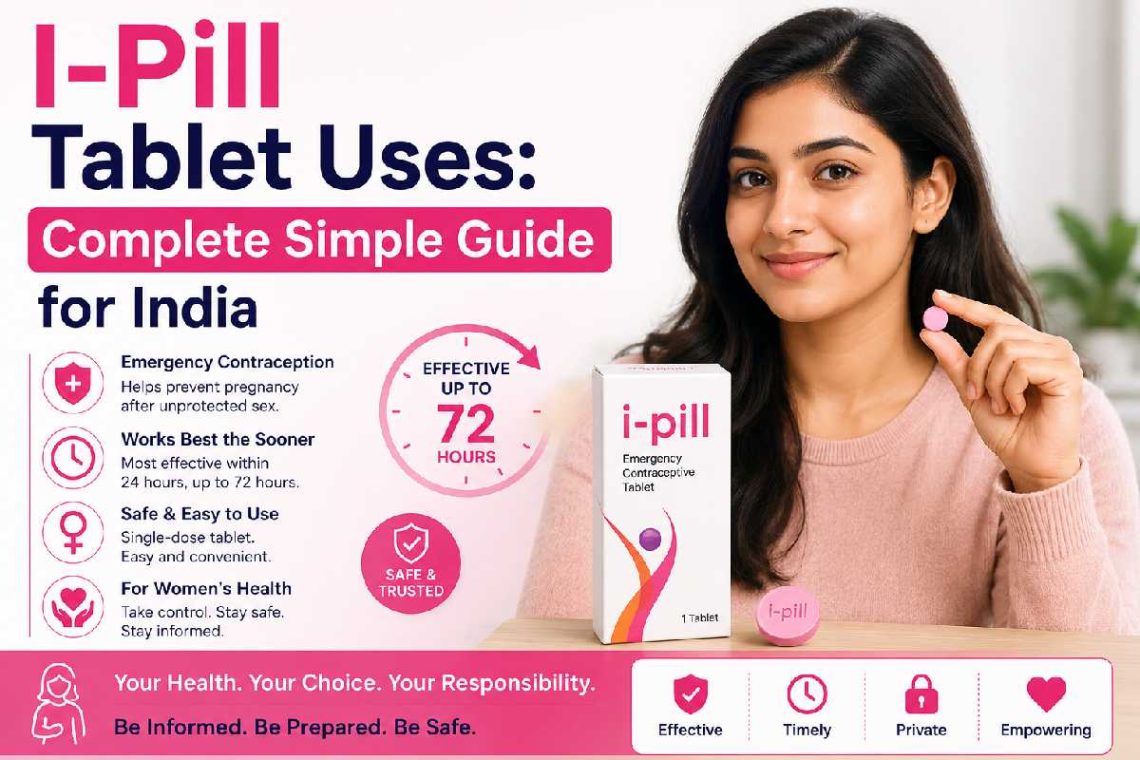
I-pill is an emergency contraceptive pill used to help prevent pregnancy after unprotected sex or contraceptive failure.
It contains a hormone called Levonorgestrel 1.5 mg. This hormone helps stop or delay ovulation, which reduces the chance of pregnancy.
In India, many women buy I-pill from pharmacies without a prescription during emergencies.
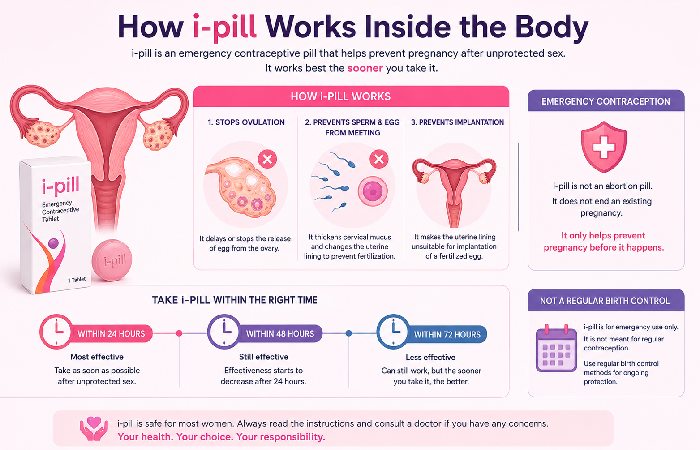
How I-pill Prevents Pregnancy
What Is Inside i-pill Tablet?
The main ingredient in i-pill is:
| Ingredient | Purpose |
| Levonorgestrel 1.5 mg | Emergency contraception hormone |
- Levonorgestrel is a synthetic progestin that prevents pregnancy by delaying ovulation.
- Emergency contraception should only be used in emergencies and is not meant to be taken on a continuous basis, unlike standard contraceptive pills.
Why Do Women Use i-pill?
There are many situations where women may need emergency contraception.
Common i-pill tablet uses
| Emergency Situation | Why Women Use It |
| Condom breaks during sex | To lower pregnancy risk |
| Forgot regular birth control pill | Emergency protection |
| Unprotected intercourse | Prevent unwanted pregnancy |
| Unsafe timing during ovulation | Reduce chances of conception |
| Sexual assault emergencies | Pregnancy prevention support |
These are the most common i-pill tablet uses in India today.
How Does i-pill Work?
Many people think i-pill is an abortion pill, but that is not true.
i-pill mainly works by:
- Delaying ovulation
- Stopping egg release
- Making fertilization difficult
It does NOT:
- End an existing pregnancy
- Harm a baby already formed
- Work like abortion medicine
That is why doctors call it an emergency contraceptive pill.
How Fast Does i-pill Start Working?
i-pill starts working soon after it is taken. The hormone begins affecting ovulation and fertilization processes within hours.
However, the exact timing depends on:
- Your menstrual cycle
- Ovulation timing
- How quickly you took the tablet
- Your body’s hormonal response
Doctors recommend taking it immediately after unprotected sex because earlier use gives better protection.
I-Pill tablet uses how many days?
One of the most searched questions online is I-Pill tablet uses how many days.
The answer is simple:
You should take i-pill as early as possible after unprotected sex.
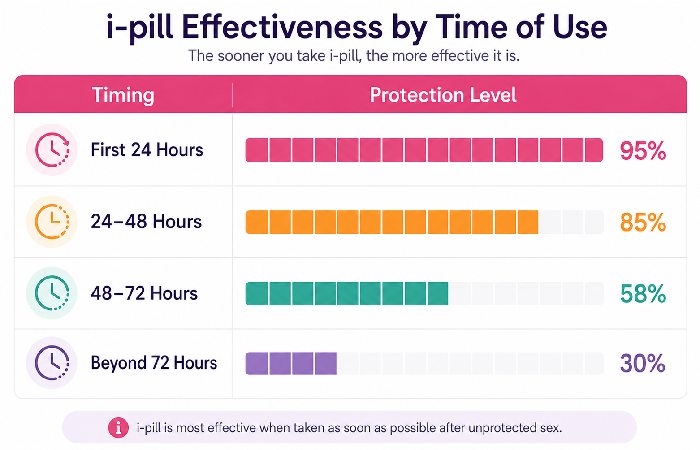
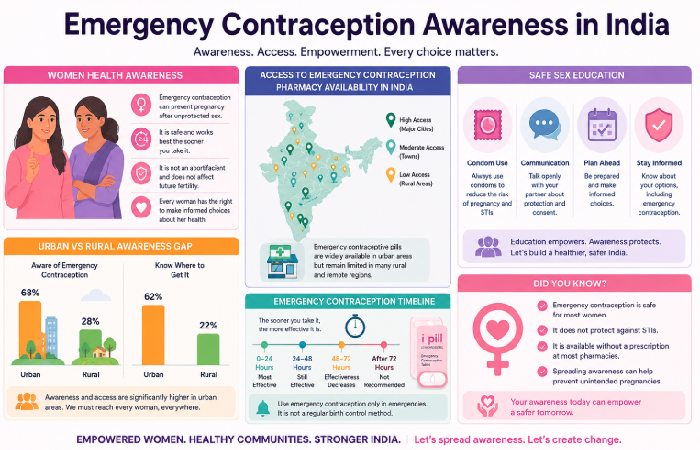
Best Time to Take i-pill
| Time After Sex | Chance of Working |
| Within 24 hours | Very effective |
| 24–48 hours | Good effectiveness |
| 48–72 hours | Lower protection |
| After 72 hours | Much less effective |
Doctors usually recommend taking it within 72 hours for best results.
Simple Effectiveness Graph
Who Should Not Take i-pill?
Although i-pill is safe for many women, some people should avoid taking it without medical advice.
Avoid or Consult a Doctor If You Have:
| Condition | Why Caution Is Needed |
| Severe liver disease | Hormonal processing issues |
| Unexplained vaginal bleeding | Needs medical examination |
| Hormone allergy | Possible reaction risk |
| Confirmed pregnancy | Not useful after pregnancy starts |
If you are unsure, talk to a gynecologist before using emergency contraception.
Who Can Use i-pill?
i-pill is generally used by women who:
- Had unprotected sex
- Faced condom failure
- Missed regular contraceptive pills
- Need emergency pregnancy prevention
Who Should Avoid It?
Some women should talk to a doctor before using it:
- Women with severe liver problems
- Women allergic to Levonorgestrel
- Women already pregnant
- Women with unexplained bleeding
Top Reasons Women in India Search for i-pill
| Reason in India | Usage Level |
| Condom accidents | Very high |
| Lack of contraceptive planning | High |
| Missed birth control tablets | High |
| Emergency situations | Medium |
| Irregular relationships | Medium |
Is i-pill Safe?
For most healthy women, occasional use of i-pill is considered safe.
But there is one important thing to remember:
i-pill should NOT be used regularly.
- It is only meant for emergencies. Using it too often can disturb hormonal balance and menstrual cycles.
I-pill tablet uses side effects
- Many users also search online for I-pill tablet uses side effects because they worry about what happens after taking it.
Most side effects are temporary and go away within a few days.
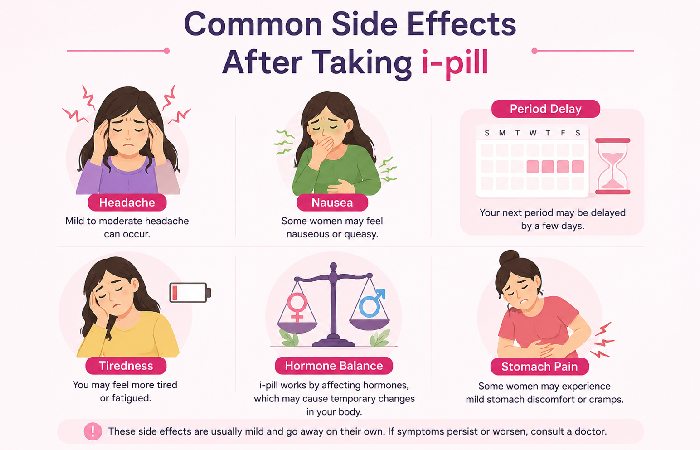
Common Side Effects of i-pill
| Side Effect | Common or Rare |
| Nausea | Common |
| Tiredness | Common |
| Mild stomach pain | Common |
| Irregular periods | Common |
| Headache | Common |
| Dizziness | Mild |
| Vomiting | Less common |
| Breast tenderness | Moderate |
Not every woman gets these side effects.
Common Side Effects After Taking i-pill
When Should You See a Doctor?
You should visit a doctor if:
- Period is delayed for many days
- Heavy bleeding happens
- Severe stomach pain occurs
- Vomiting continues
- Pregnancy symptoms appear
- These situations need medical advice.
Can i-pill Fail?
Yes. No emergency contraceptive gives 100% protection.
Things That Reduce Effectiveness
| Factor | Effect on i-pill |
| Taking pill late | Reduces effectiveness |
| Vomiting within 2 hours | Pill may not work properly |
| Certain medicines | Can reduce hormone action |
| Already ovulating | Lower success rate |
That is why doctors say earlier is always better.
What To Do If i-pill Fails?
If your period is delayed by more than one week after taking i-pill, you should:
- Take a pregnancy test
- Visit a doctor or gynecologist
- Avoid taking another emergency pill immediately
- Discuss future contraceptive options
Remember, no emergency contraceptive works 100% of the time.
Resource Link:
WHO Emergency Contraception Guide
Does i-pill Affect Future Pregnancy?
This is another common fear among Indian women.
The good news is:
- Occasional i-pill use does not usually affect future fertility.
- Most women return to normal fertility very quickly after using it.
- But using emergency pills again and again is not healthy for long-term reproductive care.
Can i-pill Cause Infertility?
- No scientific studies show that occasional i-pill use causes permanent infertility.
- However, doctors do not recommend frequent use because repeated hormonal changes may temporarily disturb menstrual cycles.
- Most women return to normal fertility naturally after use.
Difference Between i-pill and Abortion Pills
| i-pill | Abortion Pills |
| Prevents pregnancy | Ends pregnancy |
| Used before pregnancy forms | Used after pregnancy confirmation |
| Emergency contraceptive | Medical abortion medicine |
| Available OTC in India | Usually doctor-supervised |
Many people confuse these medicines, but they are very different.
Emergency Contraception Awareness in India
Can Teenagers Use i-pill?
In emergencies, teenagers may use emergency contraception, but proper guidance is important.
Parents, schools, and healthcare experts should focus more on:
- Safe sex education
- Responsible contraceptive use
- Awareness about consent and protection
Myths and Facts About i-pill
| Myth | Truth |
| i-pill causes infertility | False |
| It protects against STDs | False |
| It is an abortion pill | False |
| It works every time | False |
| Regular use is healthy | False |
Simple Tips for Safe Use in India
- Buy From Trusted Medical Stores
Avoid fake products.
- Check Expiry Date
Always check before using.
- Take It Early
Earlier use gives better protection.
- Use Condoms for STD Protection
i-pill does not protect from infections.
- Don’t Panic
Mild period changes are common after use.
Can i-pill Protect Against STDs?
No.
i-pill only helps reduce pregnancy risk. It does not protect against:
- HIV
- Gonorrhea
- Chlamydia
- Syphilis
- Other sexually transmitted diseases
- Condoms are still very important.
What Happens to Periods After Taking i-pill?
Many women notice temporary menstrual changes.
Your next period may:
- Come early
- Come late
- Be heavier
- Be lighter
Usually, cycles become normal again after some time.
Better Long-Term Birth Control Options
| Birth Control Method | Long-Term Use |
| Condoms | Very good |
| Copper-T | Long-term protection |
| Birth control pills | Regular use option |
| Hormonal implants | Long-lasting |
| Injectable contraception | Effective |
Doctors usually recommend regular contraception instead of frequent emergency pill use.
Expert Tips for Women in India
Helpful Tips
- Keep emergency contraception only as backup protection
- Use regular contraception for long-term safety
- Avoid panic after taking i-pill
- Drink enough water if nausea happens
- Track your next menstrual cycle
- Visit a doctor if unusual symptoms continue
Frequently Asked Questions
Can I take i-pill twice in one month?
Possible, but not recommended.
Does i-pill delay periods?
Yes, sometimes temporarily.
Is i-pill available in India without prescription?
Yes, in many pharmacies.
Can married women use it?
Yes.
Is i-pill 100% safe?
No medicine is 100% risk-free, but occasional use is generally considered safe.
Final Thoughts
Since emergency contraception awareness is growing in India, more women search for the i-pill tablet uses. Knowing how it works, when to take it, and what side effects may occur can help individuals make safer and smarter decisions.
The most important thing to remember is this:
- It is for emergencies, not regular birth control.
- If you require frequent contraception, it is better to consult with a doctor about safer long-term options.