
 Syeda Yasmeen
Health & Wellness Writer Syeda Yasmeen creates clear and
reader-focused content covering health,
nutrition, wellness, women’s health,
men’s health and babies’ health.
Read Full Bio of Author →
Syeda Yasmeen
Health & Wellness Writer Syeda Yasmeen creates clear and
reader-focused content covering health,
nutrition, wellness, women’s health,
men’s health and babies’ health.
Read Full Bio of Author →
 Sameena Begum
Health, Technology & Digital Content Reviewer Sameena Begum reviews selected content
for clarity, factual presentation,
consistency and reader usefulness.
Read Full Bio of Reviewer →
Sameena Begum
Health, Technology & Digital Content Reviewer Sameena Begum reviews selected content
for clarity, factual presentation,
consistency and reader usefulness.
Read Full Bio of Reviewer →
 Dr. Khizrana Begum
General Physician and Dermatologist Dr. Khizrana Begum is a qualified medical
professional with MBBS and MD qualifications
and 5+ years of experience. She reviews health
and wellness content for medical accuracy,
clarity and responsible presentation.
Read Full Bio of Medical Reviewer →
Dr. Khizrana Begum
General Physician and Dermatologist Dr. Khizrana Begum is a qualified medical
professional with MBBS and MD qualifications
and 5+ years of experience. She reviews health
and wellness content for medical accuracy,
clarity and responsible presentation.
Read Full Bio of Medical Reviewer →
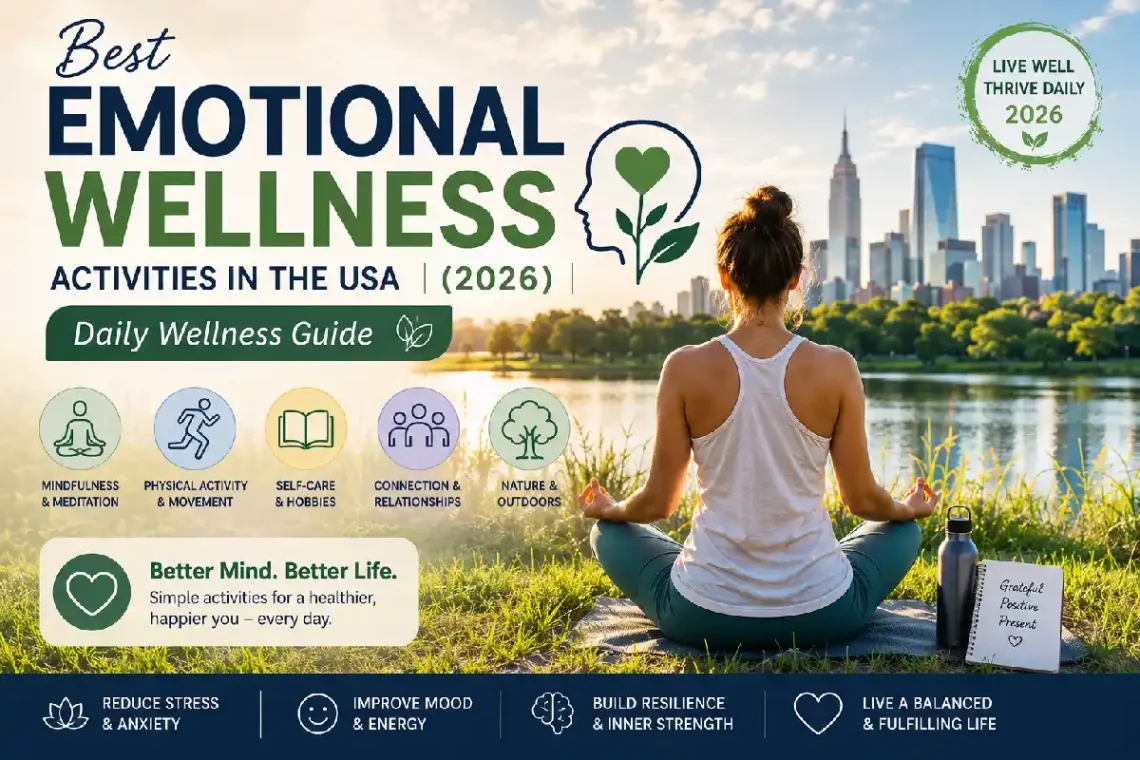
Emotional wellness is not just about being happy, it is about knowing how to feel, knowing how to react to life’s situations and knowing how to interact with others, along with knowing how to bounce back from life’s bumps and bruises. Emotional wellness activities help build resilience, lower anxiety, and promote long-term emotional health, although everyone feels stress and emotions, some of these activities help more.
More Americans say they are focusing on emotional health, with mindfulness, physical activity, creative pursuits, and nature helping them do so. Studies keep going to reveal that regular, minor life changes have a positive effect on emotional control, emotional states and the overall quality of life.
Discover the top emotional wellness events you can do in the USA, how they help, and how you can simply fit them into your day-to-day life.
❝
This article is part of
Womens Mental Health Hub
Why Activities Support Emotional Health
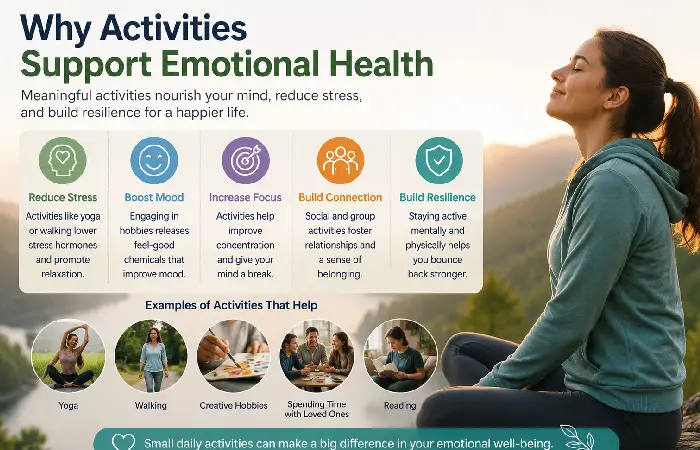
The brain, body and emotions are impacted by everyday activities. With time, positive habits can help diminish stress, grow self-awareness, and enhance sensitive resilience.
Learn more about emotional wellness and discover how daily habits can improve your overall mental well-being.
Many emotional wellness activities are based on:
- Reducing stress hormones
- Encouraging relaxation
- Improving sleep quality
- Increasing self-confidence
- Providing a supportive social relationship network
- Promoting mindfulness
Benefits of Emotional Wellness Activities
| Benefit | How It Helps |
| Lower Stress | Helps calm the nervous system |
| Better Mood | Inspires positive emotions |
| Better Focus | Lessens mental clutter |
| Stronger Relations | Expands communication and empathy |
| Better Sleep | Supports relaxation before bedtime |
| Better Confidence | Shapes self-awareness and emotional control |
Journaling
One of the easiest and most beneficial emotional wellbeing exercises is to journal. Noting on paper helps to organize emotions, recognize patterns, and to eliminate mental overload.
Emotional wellness journaling centers on emotions, self-development, and solving problems in contrast to journaling a diary of daily events.
These activities work even better when combined with proven strategies to improve emotional wellness over time.
Benefits of Journaling
Process difficult emotions
- Reduce stress
- Improve emotional awareness
- Track personal growth
- Identify unhealthy thought patterns
- Practice gratitude
- Set meaningful goals
Some people find that writing for 10-15 minutes a day helps them to feel more relaxed and concentrated.
Easy Journaling Prompts
If you don’t know where to start, seek answers to questions such as:
- What was something nice that happened to me today?
- What challenged me today?
- What are my coping mechanisms?
- What are my blessings for today?
- What is one thing I can improve tomorrow?
These prompts help to reflect without overwhelming.
Regular wellness activities can help build emotional resilience, making it easier to cope with life’s challenges.
Types of Journaling
| Type | Purpose |
| Gratitude Journal | Focus on positive experiences |
| Mood Journal | Track emotional changes |
| Goal Journal | Monitor personal growth |
| Reflection Journal | Understand thoughts and feelings |
| Stress Journal | Identify triggers and coping strategies |
Tips for Success
- Write regularly, perhaps for a few minutes.
- Be honest with yourself.
- Overlook grammar and spelling errors.
- Occasionally, look back at older entries and see how things have changed.
Mindfulness Practices
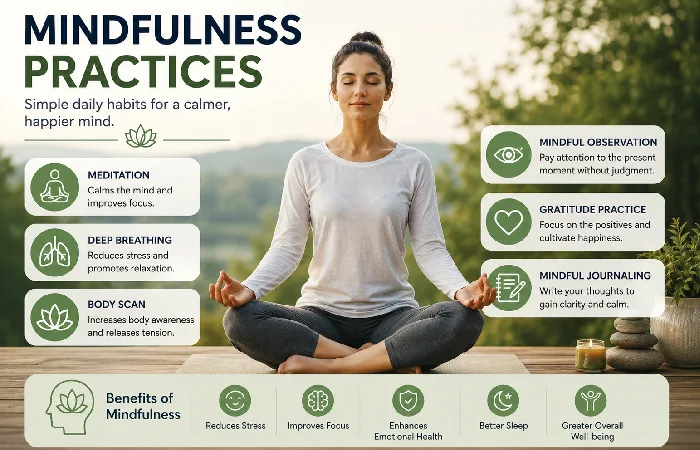
Mindfulness is the act of being in the moment, with a inquiring, but not judgmental, attitude. It aids in minimizing overthinking and indorses emotional equilibrium.
Numerous studies have found that regular practice of mindfulness can reduce stress levels and regulate emotions.
Including self-care for emotional wellness in your routine supports lasting emotional balance.
Deep Breathing
Deep breathing is one of the most simple mindfulness practices!
Here is a quick way to do this:
- Sit comfortably.
- Slowly breathe in through your nose.
- Hold briefly.
- Slowly breath out through your mouth.
- Repeat several times.
May be used when facing stressful situations or as a daily habit.
Meditation
Meditation inspires calmness and self-awareness.
Beginners can start with:
- Five minutes daily
- Guided meditation apps
- Quiet breathing exercises
- Body scan meditation
- Uniformity matters more than duration.
Meditation
A meditation will aid to bring calmness and self-awareness.
For beginners, here’s some to begin with:
- Five minutes daily
- Guided meditation apps
- Quiet breathing exercises
- Body scan meditation
It is uniformity that is more significant than duration.
Mindful Walking
Rather than rushing, listen to:
- Your breathing
- Sounds around you
- Feet on ground sensation.
- Covered with trees and flowers and sky!
It’s a nice walk and a mindfulness thing.
Mindful Eating
When eating with mindful awareness, you will try to:
- Eat slowly
- Identify tastes and textures
- Reduce disruptions
- Understand hunger and roundness signals
It can improve emotional health and diet.
Popular Mindfulness Activities
| Activity | Time Needed |
| Deep Breathing | 5 minutes |
| Meditation | 10–20 minutes |
| Body Scan | 10 minutes |
| Mindful Walking | 20–30 minutes |
| Mindful Eating | During meals |
Creative Hobbies
Creative activities enable people to express feelings in healthy and pleasurable ways. Arts isn’t a requirement for benefiting from creativity.
Creative hobbies can help to reduce stress levels and boost focus and confidence.
Simple practices like gratitude for emotional wellness can enhance the benefits of your daily wellness activities.
Drawing and Painting
Art is a good way to relax and express oneself.
Benefits include:
- Stress reduction
- Improved concentration
- Emotional expression
- Increased creativity
Music
Music can affect mood when listened to and played.
Examples include:
- Playing guitar
- Piano
- Singing
- Create a special list of soothing music.
- Joining a choir
Photography
By learning to see beauty in our daily lives, Photography helps us to be in the moment.
You can photograph:
- Nature
- Architecture
- Wildlife
- Family moments
- Sunsets
Cooking
Cooking healthy meals is inventive and useful.
It can:
- Reduce stress
- Encourage healthy eating
- Improve confidence
- Provide opportunities for interaction with others
Gardening
Gardening is fun and it’s outside.
Some popular activities:
- Growing vegetables
- Flower gardening
- Indoor plants
- Herb gardens
Creative Hobby Comparison
| Hobby | Emotional Benefit |
| Painting | Self-expression |
| Photography | Mindfulness |
| Music | Relaxation |
| Gardening | Stress reduction |
| Cooking | Creativity and confidence |
Physical Activity
Endorphins are released during exercise, which aids to boost emotional wellness, recover sleep excellence and reduce stress.
The ideal exercise is one that you love and can do on a regular basis.
Pairing these habits with nutrition for emotional wellness can support a healthier mind and body.
Walking
One of the easiest emotional wellness activities is walking.
Benefits include:
- Reduced stress
- Improved mood
- Better heart health
- Increased energy
A 30-minute walk greatest days of the week can make a optimistic difference.
Yoga
Yoga is a mixture of movement, breathing and mindfulness.
Benefits include:
- Better flexibility
- Reduced anxiety
- Improved balance
- Greater relaxation
Strength Training
Strength training is healthy for the body and for your soul.
It could be beneficial for enhancing:
- Confidence
- Stress management
- Bone health
- Physical function
Cycling
Cycling offers:
- Cardiovascular exercise
- Stress relief
- Outdoor enjoyment
- Improved endurance
Dancing
Dancing is a blend of movement, music and contact with others.
Popular choices include:
- Zumba
- Ballroom dancing
- Hip-hop
- Salsa
- Free dancing at home
Exercise Comparison
| Activity | Intensity | Emotional Benefit |
| Walking | Low | Stress relief |
| Yoga | Low–Moderate | Relaxation |
| Cycling | Moderate | Mood improvement |
| Strength Training | Moderate–High | Confidence |
| Dancing | Moderate | Joy and social connection |
Spending Time in Nature
The natural setting is calm and relaxed, promoting relaxation and mindfulness.
Going outside – whether in a national park, a neighborhood trail or a local garden – can have a positive impact on emotional health.
Nature Walks
Going for a walk in a park can be a great break from screens and benefit you get in tune with your environment.
Notice:
- Bird sounds
- Fresh air
- Trees
- Water
- Wildlife
Hiking
Hiking is a form of exercise as well as being out in nature.
Benefits include:
- Physical fitness
- Stress reduction
- Sense of accomplishment
- Improved mood
Camping
Camping encourages:
- Reduced screen time
- Family bonding
- Outdoor recreation
Improved understanding of the natural world.
Community Parks
There’s no need to go far to practise nature.
Many of the local parks have:
- Walking trails
- Picnic areas
- Gardens
- Lakes
- Outdoor fitness equipment
Nature Activity Comparison
| Activity | Best For |
| Park Walk | Daily relaxation |
| Hiking | Weekend adventure |
| Beach Visit | Stress reduction |
| Camping | Family connection |
| Botanical Garden | Quiet reflection |
Building an Emotional Wellness Routine
Joining several activities creates a stable approach.
Example Daily Routine
| Time | Activity |
| Morning | Five minutes of gratitude journaling |
| Midday | Healthy lunch and short walk |
| Afternoon | Stretching or mindfulness break |
| Evening | Exercise or yoga |
| Night | Reflection journal and reading |
Common Mistakes to Avoid
| Mistake | Better Approach |
| Expecting immediate results | Build habits gradually |
| Skipping self-care | Schedule time each day |
| Comparing yourself to others | Focus on your own progress |
| Trying too many activities | Start with one or two |
| Ignoring stress | Address challenges early |
Tips for Staying Consistent
- Plan wellness activities
- Set small, likely goals.
- Take a pal or family member along.
- Admiration growth, not excellence.
- Re-adjust as needed.
Frequently Asked Questions
So what are the best emotional wellness activities?
Journaling, mindfulness meditation, walking, yoga, creative hobbies, expenditure time outdoors and getting in touch with kind friends and family are some of the best activities.
How many emotional wellness activities should I do per week?
It is more essential to have consistency than length of play. Regular and consistent 10-30 minutes a day can help with emotional health most days of the week.
Is exercise a good action for emotional well-being?
Yes. Emotional wellness is related to even physical activity, which is known to have a optimistic impact on mood, stress and sleep.
Does keeping a journal help or hurt?
Keeping a journal is helpful for some persons to keep their thoughts in order, for stress organisation, and for personal growth. It’s all about being truthful and consistent.
If I donot like meditating, what am I supposed to do?
Walking, gardening, breathing and original hobbies are all examples of mindfulness. Select actions that are fit for interests.
Key Takeaways
- Emotional wellness actions build resiliency, ease stress and support overall wellness.
- Journaling aids to enhance self-awareness and emotional processing.
- Mindfulness approaches calm the mind and emphasis the mind.
- Original hobbies aid them express themselves in a healthy way.
- Exercise has a helpful result on emotional and physical health.
- Being outside aids to relax and calm down from everyday stress.
- Minor maintainable habits can make a large effect to emotional wellness over time.
Dr. Khizrana Begum is a qualified medical professional with MBBS and MD qualifications and 5+ years of experience in the medical field. She works as a General Physician and Dermatologist, with knowledge spanning general medicine, dermatology, preventive healthcare and skin health.
As a medical reviewer, Dr. Khizrana Begum reviews health and wellness content for medical accuracy, clarity and authenticity.
Sameena Begum reviews content for clarity, accuracy and reader usefulness. Her review process helps ensure that published information is clearly presented, relevant and easy for readers to understand.
Syeda Yasmeen is a Health & Wellness Writer at InHumanBeing.com. She creates clear and reader-focused content across health, nutrition, wellness, women’s health, men’s health and babies’ health.