
Last Updated: September 1, 2026
Anyone who has opened a container of Sunday’s chicken and rice on Wednesday only to find it tasting flat or slightly off knows the frustration of meal prep gone wrong. The problem rarely comes down to bad cooking. More often, it traces back to meal prep storage habits that ignore how a refrigerator actually distributes cold air. Different shelves, drawers, and door compartments hold different temperatures, and stacking containers wherever there is space undermines the plan before the week even starts. Understanding how storage zones work, and organizing batch-cooked proteins and produce accordingly, makes the difference between food that stays nutritionally intact through Friday and food that gets tossed by Wednesday night. This guide walks through why freshness declines faster than expected, what the underlying temperature science actually involves, and how to arrange a fridge so a week of prepped meals holds up.
Why Meal Prep Often Fails After Day Two
Meal prep containers rarely spoil evenly, and the reason usually has nothing to do with the recipe itself. Every time a fridge door opens, warm kitchen air rushes in and mixes with the cold air inside, and that mixing does not distribute evenly across every shelf. Zones near the door and upper shelves near the front absorb these fluctuations first, while the back and bottom of the fridge stay more stable. A container of grilled chicken placed on a door shelf experiences repeated temperature swings throughout the day, while an identical container tucked toward the back barely notices the door opening at all.
Overpacking compounds the problem. A fridge relies on circulating cold air around every item to maintain an even temperature, and when shelves are crammed edge to edge with meal prep containers, that circulation gets blocked. Pockets of warmer air form between tightly packed containers, and those pockets can sit just warm enough to let bacteria multiply faster than the food label or common sense would suggest. This is why two containers cooked at the same time, from the same batch, can spoil at noticeably different rates depending only on where they sat.
The Science of Temperature Zones in Food Spoilage
Different food categories need different storage temperatures because their spoilage mechanisms differ, which is exactly why a single fridge setting cannot serve every ingredient equally well. Dairy and cooked proteins hold up best in the coldest, most stable part of a fridge, since their proteins and fats break down fastest when temperatures drift upward even slightly. Produce, by contrast, often benefits from a bit more humidity and a marginally less frigid environment, since excessive cold can damage cell walls in leafy vegetables and speed up wilting rather than slow it.
The underlying mechanism is straightforward: bacteria that cause spoilage reproduce far more slowly at consistently cold temperatures and far more quickly once the surrounding air warms even a little. This is not a sharp on-off switch but a curve, where every incremental rise in temperature shortens the safe window before a food’s texture, smell, or taste starts to degrade. A fridge that swings up and down throughout the day, rather than holding a steady range, effectively resets that clock every time it warms, which is part of why consistent cooling matters more than simply setting a low number and assuming the job is done.
This is also why placement within the fridge matters as much as the fridge’s overall setting. A shelf that reads cold on average but experiences frequent brief warm-ups behaves differently, from a bacterial growth standpoint, than a shelf that stays evenly cold around the clock. Meal-prepped proteins, which are often eaten several days after cooking, benefit the most from that evenness because they have the least margin for error by the time they reach day four or five.
Organizing Your Fridge for Batch-Cooked Meals
Placing prepped meals in the coldest, most stable zone of the fridge extends their usable life more than almost any other single change. In most standard layouts, that zone sits toward the back of the middle-to-lower shelves, away from the door and away from the very top, where warm air naturally accumulates as the door opens and closes. Batch-cooked proteins, which are typically the first ingredient to signal spoilage through smell or texture, do best when they occupy this stable real estate rather than getting pushed to whatever space happens to be free.
Separating raw and cooked items follows a similar logic but for a different reason: cross-contamination rather than temperature drift. Raw meat set on a shelf above cooked, ready-to-eat meals risks dripping juices downward, introducing bacteria into food that will not be cooked again before eating. The practical fix is a strict top-to-bottom hierarchy: raw proteins on the lowest shelf, where any drips stay contained, and finished meal-prep containers above that, ideally sealed and stacked so air can still move between them.
A useful sequence for organizing a fridge after a batch-cooking session looks like this: first, clear a stable shelf toward the back for finished containers; second, portion proteins into shallow, wide containers rather than deep ones, since shallow containers cool faster and more evenly after coming out of the oven or pan; third, let hot food come down to room temperature briefly before sealing it, since sealing food while still steaming traps heat and moisture that raises the surrounding air temperature; and finally, load raw ingredients for the following week’s prep separately, on a lower shelf, so this week’s finished meals are never exposed to raw juices. Followed in that order, this sequence keeps the coldest zone doing the job it is best suited for.
Two smaller habits round out the setup and tend to get overlooked once the main shelf layout is settled. Containers with tight, secure lids limit how much warm air seeps in every time the door opens elsewhere in the kitchen, which matters more than the container’s size or shape. And once a rhythm of weekly batch cooking sets in, rotating each new week’s containers behind whatever remains from the previous batch keeps the oldest food visible and first in line to be eaten, rather than buried and forgotten until it is unmistakably spoiled.
Appliance Features That Support Consistent Food Storage
The refrigerator itself plays a real role in how well any of this organizing actually works, because not every unit distributes cold air the same way. A refrigerator with a single, uniform cooling zone forces every food category to compromise: produce sits slightly colder than it prefers, and proteins sit slightly warmer than ideal, because one temperature setting has to serve everything at once. Units built with humidity-controlled drawers address part of this by letting produce retain moisture without freezing or wilting, which matters directly for anyone who preps vegetables alongside proteins for the week.
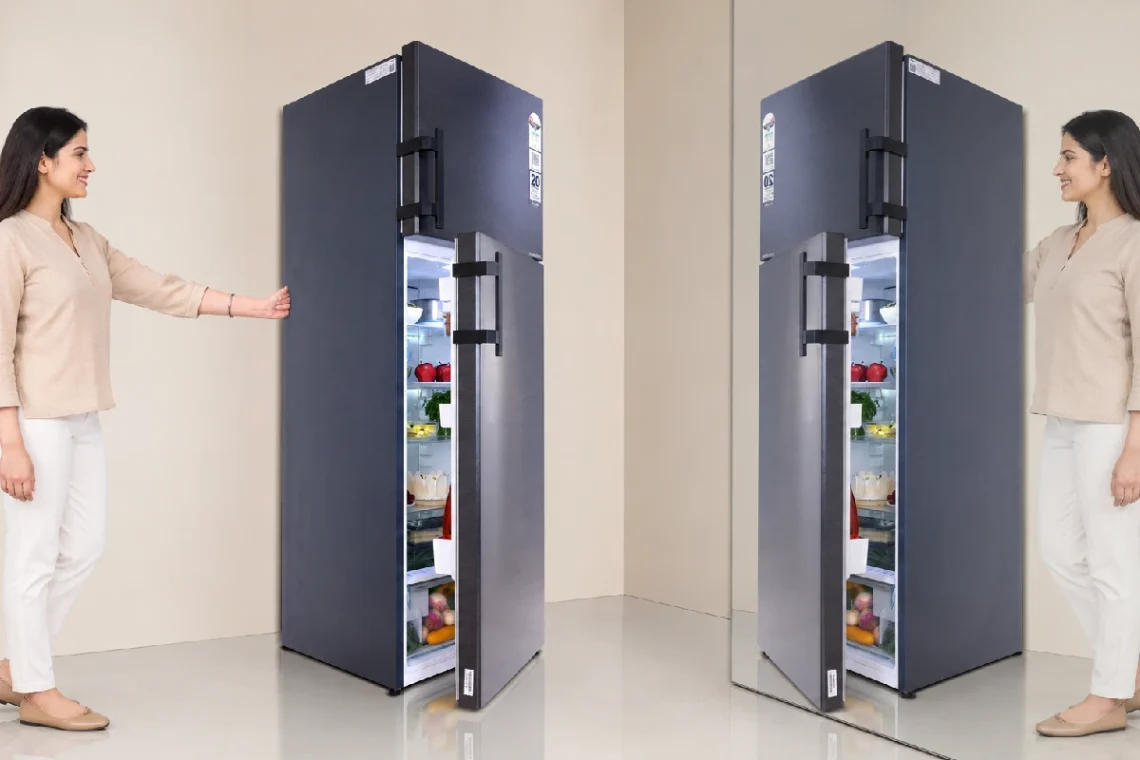
Refrigerators designed with genuinely separate compartments take this further. Rather than one cooling system trying to average out the needs of dairy, meat, and vegetables, distinct zones allow each section to run at its own stable range, closer to what that food category actually needs to slow spoilage. Investing time in organizing a Fridge with clearly separated compartments lets these design differences work in a meal prepper’s favor, rather than fighting an overpacked, single-temperature space where every container competes for the same conditions.
A Liebherr BioFresh compartment gives cooked proteins and fresh produce a 0°C zone of their own, instead of leaving Sunday’s chicken on whatever shelf still had a gap.
For anyone prepping five or six days of meals at once, this distinction becomes more than a convenience. It means the shelf holding a week’s proteins can stay colder and steadier than the drawer holding tomorrow’s vegetables, without either compromising the other, which is precisely the kind of consistency that a single warm spot or a swinging door-adjacent shelf cannot provide.
Frequently Asked Questions (FAQ)
Why does food prepped on the same day spoil at different rates?
Placement inside the fridge matters as much as the food itself. A container near the door or on a crowded shelf experiences more temperature swings than one placed toward the back of a stable, less-packed shelf, which affects how quickly bacteria multiply even when both containers started out identical.
Should meal-prep containers go on the door shelves?
Door shelves are typically the least stable part of a fridge because they absorb the temperature swing every time the door opens. Reserving them for condiments and sauces that are less sensitive to fluctuation, while keeping prepped meals on interior shelves, generally supports more even freshness.
How can labeling improve meal-prep storage?
Writing the prep date directly on each container gives a reliable reference point instead of relying on smell or appearance, which can be misleading for cooked proteins. This habit also encourages rotating older meals to the front so nothing is accidentally left until it spoils.