 Syeda Yasmeen
Health & Wellness Writer Syeda Yasmeen creates clear and
reader-focused content covering health,
nutrition, wellness, women’s health,
men’s health and babies’ health.
Read Full Bio of Author →
Syeda Yasmeen
Health & Wellness Writer Syeda Yasmeen creates clear and
reader-focused content covering health,
nutrition, wellness, women’s health,
men’s health and babies’ health.
Read Full Bio of Author →
 Sameena Begum
Health, Technology & Digital Content Reviewer Sameena Begum reviews selected content
for clarity, factual presentation,
consistency and reader usefulness.
Read Full Bio of Reviewer →
Sameena Begum
Health, Technology & Digital Content Reviewer Sameena Begum reviews selected content
for clarity, factual presentation,
consistency and reader usefulness.
Read Full Bio of Reviewer →
 Dr. Khizrana Begum
General Physician and Dermatologist Dr. Khizrana Begum is a qualified medical
professional with MBBS and MD qualifications
and 5+ years of experience. She reviews health
and wellness content for medical accuracy,
clarity and responsible presentation.
Read Full Bio of Medical Reviewer →
Dr. Khizrana Begum
General Physician and Dermatologist Dr. Khizrana Begum is a qualified medical
professional with MBBS and MD qualifications
and 5+ years of experience. She reviews health
and wellness content for medical accuracy,
clarity and responsible presentation.
Read Full Bio of Medical Reviewer →
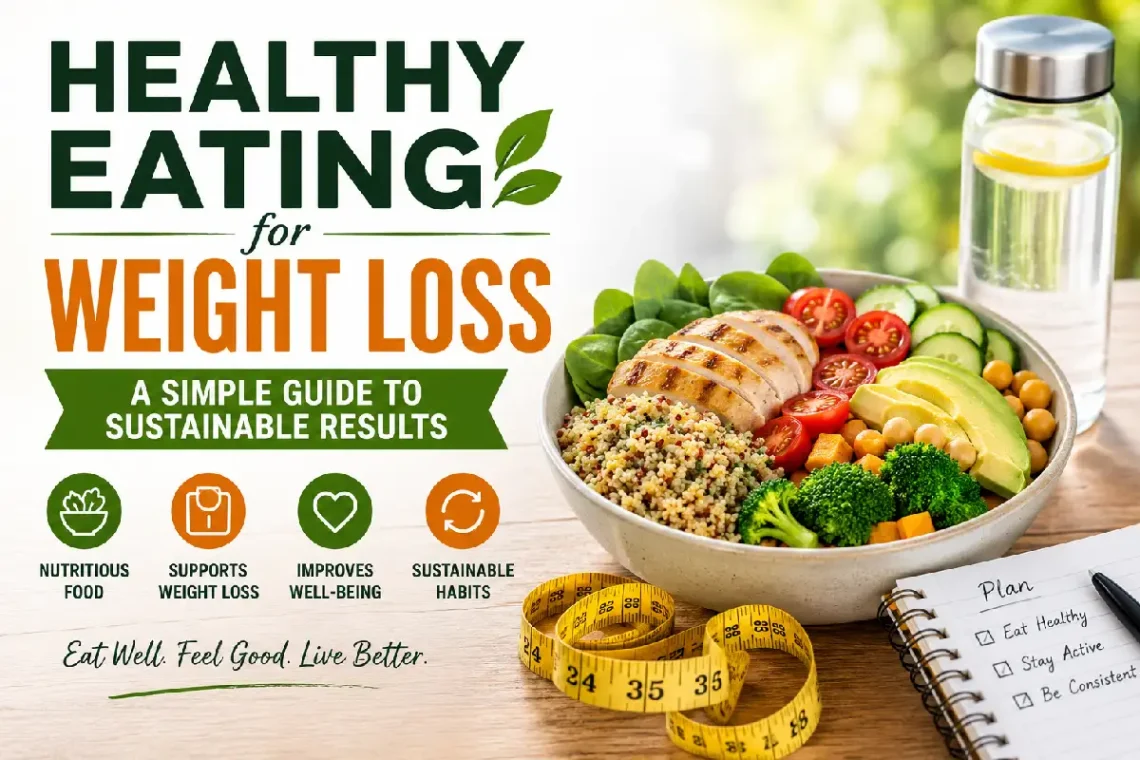
Healthy Eating for Weight Loss is not a diet of deprivation or one in which you eliminate carbs. A healthy loss of weight is normally the result of evolving a dietary plan that supplies the right nutrients and aids achieve your total calorie intake.
It’s likely to find a weight loss diet that fits into your weekly routine and comprises foods you like. A balanced plan can contain chicken, vegetables, fish, eggs, oats, beans, lentils, potatoes, rice, fruit, yogurt, nuts, and whole grains. The secret is knowing how much to eat, which foods are healthy to eat more. Andalso, creation habits that you can tolerate in the long run.
Instead of a radical modification in diet, a goal of healthy eating can make weight loss more possible. Whether you are trying to drop a few pounds or make a more significant variation to your lifestyle.
❝
This article is part of
Women’s Nutrition Hub
How Healthy Eating Supports Weight Loss
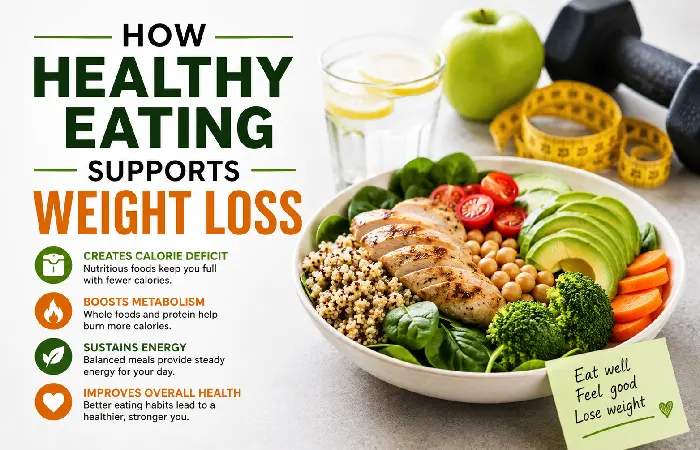
The program’s plan for weight loss, Healthy Eating for Weight Loss, focuses on developing a satisfying, nutrient-rich and calorie-matched diet.
It is easy to overeat many highly processed foods since they can be high in calories with little fullness. Protein-rich meals, paired with vegetables, fruit, whole grains and fiber-rich foods will be more filling.
Healthy eating is an important part of building a balanced and sustainable approach to weight management. Explore our complete weight loss diet plan for women for practical guidance.
What a Healthy Weight-Loss Diet Can Provide
A Healthy Weight Loss Diet can proposal a wide array of benefits.
You can help by eating a well-balanced diet, which can:
- Manage calorie intake
- Get enough protein
- Increase fiber intake
- Maintain energy
- Support muscle health
- Improve meal satisfaction
Creating a Calorie Deficit
Reducing weight is a matter of making a calorie deficit over time. It means you are burning calories more than taking in.
But not eating too little is not essentially a good thing.
Consuming a large quantity of calories less than body wants can make you feel hungry, exhausted and irritated. It also can make your eating strategy hard to follow.
Choosing nutritious and satisfying foods can make balanced eating easier while supporting weight management goals. Explore our weight loss foods for women for helpful ideas.
A Better Approach
Don’t make big changes to your diet and find ways to make things slightly different.
For example:
- Replace sugary beverages with water.
- Use less additional oil when cooking
- Grill food in preference to cooking it in deep fat fryers
- Enhance meals with vegetables.
- Reduce oversized portions
- Select fruit instead of some processed desserts
- Eat a food that contains protein in your meals.
These changes will aid to lower overall calorie intake while not creation meals super preventive.
Women in their 30s may have changing lifestyles and nutritional needs that can influence their approach to healthy eating. Explore our weight loss diet plan for women over 30 for practical tips.
Remember Individual Requirements
The calorie requirements vary dependent on factors such as age, sex, height, body weight, activity level, and others.
No one has a set number of calories to aim for.
Building a Balanced Plate
A balanced-plate method is one of the humblest methods to repetition Healthy Eating for Weight Loss.
Simple structure is:
½ plate vegetables/fruit + ¼ plate protein + ¼ plate whole grain foods/other nutrient rich carbohydrates
A healthy amount of fat may also be added as well.
Example
| Plate Section | Examples |
| Protein | Chicken, salmon, eggs, tofu, beans |
| Vegetables | Broccoli, spinach, carrots, peppers |
| Carbohydrates | Potatoes, oats, quinoa, brown rice |
| Fruit | Berries, apples, oranges |
| Healthy Fat | Avocado, nuts, seeds, olive oil |
This is not a rule, it is a suggestion. Reliant on on your nutritional supplies and meal, your plate strength look changed.
Maintaining balanced eating habits can become increasingly important as nutritional needs and daily routines change with age. Explore our weight loss diet plan for women over 40 for useful guidance.
Protein and Weight Loss
Protein can be actual helpful for weight loss.
It can support muscle tissue and can make meals more satisfying.
Good Protein Sources
Include a variety of options such as:
- Chicken breast
- Turkey
- Salmon
- Tuna
- Shrimp
- Eggs
- Greek yogurt
- Cottage cheese
- Tofu
- Tempeh
- Lentils
- Chickpeas
- Black beans
Eat food that contains Protein at every main meal.
Fiber and Weight Loss
The other significant portion of Healthy Eating for Weight Loss is fiber.
Foods rich in fibre can make meals more satisfying and can also help your digestive system.
Women over 50 can focus on nutrient-rich foods and sustainable eating habits that fit their changing nutritional needs. Explore our weight loss diet plan for women over 50 for helpful ideas.
High-Fiber Foods
| Food | Simple Serving Idea |
| Oats | Breakfast bowl |
| Lentils | Soup or curry |
| Chickpeas | Salad |
| Black beans | Burrito bowl |
| Raspberries | Yogurt topping |
| Apples | Snack |
| Pears | Snack |
| Broccoli | Dinner side |
| Chia seeds | Oatmeal |
| Whole grains | Lunch or dinner |
Increase Fiber Slowly
If the quantity of fiber in present diet is low, build up the fiber slowly.
As you are eating more fiber-rich foods, drink adequate amounts of fluid.
If fiber can be easily added by a diversified diet, then fiber supplements are not needed.
Portion Control
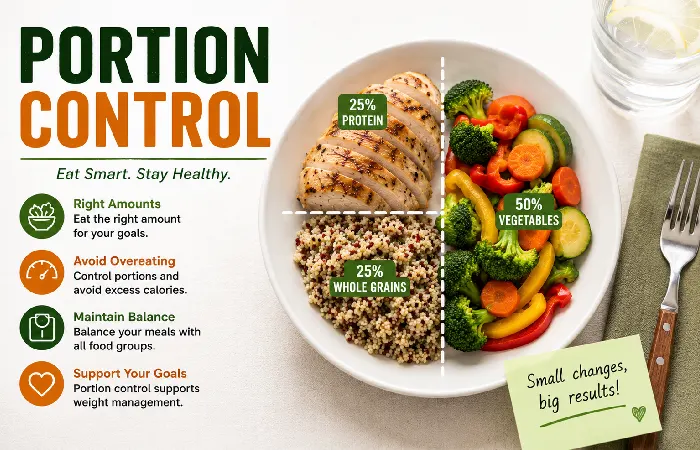
Portion sizes of healthy foods can add up to a lot of calories.
It’s not about eating very little food.
It’s about the amount that is right for you.
Easy Portion Guide
| Food Type | Simple Visual Guide |
| Protein | Palm-sized serving |
| Vegetables | One or two handfuls |
| Carbohydrates | Cupped-hand serving |
| Nuts | Small handful |
| Added fats | Thumb-sized serving |
These are general visual tools, not exact nutritional prescriptions.
Use Smaller Changes
It’s not necessary to measure everything.
Try:
Instead of serving food in a large bowl, serve it in a smaller bowl for snacks.
- Taking food off the package and onto a plate for eating
- Checking serving sizes
- Eating slowly
Waiting to refill the cup before taking a second drink
Healthy Snacks
Snacks are part of a Weight loss program.
The idea is to select the food that is nutritious and still enjoyable, but won’t increase calorie intake.
Simple Snack Ideas
- Mix apple and peanut butter.
- Greek yogurt topped with berries.
- Fruit on Cottage Cheese
- Take a boiled egg and serve on a whole-grain toast.
- Small handful of almonds
- Carrots with hummus
- Air-popped popcorn
- Fresh fruit
- Edamame
Do You Need Snacks?
Not all people require snacks.
If you do not feel like consumption three meals a day, then you may not essential.
A arranged snack may aid to avoid overeating later in the day if you incline to get very hungry between meals.
Meal Planning
It can make Healthy Eating for Weight Loss much easier.
When you are hungry and have nothing prepared. Fast food or highly processed snacks may become the easiest option.
Plan Your Week
Pick a few meals you can make ahead.
For example:
- Protein: Grilled chicken, boiled eggs, baked tofu
- Carbohydrates: Brown rice, quinoa, potatoes
- Vegetables: Broccoli, carrots, peppers
- Snacks: Fruit, yogurt, nuts
You can mix these ingredients throughout the week rather than preparing seven completely different meals.
A healthy weight loss approach can emphasize balanced meals, nutritious foods, and realistic habits rather than restrictive eating patterns. Explore our healthy weight loss diet plan for practical guidance.
Grocery Shopping List
Keep basic foods available:
- Eggs
- Greek yogurt
- Chicken
- Fish
- Beans
- Lentils
- Oats
- Whole grains
- Potatoes
- Frozen vegetables
- Fresh fruit
- Nuts and seeds
Frozen and canned foods can also be beneficial. Select lower-sodium canned options when accessible, or rinse canned beans before eating.
Common Eating Mistakes
Even those consuming a healthy diet can have matters with weight loss.
Skipping Meals
For some, skipping meals could consequence in excessive hunger and overeating later. But it’s not essentially a bad thing.
Not consuming enough protein.
If you eat a meal that is predominantly composed of refined carbohydrates, it may not last very long.
Experiment with eggs, yogurt, chicken, fish, tofu and beans.
Water the Most Significant Liquid of the Year!
Sugar sweetened coffee, energy drinks, large smoothies and sugary drinks can contribute a lot of calories.
When it comes to hydration throughout the day, water and unsweetened drinks may be the easier options.
Foods That Come In Packages For Direct Consumption
It’s informal to lose track of how much you are eating.
Instead, place snacks in a bowl or container.
Following Extreme Diets
Very restricted diets can result in initial weight loss, but can be hard to sustain.
It is generally more practical to have a sustainable approach.
Assuming that “Healthy” means Unlimited.
Nuts, avocado, olive oil, granola and nut butter are high in calories, but can also be nutritious.
Portions still matter.
Long-Term Healthy Eating
Sustainability should be the largest objective of “Healthy Eating for Weight Loss.
If a diet can be maintained for two weeks, but is not possible later on, then it is not a good long-term plan.
Plan for healthy foods to be easy to eat.
Make healthy foods readily available.
For example:
- Wash fruit when you bring it home
- Keep Greek yogurt in the refrigerator
- Take care to plan vegetables ahead of time.
- Prepare protein in portions.Prepare protein in batches.
- Store healthy snacks in convenient portions
Allow Flexibility
Do not have to eat “perfectly” every day.
You can enjoy:
- Restaurant meals
- Pizza
- Desserts
- Birthday cake
- Favorite snacks
It’s the combination of these foods that is important for the total eating pattern.
Focus on Progress
The scale will not necessarily respond in exactly the same manner each day.
The variation in body weight is natural due to water, food intake, digestion and hormones and more.
It’s a matter of taking a step back from your progress over a few weeks – not a single morning.
Integrate Nutrition and Lifestyle Habits
Healthy eating is best combined with:
- Regular physical activity
- Strength training
- Adequate sleep
- Stress management
- Good hydration
It doesn’t need to be an all-at-once approach.
Begin with one or two habits and add more as time goes on.
Conclusion
Weight loss is not a substance of eating little and often. It is not a diet in which you have to sacrifice your preferred foods. It’s about eating a balanced diet, which contributions you to control calories while receiving all the protein, fiber, vitamins, minerals and healthy fat your body requires.
Take vegetables, fruit, high protein foods, whole grains, and other nutritious carbohydrates the basis of the meal. Watch portion sizes, plan ahead, choice nourishing snacks when needed and do not feel like you essential to banish highly treated foods.
The most important thing to remember is to not just look at a quick diet. The best diet to follow is one that you can practically follow for months and years, and not just for a few weeks.
Dr. Khizrana Begum is a qualified medical professional with MBBS and MD qualifications and 5+ years of experience in the medical field. She works as a General Physician and Dermatologist, with knowledge spanning general medicine, dermatology, preventive healthcare and skin health.
As a medical reviewer, Dr. Khizrana Begum reviews health and wellness content for medical accuracy, clarity and authenticity.
Sameena Begum reviews content for clarity, accuracy and reader usefulness. Her review process helps ensure that published information is clearly presented, relevant and easy for readers to understand.
Syeda Yasmeen is a Health & Wellness Writer at InHumanBeing.com. She creates clear and reader-focused content across health, nutrition, wellness, women’s health, men’s health and babies’ health.