 Syeda Yasmeen
Health & Wellness Writer Syeda Yasmeen creates clear and
reader-focused content covering health,
nutrition, wellness, women’s health,
men’s health and babies’ health.
Read Full Bio of Author →
Syeda Yasmeen
Health & Wellness Writer Syeda Yasmeen creates clear and
reader-focused content covering health,
nutrition, wellness, women’s health,
men’s health and babies’ health.
Read Full Bio of Author →
 Sameena Begum
Health, Technology & Digital Content Reviewer Sameena Begum reviews selected content
for clarity, factual presentation,
consistency and reader usefulness.
Read Full Bio of Reviewer →
Sameena Begum
Health, Technology & Digital Content Reviewer Sameena Begum reviews selected content
for clarity, factual presentation,
consistency and reader usefulness.
Read Full Bio of Reviewer →
 Dr. Khizrana Begum
General Physician and Dermatologist Dr. Khizrana Begum is a qualified medical
professional with MBBS and MD qualifications
and 5+ years of experience. She reviews health
and wellness content for medical accuracy,
clarity and responsible presentation.
Read Full Bio of Medical Reviewer →
Dr. Khizrana Begum
General Physician and Dermatologist Dr. Khizrana Begum is a qualified medical
professional with MBBS and MD qualifications
and 5+ years of experience. She reviews health
and wellness content for medical accuracy,
clarity and responsible presentation.
Read Full Bio of Medical Reviewer →
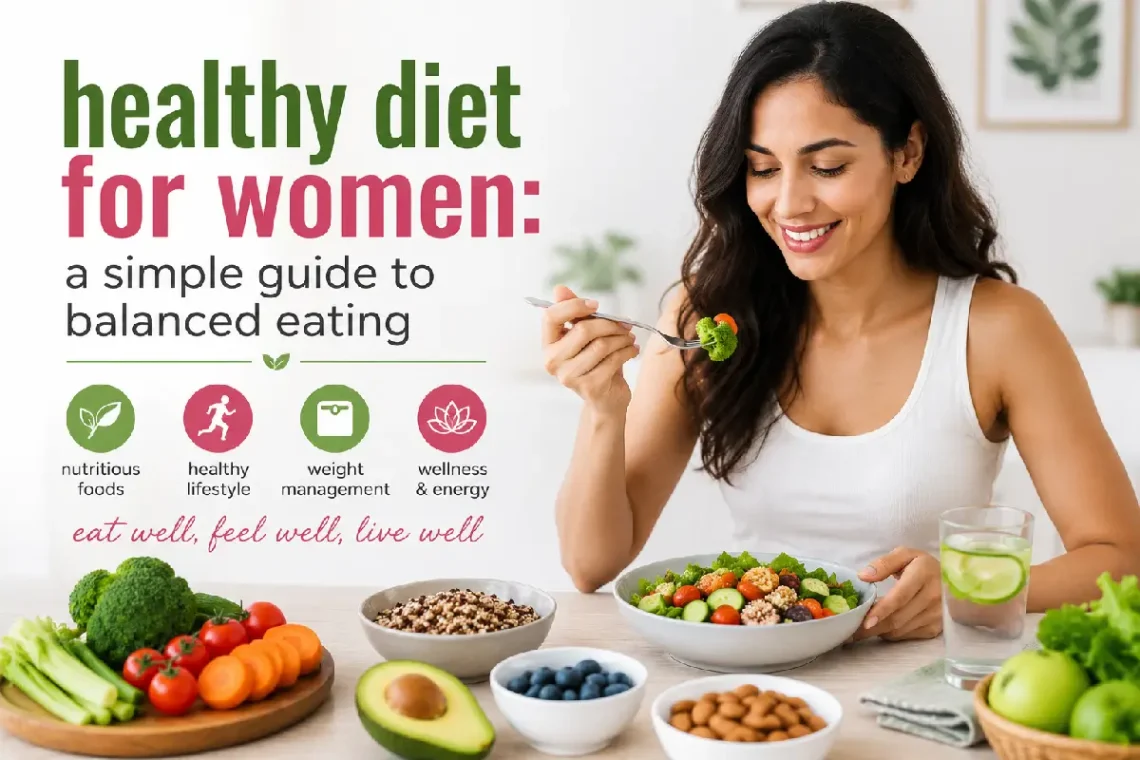
A Healthy Diet for Women is not a inflexible diet or the removal of certain food groups. Women need a mixture of protein, carbohydrates, healthy fats, vitamins and minerals, fibre and water for energy, muscles, bones, digestion and well-being.
Supplies for nutrient intakes also vary with age. Nutritional needs can differ between a teenager, an active adult, a pregnant woman and a woman over the age of 50. The basics are essentially the same. Eat a healthy variety of food, be conscious of portion sizes, and be active, using habits that you can be easily adopt.
- Nuts
- Chicken
- Fruits
- Lentils
- Greek yogurt
- Whole grains
- Fish
- Seeds
- Vegetables
- Eggs
- Oats
Basic shared foods that women in the USA can eat to promote health.
❝
This article is part of
Women’s Nutrition Hub
What Is a Healthy Diet for Women?
A healthy diet is one that gives your body all the nutrients it requires without consuming the right amount of calories for your body.
The following is a list of simple balanced plate elements:
Instructions for ½ plate: Vegetables and fruit.
- ¼ plate: Protein
- 1/4 plate: Whole grains or foods that are high in nutrients from the carbohydrates group
Small serving: Healthy fats
This does not have to be the formula at every meal. Consider it to be a basic beginning.
Variety Matters
Eat a variety of foods over the week.
Essential Nutrients Women Need
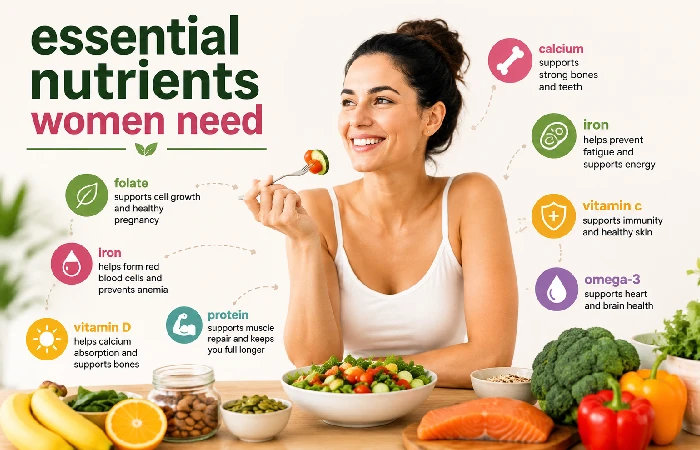
Women have similar basic nutritional requirements as men, but specific nutritional requirements may be of special interest at different life stages.
Key Nutrients
| Nutrient | Why It Matters | Food Sources |
| Protein | It help in muscle and tissue maintenance | Take Eggs, fish, chicken, beans |
| Fiber | It is good for digestive health and fullness | Eat Beans, oats, vegetables, fruit |
| Calcium | Good for bone health | Yogurt, milk, tofu |
| Iron | It help in red blood cell production | Meat, lentils, beans, spinach |
| Vitamin D | Good for bone and immune health | Fatty fish, fortified foods |
| Folate | Help in cell growth and development | Leafy greens, beans, fortified grains |
| Vitamin B12 | Blood and nerve health | Fish, eggs, dairy, fortified foods |
| Potassium | Muscle and nerve function | Potatoes, bananas, beans |
| Magnesium | Muscle and nerve function | Nuts, seeds, whole grains |
The nutritional needs differ from person to person based on various factors such as age, health, pregnancy status, activity level and more.
A healthy approach to weight management can focus on balanced meals, nutritious foods, and sustainable habits that fit into everyday life. Explore our complete weight loss diet plan for women for practical guidance.
Best food for Women.
Slightly processed and nutritious foods should be the foundation of a Healthy Diet for Women.
Protein-Rich Foods
Eat a variety of protein foods:
- Eggs
- Chicken
- Turkey
- Salmon
- Tuna
- Shrimp
- Greek yogurt
- Cottage cheese
- Tofu
- Tempeh
- Lentils
- Beans
Fruits and Vegetables
Try to have a wide range of foods and not just one “superfood”.
Good choices include:
- Berries
- Apples
- Oranges
- Pears
- Bananas
- Spinach
- Broccoli
- Carrots
- Tomatoes
- Bell peppers
- Cauliflower
All fresh, frozen and canned versions can be helpful.
Whole Grains
Consider:
- Oats
- Brown rice
- Quinoa
- Barley
These foods can help as a source of carbohydrates and fiber. It include nutrients as well.
Choosing nutritious and satisfying foods can make it easier to build balanced meals while working toward weight management goals. Explore our weight loss foods for women for helpful ideas.
Protein Needs for Women
Protein has great significance in maintaining and restoring tissues and promoting muscle health.
The amount of protein you require is based on:
- Age
- Body size
- Activity level
- Exercise routine
- Pregnancy or breastfeeding
- Health goals
Women that train regularly for strength might need more protein than sedentary adult women.
Spread out protein during the day.
Breakdown protein into slighter portions, rather than having a large protein meal at night.
Healthy Fats and Carbohydrates
Both fats and carbohydrates can be part of a Healthy Diet for Women.
Not required to cut out either food group to have a healthy diet.
Healthy Fat Sources
Try:
- Avocado
- Olive oil
- Walnuts
- Almonds
- Chia seeds
- Flaxseeds
- Pumpkin seeds
- Salmon
- Sardines
Fats are high in calories. Its significant to have sensible amounts.
Healthy eating habits can support women as their nutritional needs and lifestyles change through their 30s. Explore our weight loss diet plan for women over 30 for practical tips.
Healthy Carbohydrates
A healthy carbohydrate source is:
- Oats
- Potatoes
- Sweet potatoes
- Brown rice
- Quinoa
- Beans
- Lentils
- Fruit
- Whole-grain bread
Carbs are a source of energy. Particularly for individuals who are active.
Prioritize quality over fear. Rather than fear, prioritize quality.
Instead of asking:
“Are carbohydrates bad?”
ask:
What kind of carbohydrate is it and how many?
There are significant differences between the nutritional value of a bowl of oats and berries and a big bowl of sugary cereal.
Vitamins and Minerals
Vitamins and minerals are involved in hundreds of processes in the body.
Women must emphasis on nutrients that are problematic to get enough of by diet through their lives and in dissimilar situations.
Iron
Iron is essential to carry oxygen in blood.
Food sources include:
- Lean meat
- Seafood
- Lentils
- Beans
- Spinach
- Fortified cereals
Iron needs might be higher for women during menstruation than for men.
Calcium
Calcium is used for the bones and teeth.
Sources include:
- Yogurt
- Milk
- Cheese
- Calcium-fortified plant milk
- Calcium-set tofu
- Sardines with bones
- Some leafy greens
Vitamin D
It is essential for bone health and has some immune functions.
Food sources include:
- Salmon
- Sardines
- Egg yolks
- Fortified milk
- Fortified plant-based beverages
Don’t assume that high dose supplements of any nutrient are necessary if you think you are deficient. Talk to a health care worker about testing or taking supplements.
Women over 40 may benefit from focusing on nutrient-rich foods and realistic eating habits that support long-term weight management. Explore our weight loss diet plan for women over 40 for useful guidance.
Foods to Limit
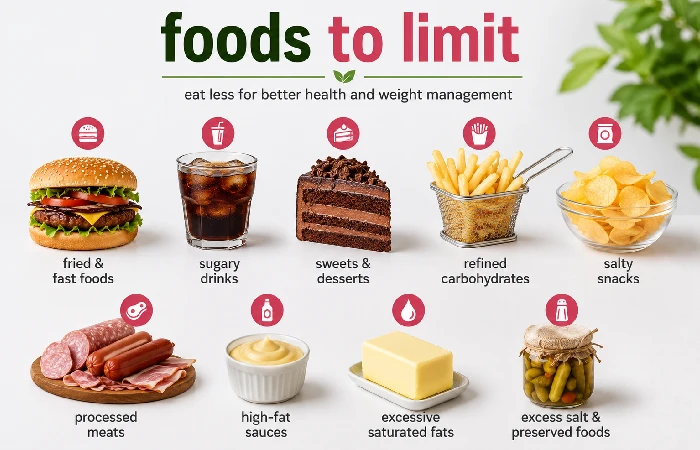
You do not have to eliminate your favourite foods totally when you have a healthy diet.
Rather, limit foods which cover added sugars, sodium, saturated fat or calories when eaten on a even basis and in large amounts.
Examples include:
- Sugary drinks
- Candy
- Chips
- Pastries
- Deep-fried foods
- Highly processed snacks
- Large desserts
- Sugar-heavy coffee drinks
Healthy Meal Ideas
Healthy meals do not have to be complicated.
Breakfast
For breakfast, try Greek Yogurt with Berries, Oats and Chia Seeds.
or
Eggs + 100% whole-grain toast + avocado + fruit
Lunch
Grilled chicken, roasted vegetables and quinoa.
or
Whole-grain pita topped with chickpea salad and yogurt dressing.Chickpea salad serves on whole-grain pita and served in yogurt dressing.
Dinner
Salmon, Potatoes, and Broccoli, all baked.
or
Tips for: Tofu stir-fry + brown rice + mixed vegetables
Snacks
- Apple + peanut butter
- Greek yogurt + berries
- Carrots + hummus
- Cottage cheese + fruit
- Small handful of nuts
- Boiled egg + fruit
Portion Control
Any diet, even healthy ones, can add up to a lot of calories when eaten in huge amounts.
But portion control does not always mean weighing all the elements.
As nutritional needs evolve with age, women over 50 can focus on balanced meals and sustainable habits when managing their weight. Explore our weight loss diet plan for women over 50 for helpful ideas.
Simple Portion Guide
Use your hand as a rough guide:
| Food | Approximate Hand Guide |
| Protein | Palm-sized portion |
| Vegetables | 1–2 handfuls |
| Carbohydrates | Cupped-hand portion |
| Nuts/seeds | Small handful |
| Added fats | Thumb-sized portion |
These are merely broad guidelines and not definitive medical advice.
Your correct amount is based on your personal calorie and nutrition needs.
Eat Slowly
Reducing eating speed will allow your stomach to feel full.
Experiment with insertion the fork down between bites and focus on the feelings during each bite.
Making healthy eating a consistent part of your daily routine can help support balanced nutrition and sustainable weight management. Explore our healthy eating guide for weight loss for practical tips.
Building Healthy Eating Habits
- The most effective Healthy Diet for Women is one that you can make a habit of.
- Don’t have to make any sweeping changes all at once.
- Start With Small Changes
Plan Your Meals
Fast food is often a temptation when you’re tired; planning can help minimize this.
Have easy access to options:
- Eggs
- Greek yogurt
- Frozen vegetables
- Canned beans
- Fruit
- Oats
- Whole-grain bread
- Pre-cooked grains
Conclusion
A Healthy Diet for Women doesn’t need to be a strict diet, costly or complicated. The aim is to create meals using a range of healthful foods rich in protein, fiber, vitamins and minerals, healthy fats and carbohydrates.
Eat a diversity of vegetables and fruits, eat protein at every meal, eat whole grains and other nutritious carbohydrates, and eat healthy fats in moderation. Focus definite nutrients like iron, calcium, vitamin D, folate and vitamin B12 according to the life stage and supplies of the individual.
Most importantly, establish a habit that you can follow. Healthy eating is not a “every day is perfect” approach, it’s a practice of making good nutrition choices everyday and allowing some flexibility and enjoyment.
Dr. Khizrana Begum is a qualified medical professional with MBBS and MD qualifications and 5+ years of experience in the medical field. She works as a General Physician and Dermatologist, with knowledge spanning general medicine, dermatology, preventive healthcare and skin health.
As a medical reviewer, Dr. Khizrana Begum reviews health and wellness content for medical accuracy, clarity and authenticity.
Sameena Begum reviews content for clarity, accuracy and reader usefulness. Her review process helps ensure that published information is clearly presented, relevant and easy for readers to understand.
Syeda Yasmeen is a Health & Wellness Writer at InHumanBeing.com. She creates clear and reader-focused content across health, nutrition, wellness, women’s health, men’s health and babies’ health.