

Last Updated: September 18, 2026
For new parents, bathing a newborn may be a bit stressful at first. The skin is very sensitive: newborns can cool off easily during the bath. Newborn bath time can be a soothing and enjoyable experience with a few easy and safe steps.
There is no need for an elegant bathing regimen. The major objectives are to maintain your baby’s cleanliness, comfort, warmth, and safety. Please always consult your pediatrician for advice, particularly if bathing before the umbilical stump falls off and heals.
Preparing for a Newborn Bath

Preparation will make bath time easier, and help avoid leaving your baby unattended while you look for supplies.
Before you begin, have all the necessary items readily to hand. Ensure the room’s temperature and bathing area is warm and drafty.
There are basic steps to preparation which include:
- Clean baby clothes
- A soft towel
- Baby washcloth
- If necessary, use mild baby soap.
- Clean diaper
- Clean water
A safe baby bathtub or appropriate bathing container.
A flat surface for drying and dressing, that’s clean
Don’t leave a newborn unattended in or near water, even for a short period of time. Hold one hand on baby when necessary and remain within arm’s reach during the bath.
If the umbilical stump is not detached, please request from your health care provider how to take care of the area and when it is safe to give a bath on a regular basis.
Essential Newborn Bath Supplies
There’s no need to have a lot of products for your newborn ‘s bath. Typically, a few essential items are sufficient.
| Bath Supply | Why It Helps |
| Baby bathtub | Provides a suitable bathing space |
| Soft washcloth | Helps clean delicate skin gently |
| Clean towel | Keeps baby warm after bathing |
| Mild cleanser | Can be used when needed |
| Clean diaper | Needed after the bath |
| Clean clothes | Makes dressing easier |
| Small cup | Useful for gently rinsing |
| Bath thermometer | Can help check water temperature |
Can use a bath thermometer to help determine water temperature
Do not purchase many products that have strong scents. Newborn skin may be sensitive and simple products may be easier to manage.
Always follow the directions of baby care products used.
How Often Should a Newborn Be Bathed?
It’s not necessary for a baby to take a bath daily. Over-bathing may cause sensitive skin.
Rather, the parents should use cleaning products to clean the dirty areas such as the face, neck folds, hands, and the area where the diaper is worn throughout the day.
You can have a full bath as part of your routine if it is appropriate, and how often this is done may vary based on your baby’s skin, age, health and advice from their healthcare provider.
Sometimes after feeding or changing your baby you may need to clean specific areas without bathing your baby.
It’s all about maintaining a baby’s cleanliness without drying the skin out.
Creating a Comfortable Bath Routine
A quiet place can help make the bath time more easily managed by both parent and baby.
Pick a time when your baby is fairly quiet and alert. Try to not start a bath when your baby is very hungry, over tired, or already crying.
Before putting your baby in the water:
- Prepare all supplies.
- Ensure a pleasant temperature in the room.
- Test the temperature of the bath water.
- Take off watches, rings, watches/jewelry etc. that might cause scratching on your baby.
- Keep a close eye on your baby.
- Hold baby’s head and neck.
- Limit bath time and make it gentle.
- Calming your baby with a low voice can also assist in establishing a soothing routine.
No hurry to rush! But don’t be distracted by your phone, visitors or other activities when your baby is in or near water.
How to Clean a Newborn Gently
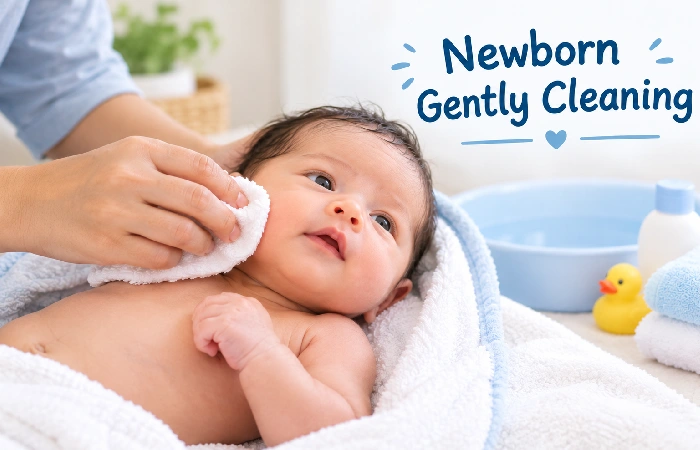
It’s important to use gentle handling when dealing with newborn skin. No excessive rubbing or scrubbing.
Use a soft washcloth to wash your baby very carefully. Be sure to keep an eye out for moisture, milk or dirt behind the ears, under the arms, in the neck folds and around the diaper area.
Use clean water and soft motions when cleaning face. Care around eyes and mouth.
When removing a diaper, clean from front to back, especially if you are taking care of a baby girl.
Avoid trying to clean inside body openings or folds, and do not attempt to clean by force. Clean where you can see and reach.
Before using new products if your baby’s skin has become irritated, cracked or is unusual looking, seek advice from a health care professional.
Washing a Newborn’s Hair
Hair can be washed gently during a baby’s bath time if necessary.
If recommended, use a small amount of a mild baby cleanser. Moisten hair thoroughly, and massage scalp lightly.
Don’t rub or scratch the scalp hard.
Cleanse carefully, making sure the cleanser never goes in your baby’s eye.
Some babies are born with areas of flaky skin on the head, often referred to as “cradle cap. Avoid picking or scratching these areas. If the scalp is extremely irritated or you are concerned about the changes, seek advice from your baby’s health care provider.
Drying and Dressing After Bath Time
It is important that the newborn dries and becomes dressed promptly as he/she can lose body heat very rapidly.
Gently lift up your baby and place him/her in a clean soft towel. Pat dry the skin, rather than rub.
Take particular care with skin folds at the neck, arms, legs and diaper areas.
When your baby is dry, change him to a clean diaper and clothing that is comfortable for the temperature of the room.
Don’t add too many layers automatically. Over clothing can make a newborn over heated.
If your baby’s skin is dry, ask your health care provider if a simple, unscented moisturizer is right for your baby.
Common Newborn Bath Mistakes to Avoid
Even basic bath procedures may pose a risk, if parents are distracted, or use an excessive number of products.
Leaving Baby Alone
Do not leave your baby unattended in the bathtub, sink or near water.
This is a good time to use Very Hot Water.
Extremely hot water can scorch the sensitive skin of babies. Beware of water when bathing your baby.
Bathing Too Frequently
Excessive bathing can cause dry/irritated skin.
To use too many products.
Harsh cleansers, powders that serve no purpose and strong fragrances can be irritating to sensitive skin.
Rubbing the Skin
The skin of a newborn should be gently washed and dried. Avoid vigorous rubbing.
Getting Distracted
Focus on your baby while you are bathing.
Forgetting Supplies
Make all preparations in advance. Any time you need to leave to find a towel, diaper, phone, or other needed item, you shouldn’t ever have to do so.
Newborn Bath Safety Basics
Safety should always come before convenience during newborn bath time.
When bathing a newborn, safety is always first.
| Safety Rule | What Parents Should Do |
| Stay close | Keep your baby within arm’s reach |
| Prepare first | Gather all supplies before starting |
| Check water | Make sure the water is comfortable before placing baby in it |
| Support baby | Carefully support the head and neck |
| Avoid distractions | Keep your attention on the baby |
| Keep it short | Avoid unnecessarily long baths |
| Dry promptly | Wrap and dry baby after bathing |
| Store supplies safely | Keep cleansers and other products out of reach |
Never leave a baby alone in or near water, no matter how shallow it may seem.
Seek urgent medical care if your baby slips, swallows water, appears sleepy, has breathing problems or practices another alarming sign following a water-related incident.
The American Academy of Pediatrics (AAP) provides detailed guidance on newborn bathing, including sponge baths, bathing frequency, water temperature, safe infant tubs, and supervision. Its guidance notes that newborns generally do not need a bath every day and recommends keeping babies within arm’s reach throughout bath time.
Final Takeaway
The time of the newborn bath does not have to be difficult. Be ready, use gentle cleaning systems, set a relaxed temperature and remember to keep your baby in your arm at all times.
Over time, bathing can be part of your routine for caring for your newborn. Ask your pediatrician or health care professional for separate advice when in doubt about bathing, umbilical care, skin or water safety matters.