
Last Updated: September 14, 2026
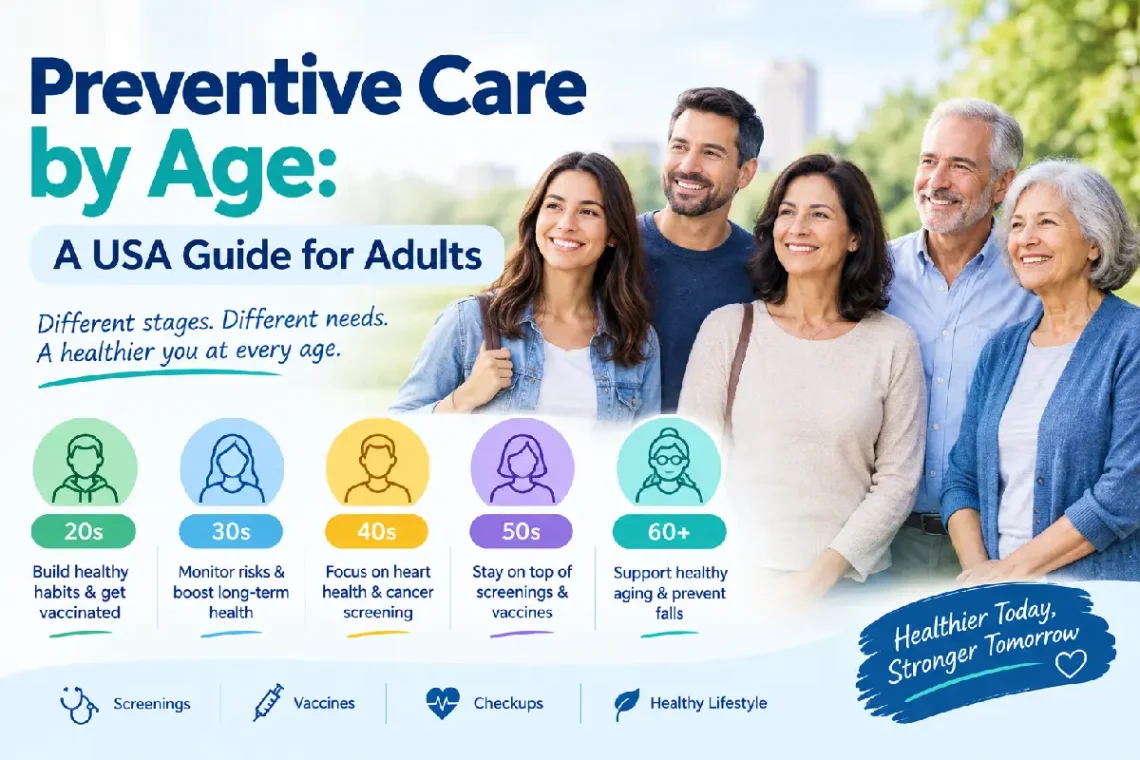
As you get older, so do your health requirements, which means that your preventive care should change as well. Things that make sense during your 20s may not be the same when you are 50 or 60 years old. Preventive Care by Age takes you through what to talk to your health care provider about at various ages in adulthood.
There isn’t one checklist for everyone. When it comes to screening, a change in your family history, sex, lifestyle, past test results, medications and health risks can all be different. The aim is to prevent potential issues before they arise.
Preventive Care in Your 20s
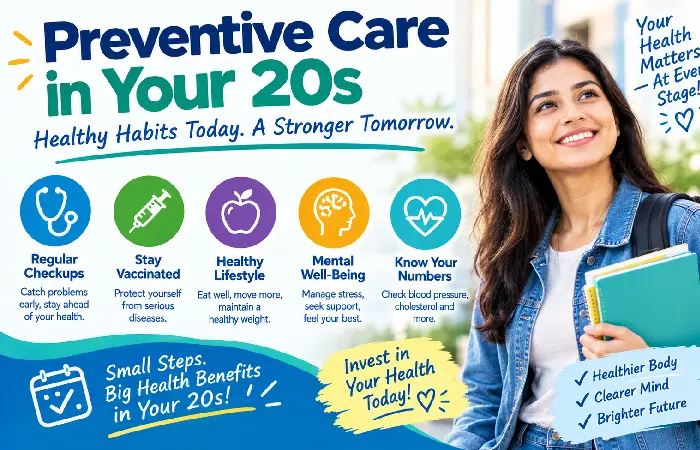
Regular health checks may include general health checks, immunizations, mental health, behavioral habits, and risk factors.
These are the areas you should talk to your doctor about:
- Blood pressure
- Mental health
- Healthy eating
- Physical activity
- Sleep habits
- The use of tobacco and nicotine
- Alcohol use
- Sexual and reproductive health as appropriate
- Vaccinations
- Family health history
Let your healthcare provider know if your family has a history of diabetes, heart disease, cancer or other condition. May impact future screening.
The 20s are also an ideal time to develop a relationship with the primary care provider. Appointments are not required when sick.
Preventive Care in Your 30s
It is even more critical to take care of your health during your 30’s. During this time, some people also start to experience changes in weight, blood pressure, cholesterol or blood sugar.
A routine visit may be a chance to take a look at these risks.
Your provider will review, depending upon your medical history:
- Blood pressure
- Weight and lifestyle
- Cardiovascular risk and cholesterol.
- Diabetes risk
- Mental health
- Vaccinations
- Family history
- Age and risk appropriate cancer screening
The time is also right to reflect on the day-to-day habits. Small changes can make a difference if you spend most of your day sitting, eat a highly processed diet, smoke or regularly sleep too little.
Preventive care is not a matter of being perfect. It’s about discovering behaviors that you are able to sustain.
Preventive Care in Your 40s
Cardiovascular and metabolic health is a critical time to review in your 40s.
When determining which preventive services are needed, blood pressure, cholesterol, blood sugar, weight and family history may take on a new significance.
There is also the possibility that cancer screening will become more a part of your health care plan. In some cases, screening for colorectal cancer is recommended for many adults starting at age 45. Screening may be different and the screening schedule may differ.
Your doctor might talk with you about:
- Blood pressure screening
- Cholesterol testing
- Diabetes screening
- Colorectal cancer screening
- Screening for breast or cervical cancer as appropriate.
- Mental health
- Vaccinations
- Heart-health risk
A healthy lifestyle and weight management.
Don’t assume that at age 40, you will require a long list of tests. You should talk to your health care provider about your personal risk before making a decision to be screened.
Preventive Care in Your 50s
It’s particularly important to keep up with preventive services in your 50s.
Typical areas to review are cancer screening, cardiovascular health, diabetes risk, vaccinations, and lifestyle habits.
It is especially vital for adults in this age range to get colon cancer screening. The U.S. Preventive Services Task Force advises that adults between the ages of 45 to 75 get screened for colorectal cancer.
Your doctor also may check if you have up to date immunizations.
Some of the things you might be thinking of for your 50s list are:
| Area | What to Review |
| Heart health | Blood pressure, cholesterol, cardiovascular risk |
| Blood sugar | Diabetes or prediabetes risk |
| Cancer | Age- and risk-based cancer screening |
| Vaccines | Recommended adult immunizations |
| Mental health | Depression, anxiety, stress |
| Lifestyle | Diet, exercise, sleep, smoking |
| Family history | New or updated family health information |
It’s also a great opportunity to evaluate health-related habits. Exercising regularly, healthy eating, getting enough sleep, and not smoking can help support healthy ageing.
Preventive Care for Adults Over 60
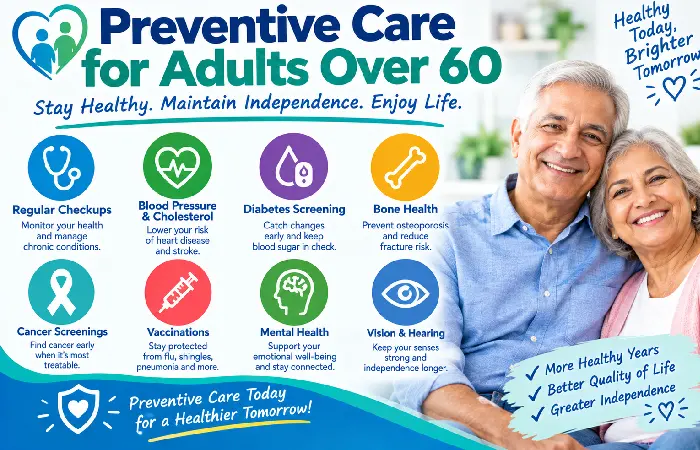
Preventive care continues to matter as you move into your 60s and beyond.
Staying healthy is important as you age.
Your health care provider may be thinking of more than just screening for disease at this point, and may be considering healthy aging.
Depending on the health and individual risk factors, the following may be discussed:
- Cancer screening
- Healthy blood pressure and cholesterol
- Diabetes
- Vaccinations
- Bone health
- Vision
- Hearing
- Fall prevention
- Physical activity
- Nutrition
- Health of mind and brain
- Medication review
There are changes in some screening recommendations based on age. At, say, age 70, some cancer tests may not be as beneficial for everyone. Your provider can consider the pros and cons with your overall health and preferences in mind.
Recommended Health Screenings by Age
There is no one-size-fits-all screening list for all adults. This overview provides a basic understanding, however, of the general focus of Preventive Care by Age.
| Age | Common Areas to Discuss |
| 20s | Blood pressure, mental health, vaccines, lifestyle and risk factors |
| 30s | Blood pressure, cardiovascular risk, diabetes risk, lifestyle and appropriate screening |
| 40s | Cholesterol, diabetes risk, cancer screening and heart health |
| 50s | Colorectal cancer, cardiovascular health, diabetes, vaccines and other age-based screening |
| 60+ | Cancer screening, heart health, vaccines, bone health, vision, hearing and fall prevention |
Keep in mind that these are broad guidelines and not medical advice.
Your doctor may suggest a screening sooner or more frequently due to family history, symptoms, prior abnormal screening, smoking or other risk factors.
Vaccinations by Age
Vaccines play an important role in adults as part of preventive health care.
Vaccine requirements may vary with time. Adults might require routine, seasonal, booster, and/or age- or health-condition-specific vaccinations.
Adults, for instance, should check their vaccination status for influenza, COVID-19, tetanus, shingles, pneumococcal disease, HPV, hepatitis, and other vaccines as appropriate.
CDC’s adult immunization schedule is regularly updated so it is best to use up to date recommendations rather than an old vaccine checklist.
During your next visit, just request:
“Am I up-to-date on all the vaccines I should have for my age?”
If there is anything you’ve missed, it can be pointed out by asking that question.
Make a habit of routine checkups by age.
Regular checks are not necessarily the same for all individuals or at all ages.
The preventive visit can cover medical history, family history, medications, lifestyle, vaccinations, screening requirements and health concerns.
Your provider also may take measurements like:
- Blood pressure
- Weight
- Height
- Heart rate
The frequency of regular visits will vary for each individual. A person with several risk factors will require more intensive monitoring than a healthy adult who has no significant risk factors.
Rather than just going for an annual checkup, make sure you keep current with services that are important to you.
Lifestyle Prevention by Age
Although lifestyle habits are significant in adulthood, the emphasis might differ.
In Your 20s
Start things off right by focusing on exercise, healthy eating, sleeping and avoiding tobacco.
In Your 30s
Be aware of stress, weight, activity, sleep and chronic diet.
In Your 40s
Put more emphasis on heart health and metabolic health. Continue activity and talk with provider about blood pressure, cholesterol and diabetes risk.
In Your 50s
Keep exercising and aerobic activity high, keep a healthy diet, protect sleep and keep up-to-date on screening.
After 60
Prioritising the continued development of strength, mobility, balance, nutrition, connection and independence, alongside maintaining age appropriate preventative services.
The optimal lifestyle plan is a plan that you can follow.
Preventive Care is different for different ages!
The most important thing to consider is that your health risks and screening requirements change as you get older, since this is the biggest difference between the ages of Preventive Care.
If you’re in your 20s, it might be about developing healthy habits and learning about some basic risk factors. Cardiovascular health, diabetes, and cancer screening might be more important during your 40s and 50s. Healthy aging, mobility, bone health, vaccines, and aging-related issues may be given more consideration after age 60.
However, age is just one factor.
Your doctor might adjust your preventive-care program for the following reasons:
- Family medical history
- Personal medical history
- Smoking history
- Weight
- Previous test results
- Medications
- Lifestyle
- Sex
- Risks that are passed on by genes or family history.
- New symptoms
- A helpful resource for keeping you on track.
For the latest U.S. recommendations, readers can visit the CDC Adult Immunization Schedule. It provides updated vaccine guidance for adults based on age and other health factors.
Final Takeaway
Preventive Care by Age is not a checklist of things to do. As you age, your risk profile changes, but the overarching message remains the same: look for risk factors early, adopt healthy behaviors and keep up on the proper screening and vaccinations.
Base screening recommendations on age; however, always take individual health history into account and consult with a competent health care provider about screening plans.