
 Syeda Yasmeen
Health & Wellness Writer Syeda Yasmeen creates clear and
reader-focused content covering health,
nutrition, wellness, women’s health,
men’s health and babies’ health.
Read Full Bio of Author →
Syeda Yasmeen
Health & Wellness Writer Syeda Yasmeen creates clear and
reader-focused content covering health,
nutrition, wellness, women’s health,
men’s health and babies’ health.
Read Full Bio of Author →
 Sameena Begum
Health, Technology & Digital Content Reviewer Sameena Begum reviews selected content
for clarity, factual presentation,
consistency and reader usefulness.
Read Full Bio of Reviewer →
Sameena Begum
Health, Technology & Digital Content Reviewer Sameena Begum reviews selected content
for clarity, factual presentation,
consistency and reader usefulness.
Read Full Bio of Reviewer →
 Dr. Khizrana Begum
General Physician and Dermatologist Dr. Khizrana Begum is a qualified medical
professional with MBBS and MD qualifications
and 5+ years of experience. She reviews health
and wellness content for medical accuracy,
clarity and responsible presentation.
Read Full Bio of Medical Reviewer →
Dr. Khizrana Begum
General Physician and Dermatologist Dr. Khizrana Begum is a qualified medical
professional with MBBS and MD qualifications
and 5+ years of experience. She reviews health
and wellness content for medical accuracy,
clarity and responsible presentation.
Read Full Bio of Medical Reviewer →
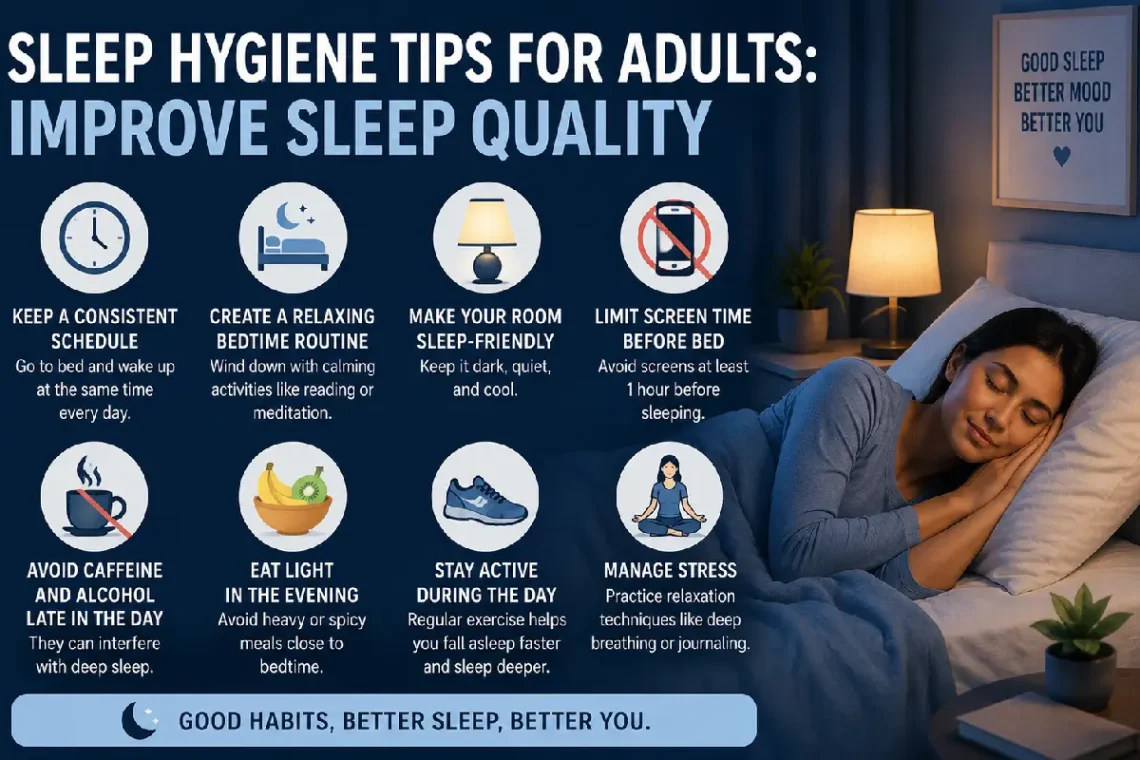
If you are someone who usually sleeps badly, stays up late or is tired during the day, Sleep Hygiene Tips for Adults can be a huge benefit. Sleep hygiene refers to the daily procedures and environment of the bedroom that indorse good and regular sleep.
Children aren’t the only ones who face an interrupted sleep cycle in Indonesia, as everyday activities like busy work schedules, long commutes, late-night screen use and social activities, as well as hot and humid weather and irregular weekend schedules, can also disrupt sleep. It’s not essential to make all changes at once. These are some simple changes you can make to aid you stay on a regular sleep schedule and find evenings more restful.
Adults need a minimum of 7 hours of sleep per night, but needs may vary. Quality is extra factor of good sleep, as well as the amount of time spent in bed.
❝
This article is part of
Sleep Health Hub
Common Adult Sleep Problems
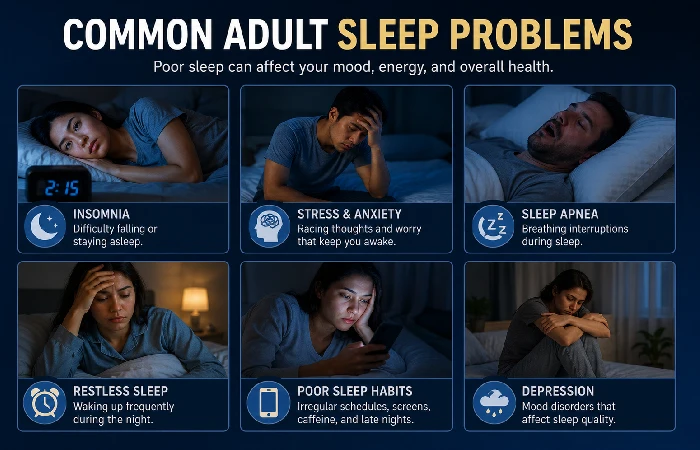
Sleep issues may occur from time to time, particularly during stressful times. However, chronic problems can influence your attention, energy levels, mood and operative. Adults can improve their overall sleep habits by following consistent routines and creating a comfortable sleep environment. For a complete overview of healthy sleep practices, explore our complete sleep hygiene guide.
Common issues include:
- Difficulty Falling Asleep
- Stress or worrying
- Phone use
- Caffeine late in the day
- Irregular bedtimes
- An uncomfortable bedroom
- Long or late naps
Waking During the Night
Waking up just a little and then receiving back to bed is ok. But if you wake up and fight to fall back to sleep. You will feel tired the following day.
This may be affected by noise, temperature, stress, alcohol or an uneven sleep pattern.
Waking Too Early
- Others wake up too soon, and can’t get back to sleep.
- If it occurs frequently, check your sleep routine, evening routine, stress and sleep environment.
- If you feel tired throughout the day, you may have suspected sleep apnea.
The factors which may be impacted by poor sleep are:
- Concentration
- Memory
- Mood
- Reaction time
- Motivation
- Exercise performance
Anyone who is getting acceptable sleep but is still very sleepy during the day should talk to a health care expert about the issue.
Creating consistent habits before bed can help adults transition from daily activities to a more restful state. Explore our bedtime routine guide for practical ideas.
Daily Habits That Improve Sleep
One of the best Sleep Hygiene Tips for Adults is to found routines that will benefit your body know when it should be asleep.
Keep a Consistent Sleep Schedule
Go to bed and get up about the same time as usual.
It’s not essential to stick to the same routine every night. However, significant alterations may make it more difficult to keep your body in sync.
Get Natural Light During the Day
Spend some time outdoors during the day, particularly earlier in the day.
Natural light benefits to set the body’s internal clock and may aid maintain a healthy sleep-wake cycle.
Exercise Regularly
For many, physical activity is linked to better sleep.
Some of the activities available are:
- Walking
- Cycling
- Swimming
- Strength training
- Yoga
- Recreational sports
If you’re feeling extra alert after an evening exercise, consider doing it during the day.
Quality sleep includes enough time for the deeper stages of sleep that support overnight recovery. Explore our guide to deep sleep for practical sleep-supporting strategies.
Watch Your Caffeine Intake
Caffeine is in drinks such as energy drinks, and in some other products, including coffee and tea.
Don’t have caffeine later in the day if it interferes with your sleep.
Try to replace coffee with a decaffeinated beverage for those adults who like their coffee in the afternoons or late evening.
Be Smart With Naps
Sometimes naps can be obliging when feeling sleepy, but too long or too late can disrupt sleep at night.
If you nap, try to keep it earlier in the day and as short as possible.
To design a Wind-Down Period.To design a Wind-Down Period.
Create a Wind-Down Period
Allow 30 to 60 minutes to help you wind down in the evening and go to sleep.
You might:
- Take a shower
- Read
- Stretch gently
Prepare for tomorrow
Play tunes that are not too loud.Play soothing music.
Practice slow breathing
The idea is to minimize stimulation, not add another stimulation.
The importance of work-life balance and sleep.Work-Life Balance and Sleep.
Work-Life Balance and Sleep
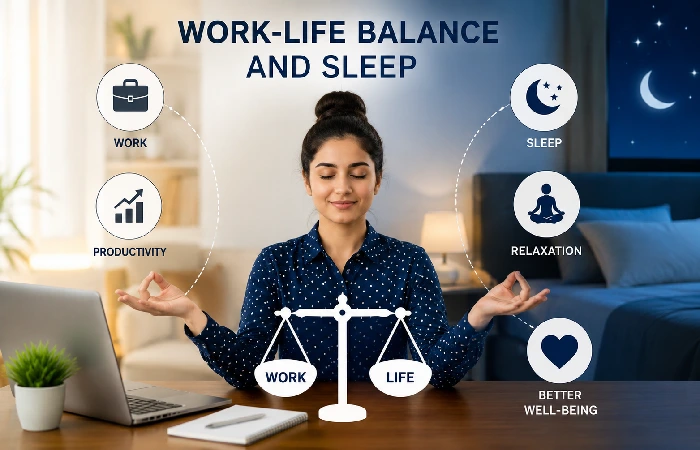
Sleep can be greatly affected by work.
Emails, deadlines, overtime, commuting and work stress can so easily bleed over into the night.
This is particularly important for adults who have irregular work plans or who are tied to the workplace using cell phonesSet a Work Cutoff
Try to select a time when you have stopped checking work messages.
Screen use in the evening can become part of an adult’s daily routine and may make it harder to wind down before bed. Explore our screen time and sleep guide for practical tips.
For example:
9:00 p.m. — Work notifications off
You can then move on to your individual evening ritual.
Of course, this is not always likely for shift workers or individuals with demanding schedules. The aim is to establish boundaries wherever possible.
Don’t Take Work to Bed
When you use your bed as an office, it can be difficult for your brain to connect the bed to sleep.
If possible, instead, work at a desk or other set up area.
Prepare for Tomorrow
If you are up late for tomorrow, write your priority list for five minutes.
For example:
- Reply to important email
- Grocery shopping
- Exercise after work
After they’re written down, there’s no need to continue rehearsing them in your head.
Protect Your Evening
A totally stress-free life is not essential for a good sleep.
Rather, provide a brief window of no working focus.
Walking, talking with family, reading or a quiet activity could help to separate work and bedtime.
Weekend Sleep Schedule
A very under-utilized Sleep Hygiene Tip for Adults is to keep a fairly consistent schedule during the weekend.
Friday and Saturday nights are often when it’s desirable to stay up a few hours longer and head to bed later in the morning.
It’s not essentially a bad thing to do this infrequently, but always changing your plans will make Monday mornings more difficult.
Try a Consistent Wake-Up Time
If you are used to getting up at 6:30 in the morning on a weekday, then waking up numerous hours later on the weekend may throw off your sleep cycle.
Ideally, you do not have to wake up at the same minute, but at the same time it aids to be as close as you can. Stress and anxiety can affect an adult’s ability to relax and maintain a consistent sleep schedule. Explore our guide to anxiety, stress, and sleep for practical ways to support better rest.
What About Sleeping In?
If you have had a really hectic week, more sleep strength be beneficial.
What is more significant is to replace the lack of sleep during the weekdays with the sleep time available on the weekends.
It’s better in the long run to ensure that you’re sleeping well all week long.
Don’t Overcorrect on Sunday Night
A common pattern looks like this:
Friday: Late night
Saturday: Sleep late
Saturday night: Late bedtime
Sunday: Sleep late
Sunday night: Can’t fall asleep
Monday: Exhausted
A more predictable schedule provides one possible way to prevent this round.
Long-Term Benefits
Following good sleep habits is not just about feeling better the next morning.
Good and adequate sleep has many health benefits, both physical and mental, and cannot be sacrificed.
Better Daytime Alertness
Good sleep contributes to concentration and alertness while at work, while studying, driving and at work.
Improved Mood
Bad sleep may make day-to-day stress more stimulating.
Maintain a regular sleep routine in order to help support emotional health.
Better Physical Recovery
Sleep is a crucial constituent to recovery after exercise and routine physical activity.
During sleep, your body is doing a number of healing things.
Healthier Daily Habits
Those who sleep well strength have an easier time upholding other healthy behaviors, such as exercise and eating a balanced diet.
Better Productivity
A good night’s sleep may help to enhance concentration, decision making and memory.
It’s important whether in an office or a business, while you’re studying, or when you’re managing a household.
A Practical Sleep Checklist
| Habit | Target |
| Sleep duration | At least 7 hours for most adults |
| Bedtime | Keep it consistent |
| Wake time | Keep it reasonably consistent |
| Exercise | Regular physical activity |
| Caffeine | Avoid late-day use if it affects sleep |
| Bedroom | Cool, dark, quiet, comfortable |
| Screens | Reduce use before bed |
| Wind-down | 30–60 minutes |
| Weekend schedule | Avoid major shifts |
Following a simple checklist can make healthy sleep habits easier to maintain consistently. Use our sleep hygiene checklist for practical steps to improve your nighttime routine.
FAQs
What are the most significant sleep hygiene tips for adults?
Establish a regular sleeping pattern, get plenty of sleep, exercise frequently, avoid caffeine in the late hours, create a comfortable bedroom, and uphold a relaxing bedtime routine prior to sleep.
What is the usual amount of sleep for an adult?
Adults require 7+ hours of sleep each night. Everyone needs a different amount of sleep.
It is bad to sleep late on weekends?
Infrequently sleeping later isn’t unavoidably harmful. But it can be more difficult to get the sleep rhythm back in place if you frequently change your sleep schedule by an hour or more.
Is it OK to exercise before going to sleep?
In general, exercise promotes sleep. But a lot of individuals find that they can’t tolerate high levels of exertion right before sleeping. If this is the case, whole your exercise routine sooner.
Does a night phone use impact sleep?
Using a phone can benefit keep your mind occupied and provide some bright light. Cutting down on screen time before sleep can aid to wind down.
When should I go to the doctor for sleep problems?
If sleep difficulties occur regularly, have a big influence on your functioning during the day, or are not refining even after trying to recover sleep, talk to your healthcare provider. Loud snoring, pauses in living while sleeping and extreme daytime sleepiness are also signs of medical attention.
Final Takeaway
Good Sleep Hygiene Tips For Adults are mostly about consistency and not perfection. Sleep and get up at more or less the same time every day; get daylight and exercise during the day; reduce caffeine if needed, have a bedtime routine and make the bedroom a comfortable place to sleep.
The following habits can be easier to follow if you incorporate them into your daily routine and climate here in Indonesia. There’s no need to change your lifestyle in an instant. Begin with 2-3 changes, and continue for a while until you create a sleep schedule that fits your schedule.
Dr. Khizrana Begum is a qualified medical professional with MBBS and MD qualifications and 5+ years of experience in the medical field. She works as a General Physician and Dermatologist, with knowledge spanning general medicine, dermatology, preventive healthcare and skin health.
As a medical reviewer, Dr. Khizrana Begum reviews health and wellness content for medical accuracy, clarity and authenticity.
Sameena Begum reviews content for clarity, accuracy and reader usefulness. Her review process helps ensure that published information is clearly presented, relevant and easy for readers to understand.
Syeda Yasmeen is a Health & Wellness Writer at InHumanBeing.com. She creates clear and reader-focused content across health, nutrition, wellness, women’s health, men’s health and babies’ health.