
Last Updated: September 14, 2026
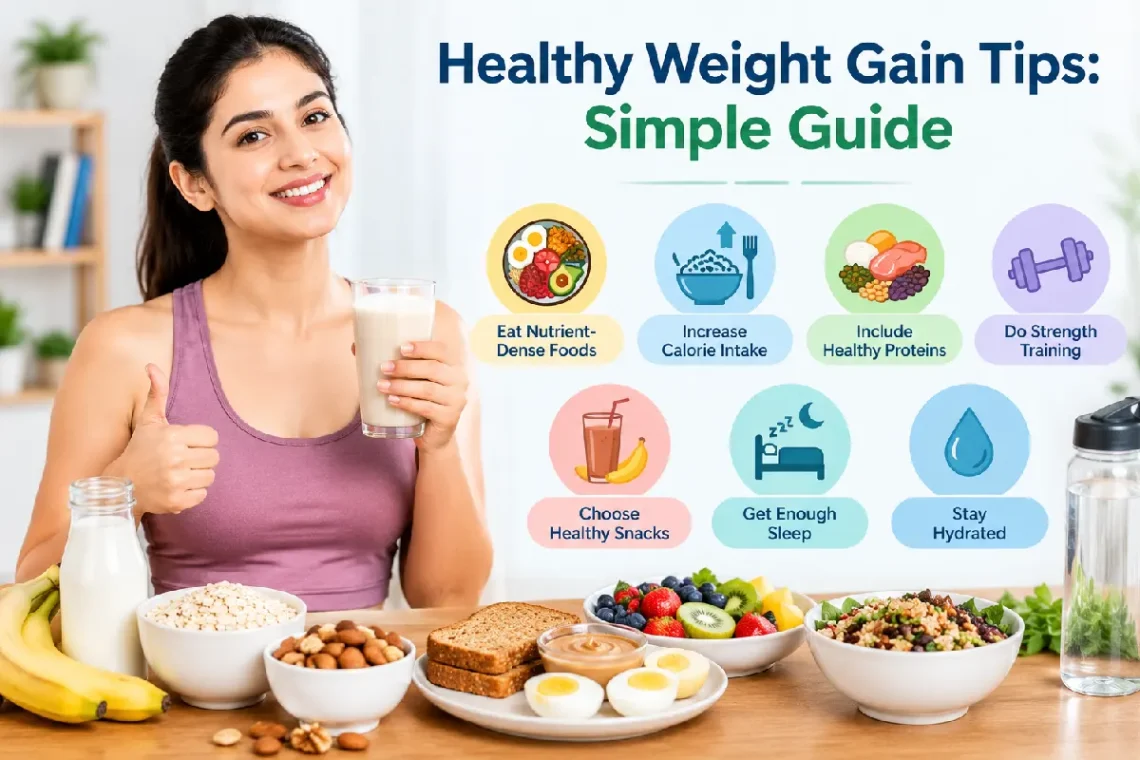
Healthy weight gain is not just about eating more food. Everything from food collection to eating habits, to exercise, to sleep, to protein, and daily routines influences the quality. If weight gain is the goal, highlight adding nutritious calories to your diet but be careful not to rely heavily on fast food, sweets or sugary beverages.
Beans, lentils, healthy fats, fruits, nuts, seeds, dairy products, eggs, and rice, oats, potatoes, and whole grains can be used to make a balanced meal. The goal is to offer sufficient energy and nutrients, and to engage in a plan which is sustainable.
How to Gain Weight Healthily
The easiest way to put on weight is to consume a little more calories than your body needs and pick healthy foods.
These are some useful habits to practice:
- Try not to skip meals.
- Always add protein to a meal.
- Include 1 or 2 healthy snacks in between meals.
- Include foods that are high in calories, like nuts, seeds, nut butter, and avocado.
- If you do not have a lot of appetite, have a nutritious smoothie.
- Eat foods with satisfying carbohydrates like rice, oats, potatoes and whole grains.
- Slowly build up to eating more food instead of eating a lot of food at once.
- If building muscle is your objective, pair a healthy eating plan with strength training.
For instance, add banana, nuts and peanut butter to oatmeal (pared with milk). This makes the bowl more energy- and nutrient-dense for a comparatively smaller size.
How Many Meals Should You Eat to Gain Weight?
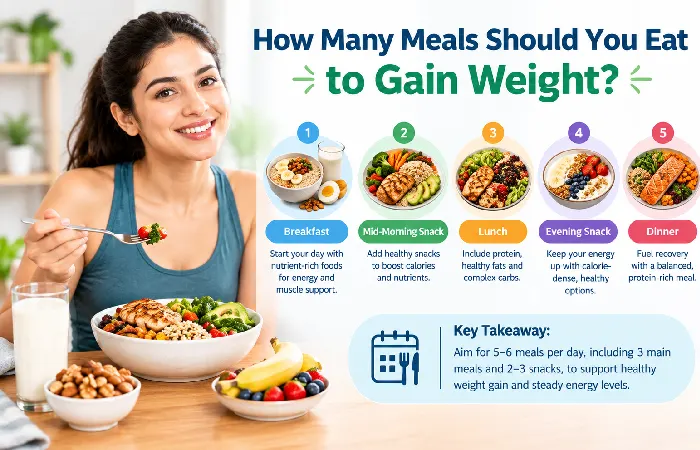
Everyone’s necessities for food intake to gain weight are not the same. Others may be improved able to consume three or more extensive meals, but others may be better able to eat 5 or 6 smaller meals and snacks.
If you have a good craving, 3 well balanced meals and 1 or 2 snacks are sufficient.
Try if you have difficulty eating large amounts:
Breakfast → Snack → Lunch → Snack → Dinner → Bedtime snack
The key is not just the number of meals, but the amount of food consumed throughout the day.
Don’t skip breakfast or eat very little frequently so it is more difficult to consume the calories needed.
How to Increase Calories Safely
Adding more calories doesn’t necessarily mean consuming more fried foods, candy or sugary beverages. Rather, get calories from healthy foods.
Easy ways to increase calories include:
Making several small contributions throughout the day can have an impact.
The NHS recommends that adults trying to gain weight should think about increasing their calorie intake by around 300 to 500 a day as a slow method. This is not a set target as each person’s calorie needs are unique.
How to Eat More When You Have a Low Appetite
It can be hard to gain weight if you don’t have much of an appetite. It may be difficult to fill a big plate so it’s best to serve smaller portions and make them healthier and more energising.
Try these strategies:
- Offer small food portions often – every few hours.
- Have nutritious snacks on hand.
- Have smoothies or milk drinks between meals.
- Add nuts or seeds as a breakfastside dish or as a snack.
- Spread nut butter on toast, fruit or oatmeal.
- Incorporate paneer, cheese, tofu or beans into what you eat.
- If drinking lots of water causes you to feel full, try to not drink so much, especially before eating.
- Enjoy eating, not forced.
It’s easier to have a liquid calorie than a large meal sometimes! Milk, banana, oats, yoghurt and peanut butter smoothie may be convenient.
If after a long period of time you still have a very poor appetite (or you notice weight loss and other symptoms that don’t make sense), talk to your health care provider.
How Protein Helps With Weight Gain
In addition to supporting muscle building and maintenance, protein plays a crucial role in a weight-gain diet.
Good protein sources include:
- Eggs
- Milk
- Greek yogurt
- Paneer
- Chicken
- Fish
- Lentils
- Chickpeas
- Kidney beans
- Tofu
- Soy foods
- Nuts
- Seeds
Try to spread protein across your meals rather than eating most of it at one time.
For gaining muscle, consuming sufficient protein and resistance training can help build muscle. The amount of calories consumed, training, recovery and overall diet also play a role.
How Exercise Supports Healthy Weight Gain

Exercise may be beneficial if your aim is to achieve a healthy body weight, particularly muscle mass.
Strength exercises such as:
- Squats
- Lunges
- Push-ups
- Rows
- Shoulder presses
- Deadlifts
- Resistance-band exercises
Can stimulate your muscles.
Don’t have to exercise for hours each day. When building muscle, a well planned strength training program can be more effective than excessive amounts of cardio.
While cardiovascular exercise is beneficial for general wellness, excessive levels could make it more difficult to create a calorie surplus if you have a difficult time consuming enough calories.
Consume an adequate amount of food that meets your activity level and allow the body rest between exercise sessions.
How Sleep Affects Weight Gain
People tend to focus on food and exercise and forget about sleep. The quality of sleep is important for recovery and keeping to the daily routine.
Adults typically require 7-9 hours of sleep per night, but this can vary from person to person.
It can be more challenging to recover from exercise and adhere to diet and training recommendations if sleep is poor.
Try to:
- Sleep and get up at the same time each day.
- Create a relaxing bedtime routine.
- Minimize excessive screen time prior to bedtime.
- Maintain a comfortable and quiet bedroom.
If eating a heavy meal causes discomfort, try to stay away from very heavy foods just before bedtime.
While a good night’s sleep won’t make you gain weight, it can help you recover and take steps toward a healthier lifestyle that will help you reach your overall objectives.
How to Track Your Weight Gain Progress
You will get a better idea if your workout is successful or not when you are able to track your progress.
You can:
- Weigh yourself once a week at the same time of day – and in the same clothes.
- If you don’t know how much you eat, keep a food diary for a couple of days.
- Keep a record of your strength training progress.
- If it’s okay, take periodic progress photos.
- Listen to your body for how it feels and what it wants.
- If building muscle is your objective, then monitor body measurements.
Don’t worry about minor changes each day. The body’s weight will vary naturally due to hydration, food consumption, digestion and more.
Pay more attention to the trend of the measurements over several weeks, rather than one measurement.
If you are not gaining weight after making a concerted effort to eat more, take a look at the amount, frequency, choice of snacks and activity level. You can also work with a registered dietitian to develop a plan that works for you.
Common Mistakes That Prevent Weight Gain
There are certain habits that can prevent healthy weight gain.
Skipping Meals
Skipping meals more often may make it harder to get the calories you need throughout the day.
Dieting by consuming only low calorie foods
Vegetables and fruits are essential but it may be difficult to get an adequate amount of calories if relying on low calorie foods primarily.
Avoiding Healthy Fats
Nuts, seeds, nut butter, avocado, dairy, and appropriate oils are options that deliver more calories in smaller servings.
Focusing Only on Protein
Protein is essential, but there also needs to be carbohydrates, fats, vitamins, minerals and sufficient calories.
Overhydrating before meals
Some people may feel too full if they consume large volumes of liquid just prior to meals.
Depending on Junk Food
Calories from fast food and candy are fine to have, but not the basis for a meal plan.
Expecting Fast Results
Typical weight gain typically occurs over time. Gaining a lot of weight in a short time may result in excessive weight gain and unhealthy diets.
Doing Too Much Cardio
Too much exercise can make it more difficult to consume a sufficient amount of calories if you have trouble putting on weight.
When to Seek Professional Help for Unexplained Weight Loss
Weight loss is not necessarily a straightforward diet issue.
Consult a physician for advice if you:
- Weigh less than you do now.
- Do not eat enough.
- Continue to experience digestive issues.
- Become overly weak or fatigued.
- Have difficulty eating enough food.
- Ongoing weight loss even when attempting weight gain.
- Experience other new or worrisome symptoms.
Consulted a doctor to find out if there is an original cause of the weight loss. Registered Dietitian can make an eating plan based on your nutritional requirements and preferences, activity level and weight goals.
Final Thoughts
Gaining weight can be a slow process, if it is complete in a healthy way. Make sure to follow a even schedule of eating, have healthy calorie-dense foods, adequate protein, strength training, sleep and routine.
There’s no necessity to make a essential change to your diet all at once. Adding nuts, milk, peanut butter, paneer, beans, oats, rice and healthy snacks to the diet can aid to make it easier to consume an adequate amount of calories each day.