
Last Updated: September 3, 2026
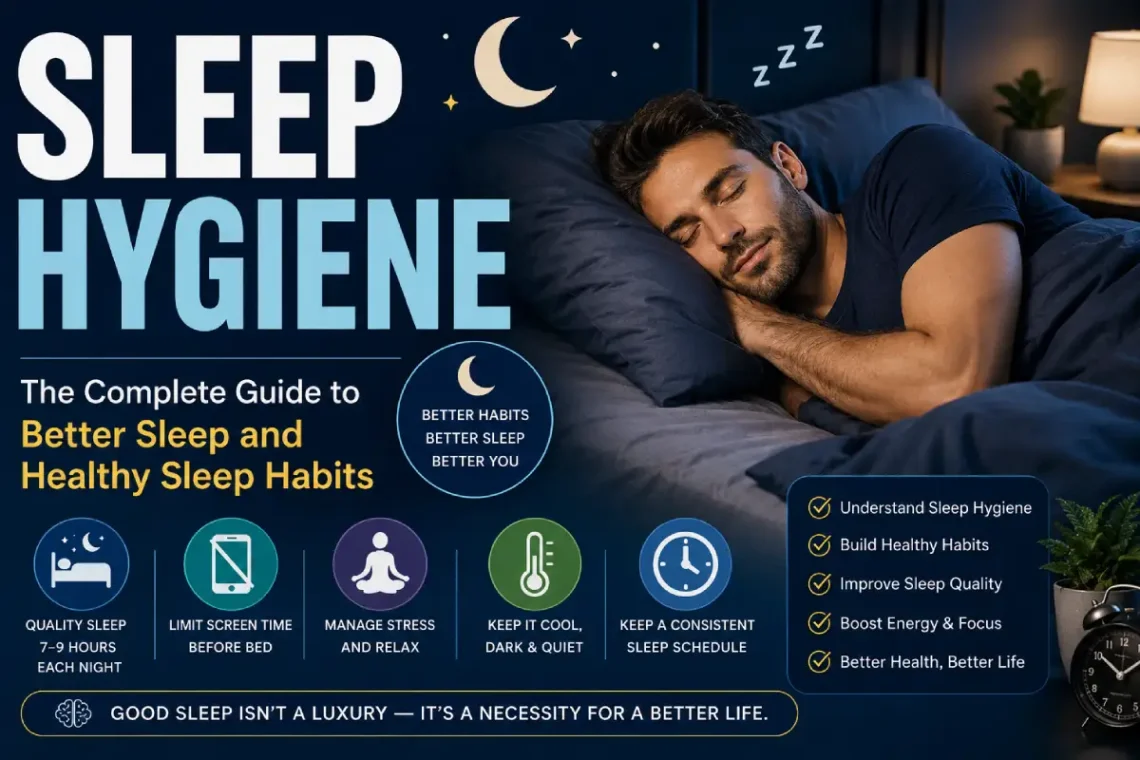
One of the most serious elements of a healthy lifestyle is sleep hygiene. It provides for simple everyday practices that can aid you sleep better, deal with troubles of your sleep pattern and wake up refreshed. Whatever you may be – a student, an office employee, a mother or a senior person in Indonesia – the quality of your sleep has an influence on your health and performance.
The use of gadgets at night, stress, disruption of the sleep cycle, and bad habits can be considered as the major causes of poor sleep in most individuals. However, there are numerous little changes that one can make in his or her daily routine which will bring about a great effect.
Sleep hygiene, its importance, functioning, and implementation in your life in Indonesia.
❝
This article is part of
Sleep Health Hub
Quick Overview
| Feature | Sleep Hygiene |
| Best For | Children, adults, older adults, students, workers |
| Primary Goal | Improve sleep quality and overall health |
| Main Focus | Healthy bedtime habits and daily routines |
| Difficulty | Beginner friendly |
| Cost | Mostly free lifestyle changes |
| Suitable For | Anyone who wants better sleep |
What Is Sleep Hygiene?
Sleep hygiene is the everyday routine, activities, and bedroom atmosphere that will enable you to have a relaxing sleep regularly.
This is not a medical treatment or special product. Instead, it’s a set of healthy lifestyle practices that assist your body to adhere to its natural sleep schedule.
The following list is some examples of proper sleep hygiene practices:
- Eating on a regular timetable
- Waking up at the time every morning.
- The room should be a quiet and comfortable.
- Intake light food during the night.
- Avoid consuming too much caffeine.
- Avoid screens right before going to bed.
This list above shows you what you can change easily in order to make your brain aware that it is sleep time.
A consistent bedtime routine can make it easier to prepare your body and mind for restful sleep. Explore our bedtime routine guide for practical ideas to build a healthier nighttime routine.
Sleep Hygiene vs Poor Sleep Habits
| Good Sleep Hygiene | Poor Sleep Habits |
| Regular bedtime | Different bedtime |
| Easy to sleep in room | Bright / noisy room |
| No more than 30 minutes of screen time each day | Phone use before sleeping |
| Relaxing bedtime routine | Working or studying late |
| Keeping a balanced daily routine | More caffeine or energy drinks |
Who Can Benefit from Good Sleep Hygiene?
Positive sleep patterns have positive effects on nearly all.
These are particularly useful for:
- Students
- Office workers
- Shift workers
- Parents
- Athletes
- Older adults
- Teenagers
- People with busy lifestyles
Good sleep is the key to a better day and even the smallest sleep behaviour changes can help make life easier.
Sleep needs and habits can vary depending on age, lifestyle, and daily responsibilities. Explore our sleep hygiene tips for adults for practical ways to support better sleep.
Why Good Sleep Hygiene Matters
This includes most of the systems within the body. Your body repairs tissues, regulates brain activity, regulates hormones, and boosts your immune system through sleep.
In the long run, poor sleep affects one’s physical and psychological well-being.
Supports Brain Function
When you get a good night’s sleep, the brain:
- Learn new information
- Improve memory
- Stay focused
- Make better decisions
- Solve problems
After a good sleep, students and professionals feel more active and fresh.
Deep sleep plays an important role in helping your body and mind recover during the night. Learn more with our guide to deep sleep for practical sleep-supporting habits.
Improves Physical Health
Good sleep supports:
- Heart health
- Healthy metabolism
- Immune function
- Muscle recovery
- Hormone balance
Helps Emotional Well-Being
The following are some areas that a good night’s sleep can help improve:
- Mood
- Patience
- Stress management
- Emotional balance
A poor sleep can make a individual feel more tired, and less focused during the day.
Supports Daily Energy
The benefits of good sleeping are that you can:
- Wake up fresh
- Evade sitting for long periods of time.
- Workout more comfortably
- Reduce daytime tiredness
Sleep Benefits Comparison
| Poor Sleep | Healthy Sleep |
| Daytime fatigue | Additional energy |
| Difficulty focusing | Improved attention span |
| Low motivation | Increased productivity |
| Poor recovery | Better physical condition at the end of the day |
| Mood changes | More stable mood |
Signs of Poor Sleep Hygiene
Most people are not aware of how their daily activities are impacting on sleep.
Common signs include:
Taking an extended duration to fall asleep
- Waking up often during the night
- Lack of energy upon waking up
- Being awake at night
Nervousness and a need for multiple cups of coffee to be alert.
- Sleepiness at work or school
- Difficulty concentrating
If these signs persist for several weeks or interfere with usual functioning, it may be helpful to consult a health care provider.
Using screens close to bedtime can make it harder to wind down and maintain a relaxing nighttime routine. Explore our guide to screen time and sleep for practical tips.
Common Causes of Poor Sleep Hygiene
| Habit | Possible Effect |
| Phone use late-night | Delayed sleep |
| More caffeine | Effort falling asleep |
| Uneven bedtime | Rest-disruption due to body clock disturbance |
| Loud atmosphere | Frequent waking |
| Stress | Trouble falling asleep and remaining asleep |
Benefits of Healthy Sleep Habits
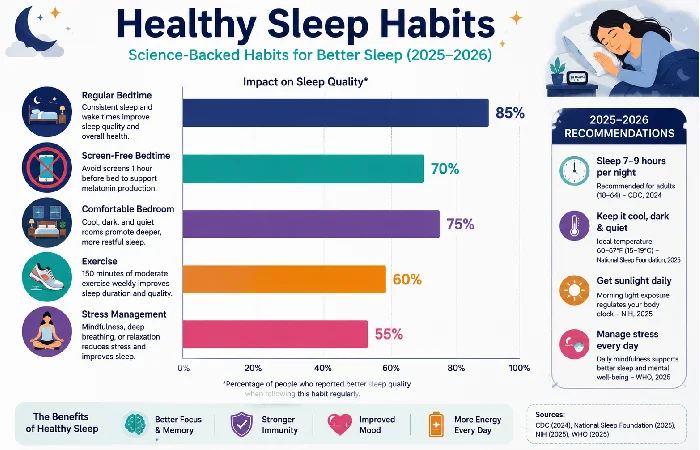
Creating healthy sleep patterns can aid improve numerous aspects of everyday living.
Better Energy
Sleep and wake up at the same time each day, which makes you feel more active on the day.
Improved Concentration
Good sleep supports:
- Learning
- Memory
- Productivity
- Attention
Healthier Weight Management
Hormones moving hunger and satiety are involved in sleep.
For some, poor nap can also make healthy eating more stimulating.
Better Athletic Recovery
After physical activity, sleep delivers opportunity for muscles and tissues to recover.
This is mainly true for active adults and athletes.
Improved Mood
Others often report feeling additional relaxed and optimistic following a proper night’s sleep.
Healthy Sleep Habits vs Poor Habits
| Healthy Habit | Benefit |
| Consistent bedtime | Regular body clock |
| Comfortable mattress | Better sleep quality |
| Dark bedroom | Easier to go to sleep in a dark room |
| Limiting caffeine | Better nighttime sleep |
| Relaxing bedtime routine | Faster sleep onset |
The Science Behind Quality Sleep
Each night sleep occurs in recurring cycles.
Each cycle allows the body and brain to heal in a different way.
There are two kinds of sleep:
- Non-REM (NREM) sleep
- REM (Rapid Eye Movement) sleep
Both are necessary for good health.
Non-REM Sleep
During NREM sleep:
- Muscles relax
- Heart rate slows
- Body temperature decreases
- Physical recovery takes place
REM Sleep
During REM sleep:
- Dreams usually occur
- Memories are processed in the brain.
- Learning is strengthened
- Emotional processing takes place
There are several cycles of NREM and REM sleep during a healthy night’s sleep.
Average Sleep Recommendations
| Age Group | Recommended Sleep |
| School-age children | 9–12 hours |
| Teenagers | 8–10 hours |
| Adults | 7–9 hours |
| Older adults | 7–8 hours |
Individual sleep needs may vary.
Factors Affecting Sleep Quality
Altering a few of daily routines will have an influence on your sleep quality.
These include:
- Stress
- Screen time
- Physical activity
- Room temperature
- Noise
- Light exposure
- Diet
- Caffeine intake
Knowing these will help you to see where you can improve.
Daily Sleep Hygiene Checklist
| Habit | Completed |
| Get up at regular times | ✓ |
| Exercise regularly | ✓ |
| Stay away from caffeine in the evening | ✓ |
| Limit TV viewing before sleep | ✓ |
| Maintain bedroom cool and quiet | ✓ |
| Follow a relaxing bedtime routine | ✓ |
Anxiety and stress can interfere with relaxation and make it harder to maintain healthy sleep habits. Explore our sleep tips for anxiety and stress for practical ways to create a calmer bedtime routine.
How to Build a Healthy Sleep Routine
A fixed bedtime schedule supports the brain to know it is bedtime. It give signal to get ready to sleep. Do not go repairing your entire atmosphere. Begin by selection one or two healthy habits and then add more.
1. Keep the Same Sleep Schedule
It is significant to sleep and wake up at the same time everyday to keep your body’s clock in check.
Always keep follow schedule as much as possible, even on weekends.
Benefits
- More easily falls asleep
- Better sleep quality
- More energy in the morning
- Improved daily routine
2. Create a Relaxing Bedtime Routine
Do calming activities for the final 30-60 min before sleep.
The following are good bedtime activities:
- Listen to soft music
- Gentle stretching
- Deep breathing
- Meditation
- Reading a book
- Take a warm shower
Avoid heavy exercise and work right before sleeping.
3. Reduce Screen Time
Blue light is released by phones, tablets, laptops and televisions, which can be a barrier for individuals falling asleep.
Avoid electronic devices at least 30–60 minutes before bedtime.
In their place, opt for unwinding, non-tech activities.
4. Make Your Bedroom Comfortable
Your bedroom should be a place for sleep.
Aim for:
- Comfortable mattress
- Supportive pillow
- Clean bedding
- Quiet surroundings
- Dim lighting
- Comfortable room temperature
Making small changes can improve sleep quality.
5. Exercise Regularly
For numerous, exercise is a way to recover sleep.
Good options include:
- Walking
- Cycling
- Swimming
- Yoga
- Strength training
- Light stretching
Some individuals might find it easier to workout in the morning or afternoon than at night.
Healthy Evening Routine Example
| Time | Activity |
| 7:00 PM | Have a well-balanced evening meal |
| 8:00 PM | Light walk or stretching |
| 9:00 PM | Reduce screen time |
| 9:30 PM | Read or relax |
| 10:00 PM | Go to bed |
Best Sleep Hygiene Practices in Indonesia
There are warm climate, bustling city life and different lifestyles in Indonesia. There are some daily habits and environmental factors which can impact sleep quality.
Many people in Indonesia find these to be practical tips.
- Keep Your Bedroom Cool
- Hot temperatures can cause a lack of sleep.
Simple ideas include:
- If possible, use a fan or air conditioner.
- Choose lightweight bedding.
- Wear comfortable sleepwear.
- Improve room ventilation.
Manage Noise
Traffic and neighborhood noise, or family noise, can interfere with sleep.
Helpful solutions include:
- Closing windows, where possible.
- Curtains for noise reduction for outside sounds.
- Use comfortable ear plugs
Eat Dinner at a Riight Time
Try to avoid very heavy meals instantly before bedtime.
It’s essential to have a balanced meal with:
- Vegetables
- Lean protein
- Whole grains
A light snack should be adequate if you are still hungry.
Avoid Coffee and Tea Late in the Day
Caffeine is found in coffee, tea, and energy drinks and can have an influence on sleep for certain individuals.
Stay Hydrated
Drink sufficient fluids throughout the day.
Avoid drinking large amounts of fluid just before bedtime. Going to the toilet frequently keeps you awake.
Spend Time Outside During the Day
Sunlight promotes your body’s rhythm.
Activities such as:
- Morning walks
- Gardening
- Outdoor exercise
- Walking to nearby shops
can extend the time of daylight exposure.
Healthy Bedroom Checklist
| Item | Recommendation |
| Mattress | Comfortable and supportive |
| Pillow | Supports neck comfortably |
| Room Temperature | Cool and comfortable |
| Lighting | Dim before bedtime |
| Noise | Keep as quiet as possible |
| Electronics | Limit use before sleep |
Foods That May Support Better Sleep
A properly balanced diet aids complete health and can lead to improved sleep.
Here are some good snack ideas for the night:
- Yogurt
- Banana
- Oatmeal
- Whole-grain crackers
- Warm milk (if tolerated)
- Almonds
These foods can be eaten as part of a balanced diet, but won’t necessarily work for getting to sleep.
Foods and Drinks to Limit Before Bed
Some people find that it helps them sleep better if they decrease:
- Energy drinks
- Coffee
- Strong tea
- Alcohol
- Large spicy meals
- Heavy fried foods
- Sugary snacks
Healthy Sleep Foods Comparison
| Better Evening Choices | Foods to Limit Close to Bedtime |
| Oatmeal | Energy drinks |
| Banana | Strong coffee |
| Plain yogurt | Large fried meals |
| Whole-grain crackers | Sugary desserts |
| Warm milk | Alcohol |
Lifestyle Habits That Improve Sleep
The daily schedule impacts night sleep.
Healthy habits include:
Stay Active
Many people benefit from frequent change of location when sleeping.
Manage Stress
Some relaxing techniques that can be used include:
- Deep breathing
- Meditation
- Prayer
- Journaling
- Gentle yoga
Limit Long Daytime Naps
While some may fresh from a nap, afternoon napping could interrupt night sleep.
Avoid Smoking
There are many health risks linked to smoking. It can also have a negative effect on sleep.
Keep a Sleep Diary
Note your sleep patterns to look for any patterns.
Track:
- Bedtime
- Wake-up time
- Caffeine intake
- Exercise
- Screen time
- Sleep quality
Sleep Routine Comparison
| Healthy Routine | Unhealthy Routine |
| Fixed bedtime | Sleeping at different times |
| Screen-free bedtime | Phone use in bed |
| Relaxing activities | Late night work |
| Comfortable bedroom | Bright room |
| Regular exercise | No physical activity |
One-Day Healthy Sleep Schedule
| Time | Activity |
| 6:30 AM | Wake up |
| 7:00 AM | Healthy breakfast |
| 12:30 PM | Balanced lunch |
| 5:30 PM | Light exercise |
| 7:00 PM | Dinner |
| 9:00 PM | Relax without screens |
| 10:00 PM | Sleep |
Common Sleep Challenges in Indonesia
People living in Indonesia may face challenges such as:
- Busy work schedules
- Shift work
- Long commuting times
- Hot weather
- Traffic noise
- Increased evening screen use
Recognizing these challenges makes it easier to create practical solutions.
Tips for Better Sleep in Hot Weather
- Keep bedroom well ventilated.
- Use breathable cotton sheet.
- Drink plenty water during the day.
- Take a cool shower before bed if comfortable.
- Use a fan or air conditioner when available.
- Avoid heavy blankets.
Common Sleep Hygiene Mistakes in Indonesia
Many individuals fall into habits they do not realize are stopping them from sleeping well. Knowing what these habits are is the first step to a healthier night’s sleep.
1. Using Mobile Phones Before Bed
There are numerous individuals who spend time on social media, watching a video or reading messages before going to sleep.
This may:
- Delay bedtime
- Adds extra stress to the body
- Can diminish sleep quality for some individuals
Better Habit
Turn off your screens 30-60 minutes before bed. Keep your phone away.
2. Drinking Too Much Coffee at Night
Coffee is usually liked around Indonesia, but for some individuals, a late cup in the day could be interfering with sleep.
Better Habit
If caffeine has an influence on sleep, opt for water or another beverage in the evening.
3. Sleeping at Different Times Every Day
Late night Sunday and early-morning Monday (or Tuesday, etc.) can disrupt your internal clock.
Better Habit
Keep to the same bedtime and morning.
4. Eating Heavy Meals Before Sleeping
Eating huge meals right before bed can lead to uneasiness and delay the sleep.
Better Habit
If possible, have your meals at least 2 hours prior to bedtime.
5. Not Getting Enough Physical Activity
Some persons may discovery it problematic to get a good night’s rest if they are inactive.
Better Habit
Involve in regular physical activity, like walking, cycling, swimming or other activities you enjoy.
6. Ignoring Stress
Working, schooling, financial, or family stressors may impact sleep.
Better Habit
Create a calming bedtime routine that can include:
- Reading
- Deep breathing
- Meditation
- Prayer
- Journaling
7. Keeping the Bedroom Too Bright
Bright lights, such as TV, lights, or outside lights, might make falling asleep harder.
Better Habit
Make the bedroom as cozy as possible with curtains or dim lighting before going to sleep.
Common Sleep Problems and Solutions
| Sleep Problem | Possible Cause | Helpful Habit |
| Trouble falling asleep | Screen use, and stress | Relaxing bedtime routine |
| Waking during the night | Noise, heat, uneven schedule | Develop bedroom environment |
| Feeling exhausted in the morning | Poor sleep quality | Keep a steady sleep schedule |
| Difficulty concentrating | Insufficient sleep | Prioritize regular sleep hours |
| Feeling sleepy during the day | Uneven bedtime | Uphold healthy sleep habits |
Sleep Hygiene Tips for Different Age Groups in Indonesia
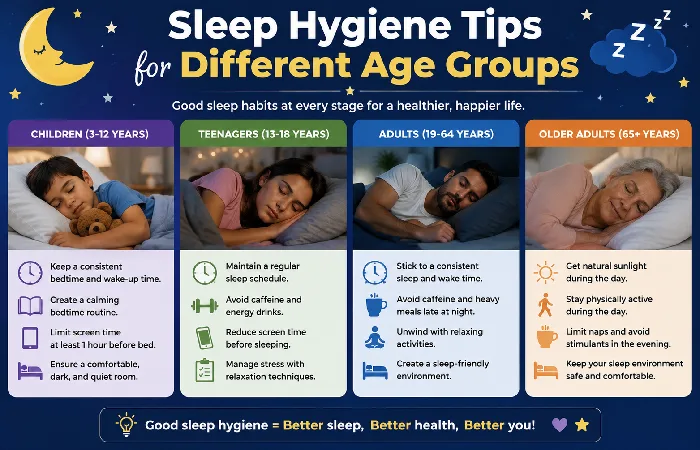
In Indonesia, there are several sleep hygiene tips that can be given to various age groups, as follows:
Older and younger people have varying sleep requirements and day-to-day schedules.
Children (6–12 Years)
Children need adequate sleep for proper development, learning and growth.
Helpful habits:
- Consistent bedtime
- Screen-free bedtime routine
- Comfortable bedroom
- Reading before bed
Limit intake of sugary snacks before bed time.
Teenagers
Students occasionally stay up late to whole their school projects or to play on electronic strategies.
Helpful tips:
- Avoid watching screens prior to sleep
- Sleep and wakeup at the same time each day.
- Do not consume caffeine late in the day.
- Have a silent study time earlier in the day.
Adults
More work or family responsibilities, can influence sleep.
Healthy habits include:
- Planning bedtime
- Managing stress
- Regular exercise
- Balanced meals
- Limiting late-night work
Older Adults
A person’s sleep timetable may alter as he or she gets older.
Helpful habits include:
- Daily physical activity
- Morning sunlight exposure
- Comfortable bedding
- Getting enough sleep and rest
If nap issues persist, talking to a health care provider is recommended.
Following a simple checklist can make it easier to stay consistent with healthy sleep habits. Use our sleep hygiene checklist to organize your nighttime routine and support better sleep.
Sleep Recommendations by Age
| Age Group | Recommended Sleep |
| School-age Children | 9–12 hours |
| Teenagers | 8–10 hours |
| Adults | 7–9 hours |
| Older Adults | 7–8 hours |
Healthy Daily Habits That Support Better Sleep
Maintaining good sleep hygiene and establishing good daily habits that support better sleep.
Over time, things as simple as daily habits can enhance sleep.
Morning
- Wake up at the same time every day.
- Let natural light
- Take a nutritious breakfast.
Afternoon
- Stay active.
- Drink enough water.
- Eat balanced meals.
Evening
- Reduce screen time.
- If possible, have a light meal.
- Relax before bedtime.
- Keep lights dim.
Sleep Hygiene Troubleshooting Guide
| Situation | Possible Reason | Practical Solution |
| Unable to sleep | screen use or stress | Practice deep breathing |
| Wake up sense sleepy | Uneven sleep schedule | Sleep and wake up at the same time everyday |
| Bedroom feels too hot | Warm weather | Improve ventilation or use a fan if available |
| Wake up often | Noise or light | Reduce noise and darken the room |
| Sleep agenda keeps altering | Hard lifestyle | Set notices for bedtime |
If sleep problems last for several weeks or implicitly disturb your daily life. Consult a qualified healthcare professional for further evaluation.
Frequently Asked Questions
Why is it essential to practice good sleep hygiene?
Practicing good sleep habits can aid to improve energy, focus, mood and physical health.
What is the best time of sleep for adults?
In general, most adults need 7-9 hours of sleep a night.
Do using phone before sleep influence sleep?
Using an electronic device before you go to sleep could make it more difficult to fall asleep for some. Cutting back on screen time before going to sleep will help.
Can i have coffee as a late night snack?
If caffeine has an effect on sleep, it is best to stick to smaller portions of coffee.
Does exercising help sleep?
Many individuals improve their sleep patterns with regular exercise.
Should people watch TV before going to bed?
Some individuals may find it difficult to fall asleep due to bright screens. Relaxing music, reading or listening to relaxing music, may be better alternatives.
What can help me de-stress before I go to sleep?
You can try:
- Deep breathing
- Meditation
- Prayer
- Gentle stretching
- Reading
Have students write in a journal.
Is sleep important for students?
Yes. Good sleep aids children to learn, remember, focus and do their schoolwork.
Does bad sleep impact job results?
Yes. Not getting a good night’s rest can make it harder to focus, work and make decisions.
Is there anything that is impossible to improve sleep hygiene for?
Many individuals can get better sleep by establishing healthy sleep patterns. But others have sleep disorders that need medical diagnosis and treatment.
Key Takeaways
- Sleep and wake at the same time every night and morning.
- Make a peaceful and comfortable night’s rest.
- Limit screen time, particularly before bedtime.
- Avoid caffeine later in the day. if it disrupts sleep.
- Get even exercise and follow a well-balanced diet.
- Develop a relaxing bedtime routine.
- If sleep problems persist, talk to a professional.
Final Thoughts
Quality sleep is a countless asset in wellness. The right mattress, the right pillow and some basic habits are all that is required to get a good night’s sleep. Making small changes to the way they sleep, like going to bed at the same time every night, developing a bedtime routine or not watching any screens before bed. Always ensuring the bedroom is a comfortable atmosphere which have a positive effect over time.
These performs can be more effortlessly accepted by individuals who live in Indonesia. Adoption of these habits into everyday life, lifestyles, climate and culture. Celebrate the little victories, not the big ones. Improved sleep has the potential to improve health for years after.The improvements in sleep can last for years in terms of physical, emotional, work and quality of life.