
 Syeda Yasmeen
Health & Wellness Writer Syeda Yasmeen creates clear and
reader-focused content covering health,
nutrition, wellness, women’s health,
men’s health and babies’ health.
Read Full Bio of Author →
Syeda Yasmeen
Health & Wellness Writer Syeda Yasmeen creates clear and
reader-focused content covering health,
nutrition, wellness, women’s health,
men’s health and babies’ health.
Read Full Bio of Author →
 Sameena Begum
Health, Technology & Digital Content Reviewer Sameena Begum reviews selected content
for clarity, factual presentation,
consistency and reader usefulness.
Read Full Bio of Reviewer →
Sameena Begum
Health, Technology & Digital Content Reviewer Sameena Begum reviews selected content
for clarity, factual presentation,
consistency and reader usefulness.
Read Full Bio of Reviewer →
 Dr. Khizrana Begum
General Physician and Dermatologist Dr. Khizrana Begum is a qualified medical
professional with MBBS and MD qualifications
and 5+ years of experience. She reviews health
and wellness content for medical accuracy,
clarity and responsible presentation.
Read Full Bio of Medical Reviewer →
Dr. Khizrana Begum
General Physician and Dermatologist Dr. Khizrana Begum is a qualified medical
professional with MBBS and MD qualifications
and 5+ years of experience. She reviews health
and wellness content for medical accuracy,
clarity and responsible presentation.
Read Full Bio of Medical Reviewer →
A weight gain diet is planned to get a individual the right amount of calories, protein, healthy fats, carbohydrates, vitamins and minerals to slowly gain weight. If someone is underweight or has a problem with weight gain, consuming more junk food is not a good idea. It is a better method to add energy dense foods to your diet. Since these foods are more nutritious, and add calories.
There are many cheap foods available in India that can aid promote healthy weight gain. Such as rice, roti, dal, paneer, milk, curd, eggs, nuts, seeds, bananas, peanuts,, potatoes, sweet potatoes and healthy cooking oils. The proper mixture will vary based on age, body size and activity level, nutritional preferences, health goals.
This comprehensive diet plan will tell you what a weight gain diet is. How many calories you might require, what foods can you consume for healthy weight gain. How to come up with a viable Indian meal plan!
❝
This article is part of
Weight Gain Nutrition Hub
What Is a Weight Gain Diet?
A diet for weight gain is a diet designed to take in more food calories than you burn, and still give you the nutrients that you need for good health.
It’s not just about getting the weight up the scale. In the best of worlds, weight gain would be achieved through healthy muscle mass, body fat and normal increases of body stores and not heavily on ultra processed food.
Choosing the right foods can make it easier to increase your calorie and nutrient intake while working toward your weight gain goals. Explore our weight gain foods guide for practical food ideas and nutrition inspiration.
A healthy weight gain diet typically consists of:
- Adequate calories
- Protein-rich foods
- Complex carbohydrates
- Healthy fats
- Fruits and vegetables
- Dairy or appropriate substitute
- Plenty of fluids
- Regular meals and snacks
Healthy Weight Gain vs Unhealthy Weight Gain
| Healthy Approach | Less Healthy Approach |
| Rice and dal | Sugary drinks |
| Paneer and vegetables | Frequent fried foods |
| Nuts and seeds | Excessive sweets |
| Milk or curd | High-sugar beverages |
| Whole grains | Highly processed snacks |
| Balanced meals | Skipping meals and overeating later |
How Does a Weight Gain Diet Work?
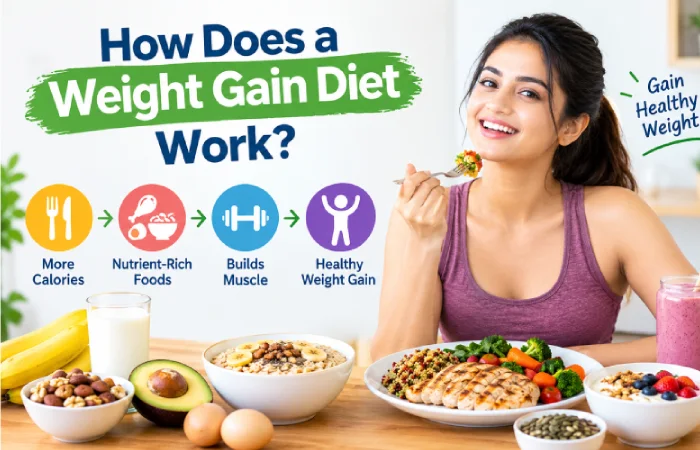
Weight gain is usually a result of having a surplus of energy in the diet.
This is referred to as a calorie surplus.
If your body needs a certain amount of energy to keep your weight the same, eating a little more than this over time will lead to gradual weight gain.
But calories are not calories if they aren’t quality calories.
Rather than eating a lot of food at one time, increase your portions of calorie-dense foods in foods you already like.
High-calorie foods can help you increase your daily energy intake, especially when you need to add more calories without eating large portions. Explore our high-calorie foods for weight gain guide for useful meal and snack ideas.
Light-hearted ways to gain some calories.
- Add peanuts to poha.
- Add ghee to rice/dal.
- Top oatmeal with nuts.
- Enjoy a milk smoothie!
- Include ‘paneer’ in diet.
- Eat curd at lunchtime or at dinner.
- Fill yogurt with seeds.
- Serve a snack in the evening.
How Many Calories Do You Need to Gain Weight?
There isn’t one calorie target that works for everyone.
The amount of energy you require is based on:
- Age
- Sex
- Height
- Current body weight
- Physical activity
- Metabolism
- Training frequency
- Health status
One of the most common methods of practice is starting with a smaller surplus, instead of just drastically eating more food one day.
Additional energy intake of about 300-500 calories a day may be a starting point for those with poor weight gain, although this varies between individuals.
Your registered dietitian can help you set a calorie target that’s right for you.
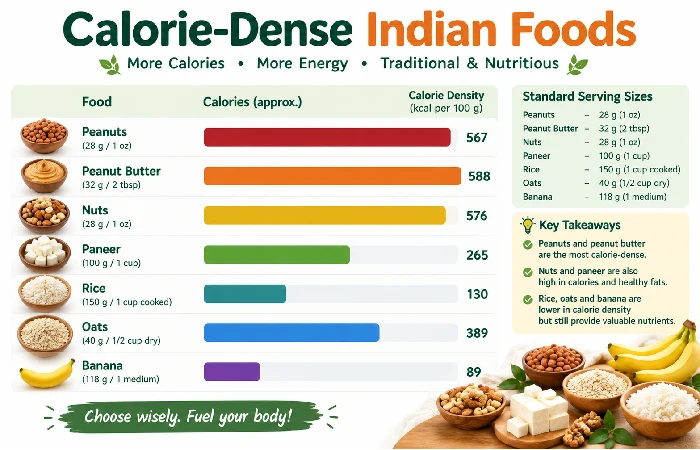
Indian cuisine offers many nutritious dishes and ingredients that can be included in a balanced eating plan for healthy weight gain. Explore our Indian weight gain diet guide for meal ideas and food inspiration.
Example Calorie Addition
| Current Eating Pattern | Simple Addition |
| Breakfast | Add banana + peanut butter |
| Lunch | Add curd + extra rice |
| Snack | Add nuts + milk |
| Dinner | Add paneer or dal |
| Before Bed | Milk if tolerated |
It may be easier to make several small meals throughout the day than one large meal.
Best Foods for a Weight Gain Diet
The healthiest foods for weight gain are ones rich in calories and beneficial nutrients.
Rice
Rice is cheap, simple to prepare and a great source of carbohydrates.
It can be mixed with:
- Dal
- Rajma
- Chole
- Paneer
- Chicken
- Fish
- Vegetables
- Curd
Roti and Chapati
Roti consists of carbohydrates, fiber and contains protein in small amounts.
Combine with:
- Paneer
- Dal
- Vegetable curry
- Curd
- Ghee
Milk
Milk contains protein, carbohydrates, fat, calcium and more.
It can be consumed:
- With breakfast
- In smoothies
- With oats
- Before bed
Paneer
Paneer is especially beneficial in vegetarian weight gain diets as it supplies protein, calories in an easy to find food.
Smoothies and shakes can be a convenient way to add calories, protein, and other nutrients to your daily diet. Explore our weight gain smoothies and shakes guide for easy and delicious ideas.
Eggs
Eggs are excellent source of protein that can be easily incorporated into breakfast, lunch or snacks.
- Bananas
- Bread is cheap, easy, and simple to incorporate:
- Smoothies
- Oatmeal
- Milkshakes
- Yogurt
- Peanut butter toast
High-Calorie Foods for Healthy Weight Gain
High calorie foods can help facilitate a calorie surplus without consuming vast quantities of food.
| Food | Why It’s Useful |
| Peanuts | Calories + protein + healthy fats |
| Almonds | Energy + healthy fats |
| Walnuts | Healthy fats + calories |
| Peanut Butter | Convenient calorie-dense spread |
| Paneer | Protein + calories |
| Whole Milk | Protein + carbohydrates + fat |
| Rice | Energy-rich carbohydrate |
| Oats | Carbohydrates + fiber |
| Dates | Energy-dense fruit |
| Avocado | Healthy fats + calories |
High-Protein Foods for Weight Gain
Protein is especially crucial if you aim to build muscle and put on body weight.
Vegetarian Protein Sources
- Paneer
- Milk
- Greek yogurt
- Curd
- Soybeans
- Tofu
- Lentils
- Chickpeas
- Rajma
- Moong dal
- Peanuts
Non-Vegetarian Protein Sources
- Eggs
- Chicken
- Fish
- Lean meat
- Turkey
Protein Food Comparison
| Food | Approximate Protein |
| Chicken breast, 100 g | ~31 g |
| Eggs, 2 large | ~12 g |
| Paneer, 100 g | ~18 g* |
| Cooked lentils, 1 cup | ~18 g |
| Greek yogurt, 170 g | ~17 g |
| Tofu, 100 g | ~10 g |
| Milk, 1 cup | ~8 g |
Values vary substantially by product and preparation method.
A vegetarian diet can provide a variety of calorie-rich and nutrient-dense foods that support healthy and balanced weight gain. Explore our vegetarian weight gain diet guide for plant-based meal ideas.
Healthy Fats for Weight Gain
Healthy fats can be beneficial as they contain more calories per gram than protein or carbohydrates.
Good choices include:
- Peanuts
- Almonds
- Walnuts
- Cashews
- Peanut butter
- Sesame seeds
- Chia seeds
- Flaxseeds
- Olive oil
- Mustard oil
- Groundnut oil
- Avocado
Simple ways to add healthy fats to your diet
- Breakfast: Add nuts or seeds to oats.
- Lunch: Include a little oil/ghee with lunch.
- Snack: Have fruit with peanut butter.
- Meals: Top curd or salad with seeds.
Indian Weight Gain Food Plate
A simple Indian meal can include several food groups.
| Plate Component | Examples |
| Carbohydrate | Rice, roti, potatoes |
| Protein | Dal, paneer, eggs, chicken |
| Vegetables | Spinach, carrots, beans |
| Healthy Fat | Ghee, nuts, seeds |
| Dairy | Curd or milk |
| Fruit | Banana, mango, orange |
Practical Weight Gain Strategy
To make a diet shift, don’t turn your life upside down instead follow a simple add and build strategy:
Step 1: Keep Your Normal Meals – Do not change your routine.
Don’t immediately double your portions.
In step 2, add one food that is high in calories.
For example:
- Nuts
- Peanut butter
- Milk
- Paneer
- Banana
Step 3: Add a Snack
This can provide extra calories for the day at a morning or evening snack.
Step 4: Include Protein
Include a protein source at all main meals.
Step 5: Monitor Progress
Monitor your weight from time to time, not hour-by-hour.
Important Health Note
Talk to a doctor or registered dietitian if you’re losing weight for no known reason, have very little appetite, have persistent digestive issues or can’t put on weight even if you are eating enough. Unintentional weight loss may be caused by medical problems.
Weight Gain Meal Plan
The best meal plan for weight gain does not involve just adding junk food and sweets to the diet. It’s about consuming sufficient calories and also adding protein, carbs, healthy fats, vitamins, minerals and fiber.
The most convenient route to take for many Indians is to make the familiar foods like rice, roti, dal, paneer, egg, milk, curd, banana, potato, nuts and pulses as the basis for the meals.
This may vary based on your activity level, appetite, health goals, and age and body size. Do not use the meal plan below as a set plan; rather, it is a guide for how many portions to eat depending on your progress.
This menu is not necessarily followed. Depending on the budget, food preference, amount of cooking time and vegetarian/non-vegetarian dietary choices, foods can be substituted.
Vegetarian Weight Gain Meal Plan created by Dr. Axe.
Healthy weight gain involves more than simply increasing calories, as balanced nutrition and consistent eating habits can also play an important role. Explore our healthy weight gain tips guide for practical nutrition and lifestyle advice.
Sample Indian Weight Gain Meal Plan
| Meal | Example Foods | Weight Gain Tip |
| Early Morning | Milk + banana + soaked almonds | Add peanut butter if more calories are needed |
| Breakfast | 3–4 eggs + 2–3 rotis or paneer paratha + curd | Include a protein source |
| Mid-Morning | Banana shake + handful of peanuts | Easy way to add calories |
| Lunch | Rice + dal + paneer/chicken + vegetables + curd | Add a teaspoon of ghee if suitable |
| Evening Snack | Peanut chaat or boiled eggs + fruit | Choose filling, nutrient-rich foods |
| Dinner | Roti or rice + dal + paneer/eggs/chicken + vegetables | Keep protein in the meal |
| Before Bed | Milk + dates or nuts | Useful if you struggle to eat enough during the day |
7-Day Indian Weight Gain Meal Plan
| Day | Breakfast | Lunch | Snack | Dinner |
| Monday | Paneer paratha + curd | Rice + dal + chicken + vegetables | Banana shake + peanuts | Roti + paneer curry |
| Tuesday | Oats with milk, banana and nuts | Roti + rajma + curd | Boiled eggs + fruit | Rice + dal + vegetables |
| Wednesday | Eggs + roti + milk | Rice + chole + paneer | Peanut chaat + banana | Roti + chicken curry |
| Thursday | Poha with peanuts + curd | Roti + dal + vegetables + eggs | Mango or banana shake | Rice + paneer + vegetables |
| Friday | Upma + eggs + milk | Rice + rajma + curd | Nuts + dates + fruit | Roti + dal + chicken |
| Saturday | Paratha + curd + banana | Rice + dal + paneer | Peanut butter toast + milk | Roti + eggs + vegetables |
| Sunday | Vegetable omelet + paratha | Rice + chicken/paneer + dal | Banana shake + nuts | Roti + dal + curd |
This menu is not necessarily followed. Depending on the budget, food preference, amount of cooking time and vegetarian/non-vegetarian dietary choices, foods can be substituted.
Vegetarian Weight Gain Meal Plan
Vegetarians can gain weight successfully by combining calorie-rich foods with enough protein.
Good choices include:
- Paneer
- Milk
- Curd and Greek yogurt
- Dal
- Rajma
- Chole
- Soy chunks
- Tofu
- Peanuts
- Peanut butter
- Almonds and walnuts
- Oats
- Rice
- Roti
- Bananas
A simple vegetarian combination could be rice + dal + paneer + vegetables + curd. This gives you carbohydrates, protein, fats, and several important micronutrients in one meal.
Non-Vegetarian Weight Gain Meal Plan
For those who consume animal foods, eggs, chicken, fish and other protein-rich foods can help you achieve your protein requirements more easily.
A practical plate could contain:
Roti/Dal with chicken/eggs, vegetables and curd along with rice.
Milk, bananas, nuts and peanut butter can be used between meals for extra calories as well.
High-Calorie Indian Snacks
If you’re starving for a snack, it can make all the difference.
Try:
- Enjoy peanut butter and sliced bananas.
- Peanut chaat
- Paneer cubes
- Boiled eggs
- Dry fruits and nuts
- Peanut butter toast
- Banana milkshake
- Add some curd to the fruit and nuts and stir until well blended.
- Roasted black chickpeas with peanuts
- Dates with almonds
The intention is NOT to snack all day. Rather, enjoy 1 or 2 healthy snacks to fill in the calorie deficit between meals.
Weight Gain Diet for Women
The weight gain diet for women should emphasize slow weight gain and not just eating as much as possible.
Each woman will require a different amount of calories and protein based on her body size, activity level, age and training. If someone is exercising a lot, they may require more food than someone who works on a mostly sedentary job.
Best Foods for Weight Gain for Women
Some useful options include:
| Food | Why It Can Help |
| Paneer | Provides protein and calories |
| Milk | Convenient source of protein and energy |
| Eggs | Protein and several micronutrients |
| Peanut butter | Calorie-dense and easy to add to meals |
| Bananas | Carbohydrates and calories |
| Rice | Easy source of carbohydrates |
| Oats | Provides carbohydrates and fiber |
| Nuts | Small serving provides substantial energy |
| Dal | Protein, carbohydrates, and fiber |
| Curd | Protein and calcium |
Example Daily Routine for Women
Lunch: Tuna fish + dal + chapli + sabzi + dal + rice + dal + roti + fried curd + pickle + pasta salad (optional)
Lunch: Fruit salad with yoghurt and peanut butter
Dinner: Dal + dalia or roti + raita + dalia + vegetables.
Evening: Peanut chaat + fruit
Dinner: Roti + veggies + paneer/eggs.
When leaving the office: Milk and some nuts
If you’ve been on the scale for a few weeks, but the scale hasn’t budged and you’re still having the meals you’ve planned, try to increase your serving sizes or snacks.
Weight Gain and Strength Training
If a woman desires to supplement her diet with extra food and resistance training to help her gain weight while also building muscle, it can be helpful.
Exercises such as:
- Squats
- Lunges
- Rows
- Push-ups
- Shoulder presses
- Hip hinges
- Resistance-band exercises
Can be incorporated based on fitness level.
It doesn’t have to be all the time super long workouts. It is more important to have regular strength training, proper nutrition, protein and rest.
Weight Gain Diet for Men
There are differences in calorie needs for men, due to varying levels of physical activity, muscle mass, and body size. But eating more and more fried foods is not a proper means of gaining weight.
Rather than increasing calories, it’s a better idea to do so by adding healthy food that provides adequate protein.
Best Weight Gain Foods for Men
Useful options include:
- Rice
- Roti
- Potatoes
- Oats
- Eggs
- Chicken
- Fish
- Paneer
- Milk
- Curd
- Dal
- Rajma
- Chole
- Peanuts
- Peanut butter
- Almonds
- Walnuts
- Seeds
- Bananas
- Dates
Gaining weight as a man who works out.
If you’re looking to build muscle and not just fat, concentrate on three areas:
| Focus | What to Do |
| Calories | Eat enough to support gradual weight gain |
| Protein | Include a protein source in most meals |
| Training | Perform regular resistance exercises |
| Recovery | Get enough sleep and rest |
| Consistency | Follow the plan for several weeks |
Don’t alter your diet every few days. Don’t make large changes too soon.
Weight Gain Diet for Underweight People
There can be various factors behind being underweight. There are some individuals who may have a slim body build and for others, their appetite may be low or they may find it difficult to put on weight due to digestive issues, illness, stress, medications, and other reasons.
Any weight loss not explained or inability to acquire weight despite eating sufficient calories should be discussed with a health care provider.
If you’re trying to gain weight, pay attention to the calories and nutritional value.
You don’t need to eat very large portions; you can increase the nutrient and energy density of your meals and snacks, which are normal portions.
Easy Ways to Add Calories
| Instead of | Try Adding |
| Plain roti | Roti with paneer or a little ghee |
| Plain rice | Rice with dal and paneer |
| Plain oats | Oats with milk, banana and nuts |
| Plain toast | Peanut butter toast |
| Plain curd | Curd with fruit and nuts |
| Fruit alone | Banana with peanut butter |
| Plain milk | Milk with banana or oats |
Eat Smaller Meals More Often
Those who don’t have a lot of appetite may struggle with eating 3 large meals.
An improved structure is:
Breakfast, Snack, Lunch, Snack, Dinner, Bedtime snack
This will allow you to eat a few times without overeating.
Nutrient-Dense Smoothie
A homemade smoothie can come in handy if the thought of chewing a big portion of food seems overwhelming.
For example:
- 1 banana
- 1 glass of milk
- 2 tablespoons peanut butter
- 2 tablespoons oats
- A few dates
- Mix all ingredients together and give as desired.
Keep in mind smoothies are meant to complement foods, not to replace a diverse diet.
Underweight people should seek medical advice.
Talk to your health care provider or registered dietitian if you have:
- Unexpected weight loss
- Unabated diarrhea or vomiting.
- Ongoing stomach problems
- Very poor appetite
- Extreme tiredness
- Difficulty swallowing
- Suddenly changing diet or eating habits.
It might take more than just more calories to get the right solution.
Common Weight Gain Diet Mistakes
While gaining weight is an easy task, there are certain common missteps that can make it challenging or less healthy.
Consuming excessive amounts of junk food.
Foods such as fast food, sweets, sugary beverages and fried snacks can pack on calories fast, but are not the best staples of your diet.
The calories aren’t enough. There are also healthy fats, fiber, minerals, and vitamins needed in your body.
Skipping Protein
Consuming additional rice, bread or sweets without sufficient protein may not provide an effective muscle building exercise.
Add the following foods:
- Eggs
- Paneer
- Milk
- Curd
- Dal
- Soy
- Chicken
- Fish
- Beans
Excessive Water Intake Just Prior to Eating.
Some people may feel full rapidly when consuming lots of fluid immediately prior to eating.
If you’re not hungry, consider having fluids all day rather than the night before a meal.
To depend on supplements exclusively.
While protein powders and other supplements may be suitable, they may not be essential for everyone.
Most of your nutritional supplies can be met by a balanced diet. Supplements are meant to make-up for certain gaps in an individual’s diet, not a additional for meals.
Not Tracking Progress
There is no need to weigh yourself multiple times daily.
Regular checkups of your weight, which you do in similar conditions, can give you an idea of how well your overall eating plan is working for you.
You can also be alerted to:
- Strength
- Appetite
- Energy
- Clothing fit
- Workout performance
- General well-being
Inadequate sleep or recovery.
Gaining weight is just one component of good health.
Recovery is also important if you’re exercising. Follow a regular bedtime routine and get adequate rest. Stick to a consistent method, track progress and make incremental changes as necessary.
The World Health Organization (WHO) provides reliable guidance on healthy eating and balanced nutrition
Frequently Asked Questions About Weight Gain Diets
1. What is the healthiest diet to gain weight?
The best weight gain diet is quite simply a diet. That’s high enough in calories and protein, and contains a range of healthy foods.
2. If you want to gain weight naturally, what are the steps to take?
Limit the number of meals and snacks, include foods that will provide calories. Incorporate protein in meals, provide healthy snacks. Think about strength training when appropriate.
3. Is it okay for me to eat rice daily to gain weight?
Yes. Rice is a good source of carbohydrates and is a good carbohydrate to include in a weight gain diet.
4. Does milk help you gain weight?
As part of a well-balanced diet, milk provides an additional source of calories and protein.
5. Can bananas help you gain weight?
Bananas are carbohydrate and calorie sources and go well with milk, curd, oats, nuts or peanut butter.
7. Is it possible to eat a vegetarian diet to gain weight?
Yes. Paneer, milk, curd, soya, tofu, dal, rajma, chole, peanuts, nuts, seeds, rice, oats, roti etc. can be included in the vegetarian foods.
Conclusion
The key to a healthy weight gain diet is to eat sufficient quantities of nutritious food on a regular basis. Eat foods that are high in calories, protein, healthy fats. Eat meals at regular times when suitable and strength train when possible. Patience and consistency is the key to healthy and supportable weight gain.
Dr. Khizrana Begum is a qualified medical professional with MBBS and MD qualifications and 5+ years of experience in the medical field. She works as a General Physician and Dermatologist, with knowledge spanning general medicine, dermatology, preventive healthcare and skin health.
As a medical reviewer, Dr. Khizrana Begum reviews health and wellness content for medical accuracy, clarity and authenticity.
Sameena Begum reviews content for clarity, accuracy and reader usefulness. Her review process helps ensure that published information is clearly presented, relevant and easy for readers to understand.
Syeda Yasmeen is a Health & Wellness Writer at InHumanBeing.com. She creates clear and reader-focused content across health, nutrition, wellness, women’s health, men’s health and babies’ health.