
Last Updated: September 18, 2026
The skin of a newborn baby is soft, thin, and still developing. This often leads parents to have questions regarding cleaning, moisturizing, bathing and product selection.
Skin care for newborns doesn’t have to be complicated. Skin comfort can be achieved by a routine of simple skin care, no unnecessary products and protecting the skin.
Changes in the skin are also normal in the first few weeks of a newborn’s life. The skin may become slightly dry, cracked or develop tiny spots because it is getting used to the cold temperature. Contact your baby’s healthcare professional if you notice severe redness, swelling, blisters, oozing, widespread rash or other unusual change.
Understanding Newborn Skin Care
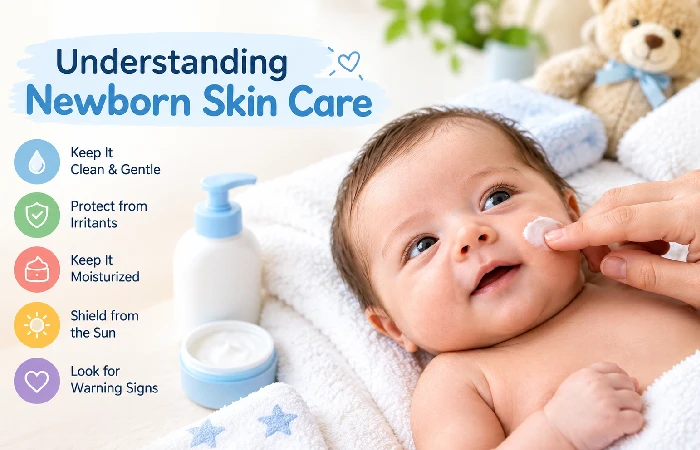
The skin of newborns is more sensitive than adult skin. Can be dry or irritated by repeated bathing, harsh cleaners, perfumes or rubbing.
The care of your baby’s skin is primarily about:
- Maintaining clean skin.
- Avoiding unnecessary products
- If necessary, using gentle products.
- Maintaining a clean dry skin fold
- Protecting irritated areas
- Regular checks of skin for changes
It’s not necessary to have a stack of baby lotions, oils, powders and creams. In many instances the routine is easier if there are fewer products.
All babies have different skin and the color will vary. Some products that may work for one baby may not work for another, so monitor for any signs of irritation when it comes to new products.
Creating a Simple Newborn Skin Care Routine
Quite simple task is easier to keep up than complicated one.
Begin with soft cleaning when changing diapers and when your baby becomes soiled. Avoid scrubbing when bathing. Dry skin with soft towel after bathing.
You can follow a basic routine such as:
| Skin Care Step | Simple Approach |
| Daily cleaning | Clean dirty areas gently |
| Diaper care | Keep the diaper area clean and dry |
| Bathing | Use gentle bathing practices |
| Drying | Pat rather than rub |
| Moisturizing | Use a suitable moisturizer if needed |
| Clothing | Choose comfortable, breathable clothing |
| Skin checks | Look for unusual redness or irritation |
There’s no need to have a complex schedule. The state of your baby’s skin will help to determine the amount of care required.
How to Clean Newborn Skin
Gentle cleaning is a vital aspect of newborn skin care.
Clean up soiled areas with clean water and soft washcloth. Focus on face, neck folds, hands and diaper area.
When washing the baby’s face, wash gently and care not to put the cleanser into the baby’s eyes.
Skins folds can trap moisture, milk or sweat. Wash and dry these areas thoroughly.
When changing the diaper, clean the diaper area and let the skin dry before applying a new diaper.
Avoid vigorous rubbing. The skin of babies does not require scrubbing to make it clean.
Do not apply new product to broken, bleeding, very irritated or infected looking skin unless you have consulted a health care professional first.
Choosing Newborn Skin Care Products
There are numerous baby skin care products on the market, but newborns don’t necessarily need them all.
For product selection, opt for baby or sensitive skin products. Try to stay away from products that have strong smells or ingredients that seem to cause your baby’s skin to become irritated.
These are some useful products that may be included:
- Gentle baby cleanser
- Soothing, non-scented moisturizer as required
- Soft washcloths
- Clean towels
- Use diaper cream as recommended or necessary
Follow the label directions and manufacturer’s recommendations on products.
It is also advisable to add one product at a time. This will make it easier to determine what may have caused the reaction if irritation has occurred.
Never use an adult skin care product on a newborn baby unless they are given permission to do so by a health care professional.
Moisturizing Newborn Skin
Some babies may have dry or peeling skin, particularly in the first few weeks.
If baby has dry skin, a simple moisturizer might help. Select a product suitable for newborn or sensitive skin and be sure to stay away from heavily scented products.
Apply moisturizer gently to clean, dry skin. Do not need to use a lot.
But all babies do not require frequent moisturisation. Your baby may not need another product to be part of their skin care routine if their skin is comfortable and healthy.
Talk to your baby’s health care professional if your baby develops very dry, cracking, painful skin or redness or a rash.
Skin Care After Bath Time
After-bath care for your skin.
While bathing can strip some of the oil from the skin, it’s important to take extra care to avoid unnecessary dryness after bathing.
Once the bath is finished, gently pat your baby dry with a soft towel.
Pay particular attention to:
- Neck folds
- Behind the ears
- Under the arms
- Groin area
- Behind the knees
- Other skin folds
- Avoid harsh rubbing of the skin.
Apply moisturizer right after you have gently dried your baby’s skin to keep skin moist.
Clothe your baby in clean and comfortable clothes appropriate for the room temperature. Do not have too many layers that may make your baby over-heated.
Choosing Gentle Products
If you’re purchasing newborn skin care items, simpler is better.
Check for baby or sensitive skin products. For babies who tend to be irritated by fragrance, fragrance-free products can come in handy.
Use caution when using products containing:
- Strongly scented lotions
- Adult exfoliating products
- Harsh soaps
- Strong antiseptic products
- Unnecessary powders
- Formulation with ingredients which were previously irritating
But not everything that is ‘natural’ is suitable for the very young. A few plant based ingredients and essential oils can also irritate sensitive skin.
If your baby suffers from a skin disorder, check with your pediatrician or health care provider about which products are suitable.
Common Newborn Skin Care Mistakes
Bathing Too Often
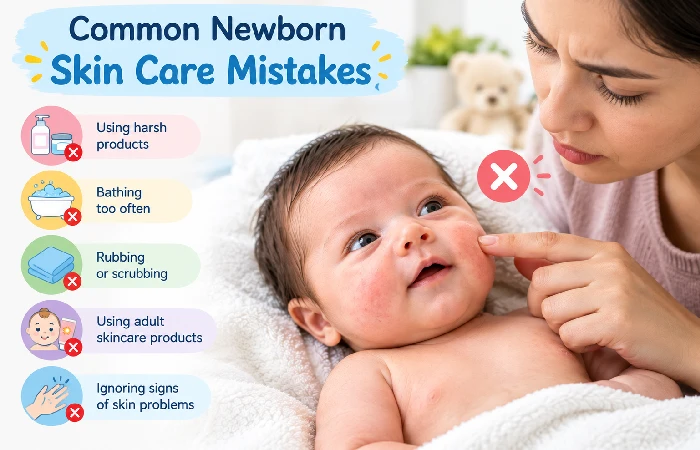
Spending too much time in the bathtub can lead to dry skin. Generally a baby doesn’t require long baths every day.
Applying excess products.
There are many formulations of lotion, oil, powder and cleansing agents that can be confusing as to what’s causing skin irritation.
Scrubbing the Skin
Gently clean, don’t scrub, newborn skin.
Ignoring Skin Folds
Folds around the neck, arms and diaper area may collect moisture. Carefully clean and dry these areas.
Using Adult Products
Cleansers, lotions etc for adults may not be suitable for newborn skin.
The temptation to touch Peeling Skin!
It is normal for the skin to peel during the neonatal phase. Avoid pulling or picking at it.
Experiencing Home Remedies Without Guidance
Not all traditional or online skin care solutions will work for a baby. Use only products that you are familiar with and have been recommended by a health care provider.
For evidence-based guidance, parents can refer to the American Academy of Pediatrics (AAP). Its HealthyChildren.org resources cover newborn bathing and skin care, including gentle cleaning, moisturizing, bathing frequency, and common newborn skin concerns.
When to Seek Professional Advice
Some of the skin changes are minor and should not cause concern, however parents should keep an eye out for unusual/ worsening changes.
If you observe your baby has:
- Any rash that is spreading or getting worse.
- A large amount of redness or swelling
- Blisters
- Foul drainage or pus
- Any wounds or areas of exposed skin.
- Excessive dryness or cracks
- A rash accompanied by fever
- The “yellowing” of the skin or eyes that is worrisome to you
Final Takeaway
Skin care for newborns should be mild, easy and regular. Carefully clean baby’s skin, use right products, let skin folds dry and use appropriate moistenurizing products if necessary.
The skin of the newborns can change in the first few weeks so it is as important as having a routine to observe the skin of your baby. Don’t try treatments on your own if the rash or skin change is unusual, severe, or lasting; seek advice from a healthcare provider.