
Last Updated: September 16, 2026
Caring for a baby can be exciting, fulfilling and sometimes somewhat confusing, particularly to new parents. Baby care includes feeding, bathing, changing diapers, skin care, clothing, hygiene, sleep and ensuring your baby is safe and relaxed. There is no requirement for a lot of products and a complex routine to take care of your baby well.
Each baby is unique, and each grows up in a different manner. Everything you must to know about caring for your baby, from the usual procedures and must-have products, to hygiene tips, skin and hair care, bathing, diaper care, clothing, and common pitfalls, to when to consult a professional. For every parent, either expecting or raising a baby, these are some easy parenting hacks to help you care for your child in an easier and better-organized way.
What Is Baby Care?
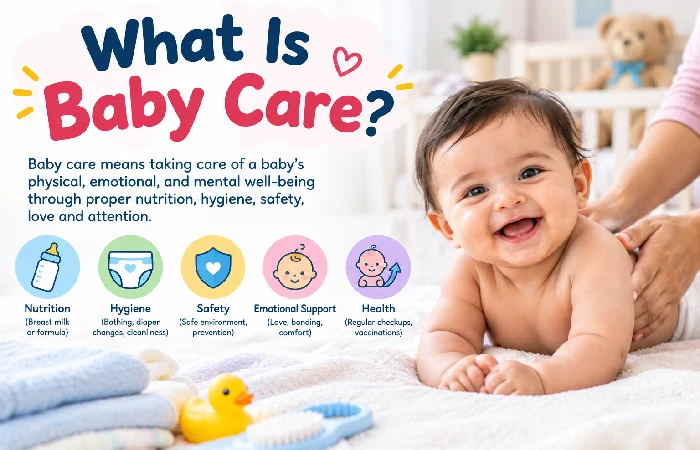
Baby care refers to the day-to-day actions parents and caregivers do to keep a baby clean, relaxed, safe, well-fed, and healthy. It covers basic skills like bathing, changing diapers, caring for skin, clothing, eating, sleeping, and establishing a daily schedule.
Babies have sensitive skin and young bodies and so their needs are dissimilar to older children and adults. You don’t have to have dozens of complicated products or routines when you become a new parent. Some simple routines, soft products, and extra care will make day-to-day baby care simpler.
All babies are unique. They might need to be fed, changed and rested more often than usual, and older babies may be more active and need changes to their feeding and rest schedule.
Parents should also adhere to the recommendations of their baby’s physician, particularly in the area of newborn care, feeding, sleeping, vaccinations and illness symptoms.
Essential Baby Care Basics
It can be overwhelming during the first few months with your baby. Having a checklist of essentials is a great way for parents to stay organized.
| Baby Care Need | Basic Essentials |
| Diapering | Diapers, wipes, changing pad, diaper cream |
| Bathing | Baby bathtub, mild cleanser, soft washcloth |
| Skin care | Gentle moisturizer and baby-safe products |
| Clothing | Bodysuits, pajamas, socks, weather-appropriate clothes |
| Feeding | Bottles or breastfeeding supplies as needed |
| Sleeping | Safe sleep space, fitted sheet, appropriate sleep clothing |
| Grooming | Baby nail clippers, soft brush, comb |
| Health | Thermometer and basic baby-care supplies |
Use baby-friendly products and refrains from using surplus perfumed products. If the baby’s skin is sensitive, consult a paediatrician about products that are safe to use.
Safety is also an important aspect of caring for infants. Remove medicines, cleaning products, small objects and other hazards from your baby’s reach.
Daily Baby Care Routine
An unchanging routine can make the care of babies easier for parents. The sequence doesn’t have to be the same each day.
The following can be included in a basic day:
- Providing baby with what they need to feed on.
- Changing diapers regularly.
- Washing the baby’s face, hands and soiled parts.
- Providing the baby with the proper amount of sleep and rest.
- Furnishing adequate play and interaction for age.
- Inspection of skin and overall comfort of the baby.
- Wearing a clean, dry garment when it is wet and/or dirty.
- Having a calming bedtime routine.
Newborns may fall asleep and wake up at different hours during the day and night. Babies’ schedules tend to get more predictable as they get older.
Parents are not to compare their baby’s schedule with another baby’s. Babies may grow, feed, sleep and be active very differently.
Baby Hygiene and Personal Care
Proper hygiene practices keep your baby comfortable and prevent him or her from being exposed to dirt and irritants.
Try not to bathe your baby daily. If the child’s not having a bath, massively clean the face, neck folds, hands and diaper area.
Wash your hands before touching your baby, particularly before feeding, feeding bottles, and touching umbilical cord area of a newborn.
Regularly clean frequently-used items, such as baby’s bottles, pacifiers, changing surfaces and washable toys. Clean feeding equipment according to manufacturer’s instructions.
Don’t insert cotton swabs into your baby’s ear or nose. Clean ear with a soft cloth outside the ears.
Baby Skin Care
Babies’ skin may be sensitive and prone to dryness and irritation. It’s better to use a few skin care products than many.
When possible, use fragrance-free and mild products, especially if your baby has sensitive skin. A mild baby cleansing shampoo can be used when bathing and a simple moisturizer can be used to combat dry skin.
Focus on any creases around the neck, legs and diaper region. Often these will become moist and irritating.
Seek medical attention if your baby has a persistent rash, severe redness, swelling, blisters or other odd skin changes.
Simple Baby Skin Care Tips
The following are some of the simplest baby skin care tips you’ll find.
- Do not use water that is very hot.
- Pat, do not rub, skin dry.
- Always use baby products that are gentle.
- Frequently replace wet or soiled diapers.
- Maintain clean and dry skin folds.
- If heavily scented products irritate the skin, avoid using them.
Consult your pediatrician if there are any rashes that continue or are unusual.
Baby Hair Care
Baby hair typically doesn’t need elaborate maintenance. A soft baby brush or comb will help to keep the hair tidy.
When necessary, use a mild shampoo to wash your baby’s hair. It is not necessary to clean it every day unless there is a particular reason.
When washing your baby’s hair, hold the head and neck and avoid getting water and soap into the eyes.
Many babies get flaky skin on their scalp, which is called “cradle cap. Typically gets better with mild treatment, but parents should discuss with pediatrician if there is a lot of redness, swelling, pain or signs of infection on the scalp.
Baby Bath Time
Bath time can be a calming routine for your baby, but the most important thing is safety.
Have all the items ready before putting baby in the bath. Have everything necessary for the baby on hand, including a towel, clean diaper, clothes, washcloth, and any other baby supplies.
Use warm—not hot—water and check the temperature before putting your baby into the bath.
Never leave a baby unattended in or near water, even for a short time. It is possible for a baby to drown in a small amount of water, so an adult should stay close by during the bath.
Don’t make baths long or hard. Gently cleanse baby with care paying special attention to skin folds. Dry baby gently after bath and get dressed in comfortable clothes.
Use the following tips to help keep baby safe while bathing.
Baby Bath Safety Checklist
| Check | What to Do |
| Water | Use comfortably warm water |
| Supervision | Stay within arm’s reach |
| Products | Use gentle baby products |
| Preparation | Keep everything ready beforehand |
| After Bath | Dry and dress baby promptly |
Diaper and Changing Care
Changing a diaper is one of the most frequent aspects of baby care, particularly in newborns. Avoiding skin irritation can be accomplished by keeping the area clean and dry.
Gather the diaper, wipes or a clean wet cloth, diaper cream (if necessary), and a clean change of clothes prior to preparation.
Have baby safely on a secure changing surface and maintain one hand on baby as needed. Keep baby off elevated surface or changing table when not supervised.
Gently clean the diaper area front to back. In particular, it is important for baby girls to be wiped back to front as this can spread bacteria towards the urine area.
Allow the skin to dry before putting on a fresh diaper. A good barrier cream can help protect irritated skin if your baby’s skin becomes irritated.
Basic Diaper Changing Steps
- Wash or clean your hands.
- Put your baby on a safe changing area.
- Take off the soiled diaper.
- Gently clean the diaper area.
- Dry the skin.
- Use diaper cream as necessary.
- Change into a clean diaper.
- Dispose of dirty diaper correctly.
- Wash your hands again.
When diaper rashes become severe, spread, bleed or don’t improve, talk to your baby’s healthcare provider.
Baby Clothing and Comfort
Baby clothes should be comfortable, breathable and weather-appropriate. Use soft materials and refrain from tight fitting clothes.
If your baby spits up, eats, has a leaky diaper or drools, they may need to be changed several times throughout the day.
Using simple clothing can make daily care simpler. These are some handy essentials: bodysuits, pajamas, socks, and suitable layers for the weather.
Do not have anything loose that might pose a sleep hazard. When selecting sleep wear, and when you set your baby’s sleep area up, follow the safe-sleep recommendations from trusted pediatric health organizations.
Choosing Baby Clothes
| Situation | Useful Clothing |
| Warm weather | Lightweight bodysuits and breathable clothes |
| Cooler weather | Comfortable layers |
| Sleep | Appropriate fitted sleep clothing |
| Everyday use | Soft bodysuits and pajamas |
| Outdoor trips | Weather-appropriate layers and protection |
Don’t just look at hands and feet for baby if they’re overheating – look for it on their neck, back, or chest.
Baby Care Products and Essentials
Parents can discover hundreds of baby items in shops and online, however not all of them are required.
A useful Infant care kit could contain baby clothes, infant safe thermometer, baby wipes, diapers, a changing pad, towels, washcloths and a gentle baby skin care system.
When selecting feeding supplies, parents should take into account whether or not their baby is breast-fed, formula fed or both. The bottles and other feeding utensils should be cleaned in accordance to the manufacturer’s directions.
Look for age recommendations and safety information when shopping for baby products. Do not use products that are recalled or have damaged packaging.
Baby Care Shopping Checklist.
- Diapering
- Diapers
- Wipes or soft cloths
- Changing pad
- Diaper cream
- Bathing
- Baby bathtub
- Washcloth
- Baby towel
- Gentle cleanser
- Grooming
- Soft baby brush
- Baby comb
- Baby nail clippers
- Health and Comfort
- Digital thermometer
- Comfortable clothing
- Safe sleep clothing
Basic first aid supplies as advised by your health care professional.
Parents don’t have to buy everything that’s been labelled a baby necessity. Start with the basics and add items according to your baby’s needs.
How to Create a Baby Care Routine
A baby care routine provides parents with a simple way of dealing with everyday tasks. But, flexibility, as babies don’t always go on a clock schedule.
Begin with simple tasks like feeding, changing, napping, bathing, play and bedtime.
For instance, here’s an example of an evening routine:
Diaper change → gentle cleaning → comfortable clothes → quiet interaction → feeding → bedtime
How this will happen is dependent on the baby’s age and their needs.
Take care to keep the surroundings relaxed at night time. Dimming the lights and taking the same actions each night can help your baby know that it is dinnertime.
A very simple baby care routine.
Simple Baby Care Routine
| Time of Day | Possible Baby Care Activities |
| Morning | Feeding, diaper change, washing face and hands |
| Daytime | Feeding, diaper changes, naps, play |
| Evening | Bath or gentle cleaning, diaper change, pajamas |
| Bedtime | Feeding, calming activities, safe sleep routine |
| Overnight | Feeding and diaper changes as needed |
Remember that newborn routines can change frequently. Growth spurts, illness, travel, teething, and developmental changes can all affect daily patterns.
Making Baby Care Easier for Parents
Taking care of babies can be exhausting, particularly in the early months. Spending time preparing supplies in advance can save time.
Store diapers and wipes where you are used to changing your baby. Have clean clothes available before bath time. Make feeding preparations following safe preparation and storage guidelines.
Parents can also be part of responsibility sharing. You may want to have one person change the diaper while another is engaged in putting out clothes or cleaning feeding supplies.
Taking breaks is also key, particularly when available. If you are feeling overwhelmed, put your baby in a safe sleep position in a suitable sleep space and take a short break or ask another trusted adult for support.
Common Baby Care Mistakes to Avoid
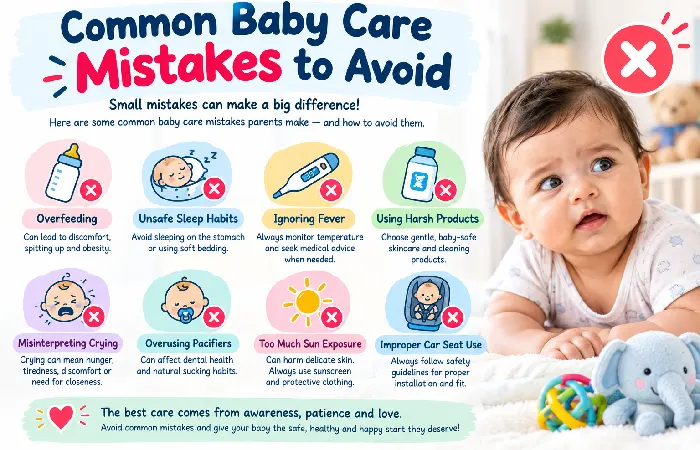
Even parents with much experience can make errors. Simple safety practices can minimize many common baby care issues.
Too many products are used.Too many products are used
Babies don’t require a stock of many lotions, cleaners, fragrances, and more. Excessive use of products can cause skin irritation.
Use simple, baby friendly products and add new products slowly.
Leaving Baby Unattended
Do not leave a baby unattended on a changing table, near water or anywhere else.
Even young babies can move unexpectedly.
Neglecting minor safety issues
Keep small items, cords, medicine, cleaning supplies and other household items out of reach of babies.
When babies start moving, parents should frequently observe the environment from the baby’s point of view.
Overheating the Baby
When babies are dressed too warmly, they may be uncomfortable and may raise sleep-related safety concerns. Dress for the environment and adhere to safe-sleep guidelines.
After Every Online Baby-Care Tip
Not all social media and online parenting advice is accurate. If you have any health and safety concerns, consult a trusted source or your baby’s healthcare provider.
Comparing Babies
All babies grow at different speeds. Comparing feeding, sleeping, moving or other behaviors with another baby can cause unnecessary stress.
If you are concerned about development or health, discuss your concerns with a pediatrician.
When to Seek Professional Advice
When parents notice something unusual and/or are concerned about their baby’s health, they should contact their baby’s healthcare provider.
Professional advice might be required in the following situations:
Fever that lasts for a sustained period or temperature changes (above or below normal) that are unusual.
- Difficulty breathing
- Poor feeding
- Signs of dehydration
- Excessive sleepiness or problem getting up
- Persistent vomiting
- Bad or getting worse rash
- Signs of infection
- Moderate or severe change in normal behavior
- Worry over development or growth
In times of emergency, parents are advised to attend the GP immediately, not just because of a routine appointment.
The correct answer may vary depending on the age and symptoms of the baby, their medical history and general condition. If any doubt, it’s always better to ask a health care expert than to trust a word from a website.
Building a Simple Baby Care Checklist
Keeping a checklist of daily baby care can help make it less stressful, particularly for any new parent or caregiver.
Daily Checklist
☐ Feed baby frequently
☐ Change diapers regularly
☐ Maintain clean and dry diaper area
☐ Use a skin conditioner to reduce irritation to skin
☐ Dress baby comfortably
☐ Follow a safe sleep routine
☐ Clean feeding equipment properly
☐ Age appropriate interaction and play
☐ Store hazardous materials out of the reach of children
Things that need to be done each week or at any time.
☐ Wash baby towels and clothes
☐ Wash regularly used baby products.
☐ Check baby products for damage or expiration
☐ Restock diapers and other essentials
☐ Check on upcoming health check-ups
Baby Care FAQs
How often should I bathe my baby?
Babies generally do not need a full bath every day. Parents can clean the face, hands, neck folds, and diaper area regularly and give full baths as appropriate for the baby’s age and needs.
What products are essential for baby care?
Basic supplies include diapers, wipes or soft cloths, baby clothing, towels, a changing surface, gentle skin-care products, grooming tools, and a thermometer. Feeding and bathing supplies depend on your baby’s needs.
How can I protect my baby’s sensitive skin?
Use gentle products, avoid unnecessary fragrances, keep the diaper area clean and dry, and avoid very hot water. Speak with a healthcare professional about persistent skin problems.
What should I do if my baby develops a diaper rash?
Keep the diaper area clean and dry and change diapers regularly. A suitable barrier cream may help. If the rash is severe, persistent, worsening, or accompanied by other symptoms, contact your baby’s healthcare provider.
Is a daily baby care routine necessary?
A routine can make life easier, but it does not need to be strict. Babies’ needs change frequently, particularly during the first year. A flexible routine is often more practical.
How can I make bath time safer?
Prepare everything before starting, use appropriate warm water, and keep your baby within arm’s reach throughout the bath. Never leave a baby alone near water.
When should I call my baby’s doctor?
Contact your baby’s healthcare provider when you notice concerning symptoms, changes in feeding or behavior, persistent illness, or anything that does not seem normal for your baby. For emergencies, seek immediate medical help.
Top 5 Baby Care Products Available Online in the USA
| Baby Care Product | Best For | Approx. Price (USD) | Online Availability in USA |
| Aquaphor Baby Healing Ointment | Dry skin and diaper-area protection | $9.99–$12.99 | Target, Walmart, Amazon |
| Desitin Daily Defense Diaper Rash Cream | Everyday diaper rash protection | $6.29–$16.99 | Target, Walmart, Amazon |
| Aquaphor Baby 3-in-1 Diaper Rash Relief Cream | Diaper rash care | About $7.79 | Target, Walmart, Amazon |
| Vanicream Baby Moisturizing Cream | Dry and sensitive skin | About $9.99 | Target and other online retailers |
| Frida Baby Ultimate Baby Essentials Set | Basic baby-care tools and essentials | About $99.99 | Target and other online retailers |
Parents can find many baby care tips online, but it is important to use reliable health information when making decisions about a baby’s safety and well-being. The American Academy of Pediatrics (AAP) provides trusted guidance on newborn and baby care, including feeding, sleep, safety, development, and common health concerns. Parents can use this resource to learn more about age-appropriate care and discuss any specific concerns with their child’s pediatrician.
Final Takeaway
Good baby care is built around simple, consistent habits. Clean diapering, gentle skin care, safe bathing, comfortable clothing, proper hygiene, and a flexible daily routine can help babies stay comfortable while making life easier for parents.
You do not need to follow every parenting trend or buy every baby product. Focus on safety, cleanliness, comfort, age-appropriate care, and advice from trusted healthcare professionals.
As your baby grows, their needs will change. A routine that works for a newborn may look completely different a few months later. Staying flexible and paying attention to your baby’s needs can make everyday care more manageable.