

Last Updated: September 16, 2026
While bath time for babies can become a calming experience, it can be a little stressful as a new parent when you’re bathing a newborn for the first time. Babies require soft handling, support and supervision around water.
There’s no need for a complicated bathing regimen or many products. Usually just a safe bath, lukewarm water, gentle cleaning and a soft towel are sufficient. The first rule is easy: never leave your baby unattended in water – not for a second.
Bath time can also be an enjoyable time to talk and sing to your baby, and be able to interact with them gently as they grow.
When Is the Best Time for Baby Bath Time?
For each baby there’s no perfect time. It’s best when your baby is neither overly hungry nor overly sleepy, and is calm and awake.
Some parents like to bathe their baby at night as it will become a part of the bedtime routine. Others discover that they are able to function better during the morning or in the afternoon.
Avoid bathing baby directly after feeding. Allowing your baby some time after a feeding may help make it more comfortable.
The time of day that is good for bath time is:
- Baby is alert and somewhat settled.
- You have enough time and no hurry.
- The temperature of the room is acceptable when it comes to warmth.
- Have all the ingredients ready before beginning
- There’s another adult on hand in case more assistance is required
Keep in mind that newborn schedules vary from day to day. No need to bathe your baby at the same time each day.
Preparing for Baby Bath Time

Preparation is a key component to a safe baby bath. Prepare all the necessary items before entering your baby’s water.
You may need:
A bathtub for a baby or other secure bathing area
- Lukewarm water
- A soft washcloth
- Use a gentle baby cleanser (if necessary)
- A clean towel
- Clean diaper
- Fresh baby clothes
If your baby’s skin requires a gentle moisturizer, then go with that option.
Keep these items in easy reach.
Use a thermometer to check the water temperature before putting your baby in the water. Water should be warm, but not hot.
Try and eliminate distractions in the bathing space. Do not put the phone away and get distracted to retrieve the phone, towel, or other items.
Never leave your baby alone in water. Take baby with you if you need to leave the area.
Essential Baby Bath Products
There’s no need to have a whole bunch of products to use for baby bath time. There are a few simple items that will make bathing easier.
| Product | Purpose |
| Baby bathtub | Provides an appropriate bathing space |
| Soft washcloth | Gentle cleaning |
| Mild baby cleanser | Helps clean skin when needed |
| Soft towel | Drying after the bath |
| Clean diaper | Used after drying |
| Baby clothes | Keeps baby comfortable afterward |
| Gentle moisturizer | Helps with dry skin when appropriate |
Select baby or sensitive skin products. Fragrance-free varieties can be of benefit to babies with sensitive skin.
Do not use body wash, strong soap, scrubber or heavily perfumed products on your baby’s sensitive skin.
You don’t even have to use cleanser all the time. Depending on your baby’s needs and pediatrician’s advice, plain water can be used for some baths.
How to Create a Comfortable Bath Routine
If you have a routine for bath time, your baby can get used to this.
The first step is to set up the room and materials. Maintain warm and comfortable temperature.
Talk softly to your baby while your baby takes the bath. Sing a simple song or look your baby in the eye while holding him.
Minimize the amount of chaos in the bath and try to stick to a shorter time in the water. Long baths are not necessary for babies.
Once the baby has been washed, pat him/her dry, put on a clean diaper and appropriate clothing.
A basic activity could be:
- Prepare, check water, gently wash, rinse, dry, moisturize if necessary, diaper, dress.
- You can modify the routine as your baby gets older.
If your baby is upset during the bath time, discontinue the bath and comfort your baby. For some babies it takes time to get used to water.
Cleaning Your Baby Gently
Baby skin is sensitive – it’s best to clean gently.
Avoid letting baby’s head and neck sink while bathing. Gently wash face and body with a soft washcloth.
Be mindful of places where dirt, milk, sweat or water may accumulate including:
- Neck folds
- Behind the ears
- Hands and fingers
- Under the arms
- Diaper area
A fold of skin around the legs
No scrubbing your baby’s skin necessary. Hand washing is sufficient.
Be careful and thorough when cleaning diaper area. When changing an infant’s diaper, wipe front to back on the girl.
Do not let soap come in contact with your baby’s eyes. Should cleanser enter the eyes, flush with plenty of clean water.
Use one hand to support baby as desired and remain within arm’s reach during bath.
Washing Baby’s Hair
Baby’s hair doesn’t always require daily shampooing.
If it’s safe to use, when giving your baby a bath use a small amount of mild baby cleanser or shampoo. Use fingers to gently massage the scalp.
Do not scratch or rub scalp.
Take care to avoid touching your baby’s eyes and face. If this is easier, gently rinse the head with a soft washcloth.
A few babies get dry, flaky skin on their scalp, which is sometimes called “cradle cap”. Common in babies but don’t pick or scratch the flakes.
If your baby’s scalp is extremely red and swollen, or has any sores or doesn’t seem to be comfortable, consult your baby’s doctor for advice.
Drying and Caring for Baby After Bath Time
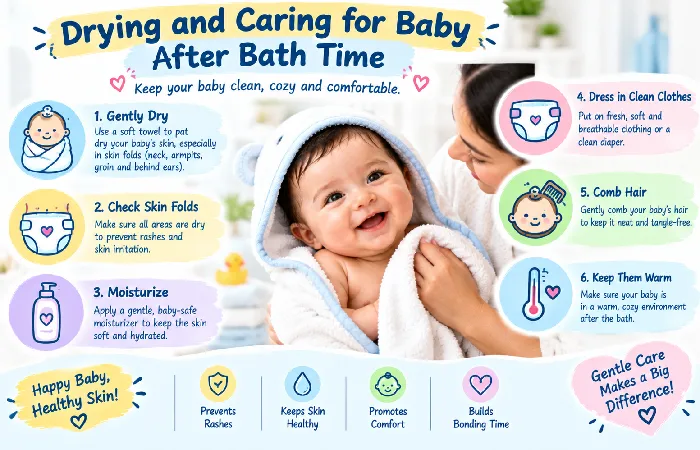
Once babies’ bathing is finished, gently remove him/her from the water and gently dry him/her with a soft towel.
Pat dry, do not rub. Focus on the skin folds around the neck, arms, legs and diaper.
If your baby’s skin is dry, you can apply a baby-approved, mild, and non-scented cream.
Then put on a clean diaper and comfortable clothing.
It is important not to over-dress your baby after being bathed. Select appropriate clothes for the temperature of a room.
Bath time may also be a pleasant moment to cuddle and chat with the child. The after-bath few quiet minutes can contribute to a soothing and pleasant experience.
How Often Should Babies Be Bathed?
Naturally babies do not need a daily bath. Sometimes extreme bathing will cause dry, sensitive skin.
A couple of baths per week might be adequate for a newborn and young baby. It is still significant to clean the diaper area and mildly clean areas that are soiled.
The amount of bathing may vary based on your baby’s age, skin type, and action level, as well as your family’s bathing habits.
When babies start being more active. They can get sweaty, dirty or messy when playing and may need more frequent baths.
If your baby has dry or sensitive skin, consult your doctor to determine the optimal bathing incidence and products.
The aim is to maintain your baby’s cleanliness without causing further irritation or drying out the skin.
Common Baby Bath Mistakes to Avoid
Parents’ distraction or lack of preparation can create safety issues even during simple bathing tasks.
Allowing the Baby to be left alone.
This is the greatest thing to avoid doing. Never leave a baby alone in water, even in shallow water.
An introduction to the use of hand-watering.
Comfortable adult temperature is not necessarily comfortable to a baby. Be careful to check temperature and use hot water.
Getting Supplies Ready when the Bath Starts
Prepare towels, diapers, clothes and other items before putting your baby in the water.
Using Too Much Soap
A good amount of cleanser is not required. Excessive amounts can dry or irritate the baby’s skin.
Scrubbing the Skin
Gently clean baby skin. Don’t use any harsh washcloths or scrubbing.
Bathing for Too Long
Long baths may cause a loss of body heat and may lead to dry skin in babies. Be sure to set the temperature of baths and make them fairly short.
Getting Distracted
Distractions, such as phones, visitors, pets, or household chores, can divert your attention. Your baby needs your attention during bath time.
Unsafe Bath Accessories
Do NOT use bath seats or supports in place of supervision. You still need your hands-on attention, though.
Final Takeaway
Baby bath time doesn’t need to be complicated. Do everything before you start, use comfortably warm water, clean your baby gently and do not let him or her out of arm’s reach while bathing.
This basic procedure will ensure your baby stays clean and it will also be a calm bonding experience. For questions regarding bathing frequency, skin issues or products, your pediatrician can offer direction based on the individual needs of your baby.
The American Academy of Pediatrics also has a great resource for parents called HealthyChildren.org, which aids in trusted information for infant bathing and safety.