
 Syeda Yasmeen
Health & Wellness Writer Syeda Yasmeen creates clear and
reader-focused content covering health,
nutrition, wellness, women’s health,
men’s health and babies’ health.
Read Full Bio of Author →
Syeda Yasmeen
Health & Wellness Writer Syeda Yasmeen creates clear and
reader-focused content covering health,
nutrition, wellness, women’s health,
men’s health and babies’ health.
Read Full Bio of Author →
 Sameena Begum
Health, Technology & Digital Content Reviewer Sameena Begum reviews selected content
for clarity, factual presentation,
consistency and reader usefulness.
Read Full Bio of Reviewer →
Sameena Begum
Health, Technology & Digital Content Reviewer Sameena Begum reviews selected content
for clarity, factual presentation,
consistency and reader usefulness.
Read Full Bio of Reviewer →
 Dr. Khizrana Begum
General Physician and Dermatologist Dr. Khizrana Begum is a qualified medical
professional with MBBS and MD qualifications
and 5+ years of experience. She reviews health
and wellness content for medical accuracy,
clarity and responsible presentation.
Read Full Bio of Medical Reviewer →
Dr. Khizrana Begum
General Physician and Dermatologist Dr. Khizrana Begum is a qualified medical
professional with MBBS and MD qualifications
and 5+ years of experience. She reviews health
and wellness content for medical accuracy,
clarity and responsible presentation.
Read Full Bio of Medical Reviewer →
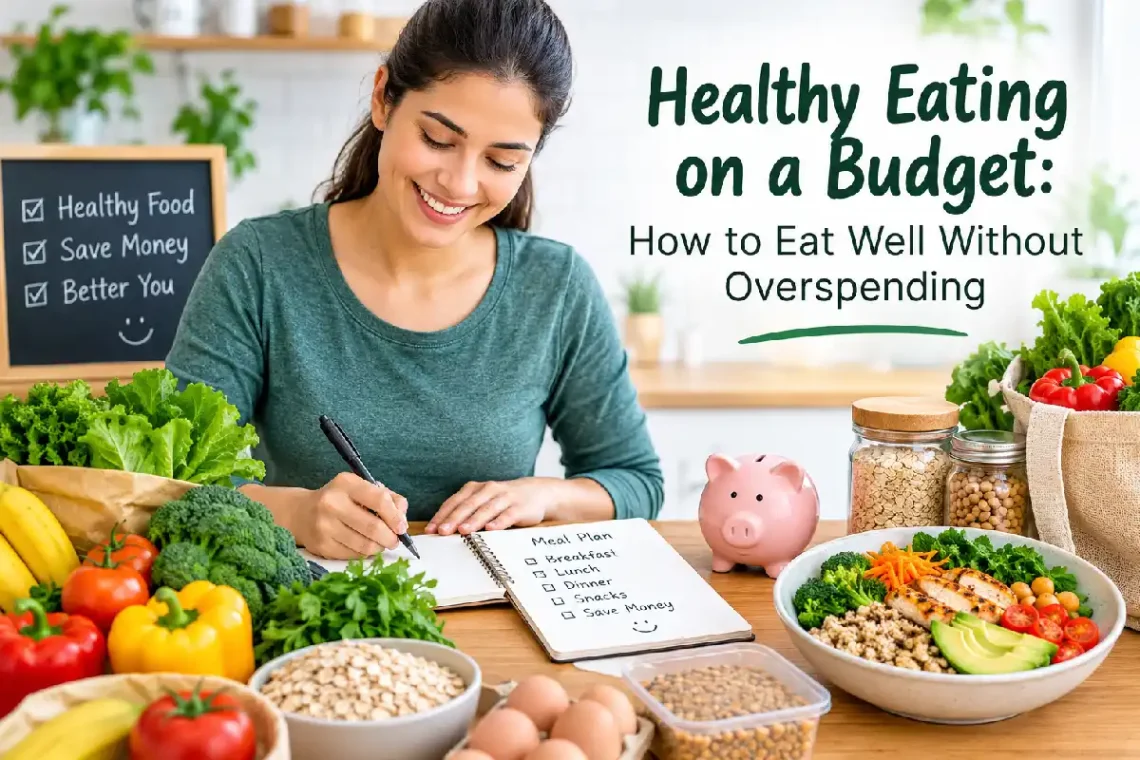
Healthy eating does not mean expensive eating. With some forethought, foods like beans and lentils, eggs, oats and rice, seasonal fruits and vegetables, frozen foods and whole grains make reasonable staples of healthy meals.
This is mainly essential in times of changing food prices. The USDA Food Price Outlook release for August 2026 anticipates a 2.5% rise in food-at-home prices in 2026, and a 3.6% increase in the prices of restaurant and other foodservice prices in 2026.
The cheerful side is that a healthy eating plan does not have to be luxurious. Before you buy anything, plan, be aware of flexibility, minimize food surplus and cook at home more.
❝
This article is part of
Healthy Lifestyle Hub
Is Healthy Eating Expensive?
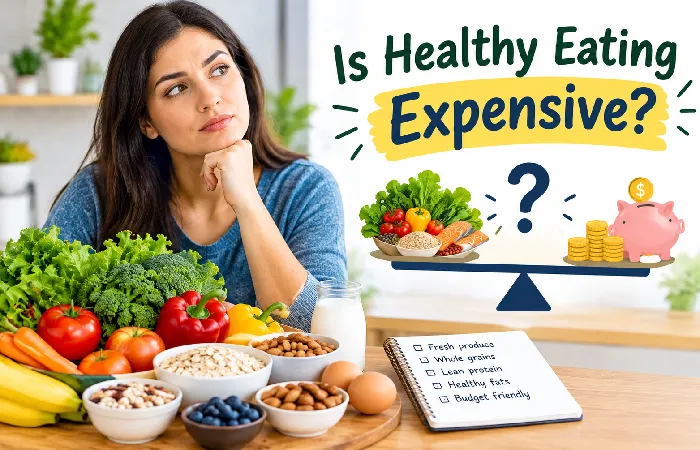
It can be expensive to eat healthy foods. If you are buying high excellence foods, prepared foods, specialty foods or eating lunch every day at the restaurant. The foods are not vital to a healthy diet.
Creating a budget friendly healthy diet on a basic level of food provides protein, fibre, vitamins and minerals.
CDC’s 2026 guidance calls for importance on nutrient-rich foods and admits that healthy eating needs individuals to select foods that are within their budget and taste favourites.
A healthy eating plan can help you organize nutritious meals while keeping everyday food choices simple and consistent. Explore our complete healthy eating plan for practical guidance.
Affordable foods vs. expensive choices
| More affordable choice | More expensive alternative |
| Oats | Packaged breakfast bars |
| Lentils | Ready-made protein meals |
| Beans | Specialty meat alternatives |
| Eggs | Premium breakfast products |
| Seasonal fruit | Out-of-season imported fruit |
| Frozen vegetables | Pre-cut fresh vegetables |
| Brown rice | Ready-to-eat grain bowls |
| Plain yogurt | Flavored premium yogurt |
| Homemade soup | Restaurant soup |
| Homemade snacks | Packaged snack foods |
This is not to say that high quality foods are necessarily high in costs. It is just that price doesn’t necessarily indicate nutrition quality.
How to Plan Affordable Healthy Meals
Planning is the easiest approach to saving money, and it is easy to plan the meals you will need before you go shopping.
Look in the refrigerator, freezer and pantry first. Utilize foods that you have available before purchasing new food.
Then select foods that have common ingredients.
A healthy eating plan can help you organize nutritious meals while keeping everyday food choices simple and consistent. Explore our complete healthy eating plan for practical guidance.
For example, cooked lentils could be made into:
- Lentil curry
- Lentil soup
- Lentil salad
- Lentil and rice bowls
The CDC suggests planning recipes, using common ingredients in several meals, “stretching” recipes and freezing leftovers when suitable. (CDC)
Make sure to use the “mix and match” approach
Choose:
2–3 proteins + 3–4 vegetables + 2 grains + 2 fruits + 1–2 healthy fats
These ingredients may be mixed differently each day of the week.
This is often cheaper than purchasing ingredients for seven totally different recipes.
Planning meals for an entire week can make it easier to manage grocery shopping, portions, and food costs. Explore our 7-day healthy eating plan for practical meal ideas.
Example Buy:
- Eggs
- Lentils
- Chicken or tofu
- Oats
- Rice
- Seasonal vegetables
- Bananas
- Apples
- Plain yogurt
- Peanuts
Those fixings can make breakfasts, lunches, dinners and snacks without having to compile a massive grocery list.
Budget-Friendly Protein Sources
This is where lentils come in handy, whether it be in dhal, soups or curries.
Affordable protein options
| Protein | Budget-friendly use |
| Lentils | Dal, soups, curries |
| Beans | Chilis, salads, bowls |
| Eggs | Breakfast, wraps, salads |
| Chickpeas | Curries, salads, hummus |
| Tofu | Stir-fries and bowls |
| Plain yogurt | Breakfast and snacks |
| Canned fish | Sandwiches and salads |
| Chicken | Curries, soups and rice bowls |
| Peanuts | Snacks and sauces |
| Seeds | Oatmeal and yogurt toppings |
According to the current CDC healthy eating strategies, nuts, beans, peas, lentils, seeds, poultry eggs, and seafood are all considered good protein options.
A nutritious breakfast can be included in an affordable eating routine with simple ingredients and balanced choices. Explore our healthy breakfast eating plan for helpful ideas.
Eat plant-based protein more frequently.
Beans and lentils are mainly helpful when your budget is short. They are a good basis of protein and fiber.
They can also be complementary with rice, whole grain breads, roti or other main foods to make filling meals.
Affordable Fruits and Vegetables
Fresh produce is healthy but it’s not always essential to purchase the most luxurious produce.
Choose seasonal produce
Fruits and vegetables are available in the seasons when they are in season and at reasonable prices.
Affordable food choices can also support a balanced approach to weight management when meals focus on nutritious ingredients and appropriate portions. Explore our healthy eating plan for weight loss for useful guidance.
Consider some of these are good budget options:
- Bananas
- Apples
- Oranges
- Cabbage
- Carrots
- Potatoes
- Onions
- Spinach
- Tomatoes
- Cucumbers
The price is different in different parts of the world and also with different seasons, so compare what is available locally.
Don’t pass up on the frozen versions of vegetables.
Frozen vegetables are also a good budget choice since they are long lasting and can help minimize food waste.
Fresh, frozen, dried and canned fruits and vegetables are all part of a healthy diet, according to the CDC, and ideally should be canned with no added sugar and a low sodium content.
Building balanced meals with affordable ingredients can help make healthy eating more sustainable over time. Explore our balanced healthy eating plan for practical tips.
Purchase only what is necessary for your needs
If half of the vegetables in the bag go to waste, then it is not a good deal.
One of the simplest ways to lose money is through the waste of food.
Cheap Healthy Breakfast Ideas
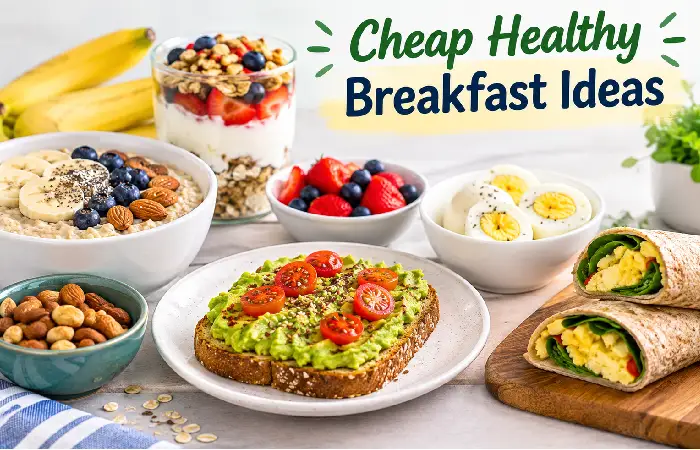
Do not make breakfast too difficult.
Oatmeal topped with banana and peanuts
The fiber comes from the oats, the fruit from the banana and the protein and healthy fats from the peanuts.
Use whole-grain toast for breakfast, topped with eggs.
Choosing nutritious and budget-friendly foods can make it easier to create satisfying meals without overspending. Explore our healthy foods for your eating plan for helpful ideas.
Include tomatoes, or other cheap vegetable, for extra nutrients.
Fruit and Oats plain yogurt
Keep cost down by expending seasonal fruit.
Vegetable poha
Poha can be used for breakfast in numerous mixtures such as vegetables and peanuts.
Homemade vegetable omelet
Eggs, onions, tomatoes and seasonal vegetables can make an affordable protein packed meal.
A peanut butter and banana sandwich.
If possible, use whole-grain breads and peanut butter that has minimal or no added sugar.
Choosing nutritious and budget-friendly foods can make it easier to create satisfying meals without overspending. Explore our healthy foods for your eating plan for helpful ideas.
Affordable Lunch and Dinner Ideas
The key to a cheap meal is this simple:
Simple seasoning, staple, protein and vegetables.
Dal and rice
A traditional pairing that is filling, budget-friendly and time efficient to cook in large quantities.
Bean and vegetable bowl
Mix beans, rice, vegetables and a little bit of healthy fat together.
Vegetable egg rice
Take left over rice, eggs, and vegetables to make a fast meal.
Curry of chicken and vegetables.
Use less chicken and serve with vegetables and rice or roti.
Lentil soup
A large pot can make a few meals and will freeze for future use.
Chickpea salad
Mix the chickpeas with cucumber, tomato, onion, greens and homemade simple dressing.
Tofu stir-fry
Serve tofu with vegetables as they are available that week, and rice.
Budget-Friendly Healthy Snacks
When buying snack items individually, they can get very costly very quickly.
Instead, go with some simple food stuff, like:
- Banana
- Apple
- Boiled egg
- Plain yogurt
- Homemade popcorn
- Carrot sticks
- Cucumber
- Roasted chickpeas
- Peanuts
- Nuts – limited amounts.
- Peanut butter and fruit.
If it actually saves you money and you know you will use it, then purchase the larger package
Shopping for Healthy Foods on a Budget
By keeping a list of groceries handy, you can keep your budget and your diet on track.
The CDC suggests purchasing a list as this can cut down on impulse buying and unnecessary trips to the store.
Before shopping
- Review: What is already present?
- Plan: What will I make for supper?
- List: What ingredients are really missing?
- Compare: Are there better value brands, sizes or seasonal options?
Calculate and compare the unit rates
Failing to choose the package with the cheapest sticker price.
Compare costs/kilog, litre, ounce etc as appropriate.
A larger package is only cheaper if you have a time frame that will not exceed its expiration date.
Make use of frozen and canned foods
Frozen vegetables will last a lot longer than fresh vegetables. Canned beans can also save time for preparation.
When possible, opt for lower sodium canned foods and rinse canned beans.
Limit convenience spending
Convenience items such as pre-cut vegetables, individual snack packs, ready-made snacks or meal foods, and delivery foods can be available and convenient, but making the basic foods yourself can often be more cost effective.
Meal Prep to Save Money
You can save food and avoid the impulse to buy at the last minute by preparing meals in advance.
It doesn’t have to be cooked all seven days of the week.
However, make construction cubes.
Weekend preparation example
Cook:
- A large pot of lentils.
- Several servings of rice
- Boiled eggs
- Roasted vegetables
- Washed salad vegetables
Do the same in a different manner throughout the week.
Use leftovers intentionally
If you grill chicken for supper, make sure to eat that leftover chicken at lunch the next day.
Make a big pot of soup and freeze single servings.
Vegetables get too soft to make a salad, make soup, curry or omelet, or stir-fry.
The idea is to consume the food that is purchased.
Common Budget-Friendly Eating Mistakes
There are some tips that can backfire even if you’re looking to save money.
The phrase “buy it now” is a common refrain these days.
Don’t expect a “discount” when the food is not eaten!
Opting for ultra-processed food items as they are more affordable.
Look at the package price and the full meal. A low cost snack is not necessarily a low cost meal of protein, fiber or nutrients.
Shopping without a plan
If you go to the grocery store without a list and without being prepared, you may end up buying things that you don’t really need.
Steer clear of all frozen and canned foods
Fresh doesn’t always mean better. Frozen and canned foods can be a healthy, economical and convenient choice when you choose them wisely.
Trying to eat healthy will be overwhelming if it’s too complicated.
No special ingredients or fancy recipes are required.
A typical lentil and veggie and rice and yogurt meal is as useful as a pricey health-food dish.
2026 Budget-Friendly Food Price Snapshot
Current USDA data details why it is important to make smart purchases. In July 2026, U.S. grocery-store prices for food were 2.7% higher than a year before, while USDA estimated 2026 prices for food at home would increase 2.5% for the year in the August forecast.
Eating healthy on a budget is possible with simple planning, seasonal foods, and affordable staples such as beans, lentils, whole grains, vegetables, and eggs. Planning meals before shopping and comparing prices can also help reduce food costs. For more practical guidance, see the CDC’s tips for eating healthy on a budget.
Some categories are changing much more than others.
| Category | 2026 USDA forecast |
| Food at home | +2.5% |
| Food away from home | +3.6% |
| Beef & veal | +9.8% |
| Fresh fruits | +2.9% |
| Fresh vegetables | +5.9% |
| Poultry | +0.5% |
| Eggs | −30.8% |
| Dairy | Approximately unchanged |
The following figures are U.S. projections and shall not be considered as the grocery price forecasts for India or any other country. They are helpful here to serve as an example of the reason that food prices can be quite different across food groups in the year 2026. The bigger lesson
Do not create a list of items that you would like to buy and then budget for it.
Think flexible.
Use lentils, beans, eggs, tofu or another protein if the chicken gets too costly. When berries are costly, opt for bananas, apples or oranges or seasonal local fruit.
Final Takeaway
Eating healthy on a budget can be skilled by selecting the right foods to stick with. Rather than the right health products to avoid.
Eat staples like lentils, beans, rice, eggs, oats, whole grains, seasonal fruits and vegetables, frozen veggies, plain yogurt and low-cost protein sources. Make a meal plan before going to the store, relate unit prices, make large quantities of food, usage remains, and do not buying more food than can be used.
Eating a healthy diet does not need a big grocery budget.
It is significant to keep it humble with a healthy, filling and cheap meal at home, not because it wants to be luxurious food, but because constancy is more significant than price.
This is a general nutrition education article. However, dietary requirements may differ from person to person, especially when a person has a medical condition, is pregnant, has a food allergy or has a special dietary requirement.
Dr. Khizrana Begum is a qualified medical professional with MBBS and MD qualifications and 5+ years of experience in the medical field. She works as a General Physician and Dermatologist, with knowledge spanning general medicine, dermatology, preventive healthcare and skin health.
As a medical reviewer, Dr. Khizrana Begum reviews health and wellness content for medical accuracy, clarity and authenticity.
Sameena Begum reviews content for clarity, accuracy and reader usefulness. Her review process helps ensure that published information is clearly presented, relevant and easy for readers to understand.
Syeda Yasmeen is a Health & Wellness Writer at InHumanBeing.com. She creates clear and reader-focused content across health, nutrition, wellness, women’s health, men’s health and babies’ health.