

 Syeda Yasmeen
Health & Wellness Writer Syeda Yasmeen creates clear and
reader-focused content covering health,
nutrition, wellness, women’s health,
men’s health and babies’ health.
Read Full Bio of Author →
Syeda Yasmeen
Health & Wellness Writer Syeda Yasmeen creates clear and
reader-focused content covering health,
nutrition, wellness, women’s health,
men’s health and babies’ health.
Read Full Bio of Author →
 Sameena Begum
Health, Technology & Digital Content Reviewer Sameena Begum reviews selected content
for clarity, factual presentation,
consistency and reader usefulness.
Read Full Bio of Reviewer →
Sameena Begum
Health, Technology & Digital Content Reviewer Sameena Begum reviews selected content
for clarity, factual presentation,
consistency and reader usefulness.
Read Full Bio of Reviewer →
 Dr. Khizrana Begum
General Physician and Dermatologist Dr. Khizrana Begum is a qualified medical
professional with MBBS and MD qualifications
and 5+ years of experience. She reviews health
and wellness content for medical accuracy,
clarity and responsible presentation.
Read Full Bio of Medical Reviewer →
Dr. Khizrana Begum
General Physician and Dermatologist Dr. Khizrana Begum is a qualified medical
professional with MBBS and MD qualifications
and 5+ years of experience. She reviews health
and wellness content for medical accuracy,
clarity and responsible presentation.
Read Full Bio of Medical Reviewer →
Everyday habits that contribute to physical health, mental health, energy and excellence of life are healthy lifestyle habits. They include drinking an adequate quantity of fluids, getting enough sleep, keeping healthy relationships, getting sufficient exercise, controlling stress, eating healthy foods, and keeping up with protective care. No need to make complete changes all at once. It is a reality that over time, small and consistent developments can become habits.
What Are Healthy Lifestyle Habits?
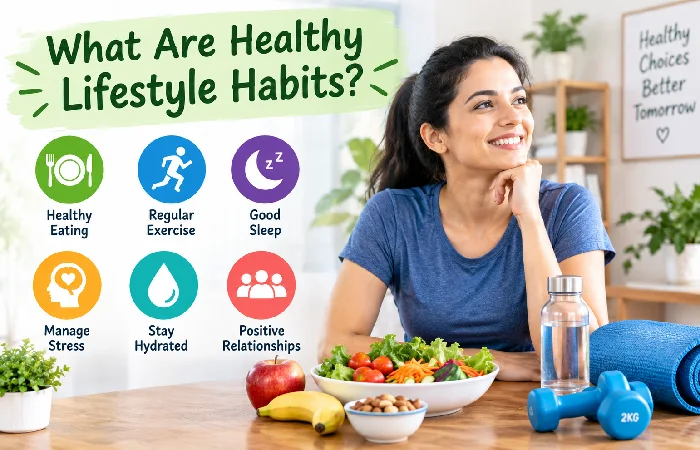
Healthy lifestyle habits are routine behaviors that promote good health for your body and mind. They are not low calorie diets or crazy fitness programs. Rather, these are things that can be incorporated into your daily habits.
These are some healthy practices that are common:
Eat a Balanced Diet
A nutritious diet pattern should consist of diverse, nutritious foods. Eat vegetables, fruits, whole grains, protein foods, healthy fats, and appropriate milk or non-dairy.
Don’t exclusively focus on one superfood instead try to have a diversity of foods during meals. Vegetables, fruits, beans, lentils, whole grains, nuts and seeds are also worthy sources of fiber, which can aid with digestion.
CDC’s Healthy Eating Guidelines 2026 include a concentration on healthy fats, vegetables, whole grains, fruits, protein, and dairy without added sugars while decreasing highly processed foods, added sugars, and excess sodium.
Stay Physically Active
Another healthy lifestyle habit is to exercise repeatedly. It can support maintain heart health, build strong muscles and bones, progress sleep, maintain healthy body weight and mental wellness.
The optional amount of activity for adults is 150 minutes of moderate-intensity aerobic. Two days of muscle-strengthening exercises per week. This action can be broken down into smaller time intermissions if desired.
If you are a learner at exercise, begin slowly. Simple actions you can do to get more lively include walking, cycling, swimming, dancing, or doing active household chores.
Make Sleep a Priority
Sleep should be seen as a essential part of your health and wellbeing regime. It is not something that can be “sacrificed” when life gets busy.
The universal guideline for most adults (18-60 years) is to get 7 hours or more of sleep per night. Some of the good habits to follow are getting to bed at the same time each night, keeping the bedroom silent and comfortable, preventive the use of electronic devices before bedtime, and evading caffeine close to bedtime.
Manage Stress
Stress is a normal incidence in life, and incessant stress impacts sleep, eating habits, physical activity and general health.
Stress management can be healthy and include:
Walking for 15 minutes each day
- Practicing slow breathing
- Playing with friends and family
- Reading
- Listening to music
- Practicing meditation
- Enjoying hobbies
- Taking breaks during peak hours
The best strategy is one you can do, that is consistent with your lifestyle.
Maintain a Healthy Weight
Weight management is not all about extreme diets. It’s about eating healthy, exercising, sleeping well and maintaining a healthy lifestyle.
The CDC points out that healthy eating, physical activity, sleep patterns, stress, age, genetic and medications are all factors in healthy weight and growth.
Don’t use tobacco and limit excessive amounts of alcohol.
The best thing you can do for your long-term health is not to use tobacco. Smoking is associated with serious diseases of the lungs, heart and other organs.
Keep Up With Preventive Care
Preventive healthcare should be complemented by healthy lifestyle habits.
Some examples of preventive measures are vaccinations, health screenings, dental health and continuous dialogue with a health care provider depending on age, gender, family history and individual risk factors.
Never put off prevention until you are feeling unwell.
Simple Healthy Lifestyle Checklist
| Habit | Simple Daily Action |
| Healthy eating | Add vegetables or fruit to meals |
| Physical activity | Walk, exercise, or stay active |
| Sleep | Keep a consistent sleep schedule |
| Hydration | Drink water regularly |
| Stress management | Take short relaxation breaks |
| Tobacco avoidance | Do not smoke |
| Alcohol | Avoid excessive drinking |
| Preventive care | Follow recommended screenings and vaccines |
| Social connection | Spend meaningful time with others |
Start With Small Changes
It’s not necessary to make all of these healthy habits happen simultaneously. Choose a couple points you consider to be in need of improvement and work on them.
Small changes may help, such as having a 10-minute break to de-stress, eating more vegetables at a specific meal, having a consistent bedtime routine, or taking a 20-30 minute walk each day, for example.
If these are ingrained, start another good habit. This step-by-step strategy can help with maintaining lifestyle changes in the long-term.
The concept is not to do it “perfectly. The goal is for people to develop the habit to have a healthier lifestyle but to do it throughout the year.
What a healthy lifestyle means to each individual is unique. Your nutritional choices may vary from person to person based on your age, health, time constraints, culture, budget, and your taste.
Why Are Healthy Lifestyle Habits Important?
Lifestyle choices that promote physical and mental health and can help lower the risk of chronic diseases. Healthy living includes regular exercise, healthy eating, keeping your weight in check, avoiding tobacco, and taking the right medical care.
You can also find healthy habits that can help you:
- Keep up your energy all day long
- Maintain a healthy weight (BMI)
- Improve physical fitness
- Support better sleep
- Manage everyday stress
- Protect heart health
- Help maintain strong bones and muscles
- Enhance the general well-being of a community.
It’s not about how perfect you’re going to be. It’s more important to be consistent than to do something that isn’t realistic and only lasts for several days.
Healthy Eating as a Lifestyle
Healthy eating is not about one particular food or diet, it’s about your eating pattern.
| Food Group | Examples |
| Protein foods | Fish, eggs, poultry, beans |
| Fruits | Bananas, oranges, apples, berries |
| Nuts and seeds | Chia seeds, walnuts, almonds |
| Whole grains | Whole-grain bread, oats, brown rice |
| Dairy or alternatives | Fortified alternatives, yogurt, milk |
| Vegetables | Peppers, carrots, broccoli, spinach |
Experts suggests a varied eating plan by consuming fruits, vegetables, whole grains, protein foods, and fit nutrients, while decreasing too much salt, added sugars, saturated fat and alcohol.
Simple healthy eating habits
- Include vegetables at lunch and dinner.
- Eat more whole grain products.
- Practise having a protein source at meals.
- Eat more fruit and less sugary foods.
- Drink water regularly.
- Pay attention to portion sizes.
- Avoid too many processed foods, if possible.
You don’t have to eliminate your favourite foods. A healthy diet provides for enjoyment while making healthy choices the majority of the time.
Regular Exercise and Physical Activity
Physical activity helps uphold the health of the circulatory system, muscles, bones, flexibility and mental health.
A good general guideline for adults is 150 minutes of moderate intensity exercise per week and two days of muscle strengthening exercise per week, although the amount of activity may vary based on individual needs. Getting exercise regularly is important to health, according to experts and the American Heart Association.
You have the option of doing activities you enjoy, like:
- Brisk walking
- Cycling
- Swimming
- Dancing
- Jogging
- Strength training
- Recreational sports
- Gardening
If you have not been active, do a little at a time. Any amount of movement is beneficial to a more active lifestyle.
Healthy Sleep Habits
Sleep is a vital element of physical and mental health. Most adults need 7-9 hours of sleep per night, but this can fluctuate from person to person. Healthy sleep is part of the American Heart Association list of top markers of cardiovascular health.
Enhanced sleep patterns include:
- Going to bed and waking up at similar times
- Having a good night’s sleep
- Avoiding caffeine before sleep
- Caffeine late in the day: Avoid this.
- Creating a relaxing bedtime routine
- Getting regular daytime activity
If you have sleep problems regularly or feel very sleepy after you have had enough sleep, talk to a health professional about your sleeping issues.
Stress Management and Mental Well-Being
While stress is a normal part of life, chronic stress may impact sleep, eating patterns, mood and functioning.
Some of the good stress management behaviours are:
- Walking or exercising
- Deep breathing
- Meditation
- Spending time outdoors
- Reading
- Listening to music
- Practicing a hobby
- Discussing with family or friends
This is why it’s recommended to take frequent breaks while being busy.
The ideal is that which is suitable for your lifestyle and for which you can commit to repeating regularly.
Harvard Health recommends focusing on sustainable habits, rather than quick fixes, such as eating well, exercising, sleeping and stress management.
If stress, anxiety, sadness or other mental health problems continue and interfere with daily living, it’s best to ask for help from a professional health care or mental health worker.
Hydration and Healthy Drink Choices
Water is an important part of the body’s proper operations. The amount of fluid required is dependent upon the age, activity, climate, diet and health.
Any of the following is suitable for day to day use:
- Water
- Sparkling water (without added sugar)
- Unsweetened tea
- If a fortified milk substitute is used, it should be milk or an appropriate fortified milk substitute.
- Drink as little beverages with high sugar content as possible.
In hot weather and when exercising, it is especially crucial to drink plenty of water. But people with healthy kidneys don’t have to drink all that water, however.
It’s easy to do: drink often during the day and be aware of thirst and other indicators of dehydration.
Maintain healthy social and relationship habits.
Healthy Social and Relationship Habits
Positive relationships can offer companionship, emotional support, encouragement and a sense of belonging.
Some healthy relationship practices are:
- Make time for others that you care about
- Listening actively
- Communicating clearly
- Setting reasonable boundaries
- Seeking assistance when necessary
- Respecting differences
- Reducing the amount of time involved in relationships that on a regular basis bring harm or distress
- Social habits doesn’t always imply having lots of friends. Some positive connections can be beneficial.
The American Heart Association takes a comprehensive view of healthy living that covers social connection, mental health, stress management, sleep, nutrition and physical activity.
Work-Life Balance and Healthy Routines
Owning a job, going to school, taking care of your family and yourself can be competing priorities. Healthy routine provides room for the needs to be met rather than filling the day with work or other obligations.
Helpful work-life habits
- Establish achievable daily goals.
- Take rest breaks to move around.
- Try not to sit for extended periods, if possible.
- Plan meals rather than often missing.
- Consistently maintain a sleep schedule.
- Find time to spend with family, friends or hobbies.
- Limit work-related activities to a reasonable level.
- Do important things before the end of the day today to plan tomorrow.
You do not need to have a flawless program. It is better to have a plan that is flexible for the most part of the day than having a very rigid plan that you find easy at first, but then find hard to stick to.
Healthy Habits for Preventive Health
Preventive health emphasizes the prevention of risks and early detection of health issues.
Some good health prevention practices may be:
- Routine health check-ups as needed
- Recommended vaccinations
- Age- and risk-appropriate screening
- Dental checkups
- Important follow-up care, including ophthalmologic consultations and medications as needed
- Blood pressure checks
- Monitoring important health conditions
- Taking medicines as prescribed
- Avoiding tobacco
Preventive care is based on age, sex, family history, risk factors and medical history. Not all screenings are suitable for all people.
Preventative health, according to experts includes regular checkups and healthy lifestyles.
Healthy Lifestyle Habits: A Simple Weekly Checklist
| Habit | Simple Goal |
| Healthy eating | Include vegetables and fruit regularly |
| Physical activity | Move throughout the week |
| Strength training | Include muscle-strengthening activity when appropriate |
| Sleep | Maintain a consistent sleep routine |
| Hydration | Choose water regularly |
| Stress management | Schedule time to relax |
| Social connection | Stay connected with supportive people |
| Preventive care | Follow recommended healthcare visits |
Healthy Lifestyle Habits for Different Ages
There are varying healthy living expectations for different life stages.
Children and teenagers
The healthy diet, sleep, physical activity, play, and positive relationships are all essential to the wellbeing of young people.
Support from parents and caregivers can be provided by establishing healthy habits instead of just thinking about weight and appearance.
Adults
There are many choices for adults to make between work, family, exercise, nutrition, sleep and preventive care.
Healthy practices are suggested such as getting regular exercise, eating healthy foods, getting enough sleep, managing stress, and getting health screenings.
Older adults
Physical activity, strength and balance exercises, healthy eating, social connections, sleep, managing medications and regular health care are all important components of healthy aging.
Appropriate regimen is dependent upon personal health and fitness.
How to Create a Healthy Daily Routine
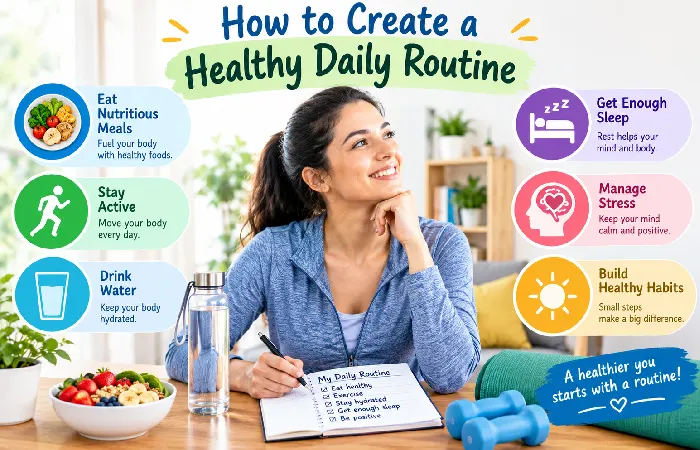
There is no need for a complicated healthy routine.
Morning
- Get up at the same time each day.
- Drink water.
- If eating breakfast, have a healthy breakfast.
- Include some movement/stretching.
- Check in your top priority tasks.
During the day
- Eat balanced meals.
- Drink fluids regularly.
- Take movement breaks.
- Play with positive individuals.
- Take on stressful tasks one at a time.
Evening
- Sit down for family dinner at an appropriate time.
- Minimize screen exposure prior to sleep.
- Prepare for the next day.
- Do something relaxing.
- Have a regular sleep schedule.
Example healthy day
| Time | Healthy Habit |
| Morning | Water, breakfast, short walk |
| Midday | Balanced lunch and movement break |
| Afternoon | Healthy snack and hydration |
| Evening | Nutritious dinner and relaxation |
| Night | Reduced screen time and regular bedtime |
The following is an example only. Your schedule should be based on your work, family, health and personal needs.
How to Maintain Healthy Lifestyle Habits
It is difficult to start a good habit but harder to keep it up.
Try these strategies:
- Start small
- Don’t make a drastic change – select one small change.
- So, for instance, if you want to begin exercising, try taking a walk for 10 minutes instead of an intense workout.
- Track progress
- You can use a simple calendar, notes app or habit tracker to visualize your consistency.
- Use habit stacking
- Link a new habit to an existing one.
For example:
- After brushing your teeth → stretch for two minutes.
- After lunch → take a short walk.
Just before sleep → lay out clothes for the next day.
The American Heart Association defines habit stacking as when you add a new behavior to an existing one.
Expect setbacks
You can still have a bad workout or a bad meal, but it does not mean that all of your workouts are bad.
Common Unhealthy Lifestyle Habits to Avoid
Some habits can negatively affect long-term health.
| Habit | Healthier Approach |
| Smoking | Avoid tobacco and seek help to quit |
| Excessive alcohol | Limit alcohol or avoid it |
| Highly processed diet | Eat more whole and minimally processed foods |
| Long periods of inactivity | Add regular movement |
| Chronic sleep restriction | Protect a consistent sleep schedule |
| Ignoring persistent symptoms | Seek appropriate medical advice |
| Skipping preventive care | Follow recommended checkups and screenings |
| Extreme dieting | Choose sustainable eating habits |
| Excessive sitting | Take regular movement breaks |
It is especially significant not to use tobacco. Not smoking is listed as one of the fundamental steps to healthy living.
Building healthy lifestyle habits is about making small, sustainable choices every day. Eating a varied diet, staying physically active, getting enough sleep, maintaining a healthy weight, avoiding tobacco, and limiting excessive alcohol can support overall health and help reduce the risk of several chronic conditions. The CDC recommends combining healthy eating with regular physical activity and adequate sleep rather than relying on quick fixes.
Frequently Asked Questions About Healthy Lifestyle Habits
So what are the most critical healthy lifestyle habits?
A balanced diet, adequate physical exercise, good sleep habits, managing stress, avoiding tobacco and socialization are all important cornerstones.
What is the first step to a healthy lifestyle?
Begin with one or two attainable changes. Start with a daily walk, make one meal or set a regular bedtime, for instance.
How many years does it take to establish a healthy habit?
The number of days needed is not certain and will vary from one person to the next. The process of forming a habit depends on the consistency, on the person, on the behavior, on the environment.
Is it possible for good health to ward off all diseases?
Answer: Healthy living can help lower some health risks and help maintain good health; however, healthy habits cannot prevent all diseases. In addition to this, genes, age, environment, infections and more can affect health.
But, is healthy eating a diet?
No. Healthy eating is a lifestyle of eating healthy foods. A diet can be a special eating plan or short-term plan.
What is the amount of physical activity recommended for adults?
At least 150 minutes of moderate-intensity physical activity a week and 2 days of muscle-strengthening activity is recommended, but may be different for individuals.
Why is sleep a component of a healthy lifestyle?
Sleep is essential to the body to restore itself, improve mental well-being, function properly, and promote many normal body functions. Good sleep is thus an integral component of general well-being.
Are there lifestyle changes that can help?
Yes. Little habits can make a big difference and get ingrained as a habit over time. The American Heart Association suggests that it’s better to make healthy behaviors a step-by-step process and not all or nothing.
When do I need to talk to a health care provider?
If you do experience symptoms that last or concern you or you are unable to exercise safely, have a medical condition that impacts your lifestyle choices, still have trouble sleeping, or you have trouble with your weight or nutrition, consult with a health care provider.
Final Takeaway
Healthy living isn’t about becoming a perfect person. It’s about developing a set of authentic ‘to-do’ routines that help you stay physically and mentally healthy.
Eat healthy, move throughout the day, get plenty of rest, drink water, manage stress, have good relationships, seek help and avoid negative habits. Takes small steps, maintains consistency and changes as needs change.
A healthy lifestyle that you can actually maintain year after year isn’t a lifestyle you can only do for a few weeks.
Dr. Khizrana Begum
Dr. Khizrana Begum is a qualified medical professional with MBBS and MD qualifications and 5+ years of experience in the medical field. She works as a General Physician and Dermatologist, with knowledge spanning general medicine, dermatology, preventive healthcare and skin health.
As a medical reviewer, Dr. Khizrana Begum reviews health and wellness content for medical accuracy, clarity and authenticity.
Sameena Begum
Sameena Begum reviews content for clarity, accuracy and reader usefulness. Her review process helps ensure that published information is clearly presented, relevant and easy for readers to understand.
Syeda Yasmeen
Syeda Yasmeen is a Health & Wellness Writer at InHumanBeing.com. She creates clear and reader-focused content across health, nutrition, wellness, women’s health, men’s health and babies’ health.