
 Syeda Yasmeen
Health & Wellness Writer Syeda Yasmeen creates clear and
reader-focused content covering health,
nutrition, wellness, women’s health,
men’s health and babies’ health.
Read Full Bio of Author →
Syeda Yasmeen
Health & Wellness Writer Syeda Yasmeen creates clear and
reader-focused content covering health,
nutrition, wellness, women’s health,
men’s health and babies’ health.
Read Full Bio of Author →
 Sameena Begum
Health, Technology & Digital Content Reviewer Sameena Begum reviews selected content
for clarity, factual presentation,
consistency and reader usefulness.
Read Full Bio of Reviewer →
Sameena Begum
Health, Technology & Digital Content Reviewer Sameena Begum reviews selected content
for clarity, factual presentation,
consistency and reader usefulness.
Read Full Bio of Reviewer →
The immune system is a body’s natural defence system. It consists of cells, tissues, organs and proteins that have the ability to identify and react to germs and other materials that might harm the body. The immune system is not localized in a single organ, but is active throughout the body and in contact with the skin, blood and lymphatic system and with other tissues. Knowing how it works can assist in making better choices regarding nutrition, exercise, sleep, vaccinations and health.
What is the immune system?
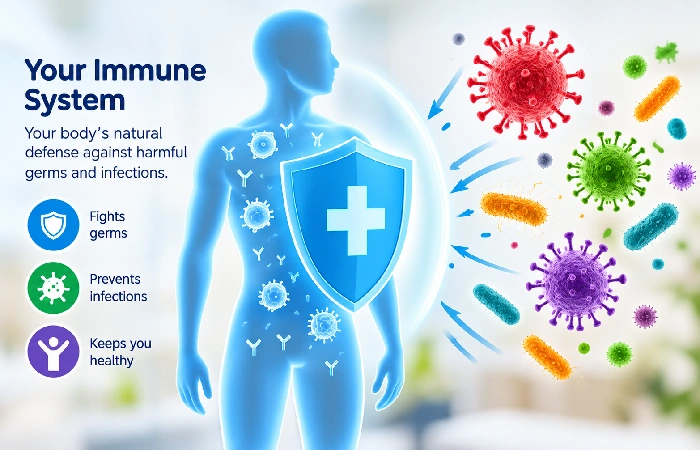
Immunity system is a complex system, designed to protect the body against the elements that may be harmful, such as bacteria, viruses, fungi, parasites and other foreign material.It consists of physical barriers, immune cells, organs and tissues, antibodies and other molecules. The skin is a critical first line of defense, and immune cells provide extra lines of defense within the body.
There are several important roles played by the immune system:
- Identifying hazardous materials
- Responding to infections
- Producing antibodies
- Detachment of impaired or abnormal cells
- Creating immune memory
- Supporting the body following immunity response
The immune system is not a standalone system. It serves as a link between other body systems; it helps to maintain normal health and ward off disease.
How Does the Immune System Work?
Immune system is a complex system which functions to defend the body against potentially harmful bacteria, viruses, fungi, parasites and other foreign substances.
It consists of physical barriers, immune cells, organs and tissues, antibodies and other molecules. The skin is a critical first line of defense, and immune cells provide extra lines of defense within the body.
There are several important roles played by the immune system:
- Identifying hazardous materials
- Responding to infections
- Producing antibodies
- Detachment of impaired or abnormal cells
- Creating immune memory
- Supporting the body following immunity response
The immune system is not a standalone system. It serves as a link between other body systems; it helps to maintain normal health and ward off disease.
Innate and adaptive immunity
| Type | Main feature | Examples |
| Innate immunity | Rapid, general defense | Skin, mucus, inflammation |
| Adaptive immunity | Specific response with potential memory | Antibodies and T-cell responses |
Immunity in its two forms is not mutually exclusive but complementary.
Parts of the Immune System
The immune system is spread throughout the body. Each organ/tissue has a specific function.
| Part | Main Role |
| Bone marrow | Produces many blood and immune cells |
| Thymus | Helps T cells mature |
| Lymph nodes | Filter lymph and support immune responses |
| Spleen | Filters blood and supports immune activity |
| Lymphatic vessels | Transport lymph and immune cells |
| Skin | Provides a physical protective barrier |
| Mucous membranes | Trap and help remove potential threats |
| White blood cells | Detect and respond to threats |
Bone marrow
Bone marrow is the soft tissue located within a large number of bones. It generates blood cells such as some kinds of immune cells.
Thymus
The thymus is in the upper chest and plays a special role in childhood. It is a place where T cells develop.
Lymph nodes
Lymph Nodes are small bodies of tissue found throughout the body. They carry out filtration of lymph and create areas where immune cells can come into contact with substances that pass through the lymphatic system.
Some infections may cause swollen lymph nodes because of increased immune activity in and around the nodes.
Spleen
The spleen is located in the upper left part of the abdomen. Filters blood and has immune cells to respond to blood-borne substances.
Skin and mucous membranes.
Protection starts before immune cells have to engage in an infection. The skin acts as a physical barrier and mucus can trap particles and microorganisms in the respiratory and digestive tracts.
Types of Immunity
Immunity is resistance to specific disease or specific toxin. There are two major types: innate immunity and adaptive immunity.
Innate immunity
The first line of defense is the innate immunity. Is present at birth and responds in general terms.
Examples include:
- Skin
- Mucus
- Stomach acid
- Certain immune cells
- Inflammation
- Protective chemical mechanisms
Such defenses can start immediately as soon as the body recognize a threat.
Adaptive immunity
- Adaptive immunity is more specifically targeted at a specific antigen.
- B cells can synthesize antibodies specific for targets. T cells may help coordinate the immune response or attack infected cells.
- Immune memory can also be generated by adaptive immunity.
Active immunity
Active immunity is immunity that is produced in response to an antigen by the immune system of the host.
It can occur after:
- An infection
- Vaccination
- Protection from a vaccine is different for different diseases, different vaccines, different people and more.
- Passive immunity
Passive immunity is the transfer of antibodies which are produced in another person than the recipient.
A natural example is the transfer of some of the antibodies from a mother to her baby. Certain medical interventions can also be used to provide temporary immunity by the provision of antibodies.
Passive immunity usually does not result in long-lasting immune memory as in active immunity.
What Does the Immune System Do?
The immune system has a few key functions.
Identifies potential threats: Immune cells can detect many of the substances that could pose a threat.
Responds to infections: Different immune cells work together to control and remove infectious organisms.
Makes antibodies: B cells can make antibody-producing cells. These proteins have specific targets.
Develops immune memory: Certain adaptive immune cells form immune memory cells following an immune response. They may make it easier for the body to react to an antigen that it already knows.
Eliminates damaged cells: Immune cells can also help to recognize and eliminate some damaged, infected, or abnormal cells.
Signs of a Healthy Immune System
No one “home test” can provide you with a definitive answer about the “strength of your immune system.
Healthy immune function generally means that the body’s defenses can respond appropriately to threats while controlling unnecessary immune activity.
Normal immune function is comprised of:
- Appropriate response to infections
- Coping with everyday diseases
- Maintaining protective barriers such as healthy skin
- Generating the correct immune responses
- Building immunity for appropriate diseases and illnesses
It is normal for healthy people to experience occasional infections. Don’t assume that if you have gotten sick, your immune system is weak.
Signs of a Weak Immune System
A weak immune system may refer to a number of situations. Some individuals may have an immune deficiency disease, or experience temporary immune deficiencies caused by illness, medication or nutritional deficiency or another medical condition.
The following are signs to look for:
- Frequent infections
- Unusually severe infections
- Repeated infections
- Infections that are lingering for a longer than expected period.
How to Support Your Immune System
No one shot or one thing will make the immune system immediately stronger. Instead, concentrate on regular practices in order to promote health.
- Eat a well-balanced diet.
Eat a variety of vegetables and fruits, whole grains, beans, nuts, seeds and dairy or alternatives to dairy and protein.
- Stay physically active
Exercise can help maintain healthy heart, body, sleep and weight.
- Get enough sleep
During sleep the body recovers and continues to operate normally.
- Manage ongoing stress
Chronic stress has a negative impact on health. Walking, breathing exercises, hobbies, social connection and relaxation are all simple activities that can help manage daily stress.
- Avoid smoking
Smoking can harm the lungs and inhibit the ability of the body to withstand infection.
- Keep vaccinations up to date
Vaccines instruct the immune system to fight against a particular disease and could offer protection from it.
Healthy lifestyle should be considered as a complement and not a replacement for medical treatment and/or recommended vaccinations.
Foods That Support Immune Health
None of the individual foods are 100% effective against all infections. But a diverse diet can help get the nutrients that are required for healthy immune response.
| Food Group | Examples | Important Nutrients |
| Citrus fruits | Oranges, grapefruit | Vitamin C |
| Vegetables | Broccoli, peppers, carrots | Vitamin C, carotenoids |
| Beans and lentils | Chickpeas, lentils, beans | Protein, zinc, folate |
| Nuts and seeds | Almonds, sunflower seeds | Vitamin E, magnesium |
| Fish | Salmon, sardines | Protein, vitamin D, omega-3 fats |
| Eggs | Eggs | Protein, vitamin B12, selenium |
| Yogurt | Plain yogurt with live cultures | Protein, calcium |
| Whole grains | Oats, brown rice | Fiber, minerals |
Focus on variety
Don’t limit yourself to one “immune-boosting” food, but rather try a variety of foods throughout the week.
Vitamins and Minerals for Immune Health

Normal immune function is dependent on a number of vitamins and minerals. This can happen when the body is not getting enough of some nutrients, causing problems.
Normal immune function is dependent on a number of vitamins and minerals. This can occur due to insufficient intakes of certain nutrients, which can lead to issues.
Important nutrients include:
- Vitamin A: Helps to maintain normal tissue and immune function.
- Vitamin B6: Assists with immune-cell function.
- Vitamin B12: Important for blood and nerve function and a normal metabolic rate.
- Vitamin C: Immune stimulating, antioxidant.
- Vitamin D: a function in immune system.
- Vitamin E: Protects cells from damaging oxidation.
- Folate: Critical for the growth and development of blood cells.
- Iron: Required for normal immune function, and other biological processes.
- Selenium: Antioxidant and Immune health.
- Zinc: Important for immune-cell development and function.
Additional nutrients do not necessarily provide additional protection, and a deficiency of a nutrient can affect function of the immune system.
Should you take immune supplements?
Sometimes it helps to take supplements if someone has a deficiency in a particular nutrient or their health care provider has advised them to take a nutrient.
In some instances, less can be more! Some vitamins and minerals may have side effects or interact with medicines at high dosages.
Don’t take supplements at high doses without talking with a health care provider, especially if taking a medication or have a medical condition.
Exercise and the Immune System
A healthy lifestyle, including regular exercise, can help in maintaining a healthy immune system.
It’s not necessary to have an extreme workout every day. Activities such as:
- Walking
- Cycling
- Swimming
- Dancing
- Strength training
- Recreational sports
- Household activities
All can be a part of an active lifestyle.
Easier than trying a high-intensity exercise program at first, you can begin with small activities.
Avoid doing too much too quickly
It is important to note that exercise is beneficial but recovery is equally important. An abrupt increase in intensity and/or volume of workouts may result in over-exertion and risk of injury.
Gradually increase your level of activity and give your body adequate rest.
Sleep and Immune Health
It is important to note that exercise is beneficial but recovery is equally important. An abrupt increase in intensity and/or volume of workouts may result in over-exertion and risk of injury.
- Gradually increase your level of activity and give your body adequate rest.
- Simple ways to improve sleep
- Some simple tips for a better night’s sleep!
- Maintain a regular sleep routine.
- Create a comfortable, quiet bedroom environment.
- Reduce bright screens before bedtime.
- Try not to eat large meals near bedtime, as they may disrupt sleep.
- Stay away from caffeine in the late afternoon or evening.
- Create a relaxing bedtime routine.
The amount of sleep needed varies by age. Kids and young people typically require more sleep than adults.
If you do not get good sleep, despite healthy lifestyle or if you get up feeling tired and worn out regularly, consult your healthcare professional.
What does stress have to do with the Immune System?
Stress is an expected reaction to difficult times. A short period of stress is different to unmanaged stress.
Chronic stress has an impact on sleep, diet, exercise and health. These indirect effects make it even more challenging to keep healthy habits.
Stress and the Immune System
Do things that are suitable to your lifestyle, including:
- Walking outdoors
- Deep breathing
- Meditation
- Stretching
- Reading
- Being around friends and family
- Listening to music
- Maintaining hobbies
It is not possible to say which is the best stress-management technique. The aim is to discover healthy strategies that you can do regularly.
A Simple Immune-Health Routine
| Daily Habit | Practical Example |
| Balanced meals | Include vegetables, fruit, protein, and whole grains |
| Physical activity | Take a walk or exercise regularly |
| Sleep | Follow a consistent sleep schedule |
| Hydration | Drink fluids regularly |
| Stress management | Take short relaxation breaks |
| Tobacco avoidance | Avoid smoking and secondhand smoke |
| Preventive care | Follow recommended vaccinations and checkups |
Immune System and Age
As a child grows, his or her immune system evolves, and it keeps changing as he or she grows older.
In some instances, babies can also get antibodies from their mothers while they are in the womb or through breast milk. Their immune system does not develop completely until after birth, however.
As children grow up they will come into contact with various new microorganisms. As they grow, their adaptive immune system begins to gain immunity and immune memory.
A person’s immune system remains active in adulthood, defending the body against infections and other dangers. It is still important to adopt healthy lifestyle habits during this time.
The immune system can have less effect in older individuals. This is one of the reasons older people might experience a different risk of some diseases than younger people and may react differently to some vaccines.
Healthy aging is about keeping active, eating a healthy diet, sleeping well, controlling health problems and practising recommended preventive care.
Immune System and Common Infections
The body’s immune system and typical infections.Common infections and body’s immune system.
Microorganisms are continually met by the immune system. Many are not infectious and others are.
There are several stages to a common infection:
- A micro organism enters the body.
- Body responds to the threat and its indicators.
- The immune system responds.
- Symptoms can appear as the infection and immune response get worse.
- Body fights off infection; starts to heal.
An immune response can cause symptoms like fever, swelling, tiredness or soreness. Symptoms will vary depending on the infection and the affected area of the body.
Having a cold or other common infections from time to time does not equate to a weak immune system.
But if you’re having infections at an unusual frequency, intensity, duration or it’s complicated, you may need medical evaluation.
Infection vs. immune response
These are similar but not synonymous terms.
- An infection is when a micro-organism enters and multiplies in the body.
- An immune response is body’s response to a foreign substance, or a threat.
- The body’s immune response to an infection may cause some of the symptoms, but not necessarily.
- Vaccines are designed to boost the immune system.Vaccines are meant to strengthen the immune system.
- Vaccines are used to train the immune system to identify a particular infectious disease.
- Vaccination may be exposure to an antigen or information for the immune system to mount a targeted immune response without the person having to actually suffer from the disease.
- The immune system can then acquire immune memory.
If the person is exposed to the same pathogen in the future, the immune system might be more effective.
How Vaccines Support the Immune System
If the vaccinated person encounters the relevant pathogen later, the immune system may respond more effectively.
Why vaccination matters
Vaccines are designed to provide protection against specific diseases. They are different from general lifestyle habits such as eating well or sleeping enough.
Healthy habits support overall health and normal immune function, while vaccination provides targeted protection against particular diseases.
Vaccination recommendations vary by:
- Age
- Country
- Health conditions
- Pregnancy
- Travel
- Occupation
- Previous vaccination history
For this reason, people should follow the vaccination schedule recommended by their healthcare professional or public health authority.
Immune System Disorders and Conditions
The immune system must remain balanced. It needs to respond strongly enough to protect the body while avoiding inappropriate attacks against healthy tissues.
Several broad categories of immune-related conditions exist.
| Category | What Happens |
| Immunodeficiency | Part of the immune system does not work properly |
| Autoimmune disease | The immune system mistakenly attacks the body’s own tissues |
| Allergy | The immune system reacts to substances that are usually harmless |
| Immune dysregulation | Immune activity becomes improperly controlled |
| Certain inflammatory conditions | Excessive or inappropriate immune activity contributes to inflammation |
Some inflammatory diseases Uncontrolled or abnormal immune response leads to inflammation
Immunodeficiency
Immunodeficiency is a deficiency in the immune system, or in the parts of the immune system that are not working properly.
There are genetic immune deficiencies and acquired immune deficiencies (due to specific diseases, drugs or treatments).
Individuals with substantial immune deficiencies might be at higher risk for specific diseases.
Autoimmune conditions
Autoimmune diseases happen when the immune system attacks its own cells or tissues.
There are a number of autoimmune diseases and they can target various organs.
The symptoms range from condition to condition and may be pain, swelling, fatigue, skin change or other issues.
Allergies
Allergies are a reaction of the immune system to a normally harmless substance.
Common triggers include:
- Pollen
- Dust mites
- Certain foods
- Animal allergens
- Insect stings
- Some medicines
An allergic reaction may be mild or it may be a serious reaction that calls for urgent medical treatment.
When to Talk to a Healthcare Professional
Most common infections don’t need a lot of immune testing.
- Repeated infections
- Infections that are severe or unusual.
- Infections which fail to respond to treatment as expected.
- Persistent unexplained fever
- Unexplained weight changes
- Long-lasting symptoms
- A frequent need for the use of antibiotics
- There is concern that they may have an immune disorder.
- Questions about vaccination
Unease about the safety of supplements or medicines for immunity.Worry about supplements and/or medicines and immunity.
Your health care provider can review your medical history, medications, symptoms and risk factors and determine if testing or further evaluation is necessary.
Never use an internet “immune system test” or an advertisement for an immune system supplement as a diagnosis for an immune disorder.
Frequently Asked Questions About the Immune System
What does the immune system do?
Immune system is a network of cells, tissues, organs and proteins that defend against infections and other potentially harmful substances.
What are the two principle components of the immune system?
Bone marrow, thymus, lymph nodes, spleen, lymphatic vessels, immune cells, skin and mucous membranes are important parts.
Name the two types of immunity.
There are two types of immunity: innate immunity and adaptive immunity. Innate immunity is general, responds quickly and does not give rise to immune memory, whereas adaptive immunity is more specific, takes longer to respond, and may give rise to immune memory.
Is it possible to strengthen your immune system?
A better term is supporting normal immune function. Good nutrition, exercise, sleep, not smoking, stress management and recommended vaccinations may all help keep you healthy.
What are some foods that can help maintain good immune function?
Nutrients for normal immune function can be obtained from a varied diet including vegetables, fruits, whole grains, beans, nuts, seeds, protein-rich foods and other nutrient-dense foods.
Can vitamins cure infections?Do vitamins help ward off infections?
Vitamins have a role in normal immune function especially if they are deficient. But, too much of vitamins will not automatically protect against infections.
Is there an immune connection between sleep and immunity?
Yes. Sleep is a crucial component of well-being and normal immune function. Poor sleep, when it happens frequently, can have a negative impact on health.
Are vaccines protective?Are vaccines immune boosting?
Vaccines teach the immune system to target and protect against particular diseases. They are not a strengthening of all immunity but only particular diseases.
What are symptoms of immune disorders?
Chronic, severe, unusual or persistent infections may be a sign of an immune disorder. But these symptoms can have numerous other causes.
When is it time for a health care provider?
Seek medical advice if you tend to have a lot of or serious infections, if symptoms continue or if you have concerns about your immune system, vaccinations, medicine or eating habits.
Key Takeaways: Immune System
The immune system is a dynamic (lifelong) defense system.
The key points of this guide are:
The immune system consists of organs, tissues, cells, antibodies and barriers that protect.
Innate immunity gives general defense in a rapid manner.
The adaptive immunity can target a specific pathogen and can develop immunity against it.
A healthy diet, proper sleep, physical activity and stress management are fundamental for general health and normal immune function.
Vaccines offer protection against a particular disease.
Immunity can be compromised due to age and other medical issues.
If you experience infection more often than usual or more severely, you should seek expert diagnosis.
Do not consider supplements as a substitute for a balanced diet and/or medical treatment.
No single food or product can provide you with protection against illness.
Maintaining a healthy lifestyle, following proper preventive measures and relying on sound medical advice will make a huge difference in a person’s immune health over time, not any immune products that claim to “boost” the immune system instantly.
Sameena Begum
Sameena Begum reviews content for clarity, accuracy and reader usefulness. Her review process helps ensure that published information is clearly presented, relevant and easy for readers to understand.
Syeda Yasmeen
Syeda Yasmeen is a Health & Wellness Writer at InHumanBeing.com. She creates clear and reader-focused content across health, nutrition, wellness, women’s health, men’s health and babies’ health.