
 Syeda Yasmeen
Health & Wellness Writer Syeda Yasmeen creates clear and
reader-focused content covering health,
nutrition, wellness, women’s health,
men’s health and babies’ health.
Read Full Bio of Author →
Syeda Yasmeen
Health & Wellness Writer Syeda Yasmeen creates clear and
reader-focused content covering health,
nutrition, wellness, women’s health,
men’s health and babies’ health.
Read Full Bio of Author →
 Sameena Begum
Health, Technology & Digital Content Reviewer Sameena Begum reviews selected content
for clarity, factual presentation,
consistency and reader usefulness.
Read Full Bio of Reviewer →
Sameena Begum
Health, Technology & Digital Content Reviewer Sameena Begum reviews selected content
for clarity, factual presentation,
consistency and reader usefulness.
Read Full Bio of Reviewer →
Immunity depends on a regular and adequate intake of certain nutrients and immune-boosting foods can deliver nutrients when eating a balanced diet. While no single food will prevent any infection, a varied diet of fruits, vegetables, protein, whole grains, healthy fats and fermented foods will help to uphold normal immune function.
What Are Immune-Boosting Foods?
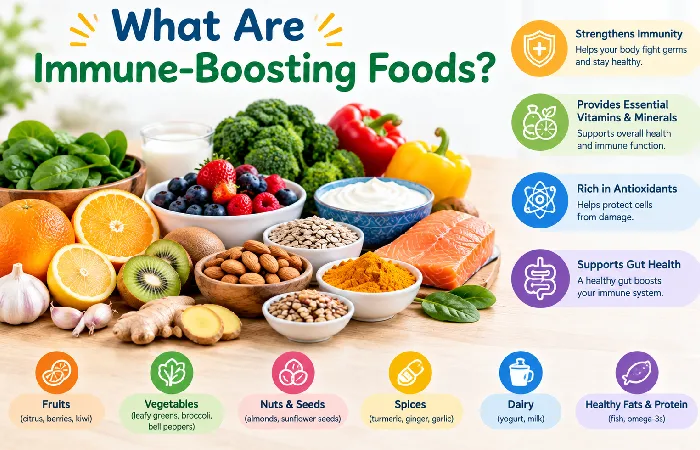
Foods containing nutrients that play a role in the immune function are often mentioned to as immune-boosting foods. These are vitamins (C, D, A, E), protein, zinc, selenium and others.
Rather than focusing on one “superfood,” aim for variety throughout the week.
| Nutrient | Food sources | Why it matters |
| Vitamin C | Oranges, guava, kiwi, peppers | Supports normal immune function |
| Vitamin D | Fortified foods, fatty fish, egg yolks | Helps regulate immune responses |
| Zinc | Meat, seafood, beans, seeds | Important for immune-cell function |
| Protein | Eggs, fish, dairy, beans, poultry | Needed to build and maintain body tissues |
| Vitamin A | Carrots, sweet potatoes, spinach | Supports healthy skin and immune barriers |
| Vitamin E | Almonds, sunflower seeds, avocado | Helps protect cells from oxidative damage |
It is better to have a balanced eating pattern than to increase the amounts of any single nutrient.
Fruits for Immune Health
Vitamin C, antioxidants, fiber and other nutrients are easily included in the diet via fruits.
Good choices include:
- Fruits and citrus fruits
- Guava
- Kiwi
- Strawberries
- Papaya
- Mango
- Apples
- Pomegranate
Certain fruits can be particularly beneficial to include in your diet. If you are looking for food that has vitamin C in high amounts, such as guava, citrus fruits, kiwi, strawberry, and papaya.
Consider using fruit at breakfast, as a snack or in combination, in plain yoghurt.
Vegetables for Immune Health
Vitamins, minerals, fiber and plant compounds found in vegetables aid with overall health.
Dark green leafy vegetables like spinach, kale and broccoli contain a number of essential nutrients. Carrots and sweet potatoes are orange and yellow vegetables that can be used by the body to indorse vitamin A status.
One easy target is to make vegetables a regular part of the meal both lunches and dinners and to mix up the colors.
Easy vegetable combinations
| Meal | Simple combination |
| Breakfast | Spinach with eggs |
| Lunch | Mixed vegetable curry with dal |
| Snack | Carrot and cucumber sticks |
| Dinner | Broccoli or beans with fish or chicken |
| Vegetarian meal | Mixed vegetables with lentils |
All fresh, frozen and properly prepared vegetables are part of a healthy diet.
Foods Rich in Vitamin C
Vitamin C is a vital nutrient that plays multiple roles in the immune system. It is found naturally in many fruits and vegetables.
The following resources are helpful:
- Guava
- Oranges
- Kiwi
- Bell peppers
- Strawberries
- Papaya
- Tomatoes
- Broccoli
It is more useful to consume vitamin-C rich foods regularly than when one feels unwell.
A very humble pairing is to have guava or orange in the morning and a portion of vitamin C rich vegetables at lunch/dinner time.
Foods Rich in Vitamin D
Vitamin D is a nutrient that plays a crucial role in upholding healthy bones, muscles, and an appropriate immune system. Relatively few foods naturally contain high amounts of vitamin D.
Food sources include:
- Salmon, sardines and other fatty fish
- Egg yolks
- Fortified milk
- Fortified plant-based drinks
- Some fortified cereals
- Other factors and sunlight exposure also affect vitamin D status. Do not self-prescribe high doses of vitamins or minerals just because you think you may be deficient in them.
Foods Rich in Zinc
Zinc is a micronutrient that plays a key role in the proper functioning of the immune system and other metabolic pathways.
These are good dietary sources:
- Other seafood such as oysters, clams, scallops, crab, and lobster.
- Meat and poultry
- Eggs
- Milk and Dairy Foods
- Beans
- Lentils
- Pumpkin seeds
- Cashews
For vegetarians and vegans, zinc is available from legumes, seeds, nuts and fortified foods, with the amount of absorption depending on the individual.
Lentils, vegetables, whole grains and seeds can offer multiple nutrients in a single meal.
Protein and Immune Health
Protein is not typically referred to as an “immune booster,” but it is crucial for the maintenance of body tissues and the production of proteins that play a normal function in the immune response.
Include a protein source in your main meals.
Protein and vegetables and whole grains go well together and can create more complete and satisfying meals.
Probiotic Foods and Gut Health
The gut and immune system are highly interconnected and your digestive system is home to a large community of microorganisms.
The foods that contain probiotics are foods that are rich in microorganisms that could offer health benefits if consumed in sufficient quantities.
Examples include:
- Yogurt containing live cultures
- Kefir
- Some fermented vegetables
- Other traditionally fermented foods
Keep in mind that not all fermented food items are probiotic, so review the food label if this is a concern.
Other ways to help maintain gut health is to eat fiber-rich foods such as vegetables, fruits, beans, lentils, oats, whole grains and so on.
Healthy Drinks for Immune Support
Water should be your main everyday drink. Although extra water does not necessarily “boost” immunity, staying hydrated helps to maintain normal body functions.
Alternatives to a healthy diet include:
- Milk
- Fortified plant-based milk (unsweetened).
- Plain kefir
- Unsweetened herbal tea
- Homemade fruit and vegetable drink (no sugar added)
Watch out for sugary drinks that are sold as immunity drinks. Just because a beverage is fortified with a vitamin or mineral doesn’t mean it’s a healthy beverage.
Building a Balanced Diet for Immune Health

Balanced meals are the simplest way to incorporate immune-boosting foods into your diet rather than looking for one particular food.
A practical plate may contain:
- Students will eat ½ plate of vegetables and fruit.
- ¼ plate: Protein
- ¼ plate: Other nutritious carbohydrates, such as whole fruits
- Plus: Some healthy fat.
For instance, grilled chicken or dal, brown rice, mixed vegetables, plain yogurt for lunch. Vegetarian meal may include chickpeas, whole grain, vegetables and seeds.
One-Day Immune-Friendly Meal Example
| Meal | Example |
| Breakfast | Oats, yogurt, berries, and nuts |
| Mid-morning | Guava or orange |
| Lunch | Dal, brown rice, spinach, carrots, and yogurt |
| Evening | Fruit with a small handful of nuts |
| Dinner | Fish or beans, vegetables, and whole grains |
| Drink | Mostly water throughout the day |
The exact amount of food required can vary from person to person due to age, activity level, health status, and nutrition needs.
Common Mistakes to Avoid
Eating only one type of food: Your body needs a variety of nutrients to maintain a healthy immune system.
Excessive supplements: It’s not all about quantity. Some vitamins and minerals can have negative side effects, particularly when consumed in excess.
Low protein intake: Eating a diet that doesn’t provide enough protein might make it easier to have a diet that doesn’t meet nutritional requirements.
Too much of processed food: Extremely processed foods can take up the space of nutrient dense foods if eaten too often.
Overlooking a general lifestyle: Nutrition is in addition to a healthy diet, including proper sleep, physical activity, proper hygiene, stress reduction, and recommended vaccinations.
Conclusion
The idea of eating foods to boost immunity is not so much that you can find a magic pill in the form of a food as it is about developing healthy eating habits. Enlist colorful fruits and vegetables, enough protein, foods rich in zinc, vitamin-C, vitamin-D foods, whole grains and appropriate probiotic foods.
A balanced diet provides your body with the requisite nutrients that promote normal immune function and are also good for your health in general.
Sameena Begum
Sameena Begum reviews content for clarity, accuracy and reader usefulness. Her review process helps ensure that published information is clearly presented, relevant and easy for readers to understand.
Syeda Yasmeen
Syeda Yasmeen is a Health & Wellness Writer at InHumanBeing.com. She creates clear and reader-focused content across health, nutrition, wellness, women’s health, men’s health and babies’ health.