
 Syeda Yasmeen
Health & Wellness Writer Syeda Yasmeen creates clear and
reader-focused content covering health,
nutrition, wellness, women’s health,
men’s health and babies’ health.
Read Full Bio of Author →
Syeda Yasmeen
Health & Wellness Writer Syeda Yasmeen creates clear and
reader-focused content covering health,
nutrition, wellness, women’s health,
men’s health and babies’ health.
Read Full Bio of Author →
 Sameena Begum
Health, Technology & Digital Content Reviewer Sameena Begum reviews selected content
for clarity, factual presentation,
consistency and reader usefulness.
Read Full Bio of Reviewer →
Sameena Begum
Health, Technology & Digital Content Reviewer Sameena Begum reviews selected content
for clarity, factual presentation,
consistency and reader usefulness.
Read Full Bio of Reviewer →
 Dr. Khizrana Begum
General Physician and Dermatologist Dr. Khizrana Begum is a qualified medical
professional with MBBS and MD qualifications
and 5+ years of experience. She reviews health
and wellness content for medical accuracy,
clarity and responsible presentation.
Read Full Bio of Medical Reviewer →
Dr. Khizrana Begum
General Physician and Dermatologist Dr. Khizrana Begum is a qualified medical
professional with MBBS and MD qualifications
and 5+ years of experience. She reviews health
and wellness content for medical accuracy,
clarity and responsible presentation.
Read Full Bio of Medical Reviewer →
In 2026, Men’s Emotional Health is poised to be one of the most significant mental wellness topics. Increasingly, men are aware of the long-term impact depression, stress, anxiety, burnout, loneliness and social pressure can have on their mental and physical wellbeing.
Many men were taught to be tougher than they are emotional, and that if they admit they are feeling something, they are vulnerable.They were taught to be tougher than emotional, to suppress emotions for many generations, and to focus on toughness over emotional awareness. Emotional overthrow is a good entity for less time, but if it is over time it can lead to stress, anger, relationship issues and mental fatigue.
Understanding your emotions is essential for long-term well-being. Explore our complete men’s mental health guide for practical advice. Emotional wellness and weakness are not the same, as proven by modern mental health investigation. Awareness of emotions, resilience, communication and healthy handling are now seen as important works of lifetime mental and social health.
Delves into the reasons why men are less likely to show their emotions, how anger and suppression go hand-in-hand, emotional intelligence in men, healthy masculinity, and how men can become psychologically powerful.
❝
This article is part of
Men’s Mental Health Hub
Quick Statistics About Men’s Emotional Health

| Emotional Wellness Trend | 2026 Estimate |
| Men struggling to express emotions | 57% |
| Men reporting emotional burnout | 53% |
| Increase in searches for emotional wellness | 41% |
| Men experiencing chronic stress | 61% |
| Young men interested in therapy | Up 46% |
Emotional struggles are often linked with depression. Learn how to identify symptoms and seek support in our guide to depression in men.
What Is Men’s Emotional Health?
Men’s emotional health refers to the ability to:
- Understand emotions
- Build emotional spirit
- Maintain strong relations
- Manage stress
- Handle challenges efficiently
- Express feelings healthily
Emotional health disappointments nearly both area of life including confidence, associations, work presentation, publication, and physical health.
Why Men Struggle to Express Emotions
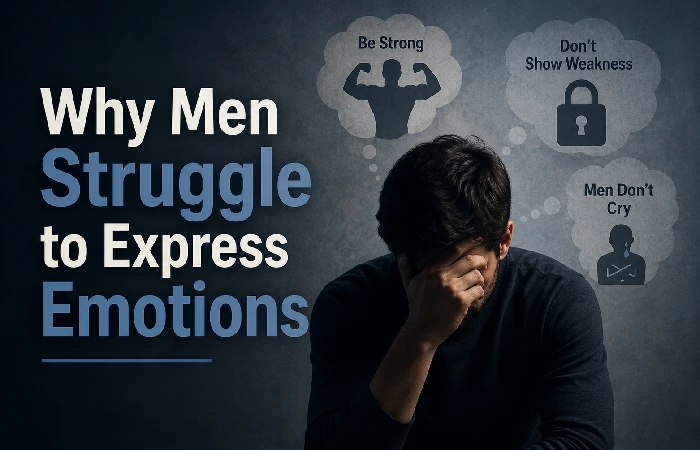
Several men grow up hearing messages like:
- “Be tough.”
- “Don’t cry.”
- “Handle it yourself.”
These beliefs may start emotional suppression and problem discussing feelings freely. Managing your emotions can significantly reduce daily stress and improve resilience. Read our stress management guide for helpful strategies.
Social Expectations and Masculinity
Traditional masculine expectations often reward:
- Independence
- Stoicism
- Toughness
- Controlling emotions
While self-discipline can be positive, control emotional repression may become dangerous.
Common Emotional Challenges Men Face
| Emotional Challenge | Possible Effect |
| Fear of vulnerability | Isolation |
| Difficulty communicating | Relationship stress |
| Emotional suppression | Anxiety |
| Avoiding emotional conversations | Loneliness |
| Internalized stress | Burnout |
Many men battle with identifying emotions because emotional perception was never supported during infancy.
If emotional challenges begin affecting your daily life, professional help can make a difference. Discover the benefits of therapy for men’s mental health.
Emotional Suppression and Mental Health
Suppressing emotions for long periods may increase:
- Anxiety
- Irritability
- Stress
- Lack of emotional feeling
- Depression
- Poor sleep
Natural emotions often seem through stress-related behaviours instead of open statement.
Strong relationships provide emotional support during difficult times. Learn how healthy relationships improve mental well-being.
Anger and Emotional Suppression in Men
Anger is regularly one of the rare emotions socially recognised for men.
However, anger regularly covers deeper emotions such as:
- Stress
- Fear
- Sadness
- Frustration
- Emotional exhaustion
- Insecurity
Why Suppressed Emotions Become Anger
When emotions remain unspoken, mental pressure forms over time.
Common Emotional Suppression Behaviors
Avoiding emotional conversations
- Emotional withdrawal
- Irritability
- Overworking
- Explosive reactions
- Bottling up stress
Anger occasionally becomes a coping mechanism for unaddressed emotional discomfort.
Effects of Chronic Anger
| Emotional Effect | Possible Consequence |
| Irritability | Relationship conflict |
| Emotional tension | Burnout |
| Stress overload | Sleep problems |
| Emotional outbursts | It may lead to to social isolation |
Healthier Ways to Control Emotions
Useful Emotional Practices
- Therapy
- Mindfulness
- Journaling
- Stress controlling techniques
- Exercise
Strong emotional release increases resilience and communication.
Regular physical activity can improve mood and emotional balance. Explore how fitness supports emotional wellness.
Emotional Intelligence for Men
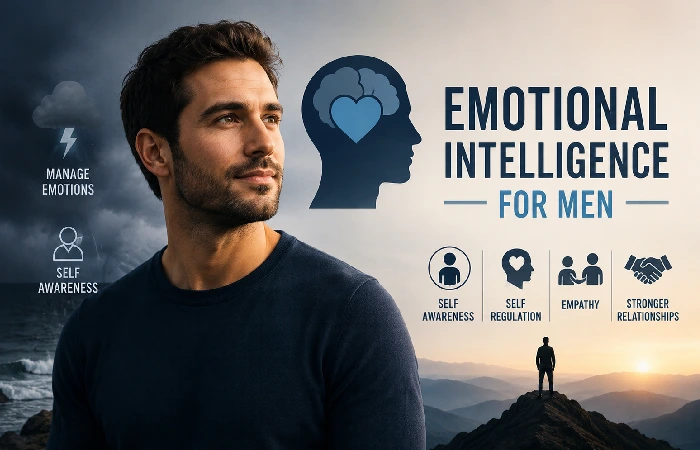
It refers to the capability to recognize, control, and connect emotions successfully.
Key Parts of Emotional Intelligence
| Emotional Skill | Description |
| Empathy | It means understanding others |
| Emotional resilience | Managing with stress |
| Self-awareness | It means understanding emotions |
| Communication | Stating feelings clearly |
| Self-regulation | Handling reactions |
It improves both personal and professional relationships.
If emotional distress becomes overwhelming or you feel at risk, seek immediate help through our mental health crisis support resources.
Why Emotional Intelligence Matters
Men with stronger emotional intelligence often experience:
- Better communication
- Stronger relationships
- Reduced stress
- Better leadership skills
It is one of the important life skills.
How Men Can Improve Emotional Intelligence
Practical Strategies
- Training active listening
- Classify emotions daily
- Redirect on pressure triggers
- Study emotional vocabulary
- Pause before responding emotionally
Emotional intelligence expands increasingly with practice.
Healthy routines, quality sleep, and balanced nutrition all contribute to emotional well-being. Read our healthy lifestyle for mental wellness guide.
Healthy Masculinity Explained
Healthy masculinity inspires strength, responsibility, self-confidence, and emotional awareness without emotional suppression or damaging behavior.
What Healthy Masculinity Looks Like
- Emotional honesty
- Accountability
- Confidence
- Respecting others
- Responsibility
Healthy masculinity supports both strength and emotional balance.
Toxic Masculinity vs Healthy Masculinity
| Toxic Behaviors | Healthy Behaviors |
| Emotional suppression | Sensitive awareness |
| Aggression | Self-discipline |
| Fear of vulnerability | Honest communication |
| Isolation | Supportive relationships |
Modern masculinity chats increasingly encourage emotional wellness beside confidence and control.
Emotional needs and challenges often change with age. Learn more in our age-based mental health guide.
Why Healthy Masculinity Matters
Healthy masculinity improves:
- Mental wellness
- Relationships
- Communication
- Emotional flexibility
- Handling stress
Balanced emotional health welfares both individuals and communities.
How Men Can Become Emotionally Stronger
Emotional strength does not mean discounting emotions. True emotional strength involves handling challenges while enduring emotionally informed and easy-going.
Build Emotional Awareness
- Helpful Emotional Habits
- Journaling thoughts
- Recognizing stress triggers
- Naming emotions clearly
- Practicing self-reflection
Self-awareness advances emotional control over period.
Advance Communication Skills
Healthy communication may reduce:
- Relationship conflicts
- Emotional misunderstandings
- Social isolation
- Internalized stress
Open conversations strengthen emotional connection.
Raising awareness helps normalize conversations about emotions and mental health. Visit our men’s mental health awareness page to learn more.
Develop Healthy Coping Mechanisms
| Healthy Coping Skill | Emotional Benefit |
| Exercise | Stress relief |
| Meditation | Calmness |
| Therapy | Emotional support |
| Sleep improvement | Better recovery |
| Supportive friendships | Emotional resilience |
Healthy routines better long-term emotional health.
Seek Help Without Shame
Many emotionally strong men seek:
- Therapy
- Mentorship
- Friendships
- Support groups
- Professional guidance
Asking for support is often a sign of emotional maturity, not difficulty.
The Relation Between Physical and Emotional Health
Chronic emotional stress may affect:
- Immune health
- Energy levels
- Blood pressure
- Sleep quality
- Hormone balance
Both wellness are deeply related.
Best Mental Wellness Apps for Emotional Health
| App | Best For |
| Calm | Stress reduction |
| Headspace | Emotional balance |
| BetterHelp | Emotional support |
| Moodfit | Mood awareness |
| Wysa | Emotional conversations |
Why These Apps Are Popular in 2026
- Stress and burnout support
- Easy access to therapy from home
- Mood tracking and self-care tools
- Better sleep and emotional awareness
- Flexible mental wellness support anytime
- Digital mental wellness apps
Addressing Emotional Health Issues
“Don’t know how to show my feelings,” he pleaded.
Begin with basic emotional comments and short, authentic dialogues.
I am simply angered,
- Irritability can be affected by stress, exhaustion and emotional suppression.
- When emotions are discussed, it feels painful.
- Emotional openness tends to progress slowly with practice and nurturing.
Feel Emotional Numb
- Emotionlessness can result from exhaustion, stress, depression or from emotional overthrow.
Men’s Emotional Health FAQ’s
Does annoyance have a relationship to emotional defeat?
Yes. Sometimes suppressed emotions manifest themselves with irritability, frustration or anger.
What does emotional intelligence means?
It is the ability to control, identify and express emotions positively.
Who do you think should be a healthy man?
It includes responsibility, emotional mindfulness, confidence, and respectful behavior.
Conclusion
Men’s Emotional Health is gradually attracting the center of the modern day wellness conversation. Several men’s physical and mental health conditions remain to be affected in 2026 by emotional suppression, long-lasting stress, isolation and social hope.
Becoming more emotionally responsive, having healthier communication and emotional intelligence, and having helpful relationships can support build greater resilience, decrease stress, and enhance mental wellness. Emotional strength is not the same as suppressing emotions — it’s about learning how to feel and thoughtful how to control emotions in a improved way.
Dr. Khizrana Begum is a qualified medical professional with MBBS and MD qualifications and 5+ years of experience in the medical field. She works as a General Physician and Dermatologist, with knowledge spanning general medicine, dermatology, preventive healthcare and skin health.
As a medical reviewer, Dr. Khizrana Begum reviews health and wellness content for medical accuracy, clarity and authenticity.
Sameena Begum reviews content for clarity, accuracy and reader usefulness. Her review process helps ensure that published information is clearly presented, relevant and easy for readers to understand.
Syeda Yasmeen is a Health & Wellness Writer at InHumanBeing.com. She creates clear and reader-focused content across health, nutrition, wellness, women’s health, men’s health and babies’ health.