
 Syeda Yasmeen
Health & Wellness Writer Syeda Yasmeen creates clear and
reader-focused content covering health,
nutrition, wellness, women’s health,
men’s health and babies’ health.
Read Full Bio of Author →
Syeda Yasmeen
Health & Wellness Writer Syeda Yasmeen creates clear and
reader-focused content covering health,
nutrition, wellness, women’s health,
men’s health and babies’ health.
Read Full Bio of Author →
 Sameena Begum
Health, Technology & Digital Content Reviewer Sameena Begum reviews selected content
for clarity, factual presentation,
consistency and reader usefulness.
Read Full Bio of Reviewer →
Sameena Begum
Health, Technology & Digital Content Reviewer Sameena Begum reviews selected content
for clarity, factual presentation,
consistency and reader usefulness.
Read Full Bio of Reviewer →
 Dr. Khizrana Begum
General Physician and Dermatologist Dr. Khizrana Begum is a qualified medical
professional with MBBS and MD qualifications
and 5+ years of experience. She reviews health
and wellness content for medical accuracy,
clarity and responsible presentation.
Read Full Bio of Medical Reviewer →
Dr. Khizrana Begum
General Physician and Dermatologist Dr. Khizrana Begum is a qualified medical
professional with MBBS and MD qualifications
and 5+ years of experience. She reviews health
and wellness content for medical accuracy,
clarity and responsible presentation.
Read Full Bio of Medical Reviewer →
Today, fitness & mental wellness are complexly tied in modern men’s health study. As additional evidence emerges in 2026, it appears clear that workout, hormone regulation, sleep quality, nutrition, and healthy lifestyle changes can all have a deep influence on emotional well-being, anxiety, concentration, stress, and mental health.
Lots of men are very conscious of their physical fitness and neglect emotional wellness, recovery and mental strength.
Physical and mental health are linked to each other. Energy levels, emotional equilibrium and mood can effect by Poor sleep, nutritional deficiencies, hormonal issues and chronic stress. Regular exercise is a key part of emotional well-being. Explore our complete men’s mental health guide to learn more.
❝
This article is part of
Men’s Mental Health Hub
Quick Statistics About Men’s Fitness & Mental Wellness
| Mental Wellness Trend | 2026 Estimate |
| Men using exercise for stress relief | 64% |
| Adults experiencing poor sleep quality | 58% |
| Men reporting burnout symptoms | 52% |
| Increase in fitness-related mental health searches | 39% |
| Men concerned about testosterone health | 44% |
Mental wellness awareness continues growing alongside fitness culture worldwide.
Physical activity has been shown to reduce symptoms of low mood and improve resilience. Read our guide to depression in men for additional coping strategies.
What Is Fitness & Mental Wellness?
Fitness & Mental Wellness is a linking between physical activity and recovery, cognitive health, emotional wellness, nutrition and hormones.
Support for healthy habits may include:
- Stress reduction
- Better sleep
- Improved mood
- Increased energy
- Mental resilience
A poor lifestyle can lead to anxiety, fatigue, emotional fatigue, and mental fatigue.
Exercise and Men’s Mental Health
- A main natural process of helping mental well-being is exercise.
- Exercise releases stress hormones and affects chemicals in the brain which affect mood, such as endorphins and dopamine.
- Grasp how to spot challenges and how to support yourself .Study to recognise problems and how to help yourself.
- Exercise is one of the most effective natural ways to manage everyday pressure. Discover practical tips in our stress management guide.
Best Exercises for Men’s Mental Health
| Exercise | Mental Health Benefit | Recommended Duration |
| Walking | Reduces stress and clears the mind | 30–45 mins daily |
| Running/Jogging | Improves mood and energy | 20–30 mins |
| Strength Training | Builds confidence and reduces anxiety | 45–60 mins, 3–4x weekly |
| Yoga | Helps relaxation and emotional balance | 20–40 mins |
| Cycling | Supports stress relief and focus | 30–60 mins |
| Swimming | Calms the mind and reduces tension | 30–45 mins |
| HIIT Workouts | Boosts endorphins and motivation | 15–25 mins |
| Team Sports | Improves social connection and mood | 60 mins |
| Meditation + Stretching | Reduces anxiety and mental fatigue | 10–20 mins |
| Hiking | Supports mindfulness and emotional wellness | 1–2 hours weekly |
Mental Health Benefits of Exercise
| Benefit | Mental Wellness Impact |
| Endorphin release | Improved mood |
| Reduced stress hormones | Lower anxiety |
| Better sleep quality | Emotional recovery |
| Increased energy | Better motivation |
| Improved focus | Mental clarity |
Even little effort can rise expressive wellness over time. Many mental health professionals recommend combining counseling with an active lifestyle. Learn how therapy for men’s mental health supports long-term recovery.
Why Exercise Helps Stress & Anxiety
Cortisol and the body’s primary stress hormone can reduce through exercise help.
Helpful Effects of Exercise
- Improves emotional regulation
- Reduces mental tension
- Supports better sleep
- Increases confidence
- Creates healthy routines
Dependable physical activity often improves resilience during stressful phases
Best Types of Exercise for Mental Health
Effective Exercise Options
- Walking
- Strength training
- Running
- Yoga
- Cycling
- Swimming
People have unique responses to movement.
Best Workouts for Stress Relief
Some workouts are more efficient at alleviating stress and emotional tension.
Working out with family or friends can strengthen motivation and social support. Find out how healthy relationships improve mental well-being.
Walking for Mental Wellness
Walking is a basic, but powerful way to reduce mental overload.
Benefits of Walking
| Benefit | Impact |
| Reduced cortisol | Lower stress |
| Fresh air exposure | Mental refresh |
| Better circulation | Improved energy |
| Mindfulness support | Mental clarity |
Emotional balance and screen-related stress can be reduced through outdoor walking.
Strength Training and Stress Reduction
Strength training may improve:
- Confidence
- Mood
- Focus
- Stress
Resistance training builds consistent habits that also benefit mental health.
Exercise also helps improve emotional balance and self-confidence. Explore our guide to emotional wellness for men.
Yoga and Mindfulness Workouts
It relates movement, breathing, and mindfulness.
Yoga aids
- Better sleep quality
- Improved flexibility
- Reduced anxiety
- Nervous system support
- Relaxation
Cardio Workouts for Emotional Release
It combines breathing, movement, and mindfulness.
Benefits
- Sleep Quality Progress
- Flexibility Enhancement
- Anxiety Lessening
- Nervous System Support and Reduction
Relaxing exercises for the body and mind can help, when mental motivation is great.
Cardio Workouts for Emotional Release
Emotional tension may be reduced with the help of running, cycling, and swimming while improving cardiovascular health. If stress or emotional struggles become overwhelming despite regular exercise, seek help through our mental health crisis support resources.
Energy and sleep quality may improve through regular cardio.
Sleep and Mental Health in Men
It is one of the most overlooked factors in mental wellness.
Poor sleep affects:
- Mood
- Stress levels
- Hormones
- Focus
- Emotional regulation
Mental Health Effects of Poor Sleep
| Sleep Problem | Mental Health Impact |
| Sleep deprivation | Irritability |
| Poor recovery | Emotional exhaustion |
| Interrupted sleep | Anxiety |
| Chronic fatigue | Low motivation |
| Insomnia | Increased stress |
Sleeping issues may worsen anxiety and hopelessness symptoms.
Fitness delivers the greatest benefits when combined with healthy daily habits. Read our tips for a healthy lifestyle for mental wellness.
Why Modern Men Struggle with Sleep
Common Sleep Disruptors
- Stress
- Screen exposure
- Overworking
- Caffeine
- Irregular schedules
- Anxiety
Digital lifestyles regularly delay with healthy sleep routines.
Tips for Better Sleep
Healthy Sleep Lifestyles
- Make a sleep schedule
- No screen time before bed
- Evening relaxation exercises
- Cooler area temperature
- Keep away caffeine late in the day
- Quality sleep is vital for mental recovery.
Nutrition Tips for Better Mental Health
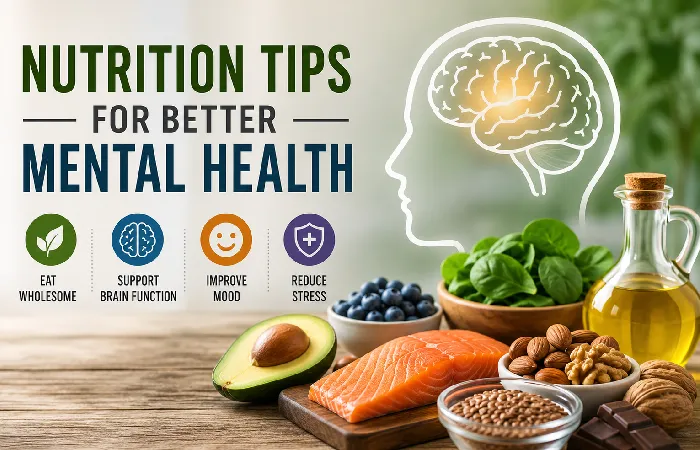
Nutrition intensely influences brain function, energy planes, inflammation, and sensitive wellness.
Exercise needs can change throughout different stages of life. Learn more in our age-based mental health guide.
Brain-Supporting Nutrients
| Nutrient | Mental Wellness Role |
| Omega-3 fats | Brain function |
| Protein | Neurotransmitter support |
| Magnesium | Stress regulation |
| B vitamins | Energy production |
| Fiber | Gut-brain support |
Balanced nutrition supports both physical and emotional health.
Foods That Support Mental Wellness
Helpful Food selections
- Salmon
- Eggs
- Leafy greens
- Nuts
- Yogurt
- Berries
Whole foods provide important nutrients for brain and hormone function.
The Gut-Brain Connection
Researchers continue studying how gut health influences mood and mental wellness.
The gut microbiome may affect:
- Stress response
- Mood regulation
- Inflammation
- Energy levels
Digestive health and mental health are closely connected.
Foods That May Worsen Mental Health
Foods to Limit
- Excess sugar
- Highly processed foods
- Excess alcohol
- Heavy fast food intake
Balanced eating patterns generally support better long-term wellness.
Can Testosterone Affect Mental Health?
Testosterone plays important roles in energy, mood, motivation, muscle health, and overall well-being.
Signs of Low Testosterone
Common Symptoms
- Fatigue
- Low motivation
- Reduced confidence
- Mood changes
- Poor recovery
- Brain fog
Hormonal health may influence emotional wellness in some men.
Encouraging physical activity is one way to promote better mental health. Visit our men’s mental health awareness page to help spread awareness.
Mental Health and Hormones
| Hormonal Factor | Possible Mental Effect |
| Low testosterone | Fatigue |
| Hormonal imbalance | Mood fluctuations |
| Chronic stress | Reduced recovery |
| Poor sleep | Hormonal disruption |
Stress and poor sleep may also influence hormone levels.
Natural Ways to Support Testosterone Health
Healthy Lifestyle Habits
- Strength training
- Better sleep
- Stress management
- Stable nutrition
- Fit body weight
Healthy practises support overall hormone balance naturally.
When to Seek Medical Advice
Professional advice and blood testing may require when persistent fatigue, and mood changes.
The Connection Between Physical & Emotional Health
Mental and physical wellness are deeply connected.
Healthy lifestyle habits may improve:
- Confidence
- Energy
- Sleep
- Stress resilience
- Emotional balance
Long-term wellness usually requires consistency rather than extreme short-term changes.
Best Mental Wellness & Fitness Apps for Men in Australia
In 2026, mental wellness and fitness applications are assisting Australian men to enhance their stress management, emotional health, fitness, sleep and daily self-care. These apps offer versatile assistance by means of mindfulness, exercise tracking, therapy get to, and healthy habit tools.
Best Mental Wellness Apps for Men (2026)
| Mental Wellness App | Best For |
| Calm | Stress reduction |
| Headspace | Anxiety & sleep |
| Wysa | Emotional support |
| BetterHelp | Online counseling |
| Moodfit | Mood tracking |
Best Fitness Apps for Men (2026)
| Fitness App | Best For |
| MyFitnessPal | Healthy eating |
| Fitbod | Workout planning |
| Sleep Cycle | Sleep improvement |
| Nike Training Club | Home workouts |
| Strava | Running & cycling |
Why These Apps Are Popular in Australia (2026)
- Stress and anxiety management
- Better sleep and recovery support
- Flexible fitness routines at home
- Easy nutrition and calorie tracking
- Convenient mental wellness support anytime
Digital wellness apps continue supporting men’s physical and emotional health routines in 2026.
Conclusion
Fitness & Mental Wellness are closely connected aspects of overall men’s health. Factors that affect emotional wellness, resilience, energy and mental function include exercise, sleep patterns, balanced nutrition, stress management, and hormone health.
Today, more men realize that a healthy lifestyle is a combination of physical fitness and mental well-being: and this is the case in 2026, too. Men can create a healthier lifestyle by establishing the importance of recovery, sleep, movement and balanced nutrition, which can lead to long-term mental wellness and enhanced overall wellbeing.
Dr. Khizrana Begum is a qualified medical professional with MBBS and MD qualifications and 5+ years of experience in the medical field. She works as a General Physician and Dermatologist, with knowledge spanning general medicine, dermatology, preventive healthcare and skin health.
As a medical reviewer, Dr. Khizrana Begum reviews health and wellness content for medical accuracy, clarity and authenticity.
Sameena Begum reviews content for clarity, accuracy and reader usefulness. Her review process helps ensure that published information is clearly presented, relevant and easy for readers to understand.
Syeda Yasmeen is a Health & Wellness Writer at InHumanBeing.com. She creates clear and reader-focused content across health, nutrition, wellness, women’s health, men’s health and babies’ health.