
 Syeda Yasmeen
Health & Wellness Writer Syeda Yasmeen creates clear and
reader-focused content covering health,
nutrition, wellness, women’s health,
men’s health and babies’ health.
Read Full Bio of Author →
Syeda Yasmeen
Health & Wellness Writer Syeda Yasmeen creates clear and
reader-focused content covering health,
nutrition, wellness, women’s health,
men’s health and babies’ health.
Read Full Bio of Author →
 Sameena Begum
Health, Technology & Digital Content Reviewer Sameena Begum reviews selected content
for clarity, factual presentation,
consistency and reader usefulness.
Read Full Bio of Reviewer →
Sameena Begum
Health, Technology & Digital Content Reviewer Sameena Begum reviews selected content
for clarity, factual presentation,
consistency and reader usefulness.
Read Full Bio of Reviewer →
 Dr. Khizrana Begum
General Physician and Dermatologist Dr. Khizrana Begum is a qualified medical
professional with MBBS and MD qualifications
and 5+ years of experience. She reviews health
and wellness content for medical accuracy,
clarity and responsible presentation.
Read Full Bio of Medical Reviewer →
Dr. Khizrana Begum
General Physician and Dermatologist Dr. Khizrana Begum is a qualified medical
professional with MBBS and MD qualifications
and 5+ years of experience. She reviews health
and wellness content for medical accuracy,
clarity and responsible presentation.
Read Full Bio of Medical Reviewer →
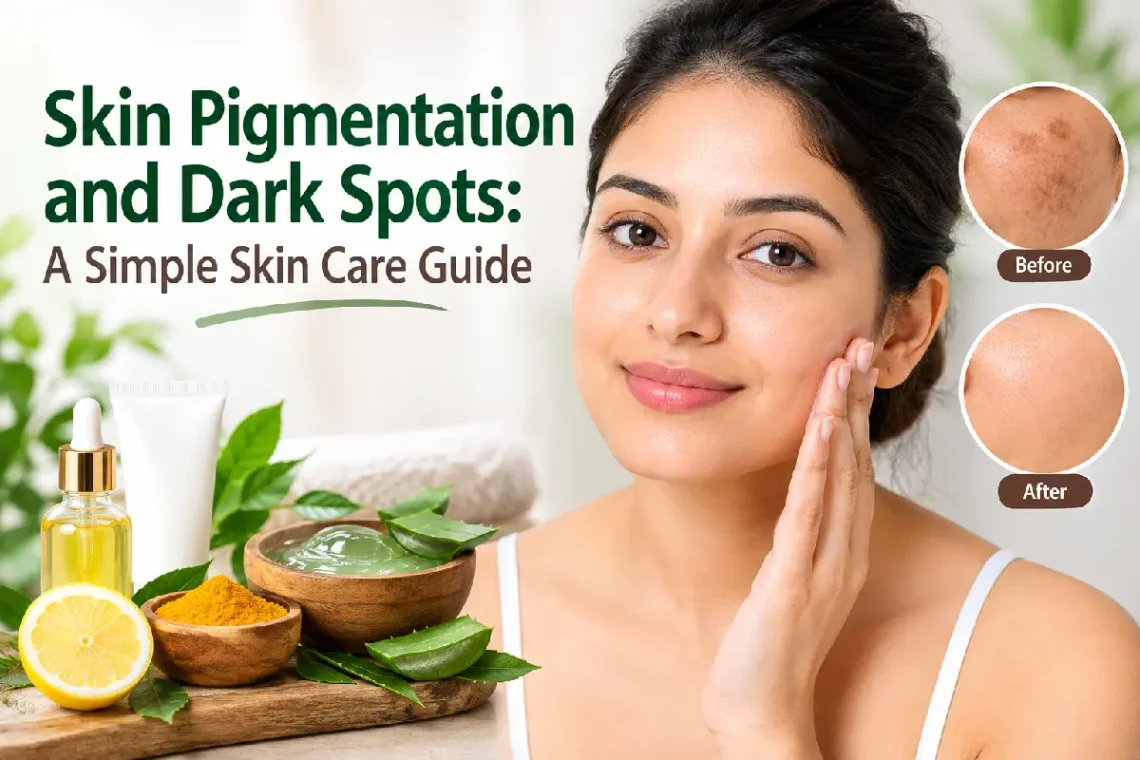
Skin pigmentation & dark spot are prevalent skin issues which can impact individuals of any skin tone. They can occur as a result of acne, sun damage, inflammation, hormonal shifts, and skin damage. Sometimes the marks fade by themselves and other sometimes it can last for months or even more years.
Pigmentation can appear more frequently in individuals who are exposed to the sun on a regular basis in Mexico, or even produce new dark patches. Over time, a basic regimen of mild skin care and sun protection should help to preserve skin and enhance skin color unevenness.
What’s important is being patient. Dark spots are naturally not cleared up in one day. Applying excessive quantities of powerful products can cause skin anger and discoloration to occur.
❝
This article is part of
Womens SKin Care Hub
What Causes Skin Pigmentation & Dark Spot?
Skin pigmentation is skin colour, which is mainly due to a pigment called melanin. Specialized cells known as melanocytes make melanin.
If the cells make increased amounts of melanin in some places, the skin may look darker. This darkening of the color is called hyperpigmentation.
Understanding the basics of skincare can help you create a consistent approach to caring for uneven pigmentation and visible spots. Explore our complete skin care guide for practical information.
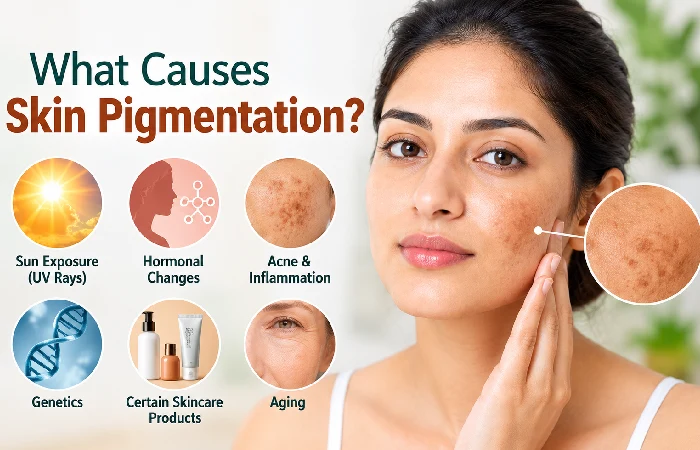
Pigmentation may be affected by any of the following:
- Sun exposure
- Hormonal changes
- Acne and inflammation
- Skin injuries
- Certain medications
- Genetics
- Some skin conditions
Not all pigmentation is a problem. It’s perfectly normal to have natural color differences in skin.
If it occurs rapidly or suddenly or if the pigmentation changes markedly, however, then it’s worth noticing the change.
What Causes Dark Spots?
There are a number of reasons for dark spots. Post-inflammatory hyperpigmentation (PIH) is one of the most common ones that can occur after acne, cuts, burns, insect bites or inflammation.
Another significant cause is exposure to sunlight. UV radiation can make existing sallowness look darker and accentuate it.
Hormones change may also be responsible for pigmentation. For instance, melasma may lead to dark, brown or gray-brown areas, particularly in the upper lip, nose, forehead and cheeks.
A consistent skincare routine can help you organize daily habits and choose suitable products for your individual skin needs. Explore our complete skincare routine guide for helpful tips.
Common causes include:
| Cause | How It May Appear |
| Acne | Dark marks left after pimples heal |
| Sun exposure | Freckles, sunspots, or increased discoloration |
| Hormonal changes | Larger patches of pigmentation |
| Skin injury | Dark mark following inflammation or damage |
| Certain medications | Increased sensitivity or pigmentation in some people |
Any dark spot that appears abnormal or changes in size, shape or color should be investigated by a health care provider.
Skin Care Routine for Dark Spots
Many products are not the best approach; the simple approach is often the better one.
Morning
Gentler cleansers (optional) → Treatment serum → Moisturizer → Sunscreen
Night
Cleanser, pigmenting treatment, moisturizing treatment.
Depending on your skin and the type of discoloration, you can use vitamin C, niacinamide, azelaic acid or any other suitable ingredient.
Avoid combining multiple active ingredients. Try one product at a time to determine skin reaction.
Most importantly, apply and reapply sunscreen regularly. If you don’t take care of your skin, you may not see much benefit from treatment for darkened areas.
Knowing your skin type can make it easier to choose products and skincare habits that fit your specific needs. Explore our different skin types guide for useful information.
Skin Care for Uneven Skin Tone
Uneven skin tone may result in patches of your face appearing darker or redder than others. This could be due to sun damage, acne scars, dehydration, skin irritation or other factors.
Taking a step back, the basics:
- Do use a mild cleaner.
- Moisturize regularly.
- Avoid aggressive scrubbing.
- Apply sunscreen daily in the morning.
- If necessary, use a single targeted treatment.
- Allow product to do its job.
Do not attempt to lighten your skin that much. The aim of proper skin care is to help the skin to maintain a uniform healthy appearance without altering the natural color of the skin.
If skin is irritated by a new product, reduce the product use until skin is not irritated.
Skin Care for Hyperpigmentation
It may take a while before hyper pigmentation improves. The first step is identifying and minimizing the trigger, when possible.
For instance, if dark marks are a problem due to acne, managing the acne will help keep pigmentation from developing.
It is particularly important to protect yourself from the sun if pigmentation is becoming a problem.
Choosing suitable skincare products is an important part of creating a routine focused on maintaining healthy-looking, even-toned skin. Explore our skincare products guide for practical ideas.
Some ingredients used as hyper pigmentation include:
- Vitamin C
- Niacinamide
- Azelaic acid
- Retinoids
- Certain exfoliating acids
The right ingredient will depend on the nature of pigmentation and your skin tolerance.
Don’t use aggressive treatments without professional advice. Irritation can trigger further pigmentation especially in those with a predisposition to post-inflammatory hyperpigmentation.
Skin Care for Acne Marks
Acne will go away but may leave behind flat brown, red or dark marks. These are sometimes confused for scar marks.
A discolored area is not the same as a true acne scar, which will cause an alteration in the skin’s texture.
To care for acne marks:
- Avoid getting more acne if possible.
- Avoid picking or squeezing pimples.
- Apply sun cream daily.
- Think about using an appropriate brightening or pigmentation.
- Do not allow skin to become dry.
- Others may find it helpful to use ingredients like azelaic acid, niacinamide, vitamin C and retinoids.
Take your time, no hurry. Post acne marks fades over time, this process can take weeks or even months.
For deep acne scars, or if you have stubborn pigmentation, your dermatologist can suggest treatments for your skin and the type of scars you have.
Pigmentation and Dark Spots are caused by the ingredients listed below:
There are a few ingredients which are frequent in skin care products for dark spots and also uneven tone.
Ingredients for Pigmentation and Dark Spots
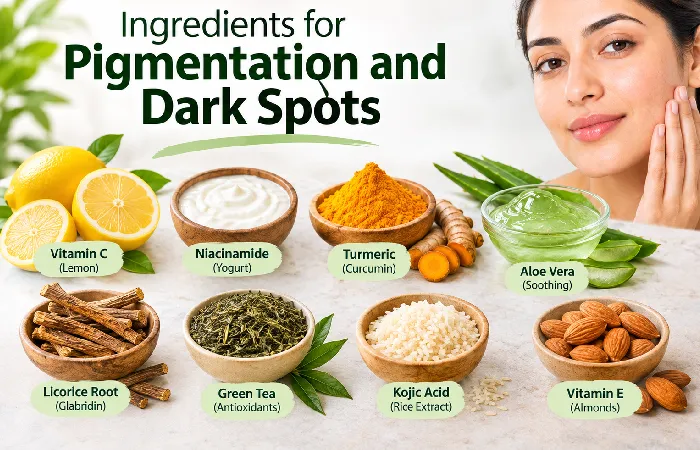
Several ingredients are commonly used in skin care products designed for uneven tone and dark spots.
| Ingredient | Common Skin Care Purpose |
| Vitamin C | Antioxidant support and brighter-looking skin |
| Niacinamide | Helps support the skin barrier and improve uneven tone |
| Azelaic acid | Can help with acne and pigmentation |
| Retinoids | Encourage skin cell turnover and can help with several skin concerns |
| Glycolic acid | Exfoliation and improvement of uneven-looking skin |
| Salicylic acid | Helps exfoliate and can be useful for acne-prone skin |
Less is sometimes more. Combination of multiple effective ingredients may lead to dryness and irritation.
Use one product with a pigment and follow the directions if this is your first experience with pigmentation products.
Exfoliating acids and retinoids are particularly harmful for sensitive skin.
Acne-prone skin can sometimes be associated with the appearance of visible marks after breakouts, making a thoughtful skincare routine important. Explore our skincare guide for acne-prone skin for helpful information.
Sunscreen and Pigmentation
Sunscreen is one of the key modules in pigmentation management.
Suns exposure can activate melanin manufacture and emphasise existing dark spots. This is why you may not see as much results when you are not putting on a pigmentation serum while taking actions to protect your skin from the sun.
Use a broad-spectrum, high-SPF (30 or more) sunscreen and apply it liberally to exposed skin.
Re-apply as often as essential, particularly when outside, working hard, perspiring, swimming, and towel drying.
Many areas in Mexico are year-round sunbathers. Sun protection can be particularly crucial there.
Visible light can also cause some hyperpigmentation in individuals with a tendency to melasma or pigmentation. Tinted sun screen products with iron oxides can offer extra protection against visible light and can be a decent point to discuss with a dermatologist.
Keep in mind that sunscreen is most effective when used in conjunction with other sun protection measures such as shade, hats, clothes and other sun protection behaviours.
Protecting your skin from everyday sun exposure is an important part of caring for skin with visible pigmentation and spots. Explore our sun protection skincare guide for practical guidance.
Some of the most frequent errors that people make with dark spots are listed below:
Common Mistakes When Treating Dark Spots
Common mistakes include:
- Excessive scrubbing of dark spots
- Be careful not to use more than one active ingredient.
- Skipping sunscreen
- Picking acne
- Over-application of products with high levels
- Expecting overnight results
- The use of unproven skin lightening products.
- Switching treatments every 2 to 3 days
- Ignoring skin irritation
Stay away from products that claim to lighten the skin very quickly, or dramatically, but don’t give you a clear indication of what they contain.
There are some free skin-lightening products that contain harmful ingredients or secret ingredients.
If the treatment causes severe red-hot, swelling, redness, or discomfort, discontinue the use of the treatment and consult a health care provider.
The American Academy of Dermatology explains that sun protection is an important part of managing pigmentation such as melasma. Using sunscreen regularly and limiting sun exposure can help prevent discoloration from becoming darker.
When to See a Dermatologist for Pigmentation
While many dark spots are harmless, not all pigmented spots are appropriate for at-home treatment.
If any of the following apply, see a doctor for skin or hair care:
- One spot all a sudden shifts.
- A mole alters in shape, size or color.
- A mark bleeds or repeatedly forms a crust.
- Pigmentation occurs for no apparent reason.
- There is ongoing spread of dark patches.
- Products from drug stores, pharmacies, or health food stores do not help.
- You have been losing your self-confidence due to pigmentation.
- Not sure if the mark is acne related pigmentation, melasma or otherwise.
A dermatologist will be able to determine what type of pigmentation it is and then provide treatment. Treatment options for professionals may be prescription creams, chemical peels, laser treatments, or more, depending on the cause and skin type.
The best way to treat Skin Pigmentation & Dark Spot is to avoid any extreme DIY remedies and instead opt for slow and steady improvement techniques, consistent sun protection and gentle skin care. While many dark spots can’t be completely resolved, with a proper regimen and sensible expectations, they can grow less prominent the more time that passes.
Dr. Khizrana Begum is a qualified medical professional with MBBS and MD qualifications and 5+ years of experience in the medical field. She works as a General Physician and Dermatologist, with knowledge spanning general medicine, dermatology, preventive healthcare and skin health.
As a medical reviewer, Dr. Khizrana Begum reviews health and wellness content for medical accuracy, clarity and authenticity.
Sameena Begum reviews content for clarity, accuracy and reader usefulness. Her review process helps ensure that published information is clearly presented, relevant and easy for readers to understand.
Syeda Yasmeen is a Health & Wellness Writer at InHumanBeing.com. She creates clear and reader-focused content across health, nutrition, wellness, women’s health, men’s health and babies’ health.