 Syeda Yasmeen
Health & Wellness Writer Syeda Yasmeen creates clear and
reader-focused content covering health,
nutrition, wellness, women’s health,
men’s health and babies’ health.
Read Full Bio of Author →
Syeda Yasmeen
Health & Wellness Writer Syeda Yasmeen creates clear and
reader-focused content covering health,
nutrition, wellness, women’s health,
men’s health and babies’ health.
Read Full Bio of Author →
 Sameena Begum
Health, Technology & Digital Content Reviewer Sameena Begum reviews selected content
for clarity, factual presentation,
consistency and reader usefulness.
Read Full Bio of Reviewer →
Sameena Begum
Health, Technology & Digital Content Reviewer Sameena Begum reviews selected content
for clarity, factual presentation,
consistency and reader usefulness.
Read Full Bio of Reviewer →
 Dr. Khizrana Begum
General Physician and Dermatologist Dr. Khizrana Begum is a qualified medical
professional with MBBS and MD qualifications
and 5+ years of experience. She reviews health
and wellness content for medical accuracy,
clarity and responsible presentation.
Read Full Bio of Medical Reviewer →
Dr. Khizrana Begum
General Physician and Dermatologist Dr. Khizrana Begum is a qualified medical
professional with MBBS and MD qualifications
and 5+ years of experience. She reviews health
and wellness content for medical accuracy,
clarity and responsible presentation.
Read Full Bio of Medical Reviewer →
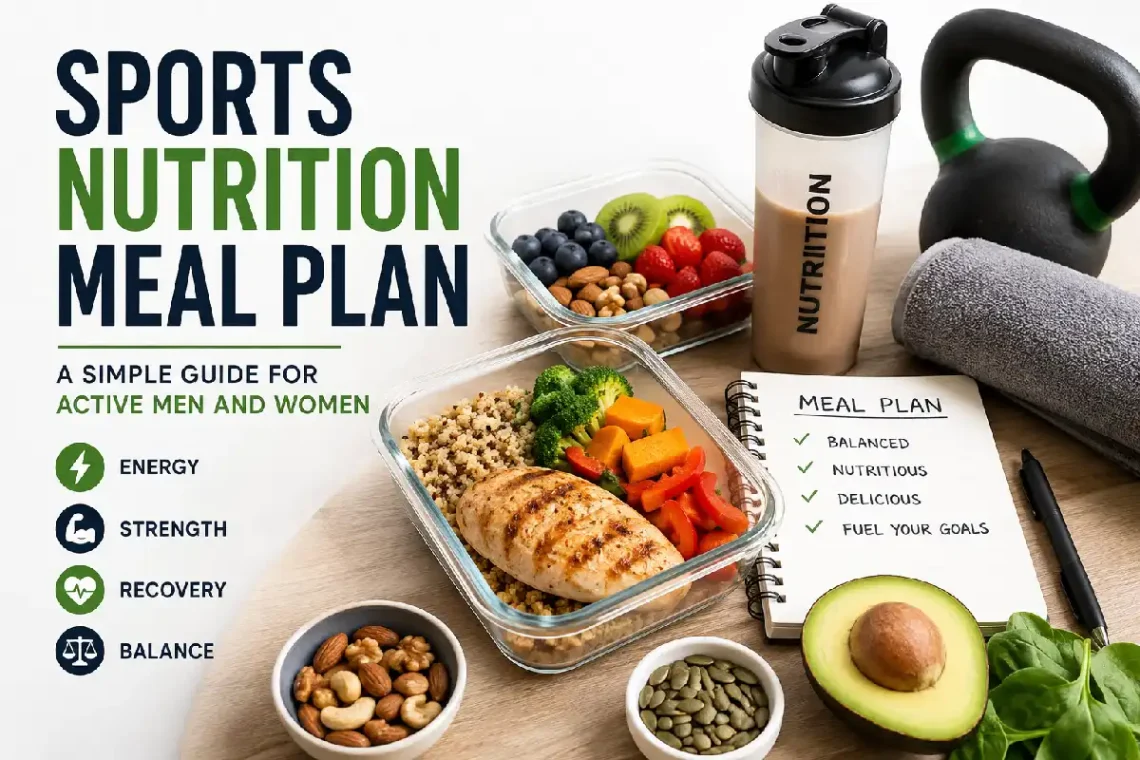
An effective Sports Nutrition Meal Plan can be implemented for active men and women to provide support to training, recovery and general health without needing to follow a complicated diet or taking expensive supplements. From weight-lifting to running, biking to team sports or just a few times a week, your body needs the energy and nutrients to perform and recover.
What works for one person’s diet plan doesn’t necessarily work for another. Calories differ according to age, size, activity level, objectives, and exercise action. But the popular of active individuals can stay healthy by consuming a diet. That’s balanced with carbohydrates for energy, protein for muscle repair, healthy fats and plenty of fruits and vegetables.
This guide outlines a simplified USA-friendly Sports Nutrition Meal Plan which can be modified for both men and women.
Sports nutrition provides a foundation for planning meals around your workouts, recovery needs, and daily activity. For a broader overview of sports-focused nutrition, explore our complete sports nutrition guide.
❝
This article is part of
Sports Nutrition Hub
Building a Balanced Meal Plan
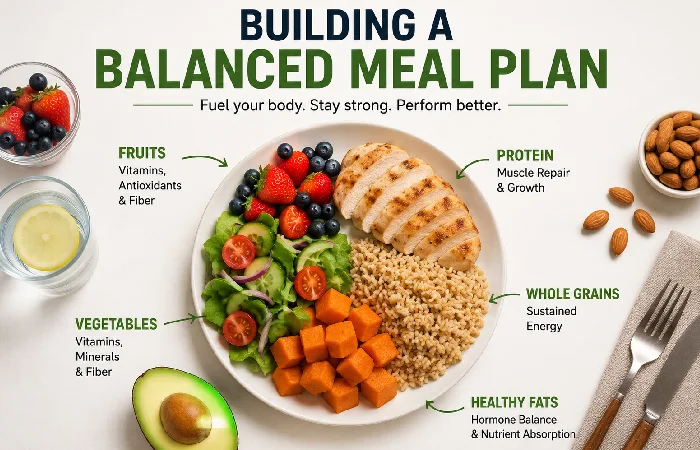
There must be an equal quantity of the three macronutrients in a stable sports nutrition plan.
Key Nutrients
| Nutrient | Main Role | Food Sources |
| Carbohydrates | It gives energy for exercise | Take Rice, oats, potatoes and fruit |
| Protein | It helps in muscle repair and recovery | Eat chicken, fish, eggs and beans |
| Healthy fats | It good for hormones and overall health | Take Avocado, nuts and olive oil |
| Vitamins & minerals | Support body functions | Fruits and vegetables |
| Fluids | Hydration | Water, milk |
Simple Plate Method
One way to create meals is:
- ½ plate: Vegetables and fruit
- ¼ plate: Protein
- ¼ plate: Whole grain or starchy carbohydrates
Increase moderate amounts of healthy fat foods.
This is suitable for numerous recreational athletes.
Adjusting for Training
| Goal | Adjustment |
| Strength training | Slightly more protein |
| Endurance training | More carbohydrates |
| Weight loss | Smaller portions while maintaining protein |
| Muscle gain | Slightly larger meals and enough calories |
| General fitness | Balanced portions |
Don’t cut out an entire food group but just make the portions different depending on activity and goals.
What you eat before training can help you prepare for your workout and maintain a consistent fueling routine. Explore our pre-workout nutrition guide for practical ideas.
Breakfast
Breakfast can help fulfil your protein requirements and give you the energy for the day.
Healthy Breakfast Options
| Breakfast | Main Benefits |
| Oatmeal, Greek yogurt and berries | It gives carbs and protein |
| Eggs, whole-grain toast and fruit | You get Protein and energy |
| Smoothie with milk, banana and oats | Convenient |
| Cottage cheese, fruit and granola | It is Protein-rich |
| Whole-grain cereal, milk and banana | Quick breakfast |
| Tofu scramble and toast | Plant-based option |
Example Strength-Training Breakfast
- 2–3 eggs
- Whole-grain toast
- Banana
- Milk or Greek yogurt
This is a source of protein, carbohydrates and micronutrients.
Example Endurance Breakfast
- Oatmeal
- Banana
- Berries
- Greek yogurt
This meal is high in carbohydrates but still has protein.
If You Exercise Early
If you decide to train early in the morning, you may want to have something lighter first.
Examples include:
Banana
- Toast
- Yogurt
- Small smoothie
After workouts, have a well-balanced breakfast.
Lunch
Lunch should ensure that your energy levels are sustained throughout the afternoon and contain adequate protein and carbohydrate for energy.
Post-workout nutrition is another important consideration when organizing meals around exercise. Learn more with our post-workout nutrition guide.
Balanced Lunch Ideas
| Lunch | Protein | Carbohydrates |
| Chicken rice bowl | Chicken | Rice |
| Turkey sandwich + fruit | Turkey | Bread |
| Salmon salad + potatoes | Salmon | Potatoes |
| Tofu stir-fry | Tofu | Rice |
| Lentil quinoa bowl | Lentils | Quinoa |
| Tuna wrap | Tuna | Wrap |
Example Lunch
- Chicken Rice Bowl
- Grilled chicken
- Brown or white rice
- Broccoli
- Bell peppers
- Olive oil or avocado
It delivers a balance of protein, carbohydrates, vegetables and healthy fats.
Some people use supplements alongside their regular meals and training routines. Explore our sports nutrition supplements guide for additional information.
Vegetarian Lunch
- Lentils
- Quinoa
- Spinach
- Tomatoes
- Cucumber
- Pumpkin seeds
- Lemon dressing
Dinner
Dinner is a chance to replenish nutrients from the day’s activity and will supply protein for recovery.
Healthy Dinner Options
Dinner Best For
Bake for 10 to 15 minutes, or until the salmon is fully cooked.Bake until salmon is cooked through, 10 to 15 minutes.
Protein-rich foods can also be included throughout the day as part of a balanced approach to sports nutrition. Our sports nutrition protein guide provides more information on this topic.
Healthy Dinner Options
| Dinner | Best For |
| Salmon + potatoes + vegetables | Recovery |
| Chicken + rice + vegetables | Muscle building |
| Turkey chili + beans | High protein |
| Tofu stir-fry + rice | Plant-based |
| Lean beef + sweet potato | Strength training |
| Lentil curry + rice | Vegetarian |
Example Dinner
- Salmon Plate
- Baked salmon
- Roasted potatoes
- Green beans
- Side salad
This offers you protein, carbohydrates, healthy fat and micronutrients.
Love Carbs at Dinner!
Dinner foods that contain carbohydrates can be healthy.
It’s not so much when you choose to eat carbs as it is how much or what type of food you’re eating overall.
If you’ve trained in the evening, a good evening meal may consist of a balanced protein and carbohydrate meal which can be a beneficial recovery meal.
Healthy Snacks
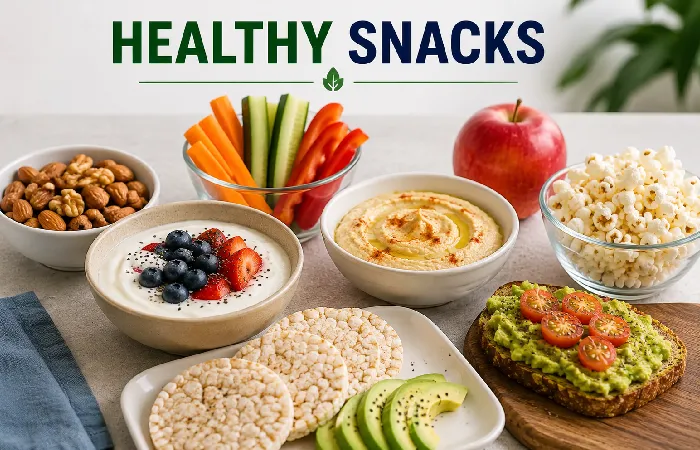
Snacks can help fill long gaps between meals, provide pre-workout energy, or contribute additional protein.
High-Protein Snacks
| Snack | Approximate Benefit |
| Greek yogurt + berries | Protein + antioxidants |
| Cottage cheese + fruit | High protein |
| Hard-boiled eggs | Portable protein |
| Cheese + whole-grain crackers | Protein + carbs |
| Hummus + vegetables | Plant protein |
| Edamame | Protein + fiber |
| Protein shake | Convenient |
| Apple + peanut butter | Carbs + healthy fats |
Pre-Workout Snack
When you can’t make it to your workout for an hour, consider:
- Banana + yogurt
- Toast + peanut butter
- Applesauce + Greek yogurt
- Small smoothie
- They offer energy without the hefty side effects for many people.
Post-Workout Snack
A snack may be helpful if you don’t plan to eat something right after you exercise.
Examples:
- Protein shake + banana
- Greek yogurt + oats
- Cottage cheese + fruit
- Turkey sandwich
Sample 7-Day Sports Nutrition Meal Plan
| Day | Breakfast | Lunch | Dinner | Snack |
| Monday | Oatmeal, yogurt, berries | Chicken rice bowl | Salmon, potatoes, vegetables | Greek yogurt |
| Tuesday | Eggs, toast, banana | Turkey wrap | Tofu stir-fry | Apple + peanut butter |
| Wednesday | Smoothie with oats | Lentil quinoa bowl | Chicken pasta | Cottage cheese |
| Thursday | Cereal, milk, fruit | Tuna sandwich | Turkey chili | Edamame |
| Friday | Eggs and oatmeal | Chicken salad | Beef, rice, vegetables | Yogurt |
| Saturday | Greek yogurt parfait | Burrito bowl | Salmon and sweet potato | Fruit |
| Sunday | Whole-grain pancakes + yogurt | Tofu wrap | Lentil curry | Nuts and fruit |
This sample plan may be adapted as necessary for portion needs.
Understanding common nutrition mistakes can help you make more informed choices when planning your meals and training nutrition. Explore our sports nutrition mistakes guide to learn what to avoid.
How to Adjust Portions for Your Goals
If You’re Building Muscle
You may need:
- Slightly larger portions
- Enough total calories
- Consistent protein intake
- Carbohydrates for training.
If You’re Trying to Lose Weight
Focus on:
- Plenty of vegetables
- Adequate protein
- Reasonable portions
- High-fiber foods
- Maintaining regular exercise
You do not have to stay off of carbohydrates.
If You’re Training for Endurance
The longer your training, the greater the need for carbohydrates.
It’s okay for you to have more of the following:
- Rice
- Oats
- Pasta
- Potatoes
- Fruit
- Bread
When you are exercise for general health, try to discovery an activity that you enjoy.
Reasonable servings on a balanced plate.
If you are not training with a modest athlete, there’s no need to train like one.
Hydration
Drinking water is a key part of any Sports Nutrition Meal Plan.
For many people:
- Have water all day.
- Drink fluids prior to exercise.
- When the workout lasts longer or is hot, drink.
- Replace fluids afterward.
Electrolyte drinks can be supportive when exercising for lengthy periods or when perspiring heavily, but may not be desirable during all workouts.
Final Takeaway
A good Sports Nutrition Meal Plan do not essential to be limiting or complex. Build your meals around lean proteins, carbohydrate-rich foods, healthy fats, and plenty of fruits and vegetables. Then regulate portion sizes based on your activity and goals.
For both men and women, uniformity matters more than perfection. Eating stable meals throughout the day. Staying hydrated, and matching your food intake to your training can support better workouts. Recovery, and long-term health without trusting on complex diets or luxurious supplements.
Dr. Khizrana Begum is a qualified medical professional with MBBS and MD qualifications and 5+ years of experience in the medical field. She works as a General Physician and Dermatologist, with knowledge spanning general medicine, dermatology, preventive healthcare and skin health.
As a medical reviewer, Dr. Khizrana Begum reviews health and wellness content for medical accuracy, clarity and authenticity.
Sameena Begum reviews content for clarity, accuracy and reader usefulness. Her review process helps ensure that published information is clearly presented, relevant and easy for readers to understand.
Syeda Yasmeen is a Health & Wellness Writer at InHumanBeing.com. She creates clear and reader-focused content across health, nutrition, wellness, women’s health, men’s health and babies’ health.