
 Syeda Yasmeen
Health & Wellness Writer Syeda Yasmeen creates clear and
reader-focused content covering health,
nutrition, wellness, women’s health,
men’s health and babies’ health.
Read Full Bio of Author →
Syeda Yasmeen
Health & Wellness Writer Syeda Yasmeen creates clear and
reader-focused content covering health,
nutrition, wellness, women’s health,
men’s health and babies’ health.
Read Full Bio of Author →
 Sameena Begum
Health, Technology & Digital Content Reviewer Sameena Begum reviews selected content
for clarity, factual presentation,
consistency and reader usefulness.
Read Full Bio of Reviewer →
Sameena Begum
Health, Technology & Digital Content Reviewer Sameena Begum reviews selected content
for clarity, factual presentation,
consistency and reader usefulness.
Read Full Bio of Reviewer →
 Dr. Khizrana Begum
General Physician and Dermatologist Dr. Khizrana Begum is a qualified medical
professional with MBBS and MD qualifications
and 5+ years of experience. She reviews health
and wellness content for medical accuracy,
clarity and responsible presentation.
Read Full Bio of Medical Reviewer →
Dr. Khizrana Begum
General Physician and Dermatologist Dr. Khizrana Begum is a qualified medical
professional with MBBS and MD qualifications
and 5+ years of experience. She reviews health
and wellness content for medical accuracy,
clarity and responsible presentation.
Read Full Bio of Medical Reviewer →
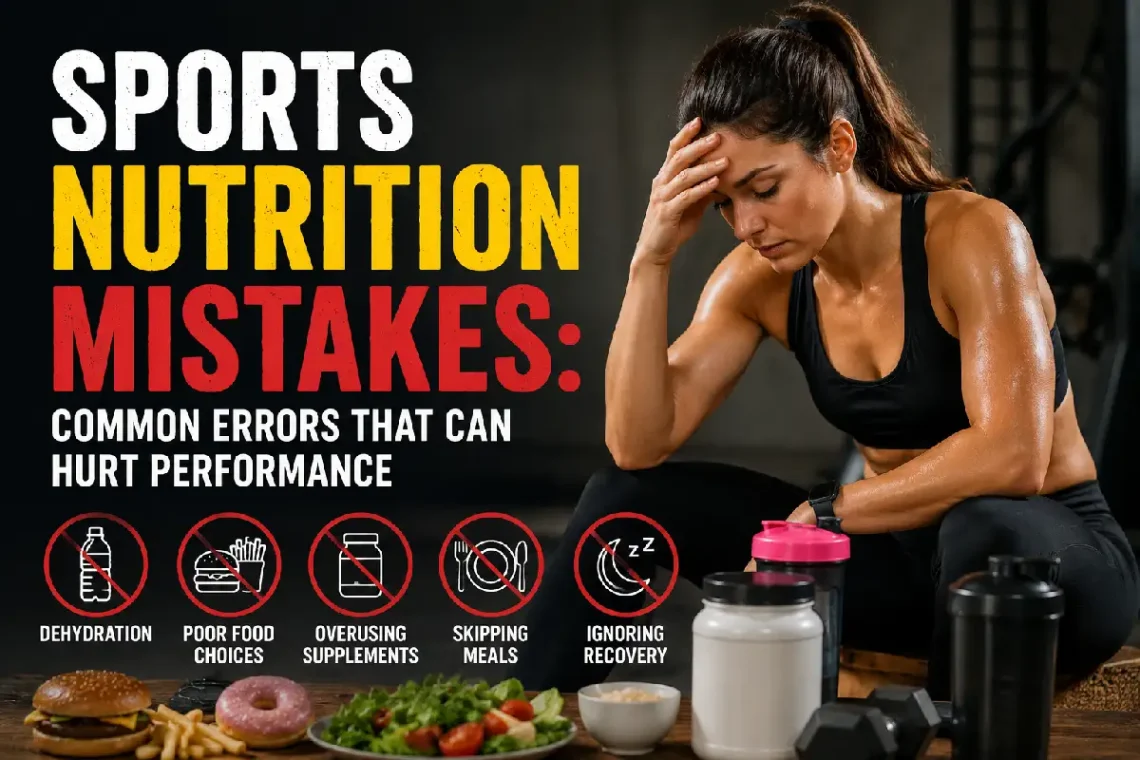
Even though people exercise regularly, they are frequently making a number of Sports Nutrition Mistakes. Even if you work out hard, have a exercise plan, and recover your strength, training or performance, you may not feel well because of a lack of nutrition.
Sports nutrition for men or women in the USA does not imply sticking with a extreme diet or purchasing a cabinet of supplements. Typically the fundamental stuff, eating enough food, getting enough protein and carbohydrates, staying hydrated and letting your body recover, is what is most important.
Here are 5 common Sports Nutrition Mistakes, their reason and how to avoid them.
Sports nutrition covers different aspects of fueling, recovery, and meal planning around exercise. For a broader overview of the topic, explore our complete sports nutrition guide.
❝
This article is part of
Sports Nutrition Hub
Underfueling
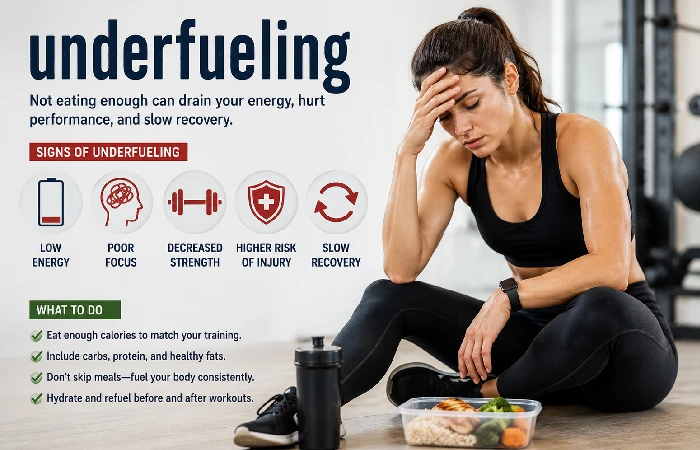
Lack of sufficient calories for your level of activity is one of the top Sports Nutrition Mistakes.
Some individuals actually starve themselves, as they wish to lose weight. Some individuals get so enthusiastic about consumption “clean” that they end up taking in a lot less calories than they should.
Choosing the right foods before training can help you build a consistent approach to workout fueling. Explore our pre-workout nutrition guide for practical ideas.
If you don’t get enough energy, you might see:
- Low energy
- Poor workout performance
- Increased hunger
- Difficulty recovering
- Irritability
- Reduced training quality
- Unwanted changes in body weight
Underfueling which occurs for extended periods of time can have negative effects on recovery and other health outcomes for athletes and/or very active individuals.
Why Carbohydrates Matter
There are numerous forms of exercise that depend on carbohydrates as an significant fuel source.
Eliminating foods like rice, potatoes, oats, fruit and whole grains doesn’t necessarily mean healthier!
Rather, tailor the amount of carbs based on the training demands.
Why Protein Matters
It is important for repair and upkeep of muscle tissue.
Good options include:
- Eggs
- Chicken
- Fish
- Greek yogurt
- Cottage cheese
- Tofu
- Lentils
- Beans
A Better Approach
Rather than removing food at the excesses, create well-balanced meals with:
Protein, carbs, vegetables/fruit, healthy fats
For weight loss, employed out a small, stable burn of calories can be more wieldy than a big, quick one.
What you eat after exercise is another important part of planning your nutrition around training. Learn more with our post-workout nutrition guide.
Skipping Recovery Meals
Another common error is doing an wearing session of exercise, only to skip breakfast and lunch for a few hours.
It is not essential to consume food directly after exercising. But failing to refill nutrients after heavy and lengthy exercise sessions can make retrieval more difficult.
A good recovery meal should consist of:
- Protein
- Carbohydrates
- Fluids
- Nutrient-rich foods
Simple Recovery Meals
| Meal | Protein | Carbohydrate |
| Chicken + rice + vegetables | Chicken | Rice |
| Greek yogurt + oats + berries | Yogurt | Oats + berries |
| Eggs + toast + fruit | Eggs | Toast + fruit |
| Salmon + potatoes + vegetables | Salmon | Potatoes |
| Tofu + rice + vegetables | Tofu | Rice |
Do You Need a Protein Shake?
Not essentially.
A protein shake can be suitable, mainly when you are traveling or do not have time to make a meal.
Systematic foods can give you all you essential, though.
For example, a mixture of Greek yogurt and banana makes a good post-workout snack.
Timing Is not Everything
Don’t become overly concerned about consuming protein within a few minutes of finishing your workout.
Generally, it is less important to consider a small window of opportunity for protein and calories after exercise than it is to consider total daily protein and calorie consumption.
Some people also consider supplements alongside their regular diet and exercise routine. Explore our sports nutrition supplements guide for additional information.
Poor Hydration
Hydration is another part where active individuals can go wrong.
Starting a workout already dehydrated can disturb how you feel and perform, mainly during longer or firmer exercise sessions.
Signs You May Need More Fluids
Depending on the situation, dehydration may be associated with:
- Thirst
- Dry mouth
- Dark urine
- Headache
- Fatigue
- Reduced exercise performance
How Much Water Do You Need?
There is not one universal amount that every athlete should drink.
Protein-rich foods can be incorporated into meals and snacks as part of a balanced sports nutrition routine. Our sports nutrition protein guide provides more information on this topic.
Fluid requirements depend on:
- Body size
- Temperature
- Humidity
- Exercise duration
- Exercise intensity
- Sweat rate
Instead of following a random number, pay attention to your thirst, setting, and individual sweat losses. Active individuals can also fall into the trap of dehydration.
What About Electrolytes?
Electrolyte beverages may be obliging for lengthy exercise, mainly when you are sweating abundantly.
However, it is not a must to have an electrolyte drink for every short workout at the gym.
Water and a regular balanced diet will be fine for many moderate sessions.
Avoid Overhydration
Water alcoholism is another risk to be mindful of when overwhelming too much water.
The aim is not to drink as much as likely, it’s to drink enough.
Overusing Supplements
Supplements can be valuable, but trusting on them too deeply is one of the most preventable Sports Nutrition Mistakes.
It’s easy to assume that more products mean better results.
You might see products marketed for:
- Muscle growth
- Fat loss
- Energy
- Recovery
- Testosterone support
- Hydration
- “Detox”
- Performance enhancement
But many products have limited evidence behind their claims.
Planning meals around your workouts can make it easier to maintain consistent nutrition throughout your training schedule. Explore our sports nutrition meal plan guide for practical ideas.
Supplements Should Supplement Your Diet
The word “supplement” is significant.
A protein powder can aid upsurge protein intake.
Creatine can provision high-intensity training performance.
Electrolytes can benefit replace fluids and electrolytes during lengthy or sweaty exercise.
But these products don’t replace:
- Adequate calories
- Fruits and vegetables
- Protein-rich meals
- Carbohydrates
- Healthy fats
- Sleep
Be Careful With Stimulants
Pre-workout products may contain significant amounts of caffeine or other stimulants.
Too much caffeine can contribute to:
- Jitters
- Anxiety
- Increased heart rate
- Digestive discomfort
- Sleep problems
Check labels carefully, particularly if you consume coffee, energy drinks, or other caffeinated products during the same day.
Choose Products Carefully
If you use supplements, look for:
- Transparent ingredient labels
- Clearly stated serving sizes
- Reputable manufacturers
- Appropriate dosages
- Third-party testing where relevant
Competitive athletes should be particularly careful about supplements that could contain prohibited substances.
Unrealistic Diets
Perhaps the most frustrating of all Sports Nutrition Mistakes is following a diet that is so restrictive that you can’t realistically maintain it.
Extreme diets often promise:
- Rapid weight loss
- Instant muscle definition
- Zero carbohydrates
- “Clean eating” perfection
- Dramatic results in a few weeks
The problem is that short-term extremes rarely create sustainable habits.
Signs Your Diet May Be Too Restrictive
You may be following an unrealistic approach if you:
- Eliminate entire food groups without a medical reason
- Feel guilty after eating normal foods
- Constantly think about food
- Avoid social meals
- Frequently experience intense hunger
- Start and stop diets repeatedly
- Feel exhausted during workouts
- energy source, especially for higher-intensity and endurance exercise.
- Do I need to eat immediately after working out?
Not always. If you recently ate a balanced meal, there is usually more flexibility. However, eating a protein- and carbohydrate-containing meal afterward can support recovery.
A Better Strategy
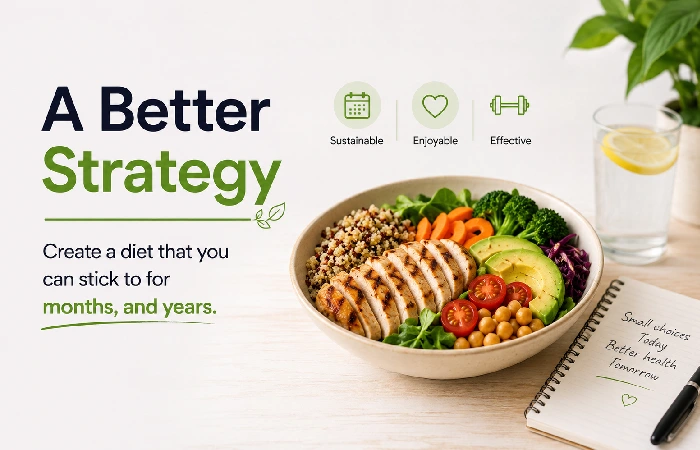
Create a diet that you can stick to for months, and years.
That might mean:
- Eating vegetables every day
- Including protein at meals
- Eating a large amount of minimally processed foods.
- Enjoying treats occasionally
- Drinking enough water
- Carbohydrate around training:Carbohydrate around training:
- Incorporating portion control to suit your objectives
- Perfectly doesn’t have to be perfect.
- The 80/20 Approach
- It’s important for some individuals to focus on their diet as a whole and not make every meal a masterpiece.
- Most meals can be healthy, and even when eating out, dessert, or a favorite food can fit into a healthy pattern, if it is consumed sparingly.
- Consistency beats perfection.
Quick Sports Nutrition Mistakes Checklist
Use this simple checklist to see whether your nutrition supports your training:
| Question | Yes/No |
| Am I eating enough for my activity level? | |
| Do I consume protein regularly? | |
| Do I include carbohydrates in my diet? | |
| Do I drink enough fluids? | |
| Do I eat after demanding workouts when needed? | |
| Am I relying heavily on supplements? | |
| Is my diet realistic long term? | |
| Am I getting enough sleep and recovery? |
If you answer “no” to several of the following questions, you will be better served by focusing on the basics than on buying another supplement.
Final Takeaway
There is no “mystery” to avoiding sports nutrition mistakes.
Start at the basics: Fuel for activity, in a diet include enough protein, carbohydrates, fluids, recover well, choose supplements judiciously.
Good nutrition should complement your lifestyle, not make it difficult, whether you are just starting to exercise, or you are a professional athlete training for a competition.
The best way to do it is in a way that you can do regularly. The best thing to do is a well-rounded diet that you’ll eat regularly that will last you longer, and will not leave you feeling hungry at the end of the day, as opposed to a crash diet that gives you overnight results, but then leaves you feeling deprived.
Dr. Khizrana Begum is a qualified medical professional with MBBS and MD qualifications and 5+ years of experience in the medical field. She works as a General Physician and Dermatologist, with knowledge spanning general medicine, dermatology, preventive healthcare and skin health.
As a medical reviewer, Dr. Khizrana Begum reviews health and wellness content for medical accuracy, clarity and authenticity.
Sameena Begum reviews content for clarity, accuracy and reader usefulness. Her review process helps ensure that published information is clearly presented, relevant and easy for readers to understand.
Syeda Yasmeen is a Health & Wellness Writer at InHumanBeing.com. She creates clear and reader-focused content across health, nutrition, wellness, women’s health, men’s health and babies’ health.