
 Syeda Yasmeen
Health & Wellness Writer Syeda Yasmeen creates clear and
reader-focused content covering health,
nutrition, wellness, women’s health,
men’s health and babies’ health.
Read Full Bio of Author →
Syeda Yasmeen
Health & Wellness Writer Syeda Yasmeen creates clear and
reader-focused content covering health,
nutrition, wellness, women’s health,
men’s health and babies’ health.
Read Full Bio of Author →
 Sameena Begum
Health, Technology & Digital Content Reviewer Sameena Begum reviews selected content
for clarity, factual presentation,
consistency and reader usefulness.
Read Full Bio of Reviewer →
Sameena Begum
Health, Technology & Digital Content Reviewer Sameena Begum reviews selected content
for clarity, factual presentation,
consistency and reader usefulness.
Read Full Bio of Reviewer →
 Dr. Khizrana Begum
General Physician and Dermatologist Dr. Khizrana Begum is a qualified medical
professional with MBBS and MD qualifications
and 5+ years of experience. She reviews health
and wellness content for medical accuracy,
clarity and responsible presentation.
Read Full Bio of Medical Reviewer →
Dr. Khizrana Begum
General Physician and Dermatologist Dr. Khizrana Begum is a qualified medical
professional with MBBS and MD qualifications
and 5+ years of experience. She reviews health
and wellness content for medical accuracy,
clarity and responsible presentation.
Read Full Bio of Medical Reviewer →
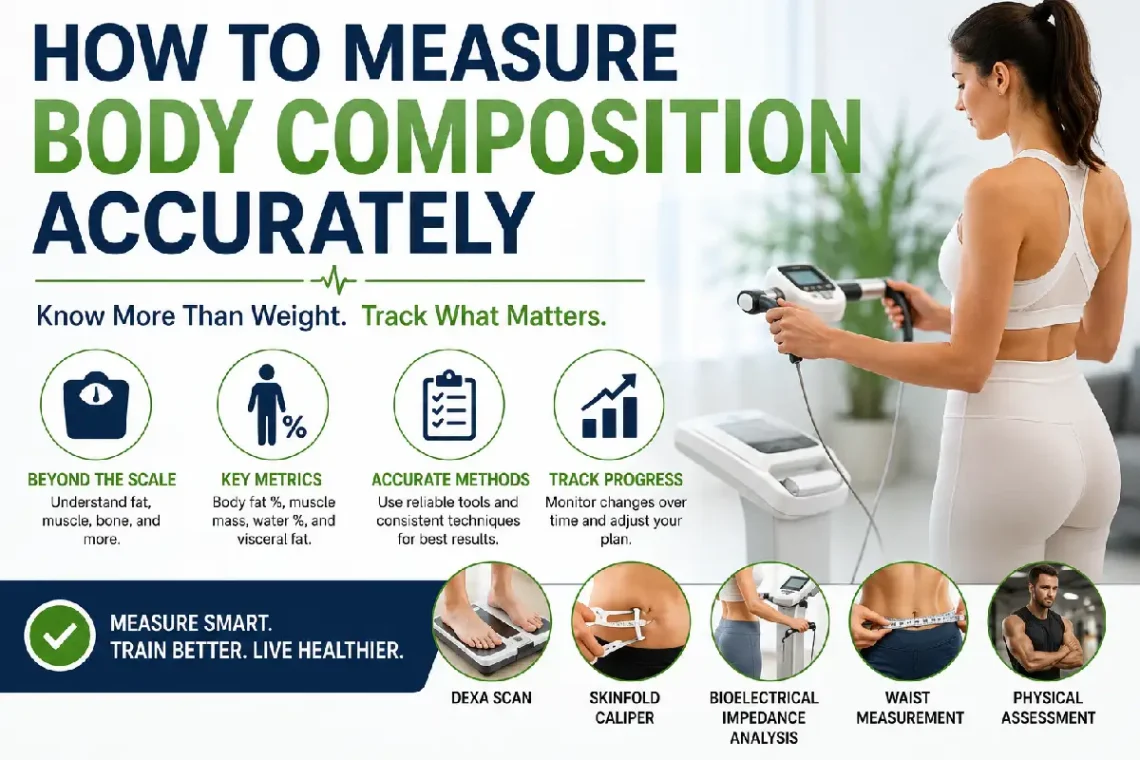
Many people judge their health by stepping on a bathroom scale. Body weights can be helpful clues, but are not definitive. Two people can be the same size with vastly different amounts of muscle, some body fat, bone density and water. This is why it is essential for those who want to get healthier, fat loss, or muscle growth to learn How to Measure Body Composition Accurately.
Body composition indicates how your body is composed, not just your weight. It can give you an idea if you are burning fat or building muscle from training or just staying at a healthy balance. There are currently a number of ways to do it, from basic tape measurements to more sophisticated medical scans.
You’ll learn the advantages and disadvantages of each method, and which is right for your objectives and budget in this guide.
❝
This article is part of
Weight Management Hub
Why Measurement Matters
Body composition is a much better indicator of health than body weight alone.
For instance, a person starting to do strength training might build muscle, but lose body fat. They may only lose a few pounds, but their body composition has improved a lot.
Accurately tracking your body composition helps you understand changes in muscle mass, body fat, and overall health beyond what the scale can show.
Benefits of Measuring Body Composition
| Benefit | Why It Matters |
| Tracks fat loss | More accurate than weight alone |
| Monitors muscle gain | Helps evaluate training progress |
| Supports healthy goal setting | Encourages realistic expectations |
| Improves motivation | Shows progress beyond the scale |
| Assesses overall health | Identifies changes in body composition |
Weight vs Body Composition
| Scale Weight | Body Composition |
| Measures total weight | Measures fat, muscle, bone, and water |
| Doesn’t identify muscle | Shows lean muscle mass |
| Doesn’t measure body fat | Estimates body fat percentage |
| May hide progress | Shows meaningful improvements |
Regular body composition measurements will assist you in determining if your fitness and nutrition plan is working.
Skinfold Calipers
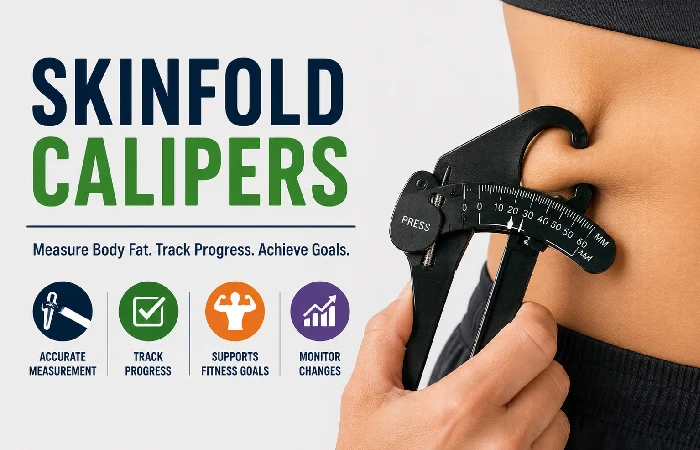
One of the older and lowest cost ways of estimating body fat percentage is with skinfold calipers.
This is a method for measuring the thickness of skin folds at certain points on the body.
While Body Mass Index (BMI) offers a quick screening tool, measuring body composition provides a much more detailed assessment of your fitness progress.
Common measurement sites include:
- Chest
- Abdomen
- Thigh
- Triceps
- Shoulder blade
The value of these measurements are then substituted into standardized formulas to calculate percentage body fat.
Advantages
| Pros | Description |
| Affordable | Low equipment cost |
| Portable | Easy to carry |
| Quick | Takes only a few minutes |
| Widely available | Used in many fitness centers |
Limitations
| Cons | Description |
| Requires experience | Accuracy depends on technique |
| Less accurate for obesity | Larger skinfolds can be difficult to measure |
| Results may vary | Different testers may get different results |
Results are subject to variation – different testers may obtain different results.
Skinfold testing, if done by a trained individual, can give reasonably accurate estimates with time.
Combining regular measurements with a balanced nutrition plan for body composition allows you to evaluate whether your diet is supporting your health and fitness goals.
Bioelectrical Impedance Analysis (BIA)
Bioelectrical Impedance Analysis (BIA) is one of the most popular body composition measures.
The modern smart scale employs the BIA technology.
BIA works by sending a small, painless electrical current through the body.
A muscle has more water and therefore the flow of current through it is different from the flow of current through fat tissue.
The device then estimates:
- Body fat percentage
- Muscle mass
- Body water
- Bone mass (estimated)
Advantages of BIA
| Pros | Description |
| Fast | Results in seconds |
| Convenient | Easy to use at home |
| Non-invasive | Completely painless |
| Affordable | Many consumer devices available |
Limitations of BIA
Results can be affected by:
- Hydration status
- Recent meals
- Exercise
- Time of day
- For the most consistent results:
- Measure at the same time each day.
- Stay well hydrated.
- Avoid measuring immediately after exercise.
Although BIA isn’t as accurate as medical imaging, it is useful for tracking long-term trends.
Tracking your progress alongside a consistent exercise routine for body composition helps you see improvements that may not appear on the scale.
DEXA Scans
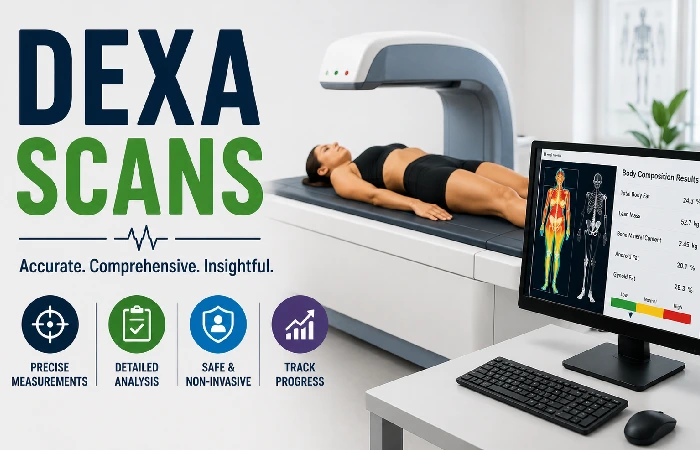
One of the most accurate methods of measuring body composition is DEXA (Dual-Energy X-ray Absorptiometry).
DEXA was originally designed to measure bone density, but can also give thorough information about body fat and lean tissue.
What DEXA Measures
| Measurement | Included |
| Body fat percentage | ✔ |
| Lean muscle mass | ✔ |
| Bone density | ✔ |
| Fat distribution | ✔ |
Advantages
- Very high accuracy
- Measures regional body fat
- Tracks muscle mass
- Evaluates bone health
- Used in research and sports medicine
Limitations
| Limitation | Explanation |
| Cost | More expensive than other methods |
| Availability | Usually found in hospitals and imaging clinics |
| Scheduling | Often requires an appointment |
While DEXA is not required for all patients, it is one of the best ways to get a view of body composition as a whole.
Monitoring your body fat percentage is one of the most effective ways to evaluate changes in body composition over time.
Body Circumference Measurements
One of the easiest apparatus to monitor body composition changes is a measuring tape.
It does not directly measure the percentage of body fat, but can indicate fat loss or muscle gain.
Common Measurement Sites
- Waist
- Hips
- Chest
- Upper arms
- Thighs
- Neck
Benefits
| Benefit | Why It Helps |
| Inexpensive | Only requires a tape measure |
| Easy to repeat | Suitable for home use |
| Tracks fat loss | Especially around the waist |
| Motivating | Shows progress beyond weight |
Tips for Accurate Measurements
- Take the measurement at the same time of the day.
- Make sure the tape is parallel to the floor.
- Don’t pull the tape too tight.
- Record measurements monthly.
- Repeat measurements under the same conditions.
Excess abdominal fat increases the risk of heart disease and diabetes type 2 and waist circumference is especially useful.
Choosing the Right Method
This will vary depending on your objectives, budget, and desired level of accuracy.
Comparison of Common Methods
| Method | Accuracy | Cost | Best For |
| Skinfold Calipers | Moderate | Low | Fitness tracking |
| BIA Smart Scale | Moderate | Low to Moderate | Home monitoring |
| DEXA Scan | Very High | High | Comprehensive analysis |
| Body Measurements | Moderate | Very Low | Tracking changes over time |
Which Method Should You Choose?
Choose Skinfold Calipers if:
- You can get in touch with a qualified professional.
- You’re looking for an inexpensive evaluation.
Choose BIA if:
- You want to keep track of how well they are doing at home.
- You like to take measurements that are fast and easy.
DEXA if:
- You want the most accurate results.
- You are monitoring athletics or specific health information.
Choose Body Measurements if:
- You’re on a budget.
- You’re looking for a simple method to track fat loss as time goes on.
Those who have used more than one of these techniques find that they work best by using them together.
If you’re focused on losing fat while building muscle, understanding body recomposition will help you interpret your body composition measurements more effectively.
Frequently Asked Questions
Which method would be the best to measure body composition?
DEXA scans are one of the most reliable techniques for measuring body fat, lean body mass and bone density.
So, are smart scales accurate?
BIA smart scales give helpful estimates, but can differ based on hydration and other factors. They are most suitable for comparative purposes.
What is the best frequency for measuring body composition?
Most people are able to see meaningful changes if they measure every 4-8 weeks.
Does it mean a person has the same BMI as the body composition?
No, BMI isn’t a measure of body composition, which is the amount of fat, muscle, bone and water in your body.
Is it possible to monitor progress without costly equipment?
Yes. Tracking progress through body measurements, pictures and keeping regular fitness logs can help for a lot without high tech equipment.
Final Thoughts
If you are familiar with How to Measure Body Composition Accurately, you will be able to concentrate on your health – not just the weight loss on the scale. When measuring skinfolds, a BIA smart scale, a DEXA scan, or just body measurements, the data from each will be useful if you are applying them consistently.
Keep in mind that with any measurement there is more to it than just that measurement. The best way to view your progress is to couple body composition measurements with a healthy diet, frequent exercise, strength training, and lifestyle changes. The object of the game is not only to be lighter, but to be healthier, stronger, and more confident in the long haul.
Dr. Khizrana Begum is a qualified medical professional with MBBS and MD qualifications and 5+ years of experience in the medical field. She works as a General Physician and Dermatologist, with knowledge spanning general medicine, dermatology, preventive healthcare and skin health.
As a medical reviewer, Dr. Khizrana Begum reviews health and wellness content for medical accuracy, clarity and authenticity.
Sameena Begum reviews content for clarity, accuracy and reader usefulness. Her review process helps ensure that published information is clearly presented, relevant and easy for readers to understand.
Syeda Yasmeen is a Health & Wellness Writer at InHumanBeing.com. She creates clear and reader-focused content across health, nutrition, wellness, women’s health, men’s health and babies’ health.