
 Syeda Yasmeen
Health & Wellness Writer Syeda Yasmeen creates clear and
reader-focused content covering health,
nutrition, wellness, women’s health,
men’s health and babies’ health.
Read Full Bio of Author →
Syeda Yasmeen
Health & Wellness Writer Syeda Yasmeen creates clear and
reader-focused content covering health,
nutrition, wellness, women’s health,
men’s health and babies’ health.
Read Full Bio of Author →
 Sameena Begum
Health, Technology & Digital Content Reviewer Sameena Begum reviews selected content
for clarity, factual presentation,
consistency and reader usefulness.
Read Full Bio of Reviewer →
Sameena Begum
Health, Technology & Digital Content Reviewer Sameena Begum reviews selected content
for clarity, factual presentation,
consistency and reader usefulness.
Read Full Bio of Reviewer →
 Dr. Khizrana Begum
General Physician and Dermatologist Dr. Khizrana Begum is a qualified medical
professional with MBBS and MD qualifications
and 5+ years of experience. She reviews health
and wellness content for medical accuracy,
clarity and responsible presentation.
Read Full Bio of Medical Reviewer →
Dr. Khizrana Begum
General Physician and Dermatologist Dr. Khizrana Begum is a qualified medical
professional with MBBS and MD qualifications
and 5+ years of experience. She reviews health
and wellness content for medical accuracy,
clarity and responsible presentation.
Read Full Bio of Medical Reviewer →
Body composition is one of the best approaches for measuring health and fitness. It is different from body weight or Body Mass Index (BMI) since it measures the amounts of fat, muscle, bone and water in the body. This will aid you understand more clearly about body’s condition and help you choose what to do for nutrition, workout, and weight managing in the future.
Many people just look at the number on the scale. But, two people can be the same weight and yet have a different amount of body fat or lean tissue. One person can be muscular and not be overweight, and the other can be overweight and not be muscular. They are the same weight, but can have completely different health risks and physical performance.
It’s important to grasp body composition, not just for athletes, or fitness enthusiasts. Whether your aim is to shed fat, build muscle, enhance athletic performance, or simply reside a healthier life, body composition monitoring offers more purpose than just weight monitoring.
This comprehensive guide not only gives you a definition of body composition but also explores its importance, the components of body composition, and how body fat and lean mass affect your overall health. You will also discover why body composition testing is becoming a growing trend in evaluating health to aid in healthy weight management.
❝
This article is part of
Weight Management Hub
What Is Body Composition?
Body composition refers to the measurements of fat, muscle, bone, water, and other tissues that make up your entire body weight. Rather than concentrating only on how much you weigh, it studies what your weight is made of.
A healthy body structure generally includes an proper balance of body fat and lean body mass. Upholding this balance supports physical act, metabolic health, mobility, and disease prevention.
What Does Body Composition Measure?
Body composition is usually classified as either of the following:
Fat Mass: Total amount of fat in the body, including essential fat and stored body fat.
Lean Body Mass: All other body components, such as strengths, bones, organs, connective tissue and body water.
It is an all-encompassing amount of health and is more informative than simply weight when measuring progress, which is why it is used by many healthcare specialists and fitness coaches.
Understanding your Body Mass Index (BMI) can provide a useful starting point for assessing your overall health, although it should be considered alongside other body composition measurements.
Why Body Composition Is Different From Body Weight
Your body weight is the weight of your body, but it does not tell you if your body weight consists of muscle, fat or other tissues.
For example:
| Person | Weight | Body Fat | Muscle Mass |
| Person A | 170 lbs | 15% | High |
| Person B | 170 lbs | 32% | Low |
Person A has a healthier body composition as they have more muscle mass and have less body fat.
Following a balanced nutrition plan for body composition helps support muscle growth, fat loss, and long-term health goals.
Why Healthcare Professionals Use Body Composition
There are several reasons why healthcare professionals use body composition.
Assessing body composition can prove beneficial and can help:
- Identify Excessive Body Fat
- Keep track of muscle growth while working out
- Use to monitor fat loss in weight management.
- Assess nutritional status
- Determine overall health risks
- Create individual fitness programmes
Body composition is a valuable tool in preventive health care and chronic disease management.
A consistent exercise routine for body composition can improve muscle mass, reduce body fat, and enhance overall physical fitness.
Quick Facts About Body Composition
| Factor | Why It Matters |
| Body Fat | provides a source of energy and cushions organs; too much is a health risk. |
| Muscle Mass | It will help to move, metabolize and build strength. |
| Bone Mass | It is necessary to provide structure and mobility. |
| Body Water | Required for circulation, the regulation of body temperature and cellular functions. |
| Lean Body Mass | Refers to how well the body is built and has non-fat tissues |
Why Body Composition Matters More Than Weight
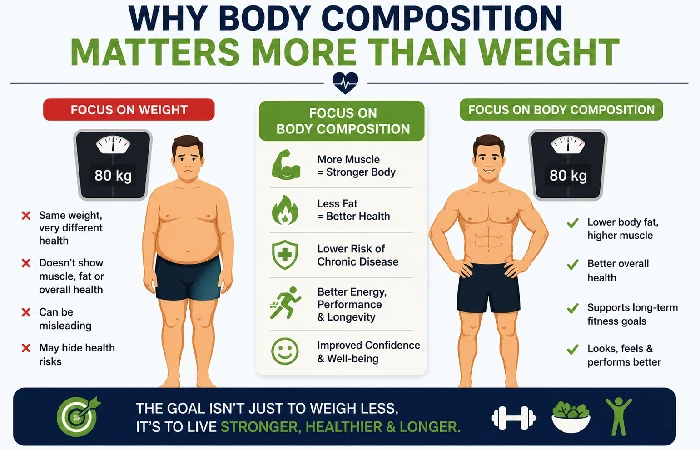
The number on the scale is the way many people determine health. Body weight can be valuable information, but it does not tell the entire story.
Fat doesn’t necessarily equal weight. That’s why body composition is emerging as a favored way to assess health and fitness.
The Limitations of Body Weight
These are the factors that can cause you to gain or lose weight every day:
- Hydration levels
- Meal timing
- Hormonal changes
- Sodium intake
- Physical activity
These transient alterations will not necessarily signal body fat or muscle alterations.
For instance, if a person starts a weight training routine, he may put on a few pounds of muscle but lose a few of pounds of fat. There was no significant change on the scale, but their body composition and health are markedly improved.
Why BMI Isn’t Always Accurate
BMI is an estimate of whether a person’s weight is healthy, determined from height and weight. BMI can be a valuable tool for large population studies but has a number of limitations in an individual.
BMI is not affected by:
- Muscle mass
- Bone density
- Age
- Sex
- Fat distribution
- Athletic build
This can lead to athletes or people with high muscle mass being defined as overweight, even if they don’t have excessive body fat.
The Benefits of Understanding Body Composition
By knowing your body composition you can:
- Establish realistic health goals
- Emphasize fat loss, not just weight loss
- Monitor muscle development
- Improve athletic performance
- Better understand metabolic health
- Reduce the risk of chronic diseases
Rather than asking “How much do I weigh?,” ask these more meaningful questions:
- What has my muscles improved by?
- Has my body fat percentage decreased?
- Am I losing weight and keeping my lean mass intact?
- These measurements help to have a clearer picture of progress.
This section compares weight with body composition.
Weight vs. Body Composition Comparison
| Body Weight | Body Composition |
| Measures total weight | Measures fat, muscle, bone, and water |
| Does not distinguish muscle from fat | Differentiates lean mass and fat mass |
| Can fluctuate daily | Better reflects long-term progress |
| Limited health information | More comprehensive health assessment |
| Often used alone | Used alongside other health indicators |
Who Benefits From Measuring Body Composition?
Body composition assessments can be beneficial to all individuals, regardless of their age or activity level, such as:
- Individuals who are trying to lose weight.
- Sportspersons seeking to improve their modest abilities
- Persons older than 40 years with the goal of keeping muscle size
- Monitoring chronic disease risk by healthcare providers
Components of Body Composition
To know body composition, it’s essential to know what your body is made of. Each person’s body contains a mix of fat, bone, water muscle, and other tissues. These features have purposes that help to ease movement, metabolism and health.
It is influenced by heredities, but diet, sleep, ageing exercise, and lifestyle ways also have an impact
Fat Mass
Fat mass refers to all the fat you have in your body. The majority of people think that body fat is a bad thing, but that isn’t the case. In reality, there is a certain level of fat which is necessary to live.
Body fat serves a number of useful purposes, such as:
- Energy transfer to a storage device to be used later.
- Protecting internal organs
- Heat exchange is regulated.
- Supporting hormone production
- Serving with fat-soluble vitamin absorption (A, D, E, K)
More body fat, mainly abdominal fat, can come with its share of fitness risks, however.
Tracking your body fat percentage provides a more accurate picture of body composition than body weight alone.
Types of Body Fat
Essential Fat
Essential fat is necessary for normal physiologic function. It performs the function of supporting the nervous system, reproductive health and organ protection.
There is an amount of essential fat needed for normal functioning in healthy adults.
Subcutaneous Fat
Subcutaneous fat is under the skin. It is the fat that can be pinched between your fingers.
Being overweight or having too much fat stored under the skin can also cause problems with look and weight, but isn’t as harmful as having visceral fat.
Visceral Fat
It is the fat that encloses organs like the liver, pancreas and intestines.
There are numerous health risks related with excess visceral fat, including:
- Metabolic syndrome
- High blood pressure
- Fatty liver disease
- Heart disease
- Insulin resistance
Type 2 diabetesThe best methods to refining long-term health is to decrease visceral fat, which can be achieved through healthy eating and exercise.
Lean Body Mass
Lean body mass includes everything in your body except fat.
It consists of:
- Skeletal muscles
- Bones
- Organs
- Connective tissue
- Body water
- Blood
The reason why the maintenance of lean body mass is important is due to the fact that muscle tissue consumes more calories than fat tissue, regardless of the condition of the body.
In addition, increased lean body mass is associated with:
- Better balance
- Improved strength
- Faster metabolism
- Greater mobility
- Reduced injury risk
Skeletal Muscle
Skeletal muscle is the type of muscle attached to bones that helps you to move.
Good muscle mass will aid in maintaining:
- Walking
- Running
- Lifting
- Balance
- Posture
- Athletic performance
Muscle loss is a natural process after the age of 30. This is a progressive decrease in strength and mobility, which can be prevented or offset with regular resistance exercise and sufficient protein consumption.
Benefits of Maintaining Muscle Mass
Building up or sustaining muscle mass can be helpful:
- Improve metabolic rate
- Enhance physical performance
- Support healthy aging
- Improve insulin sensitivity
- To minimize the falling risk
- Enable everyday tasks to be easily completed
Bone Mass
Bone mass is the quantity of bone in the body.
Healthy bones provide:
- Structural support
Vital organs are protected from harm.Vital organs are not harmed.
- Mineral storage
The use of muscles to move.Use of muscles to move in partnership.
As individuals age the mass of their bones decreases, particularly women after menopause. There are three main things that benefit keep bones strong: weight-bearing exercise, enough calcium, vitamin D, and adequate protein.
Body Water
The sum of water in the body is about 50-70% of the total body weight, reliant on age, sex, and body composition.
Water is needed for:
- Transporting nutrients
- Regulating body temperature
- Lubricating joints
- Removing waste products
- Supporting digestion
- Maintaining blood volume
Muscle tissue contains more water than fat tissue, so that people with higher muscle mass will have a higher percentage of body water.
Average Body Composition Percentages
The acceptable range for body composition is dependent upon a range of factors, including age, sex, genetics and activity level.
General Healthy Body Fat Ranges
| Category | Women | Men |
| Essential Fat | 10–13% | 2–5% |
| Athletes | 14–20% | 6–13% |
| Fitness | 21–24% | 14–17% |
| Average | 25–31% | 18–24% |
| Obesity | 32%+ | 25%+ |
The ranges listed are general and do not replace medical advice for the individual.
If your goal is to lose fat while building muscle, learning about body recomposition can help you create a more effective fitness strategy.
Body Fat vs. Lean Body Mass
Losing weight doesn’t necessarily improve health is one of the health myths that is most common. But, in fact, it is not only about the amount of weight, it’s also about the kind of weight you lose.
The ultimate aim of healthy weight management is to lose weight with minimal loss of lean body mass (LBM).
What Is Body Fat?
Body fat has a number of important functions, such as energy storage, hormone regulation, and protection of organs. But having too much body fat, especially around the waist, can increase the risk of chronic diseases.
The healthy approach is not to get rid of body fat but to keep it within a normal level.
What Is Lean Body Mass?
The lean body mass consists of:
- Muscles
- Bones
- Organs
- Tendons
- Ligaments
- Body water
Individuals with greater lean body mass tend to have:
- Greater strength
- Better endurance
- More active lifestyle
- Improved physical function
Body Fat vs. Muscle: Key Differences
| Feature | Body Fat | Lean Muscle |
| Primary Role | Energy storage | Movement and strength |
| Burns Calories at Rest | Low | Higher |
| Supports Metabolism | Limited | Yes |
| Increases Strength | No | Yes |
| Improves Mobility | No | Yes |
| Excess Levels | Increase disease risk | Generally beneficial when maintained appropriately |
Why Muscle Matters More Than the Scale
When you don’t lose weight fast enough, many people get discouraged.
If you are bulking while you are fat loss, though, your weight could remain fairly consistent while you are getting leaner and healthier.
For example:
- A person has been able to shed 8 pounds of fat.
- They get 6 pounds of muscle.
They have lost just 2 pounds, but their body composition has been drastically changed.
This is one reason body weight isn’t the best indicator of fitness, and for this reason, fitness professionals often recommend measuring body fat percentage, waist circumference, progress photos and strength gains.
How Body Composition Affects Health
Your body composition has a significant impact on a wide range of health factors, including metabolism, energy, disease risk and physical performance.
Heart Health
Excess body fat—especially visceral fat—is associated with an increased risk of:
- Coronary artery disease
- Heart attack
- Stroke
- High blood pressure
A good body composition promotes optimal circulation, blood pressure and cholesterol levels, which is important for the cardiovascular health.
Using reliable methods to measure body composition allows you to monitor progress and make informed adjustments to your nutrition and workout plan.
Blood Sugar Regulation
The more muscle mass the body has, the better it will utilize glucose, which means the more insulin sensitive and the lower the risk of developing type 2 diabetes.
Extra belly fat, however, has been associated with insulin resistance and metabolic syndrome.
Bone Health
Strength moves and good muscle mass help to put healthy stress on bones to maintain bone density and help prevent osteoporosis.
Metabolic Health
At rest, muscle tissue burns more calories than fat tissue.
This means that people with more muscle mass in their body will burn more calories during the day, and hence it will be easier for them to keep their weight at a healthy level.
Physical Performance
Positive body composition is associated with a reduction in:
- Better endurance
- Increased strength
- Improved flexibility
- Greater mobility
Improved recovery from physical activity.Better recovering from physical activities.
For athletes and anyone looking to stay active for a change, it is important to have the right amount of muscle and body fat to optimize overall performance.
Healthy Aging
Maintaining lean muscle is a priority as adults get older.
Older adults can benefit from a healthy body composition by:
- Stay independent
- Reduce fall risk
- Improve balance
- Maintain mobility
Help to improve the quality of life.
How to Measure Body Composition
Body composition is a different measurement from body weight, because there are special techniques used to calculate the percentage of fat, muscle, bone and water in the body. None of the methods is faultless, and each one has its own pros and cons. This will vary depending on your desired outcome, the amount of money you can spend, and the degree of accuracy you require.
Body Mass Index (BMI)
One of the most frequently used screening tools is Body Mass Index (BMI). It takes into account your weight and height and helps you know if your weight is in a healthy range.
BMI is a good tool to use for population level trends but cannot separate muscle and fat. For instance, a high BMI in athletes may be caused by low body fat and high body muscle mass. Likewise, a person with a normal BMI can have a high amount of body fat and low amount of muscle mass.
BMI should thus not be relied upon as the sole measure of health, and should be taken in conjunction with other measures of body composition.
Waist Circumference
One of the easiest measurements to take is waist circumference, which is a good indicator of abdominal fat. If there is excess fat around the waist, this is strongly linked with cardiovascular diseases, type 2 diabetes and metabolic syndrome.
While there may be a variety of reasons for weight gain, this increase in waistline can be caused by an increase in abdominal fat, known as visceral fat.
Bioelectrical Impedance Analysis (BIA)
BIA is an electrical current that is passed through the body to measure body fat, muscle mass, and body water.
Since BIA is non-invasive, quick and inexpensive, many smart scales and fitness centers use it. The results can, however, be affected by hydration, recent food intakes, and exercise, so it is important to measure when at similar state of hydration, after similar meals and after a similar amount of exercise.
Skinfold Measurements
Skinfold calipers are used to measure the thickness of fat under the skin at specific body sites. This technique, if done by a trained person, can give a fairly accurate body fat percentage.
Skinfold testing is an affordable method, but requires experience for reliable results.
DEXA Scan
One of the most accurate methods is Dual-Energy X-ray Absorptiometry (DEXA). It measures bone density, lean muscle and body fat separately, giving a detailed analysis of body composition.
Medical facilities, sports performance centers and research facilities are the commonplace where DEXA scans are utilized. Although highly accurate, they are more expensive than other methods.
Comparing Body Composition Methods
| Method | Accuracy | Cost | Best For |
| BMI | Low | Free | General screening |
| Waist Circumference | Moderate | Low | Abdominal fat monitoring |
| BIA Scale | Moderate | Affordable | Home tracking |
| Skinfold Test | Moderate to High | Low | Fitness assessments |
| DEXA Scan | Very High | Higher | Comprehensive analysis |
How Often Should You Measure Body Composition?
Most people should re-evaluate body composition every 6-12 weeks. Daily measurements aren’t necessary because muscle changes and body fat changes are not significant over the course of the day. Concentrate on longer trends, not short-term changes.
Muscles build up during rest, not during activity. If an injury delays recovery, progress will be hampered and the risk of injury will rise.
Support recovery by:
- Eating at regular times and meals
- Staying hydrated
- Eating enough protein
- Taking rest days
- Managing stress
Improving Body Composition Through Nutrition
Nutrition is the number one key to changing body composition. Although exercise is essential, what you eat makes a huge difference in either losing extra body fat or maintaining muscle mass or adding new lean muscle mass.
Don’t just follow a diet, but establish a lifestyle that is healthy and beneficial for long-term progress and success.
Prioritize Protein
Protein is the building block of muscle, and important for maintaining lean body mass during weight loss. Protein intake also makes you feel full, so you can eat more and longer.
Some good sources of protein include:
- Chicken breast
- Turkey
- Fish
- Eggs
- Greek yogurt
- Cottage cheese
- Tofu
- Lentils
- Beans
- Lean beef
Adding some lean protein to every meal can help keep muscles healthy and help them repair.
Eat More Whole Foods
Whole minimally processed foods are rich in vitamins, minerals, fibre and antioxidants that contribute to good health. They tend to be more filling than highly processed foods and they are easier to control calorie amounts.
Focus on:
- Fresh vegetables
- Fruits
- Whole grains
- Legumes
- Nuts and seeds
- Lean proteins
- Healthy fats
Choose Quality Carbohydrates
Carbohydrates are the fuel of choice for the body – particularly during exercise. Do not remove carbohydrates, select high fiber carbohydrates that will supply a regular energy release and support digestive health.
These are good choices for carbohydrates:
- Oats
- Brown rice
- Sweet potatoes
- Quinoa
- Whole-grain bread
- Beans
- Fruits
These foods are used for fueling workouts as well as being a source of essential nutrients.
Include Healthy Fats
Fat is an important source of energy, and it helps the body absorb fat-soluble vitamins, it helps to produce hormones or make them. They also help to promote fullness and eating well balanced.
Good Fat is:
- Avocados
- Olive oil
- Almonds
- Walnuts
- Chia seeds
- Flaxseeds
- Fatty fish (salmon)
Stay Hydrated
Water is essential to almost all functions in the body such as digestion, circulation, temperature control, and muscle function. Even dehydration – even if it is only mild – can impact physical performance and make workouts feel harder.
Water should be taken regularly by most adults throughout the day and more during hot weather or heavy exercise.
Maintain a Moderate Calorie Deficit for Fat Loss
If fat loss is your objective, eating about 10% less calories than your body burns can help you lose weight over time and maintain your muscle mass through the proper use of protein and strength training.
Don’t go too low with calories as this can promote weight loss in muscles and slow metabolism.
Foods That Support Healthy Body Composition
| Food Group | Examples | Benefits |
| Lean Protein | Chicken, fish, eggs | Supports muscle maintenance |
| Whole Grains | Oats, quinoa, brown rice | Sustained energy and fiber |
| Vegetables | Broccoli, spinach, peppers | Nutrient-dense and low in calories |
| Fruits | Berries, apples, oranges | Vitamins, minerals, and antioxidants |
| Healthy Fats | Olive oil, avocado, nuts | Hormone and heart health |
Nutrition Tips for Long-Term Success
- Make half your plate vegetables.
- Have protein at every meal.
- Eat whole grains instead of refined grains.
- Limit sugary beverages and ultra-processed foods.
- Use a meal plan to minimize food choices that are not healthy.
- Learn to be aware of and listen to cues for hunger and fullness.
Improving Body Composition Through Exercise
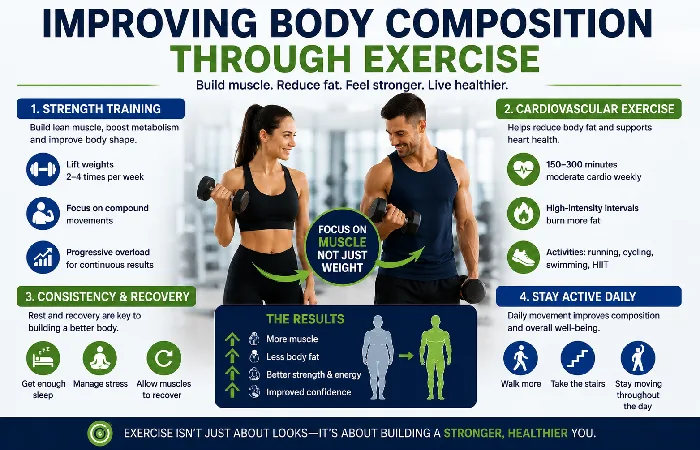
There is no such thing as a quick fix of a diet to improve body composition. Rather, it’s all about establishing a well-rounded diet that you can sustain over the course of a number of years. Consistent exercise, a healthy diet and proper rest can help maintain healthy body weight, lean muscle mass and a healthy lifestyle.
Prioritize Strength Training
The building blocks of body composition is resistance training. Strength training isn’t just about building muscle, it also helps you to boost your resting metabolic rate, and can help keep lean muscle while losing weight.
The exercises that have the greatest strength training benefits are:
- Squats
- Deadlifts
- Push-ups
- Bench presses
- Lunges
- Pull-ups
- Shoulder presses
- Rows
Work out at least 2-3 times a week targeting all of your major muscle groups, leaving sufficient recovery between workouts.
Include Cardiovascular Exercise
Cardio can help with heart health, burn calories and increase endurance. It should be used along with resistance training and NOT as an alternative to it.
Common types of activities used for cardio are:
- Brisk walking
- Jogging
- Cycling
- Swimming
- Rowing
- Dancing
The American Heart Association suggests getting at least 150 minutes of moderate exercise a week or 75 minutes of vigorous exercise a week.
Try High-Intensity Interval Training (HIIT)
HIIT is a series of short, high-intensity exercises and rest breaks. Can improve cardiovascular fitness and accelerate fat loss more than traditional, moderate-intensity workouts.
Some examples of a simple HIIT workout could be:
- Tasks that can be completed in 30 seconds or less.Items that take 30-seconds.
- Walk for 1 minute at a slow pace.Slow walk for a 60 second time.
- Repeat for 15–20 minutes
HIIT should be introduced gradually and for persons who have medical conditions, it should be introduced slowly.
Don’t Forget Flexibility and Mobility
Stretching and moving exercises increase and maintain range of motion, decrease stiffness and prevent injuries.
Activities such as:
- Yoga
- Pilates
- Dynamic stretching
- Foam rolling
Can be used in addition to your strength training program and cardio.
Recovery Is Part of Progress
Rest is the time for building muscles, not the time during activity. If it is an injury that slows down the recovery process, progress will be limited and injury risk will increase.
Support recovery by:
- Eating at regular times and meals
- Staying hydrated
- Eating enough protein
- Taking rest days
- Managing stress
Sample Weekly Exercise Plan
| Day | Activity |
| Monday | Full-body strength training |
| Tuesday | Brisk walk or cycling |
| Wednesday | Upper-body strength training |
| Thursday | Yoga or stretching |
| Friday | Lower-body strength training |
| Saturday | HIIT or swimming |
| Sunday | Rest and recovery |
Common Body Composition Mistakes
There are lots of people out there who go to work and make mistakes that they’re not aware of which is slowing them down. You can prevent these common problems and get healthier, more sustainable results.
Focusing Only on the Scale
The scale doesn’t tell the difference between fat and muscle. Fat loss and muscle gain can occur simultaneously, causing little weight loss, but a considerable improvement in body composition.
Record other measurements like:
- Body fat percentage
- Waist circumference
- Progress photos
- Strength gains
- Clothes sizes and fits
Skipping Strength Training
Many of the weight-loss programs only focus on cardio exercises. If you don’t do resistance training, some of the weight loss in the absence of exercise could be lost muscle mass.
It is important to retain the muscle to ensure good metabolism, good strength and good long term weight management.
Eating Too Little
Severely restricting calories may lead to:
- Muscle loss
- Fatigue
- Slower metabolism
- Poor workout performance
Generally, a medium calorie deficit and enough protein is more effective.
Ignoring Sleep
Bad sleep may impact hunger hormones, recovery and exercise performance. Maintaining regular, sufficient, and good-quality sleep can aid in fat loss and muscle-building.
Being Inconsistent
Progress takes time. It can be hard to achieve results if you switch workouts or diets too often.
Sticking with a healthy lifestyle may be more important than perfection.
Setting Realistic Body Composition Goals
Changes in body structure that are healthy are slow and steady. Genuine outlooks keep one interested and on the correct track for success.
Focus on Performance, Not Just Appearance
Rather than setting goals for the amount of body fat you have, consider setting goals like:
- Lifting heavier weights
- Walking longer distances
- Improving flexibility
- Increasing daily energy
- Building strength
Such successes tend to be significant health gains.
Use SMART Goals
Effective goals are:
- Specific
- Measurable
- Achievable
- Relevant
- Time-bound
Monitor Progress Regularly
Monitor progress at regular intervals (every 6–12 weeks) using the same method of measurement whenever possible. Do not make conclusions based on the changes that happen day to day, because a lot of things besides hydration may change in that time.
Healthy Progress Indicators
| Indicator | Why It Matters |
| Lower body fat percentage | Indicates fat loss |
| Increased muscle mass | Supports metabolism |
| Improved strength | Reflects fitness gains |
| Smaller waist circumference | May indicate reduced visceral fat |
| Higher energy levels | Suggests improved overall health |
Frequently Asked Questions
- What is body composition?
Body composition is the amount of body fat, muscle, bone, water and other tissues in the body.
- In what ways do body composition rates differ from body weight?
Body composition is better at giving a better picture of your health as it is able to tell you about your fat and lean muscle – body weight is not.
- What is a healthy body fat percentage?
Body fat levels are different for different people, depending on their age and sex. Healthy adult men typically have a range of 10–24%, and healthy adult women are typically 20–31%.
- Is it possible to build up the body composition without shedding pounds?
Yes. While building muscle, you can burn body fat without seeing an increase on the scale, but you will see benefits in your health.
- Which exercise will help you gain the maximum amount of body composition?
Strength training, aerobic activity, and diet make for the best long-term results.
Conclusion
Body composition is a much more comprehensive information than body weight. Knowing how to maintain a healthy ratio of fat to muscle tissue can help you make realistic objectives that will lead to health and wellness long lasting, not just a weight loss objective.
To achieve better body composition, a combination of healthy eating, frequent strength training workouts, cardiovascular exercises, good sleep habits, stress management and consistency are necessary. The changes that can be achieved may be incremental, but they can improve muscle mass, body fat percentage, fitness, and so on, which can improve the health of the heart, metabolism, mobility, and overall quality of life.
Commit to making lasting changes that will make your body stronger and healthier, rather than losing weight fast. These lifestyle changes can contribute to building a healthier body composition over time, and create a better situation for well-being for years to come.
Dr. Khizrana Begum is a qualified medical professional with MBBS and MD qualifications and 5+ years of experience in the medical field. She works as a General Physician and Dermatologist, with knowledge spanning general medicine, dermatology, preventive healthcare and skin health.
As a medical reviewer, Dr. Khizrana Begum reviews health and wellness content for medical accuracy, clarity and authenticity.
Sameena Begum reviews content for clarity, accuracy and reader usefulness. Her review process helps ensure that published information is clearly presented, relevant and easy for readers to understand.
Syeda Yasmeen is a Health & Wellness Writer at InHumanBeing.com. She creates clear and reader-focused content across health, nutrition, wellness, women’s health, men’s health and babies’ health.