
 Syeda Yasmeen
Health & Wellness Writer Syeda Yasmeen creates clear and
reader-focused content covering health,
nutrition, wellness, women’s health,
men’s health and babies’ health.
Read Full Bio of Author →
Syeda Yasmeen
Health & Wellness Writer Syeda Yasmeen creates clear and
reader-focused content covering health,
nutrition, wellness, women’s health,
men’s health and babies’ health.
Read Full Bio of Author →
 Sameena Begum
Health, Technology & Digital Content Reviewer Sameena Begum reviews selected content
for clarity, factual presentation,
consistency and reader usefulness.
Read Full Bio of Reviewer →
Sameena Begum
Health, Technology & Digital Content Reviewer Sameena Begum reviews selected content
for clarity, factual presentation,
consistency and reader usefulness.
Read Full Bio of Reviewer →
 Dr. Khizrana Begum
General Physician and Dermatologist Dr. Khizrana Begum is a qualified medical
professional with MBBS and MD qualifications
and 5+ years of experience. She reviews health
and wellness content for medical accuracy,
clarity and responsible presentation.
Read Full Bio of Medical Reviewer →
Dr. Khizrana Begum
General Physician and Dermatologist Dr. Khizrana Begum is a qualified medical
professional with MBBS and MD qualifications
and 5+ years of experience. She reviews health
and wellness content for medical accuracy,
clarity and responsible presentation.
Read Full Bio of Medical Reviewer →
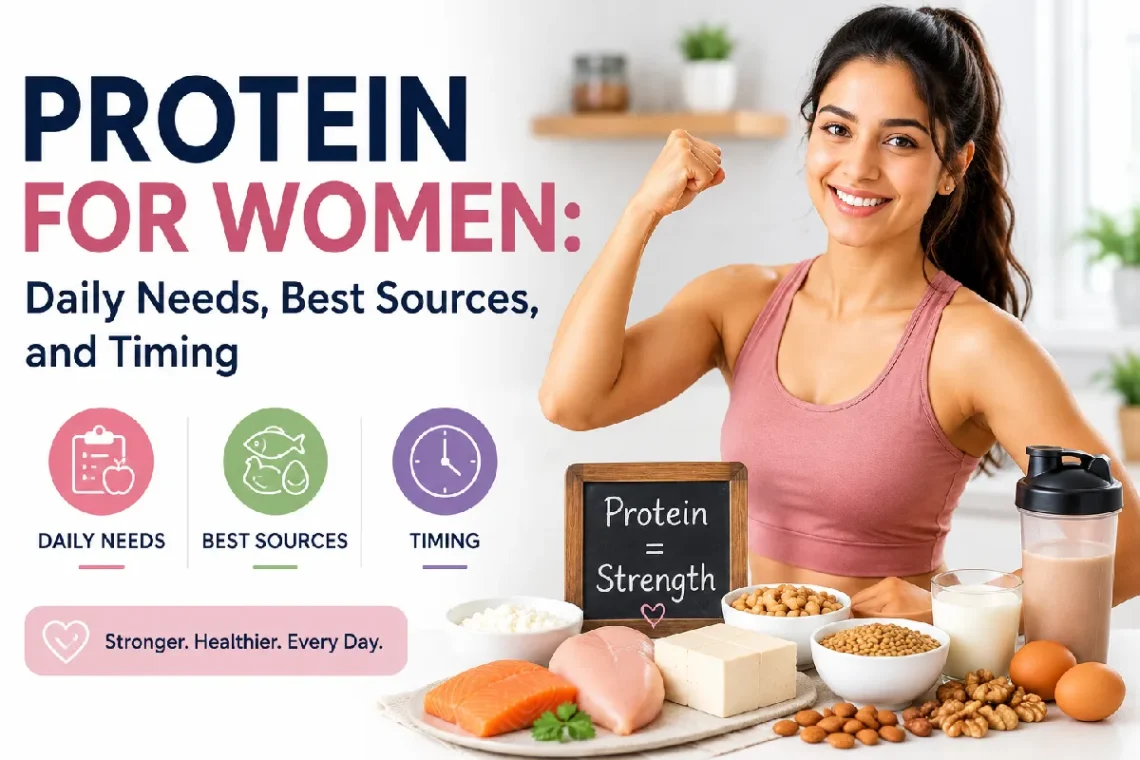
Protein for Women is essential to a healthy diet at any age. It helps to build and repair tissues, such as muscle tissue. It may likewise boost the satisfaction of the meals. Protein is the main for anyone who is aiming to increase muscle growth, lose weight and fat, improve fitness level or simply consume a healthier diet.
There is not a standard quantity for women versus men. The amount of protein need depends on your body size, activity level, training schedule, health objectives and diet. In the USA, women’s priority should be to pay care to total daily amounts of protein and to select a variety of good protein foods.
Sports nutrition is about choosing foods and eating patterns that support your training and overall fitness goals. For a broader overview of sports-focused nutrition, explore our complete sports nutrition guide.
❝
This article is part of
Sports Nutrition Hub
Daily Protein Needs
Different quantities of protein are needed by people.
General Protein Guide
| Lifestyle or Goal | Approximate Daily Protein Range |
| Generally active adult | 0.8–1.0 g/kg |
| Regular exercise | 1.2–1.6 g/kg |
| Strength training | 1.4–2.0 g/kg |
| Muscle-building focus | 1.6–2.0 g/kg |
| Weight-loss with exercise | 1.4–2.0 g/kg |
These are general ranges, not personalized medical recommendations.
For example, a woman weighing 65 kg (143 lb) who exercises regularly might need roughly 78–104 grams of protein per day depending on her training and goals.
Fueling properly before exercise can help you approach your training sessions with a consistent nutrition routine. Explore our pre-workout nutrition guide for practical ideas.
Why Protein Needs Can Increase
Protein needs may be higher when you’re:
- Strength training regularly
- Trying to build muscle
- Following a calorie-restricted diet
- Increasing exercise volume
- Recovering from demanding training
- Getting older and trying to maintain muscle mass
The goal isn’t to consume as much protein as possible. More is not automatically better.
Instead, aim for an quantity that fits your individual needs and overall diet.
Best Protein Sources
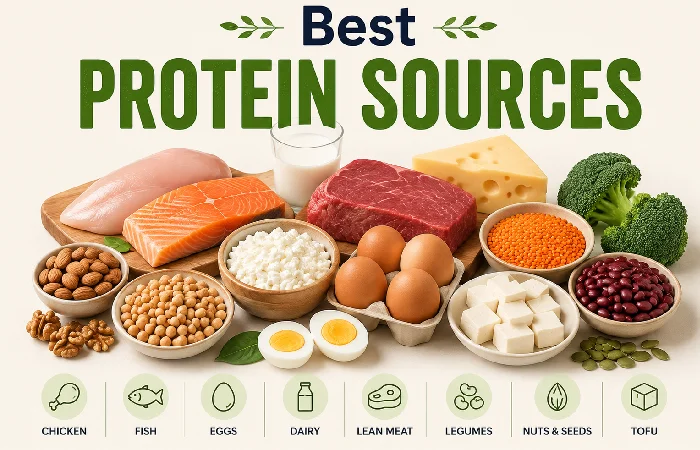
You do not need to take protein supplements to get sufficient protein.
Animal proteins, plant proteins, dairy, eggs and easy-to-eat protein foods all fit into a healthy diet plan.
Nutrition after exercise is another important part of planning your overall diet around training. Learn more with our post-workout nutrition guide.
High-Protein Foods
| Food | Approximate Protein |
| Chicken breast, 100 g | ~30–31 g |
| Salmon, 100 g | ~25 g |
| Tuna, 100 g | ~25–29 g |
| Eggs, 2 large | ~12–13 g |
| Greek yogurt, 170 g | ~15–18 g |
| Cottage cheese, 1 cup | ~25 g |
| Lentils, 1 cup cooked | ~18 g |
| Black beans, 1 cup cooked | ~15 g |
| Tofu, 100 g | ~10–15 g |
| Tempeh, 100 g | ~18–20 g |
| Milk, 1 cup | ~8 g |
| Edamame, 1 cup cooked | ~17 g |
| Easy High-Protein Meal Ideas |
The sum of protein per portion is dependent on the brand, the preparation and the type of product.
Easy High-Protein Meal Ideas
Breakfast: Eggs with whole-grain toast and Greek yogurt
Dinner: Buffalo chicken salad sandwich with caprese salad, orange juice, and crostini
Snack: Cottage cheese and fruit.
Desert: Crispy cinnamon apple and banana slices
Vegan option: Veggie burger with veggie salad. Gluten-free option: Quinoa bowl with lentils and vegetables.
Vegetarian option: Stir-Fry with Tofu, Rice and edamame.Vegan option: Stir-Fry with Tofu, Rice and edamame.
You don’t have to eat the same protein on a daily basis. Eating a diverse diet helps you keep it healthy.
Animal vs Plant Protein
Animal and plant foods can all provide a good diet.
The key distinction is that most animal proteins have all nine essential amino acids in roughly the right proportions to optimally feed the body’s protein requirements.
But some plant proteins are lacking in one or more of the essential amino acids, although foods like soy and quinoa contain complete protein profiles.
Some people also consider supplements alongside their regular diet and training routine. Explore our sports nutrition supplements guide to learn more about this topic.
Comparison
| Feature | Animal Protein | Plant Protein |
| Sources | Eggs, fish, poultry, dairy | Beans, lentils, tofu, nuts |
| Essential amino acids | Generally complete | Varies by food |
| Fiber | Usually little or none | Often provides fiber |
| Micronutrients | Depends on food | Depends on food |
| Saturated fat | Varies | Generally lower |
| Suitable for vegan diets | No | Yes |
Is Animal Protein Better?
Not necessarily.
A healthy diet can include animal protein, plant protein, or both.
For women who eat animal products, foods such as fish, eggs, poultry, and yogurt can provide convenient sources of protein.
For vegetarian or vegan women, useful choices include:
- Tofu
- Tempeh
- Lentils
- Beans
- Chickpeas
- Edamame
- Soy milk
- Peas
- Quinoa
Nuts and seeds
Combining Plant Proteins
You don’t have to combine specific plant proteins at every meal.
Eating a variety of plant foods throughout the day can help provide a broad range of amino acids.
For example:
Rice + beans
Whole-grain bread + peanut butter
Lentils + quinoa
Tofu + vegetables + rice
Plant-based meals can also provide fiber, vitamins, minerals, and other beneficial compounds.
Protein Timing
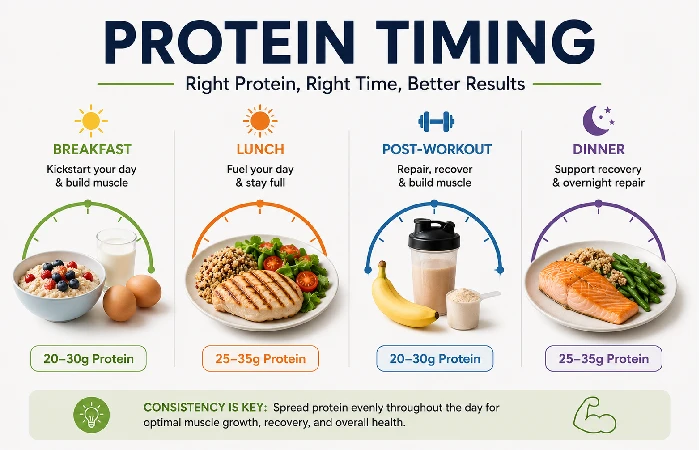
Total daily protein intake is generally more important than worrying about an exact “protein window.”
However, spreading protein throughout the day can be a practical way to support muscle maintenance and make it easier to reach your daily target.
Planning balanced meals can make it easier to maintain consistent nutrition throughout your training schedule. Our sports nutrition meal plan guide provides additional ideas.
A Simple Protein Distribution
If you are aiming for 100g per day, you might split this up into something like this:
| Meal | Example Protein |
| Breakfast | 25 g |
| Lunch | 30 g |
| Snack | 15 g |
| Dinner | 30 g |
| Total | 100 g |
This is only an example.
You don’t need to hit exactly 25 or 30 grams at every meal.
Protein Before Exercise
The following is only an illustration.
There is no need to reach for 25 or 30 grams at each meal.
Protein Before Exercise
Consuming protein before a workout may benefit, especially when it is several hours before your last meal.
Examples include:
Greek yogurt and fruit
Eggs and toast
Protein smoothie
Cottage cheese and fruit
Protein After Exercise
Consuming a protein-rich food or snack following resistance exercise may help repair and adapt your muscles.
But there is no need to consume a protein shake straight after exercising.
More flexibility if you have just had a protein-containing meal before activity.
Protein Before Bed
A protein-heavy dinner can also be a part of a nutritious diet.
Options include:
- Greek yogurt
- Cottage cheese
- Milk
- Soy yogurt
- Protein smoothie
What makes a difference most is the overall amount of protein you are consuming throughout the day.
Common Myths
Many mistaken notions exist about Protein for Women, especially that increased protein intake leads to the women being “too bulky.
Common nutrition mistakes can make it harder to maintain an effective approach to fueling and recovery. Explore our sports nutrition mistakes guide for practical information.
Myth #1: Protein Will Make Women Bulky.
Protein is not directly related to building big muscles.
Resistance training, nutrition, genetics, volume, hormones, and time are all important factors in muscle growth.
In order to build up huge muscles, you must work hard and continually.
Protein is nothing more than a source of amino acids for repairing and building body tissues.
Many people believe that women require less protein than men.
Myth #2: Women Do Not Need Much Protein.
Protein is definitely a must-have for women.
While everyone’s needs are different, protein is vital for maintaining tissues, muscle and healthy body functions.
The correct dose is not a specific one for gender but rather for the individual.
Contrary to popular belief, protein powder is not just for those looking to build muscle.
Myth 3: protein powder is only for bodybuilders.
Protein powder is just a handy way to include protein in your diet.
For women who do not receive sufficient protein via diet, a protein shake can be helpful.
However, protein powder is not necessary if one consumes adequate protein in their normal diet.
Myth 4: Plant Protein isn’t good enough
Plant proteins are definitely an element of a nutritious high healthy protein diet.
The main thing is to get sufficient protein overall and eating different protein food products.
Soy foods, lentils, beans, peas, tofu and other plant foods can be a good contribution.
The 5th myth is that you must eat protein right after exercising.
Myth 5: You should consume protein immediately after workouts.
While it’s true that you need protein after workouts, the notion that you’re short 15 minutes is over exaggerated.
Obviously it can be helpful to have protein after your workout, but the amount of protein you consume and its timing are more significant than a post workout protein shake after the last rep.
Myth #6: High-Protein Foods are only for athletes.
Protein is important whether you’re an athlete or someone who simply wants to maintain a healthy lifestyle.
Walking, sitting at a desk, exercise, fitness classes, weight training and recreational sports are all activities that women engage in that require protein to support them.
Frequently Asked Questions
What amount of protein does a woman require daily?
The basic adult RDA is 0.8 g/kg/day, but for women who are doing regular exercise, this may be higher. Each person is different according to their size, activity, and age, as well as their objectives.
Which is the ideal protein food for women?
There isn’t one best protein. Protein foods like chicken, fish, eggs, dairy, tofu, beans and lentils can all be part of a healthy diet.
Is it safe for women to use protein powders?
Yes. Protein powder can be a convenient way to get in protein when you’re having trouble eating enough.
But is plant protein good?
Yes. Plant protein can be a source of protein and nutrients like fibre, vitamins, minerals and health promoting plant compounds.
Is it ok for women to consume protein after exercise?
After resistance training, a protein meal or snack is beneficial to aid recovery, however, the total protein for the day is more important than the protein right after training.
Final Takeaway
Protein for Women doesn’t have to be difficult. Determine approximate daily needs, and plan meals around the convenient protein foods.
Add any combination of eggs, fish, poultry, dairy, legumes, soy products or other plant-protein sources, depending on your preference. For those who are active, consuming protein over multiple meals can help you make it easier to meet your protein requirements and promote muscle repair.
But remember, protein is just one aspect of the equation. The various components of a balanced diet, along with regular exercise, sufficient sleep, adequate water intake and a well-balanced calorie intake combine for strength, fitness and long-term health.
Dr. Khizrana Begum is a qualified medical professional with MBBS and MD qualifications and 5+ years of experience in the medical field. She works as a General Physician and Dermatologist, with knowledge spanning general medicine, dermatology, preventive healthcare and skin health.
As a medical reviewer, Dr. Khizrana Begum reviews health and wellness content for medical accuracy, clarity and authenticity.
Sameena Begum reviews content for clarity, accuracy and reader usefulness. Her review process helps ensure that published information is clearly presented, relevant and easy for readers to understand.
Syeda Yasmeen is a Health & Wellness Writer at InHumanBeing.com. She creates clear and reader-focused content across health, nutrition, wellness, women’s health, men’s health and babies’ health.