
 Syeda Yasmeen
Health & Wellness Writer Syeda Yasmeen creates clear and
reader-focused content covering health,
nutrition, wellness, women’s health,
men’s health and babies’ health.
Read Full Bio of Author →
Syeda Yasmeen
Health & Wellness Writer Syeda Yasmeen creates clear and
reader-focused content covering health,
nutrition, wellness, women’s health,
men’s health and babies’ health.
Read Full Bio of Author →
 Sameena Begum
Health, Technology & Digital Content Reviewer Sameena Begum reviews selected content
for clarity, factual presentation,
consistency and reader usefulness.
Read Full Bio of Reviewer →
Sameena Begum
Health, Technology & Digital Content Reviewer Sameena Begum reviews selected content
for clarity, factual presentation,
consistency and reader usefulness.
Read Full Bio of Reviewer →
 Dr. Khizrana Begum
General Physician and Dermatologist Dr. Khizrana Begum is a qualified medical
professional with MBBS and MD qualifications
and 5+ years of experience. She reviews health
and wellness content for medical accuracy,
clarity and responsible presentation.
Read Full Bio of Medical Reviewer →
Dr. Khizrana Begum
General Physician and Dermatologist Dr. Khizrana Begum is a qualified medical
professional with MBBS and MD qualifications
and 5+ years of experience. She reviews health
and wellness content for medical accuracy,
clarity and responsible presentation.
Read Full Bio of Medical Reviewer →
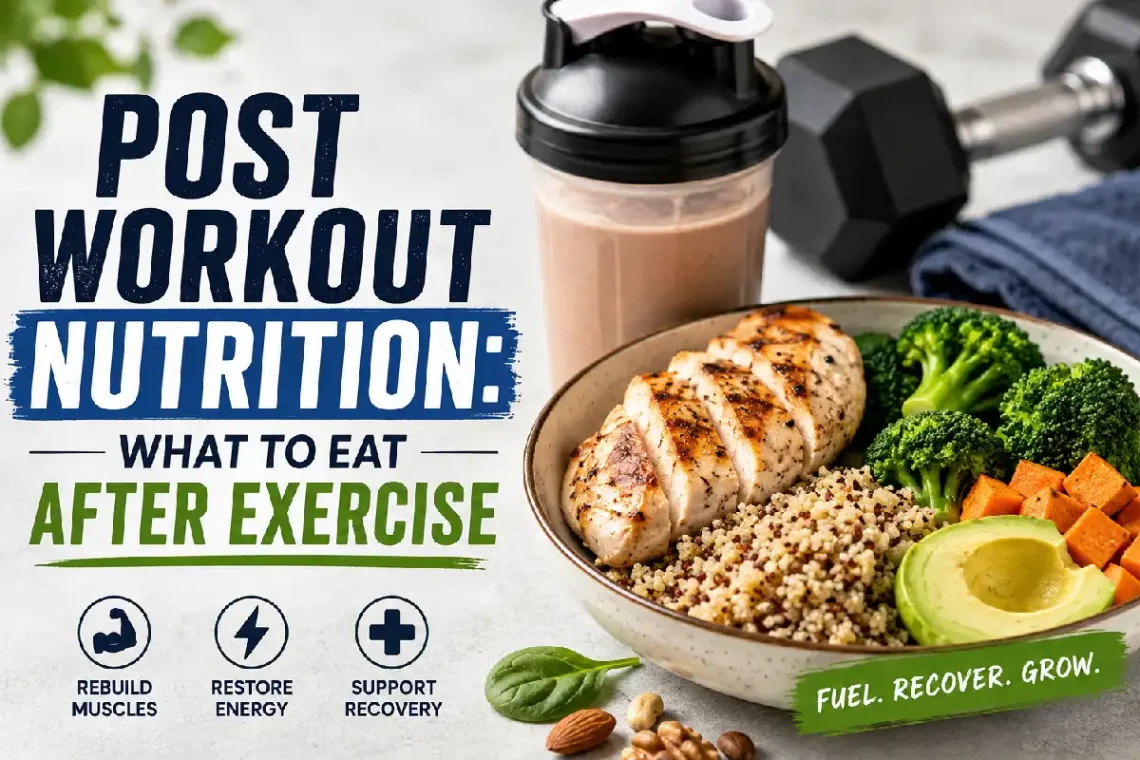
For men and women, Post Workout Nutrition is a crucial component of a well-rounded fitness plan. Eating and drinking after activity can replenish energy consumed during activity, help repair muscle damage and contribute to hydration.
Fortunately, there’s no need to complicate things when it comes to recovery nutrition. No fancy supplements or the perfect meal just after your exercise is necessary. Most people in the USA don’t need anything more than a regular, balanced protein, carbohydrate, fluid and nutrient-rich meal.
These will vary from person to person depending on their training, body size, exercise goals and the food they have consumed prior to the workout.
Sports nutrition plays an important role in supporting your training, energy, and recovery. For a broader overview of nutrition strategies for active individuals, explore our complete sports nutrition guide.
❝
This article is part of
Sports Nutrition Hub
Why Recovery Nutrition Matters
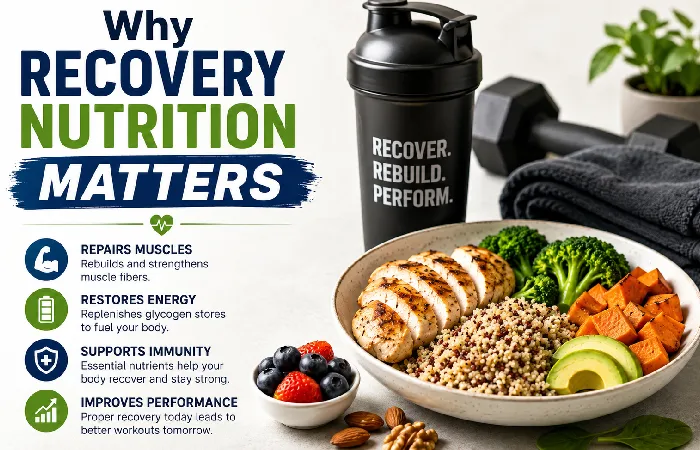
Exercise requires energy from your muscles and utilizes stored energy. There is also fluid loss due to sweat, especially on longer or strenuous workouts.
Post Workout Nutrition gets your body from the workout to the recovery stage.
A healthy recovery meal can include:
- The protein is used for muscle repair and adaptation.
- A carb provides energy stores.Carbohydrates replenish energy stores.
- Fluids to replace water losses
- If there is significant sweating, it is recommended that an electrolyte sports drink be used.
- Vitamins and minerals found in whole foods.Vitamins and minerals in food.
Recovery Depends on More Than Food
Eating is just one aspect of recovery.
Other steps of a healthy recovery program include:
- Adequate sleep
- Take a break from challenging exercises.
- Appropriate training volume
- Regular hydration
- Provide adequate overall calories and nutrients
Poor sleep and overtraining are commonly a part of an excellent recovery meal and will prevent you from recovering.
What you eat before exercise can influence how you feel during your workout. Explore our pre-workout nutrition guide for practical ideas on fueling before training.
Do all people require a post-workout meal?
Not necessarily.
A recovery snack may not be necessary if you have eaten a well-balanced meal and the next meal is not too far off.
But eating post-workout can be more beneficial when:
- You have practised for a long period of time.
- You worked really hard in your workout!
- You will get another training later on.
- It’s been hours since you last ate.
- You’re trying to build or maintain muscle
- You are hungry post training
Protein After Exercise
One of the most significant components of Post Workout Nutrition is protein, which increases the rate of protein turnover during exercise.
Resistance training along with proper protein consumption allows muscles to repair and adapt.
Supplements may be considered as part of an overall nutrition strategy, depending on individual needs and goals. Learn more with our sports nutrition supplements guide.
How Much Protein?
There’s no one right number for all.
The usual range for sports nutrition is about 20 to 40 grams per meal, dependent on size and requests of the individual. Dispersing protein consumption throughout the day may also be helpful for endorsing muscle protein mixture.
For example:
| Food | Approximate Protein |
| 3 large eggs | ~19 g |
| 170 g Greek yogurt | ~15–18 g |
| 100 g cooked chicken breast | ~30 g |
| 100 g cooked salmon | ~25 g |
| 1 cup cottage cheese | ~25 g |
| 1 cup cooked lentils | ~18 g |
| Firm tofu, 100 g | ~10–15 g |
Actual amounts vary from brand to brand and depends on the preparation.
Protein is a key part of many active people’s diets and can be included throughout the day to support their nutrition goals. Explore our sports nutrition protein guide for more information.
Protein Food vs. Protein Powder?
Both can work.
Entire foods cover extra nutrients and can help to make meals more filling.
Protein powder can be helpful if suitability is a factor or when it’s hard to get sufficient protein from a regular diet.
There is no essential to have a protein shake just because you have finished your workout.
Options for animal and plant protein.Animal and Plant Protein Options.
There are various sources of protein available for men and women.
Animal-based options:
- Chicken
- Turkey
- Eggs
- Fish
- Greek yogurt
- Cottage cheese
- Milk
Plant-based options:
- Tofu
- Tempeh
- Lentils
- Beans
- Chickpeas
- Soy milk
- Pea protein
For vegetarians, spreading your protein intake across the day by eating a variety of protein foods can help you get the protein you need.
Carbohydrates for Recovery
Carbohydrates are also an integral component of Post Workout Nutrition, particularly following longer, higher-intensity workouts.
Your body relies on body-stored carbohydrate (glycogen) during exercise. Carbohydrates are consumed after training to replenish the stores.
If you’re training again that day or want to train hard the next day, this can be important.
Carbohydrates are essential for anyone’s post workout routine
.Carbs are a key part of any post workout meal.
| Food | Why It’s Useful |
| Rice | Easy carbohydrate source |
| Potatoes | Carbs + potassium |
| Oatmeal | Carbs + fiber |
| Whole-grain bread | Carbs + nutrients |
| Pasta | Convenient energy source |
| Bananas | Convenient and portable |
| Berries | Carbs + micronutrients |
| Beans | Carbs + protein + fiber |
| Quinoa | Carbs + some protein |
Do You Need to Avoid Carbs After Exercise?
No.
Carbohydrates aren’t the reason why people get fat just because they consume them after physical activity.
The amount of energy that you consume, the quantity of activity and how you are eating are far more significant than whether or not you eat carbohydrates at a specific time.
Carbohydrates can be particularly helpful for people who are looking to build muscle, improve their endurance or train very often.
A structured meal plan can make it easier to organize your food intake around workouts and daily activities. Explore our sports nutrition meal plan guide for practical guidance.
Combine Carbohydrates And Proteins.
Protein and carbohydrates make a great combination for a recovery meal.
Examples include:
Chicken + rice + vegetables
Greek yogurt, oats and the berries!
Whole-grain toast + eggs + fruit
Tofu + noodles + vegetables
Hydration After Workouts
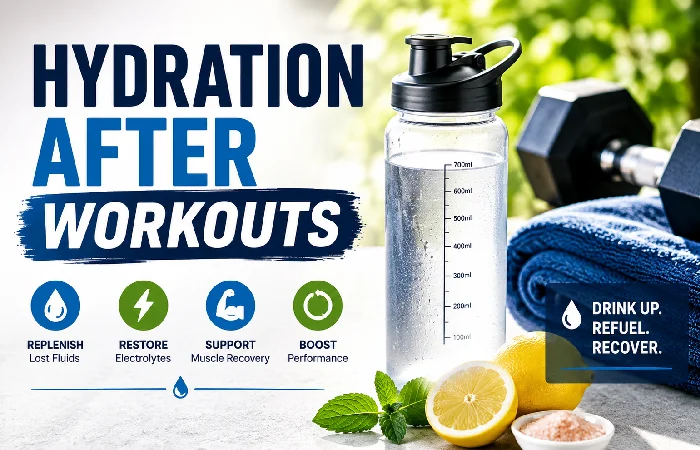
During exercise, your body loses fluids and during some exercises and in certain environments, your body loses electrolytes, including sodium.
Fluid replacement is an essential component of recovery, therefore.
Use water whenever you can.Use water whenever possible.
Water alone after exercise will do just fine for many typical exercise sessions.
It’s not a rule that a sports drink needs to be consumed following a quick workout at the gym.
When might electrolytes be of benefit?
After: Electrolyte-containing drinks may be more beneficial:
Long-duration exercise
Heavy sweating
Avoid exercising in hot or humid weather.
Endurance events
Multiple training sessions
The amount of fluid you need depends on how much you sweat and the conditions in which you exercise.
Here are a few signs indicating that you might need more fluids.
One helpful indicator is thirst, but it varies depending on hydration requirements.
Once you’ve had a hard workout, notice:
- Strong thirst
- Dry mouth
- Darker-than-usual urine
- Headache
- Unusual fatigue
Don’t put too much water down at one time. Drink slowly and according to your fluid losses.
What About Sports Drinks?
The sugars and electrolytes in sports drinks vary.
They can help during or after extended and strenuous workouts, but may not be needed for all exercise sessions.
A normal balanced meal plus water is usually sufficient for an exercise session of 30-60 minutes duration.
Recovery Meal Ideas
The easiest way to apply Post Workout Nutrition is to keep meals simple.
You don’t need a special “fitness meal.”
Post-Workout Meal Guide
| Meal Idea | Protein | Carbohydrates | Best For |
| Chicken + rice + vegetables | Chicken | Rice | Strength training |
| Salmon + potatoes + salad | Salmon | Potatoes | Balanced recovery |
| Greek yogurt + oats + berries | Yogurt | Oats + fruit | Quick breakfast |
| Eggs + toast + fruit | Eggs | Toast + fruit | Morning workouts |
| Turkey wrap + fruit | Turkey | Wrap + fruit | Convenient lunch |
| Tofu + rice + vegetables | Tofu | Rice | Plant-based recovery |
| Lentil bowl + quinoa | Lentils | Quinoa | Vegetarian meal |
| Protein smoothie + banana | Protein powder/yogurt | Banana | Quick option |
After a Morning Workout
If you train early, breakfast can double as your recovery meal.
Try:
Oatmeal + Greek yogurt + berries
or
Eggs + whole-grain toast + banana
After an Evening Workout
You don’t need to avoid eating because it’s nighttime.
A balanced dinner can provide everything your body needs.
For example:
Grilled chicken + potatoes + vegetables
or
Tofu + rice + mixed vegetables
If You Don’t Have Time to Cook
Convenience options can work too.
Try:
Greek yogurt + banana
Protein shake + fruit
Cottage cheese + berries
Turkey sandwich
Milk + whole-grain cereal
Ready-to-eat rice + canned tuna
The best recovery meal is one that fits your lifestyle and overall nutritional needs.
Even a well-planned nutrition routine can include mistakes that affect your overall approach to training. Read our sports nutrition mistakes guide to learn what to avoid.
Final Takeaway
Good Post Workout Nutrition is much simpler than many supplement ads make it seem. Focus on the basics: eat sufficient protein, include carbohydrates according to your activity needs, replace fluids, and select nutritious foods you enjoy.
For most men and women, a usual balanced meal can provide outstanding recovery nutrition. A protein shake, sports drink, or particular recovery product may be suitable in certain situations, but none is mechanically required.
Think of retrieval as a whole process rather than a single meal. Reliable nutrition, regular training, hydration, sleep, and passable rest work together to provision better results.
Dr. Khizrana Begum is a qualified medical professional with MBBS and MD qualifications and 5+ years of experience in the medical field. She works as a General Physician and Dermatologist, with knowledge spanning general medicine, dermatology, preventive healthcare and skin health.
As a medical reviewer, Dr. Khizrana Begum reviews health and wellness content for medical accuracy, clarity and authenticity.
Sameena Begum reviews content for clarity, accuracy and reader usefulness. Her review process helps ensure that published information is clearly presented, relevant and easy for readers to understand.
Syeda Yasmeen is a Health & Wellness Writer at InHumanBeing.com. She creates clear and reader-focused content across health, nutrition, wellness, women’s health, men’s health and babies’ health.