 Syeda Yasmeen
Health & Wellness Writer Syeda Yasmeen creates clear and
reader-focused content covering health,
nutrition, wellness, women’s health,
men’s health and babies’ health.
Read Full Bio of Author →
Syeda Yasmeen
Health & Wellness Writer Syeda Yasmeen creates clear and
reader-focused content covering health,
nutrition, wellness, women’s health,
men’s health and babies’ health.
Read Full Bio of Author →
 Sameena Begum
Health, Technology & Digital Content Reviewer Sameena Begum reviews selected content
for clarity, factual presentation,
consistency and reader usefulness.
Read Full Bio of Reviewer →
Sameena Begum
Health, Technology & Digital Content Reviewer Sameena Begum reviews selected content
for clarity, factual presentation,
consistency and reader usefulness.
Read Full Bio of Reviewer →
 Dr. Khizrana Begum
General Physician and Dermatologist Dr. Khizrana Begum is a qualified medical
professional with MBBS and MD qualifications
and 5+ years of experience. She reviews health
and wellness content for medical accuracy,
clarity and responsible presentation.
Read Full Bio of Medical Reviewer →
Dr. Khizrana Begum
General Physician and Dermatologist Dr. Khizrana Begum is a qualified medical
professional with MBBS and MD qualifications
and 5+ years of experience. She reviews health
and wellness content for medical accuracy,
clarity and responsible presentation.
Read Full Bio of Medical Reviewer →
With a higher protein based diet for weight loss, healthy eating can be easier since protein can help you build satisfying meals while still getting the necessary nutrients for maintaining muscle. However, “high protein” is not synonymous with consuming massive quantities of chicken, eggs and protein powder.
Instead, a healthy option is to have a good source of protein at your main meals and serve it with vegetables, fruits, whole grains, pulses, and healthy amounts of fat.
It can be quite easy for Indian diets. Protein can be found in dal, chana, rajma, curd, paneer, tofu, egg, fish, chicken, soya and nuts.
There is no need to consume the highest amount of protein. It’s about overwhelming adequate amounts of protein within a balanced diet that is maintainable in the long term.
❝
This article is part of
Weight Loss Nutrition Hub
What Is a High-Protein Diet?
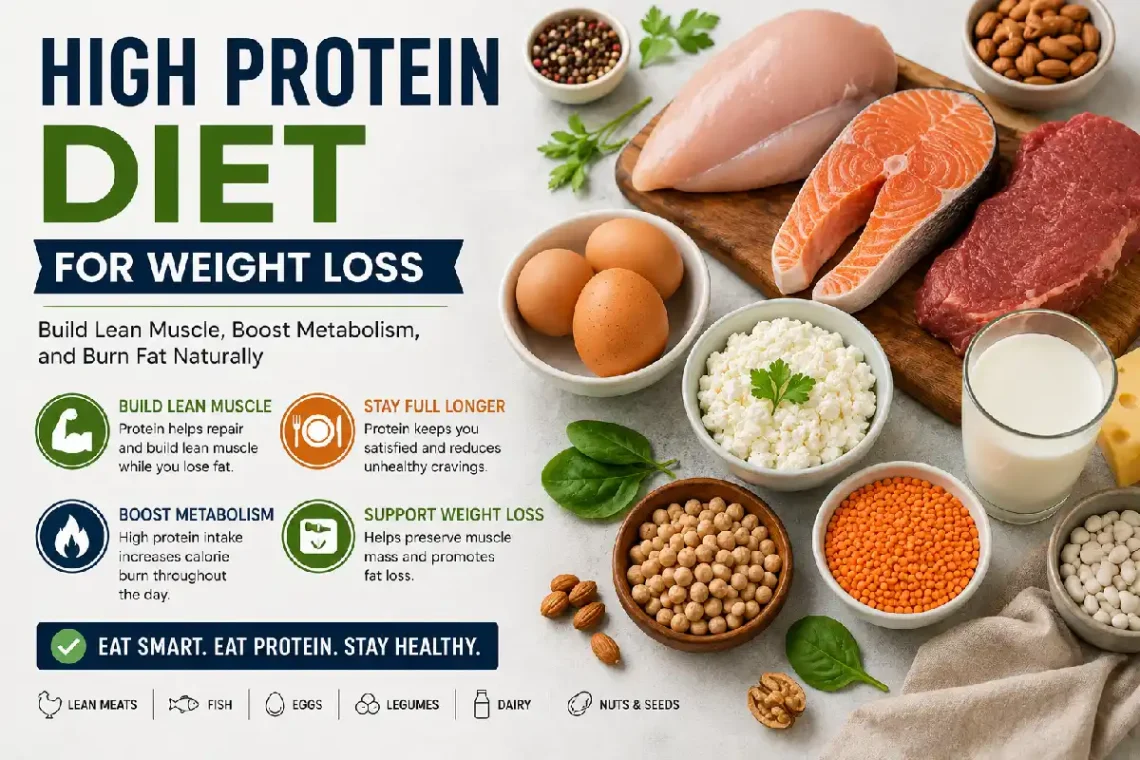
High protein diet pattern is a diet that covers a comparatively large amount of protein as compared to the characteristic eating pattern.
Proteins are derived from both animal and plant products.
Common sources include:
- Eggs
- Fish
- Chicken
- Milk
- Curd
- Paneer
- Dal
- Lentils
- Rajma
- Chana
- Soy
- Tofu
- Nuts
- Seeds
According to the CDC’s healthy consumption guidelines for 2026, foods from a diverse protein group, including seafood, meat, poultry, eggs, beans, peas, lentils, soy, nuts and seeds, should be a part of a healthy diet.
The key is to use protein to replace other foods or to balance them with protein, not just complement with protein.
For instance, if you add fried chicken to your regular meals, this doesn’t mean that it’s going to aid you lose weight.
It can be much more helpful to replace some of the highly processed food with grilled chicken, dal, eggs, tofu or curd.
Protein plays a key role in weight loss.Protein is important in the process of losing weight.
A high-protein approach can be part of a balanced weight loss routine when meals include a variety of nutritious foods. Explore our complete diet plan for weight loss for practical guidance.
How Protein Supports Weight Loss
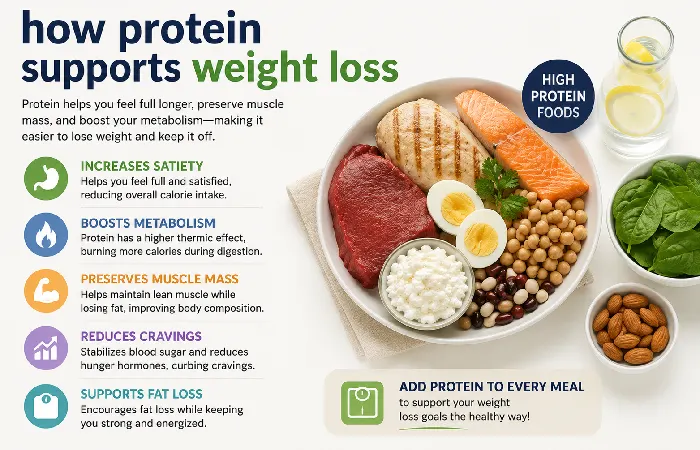
It can improve the enjoyment of eating. It can help make food more agreeable.
Protein-rich meals can contribute to attaining a fuller feeling following eating, making a portion control method easier and helping to decrease recurrent snacking.
It supports muscle
When fat loss is your goal, you want the fat loss to be from body fat—not an excess of lean tissue.
A sufficient amount of protein, together with resistance training, will aid in the maintenance of muscle.
It makes meal planning easier
Protein-based meals are often a better eating plan to balance.
Choosing nutritious, protein-rich foods can help you build satisfying meals while working toward weight management goals. Explore our best foods for weight loss for helpful ideas.
For example:
Dal + vegetables + roti
or
Eggs, vegetables and whole grain toast.
is a simple structure, which is made up of protein and other important foods.
Protein is not a fat-burning food
This distinction matters.
Protein by itself does not “burn belly fat.” Even though weight loss is still largely dependent on a long-term calorie deficit, there are increased factors to consider.
Healthy weight management includes keeping track of your calories and ensuring proper nutrition and exercise, according to the CDC.
Rather than being a diet shortcut, consider protein a weight loss diet booster.
How Much Protein Do You Need?
There is no single protein target that is right for every person.
Your needs can vary according to:
- Body size
- Age
- Physical activity
- Strength-training routine
- Overall diet
- Health status
Weight-loss goal
ICMR-National Institute of Nutrition (ICMR-NIN) has highlighted the importance of consuming protein from a diverse food source and has provided a list of protein sources such as pulses, beans, soya, nuts and seeds, eggs, milk, meat and fish. It also mentions that protein quality can be enhanced by complementation of cereals with pulses.
This doesn’t necessarily mean that just because you are trying to lose weight that you need a protein supplement.
Combining protein-rich choices with appropriate portions can help create a balanced approach to calorie-conscious eating. Explore our low-calorie diet plan for weight loss for practical tips.
A practical approach
Rather than fixate on one number, ask yourself the following:
“Is there a good protein component to every major meal?”
That is a simpler habit for many to form.
Protein supplies may vary depending on your age, whether you are an athlete, pregnant or breastfeeding, managing a medical condition, or on a therapeutic diet. A healthcare expert should be consulted to decide on a target.
Best Protein-Rich Foods
These are some good food choices to consider in a well-rounded diet:
| Protein food | Type | Easy meal idea |
| Eggs | Animal | Omelette + vegetables |
| Chicken | Animal | Grilled chicken + roti + salad |
| Fish | Animal | Fish + vegetables + rice |
| Curd | Dairy | Curd + fruit |
| Paneer | Dairy | Paneer bhurji |
| Dal | Plant | Dal + roti + sabzi |
| Rajma | Plant | Rajma + rice + salad |
| Chana | Plant | Chana chaat |
| Tofu | Plant | Tofu stir-fry |
| Soy chunks | Plant | Soy curry |
| Sprouts | Plant | Sprout chaat |
| Nuts and seeds | Plant | Small portion with breakfast/snack |
Not all food of equal protein number is created equal!
It’s the food that you like and can afford and make easily and that you can eat regularly. For an India-specific reference on protein sources and balanced diets, see the ICMR–NIN Dietary Guidelines for Indians 2024, which covers pulses, cereals, nuts, seeds, dairy and animal-based foods as dietary protein sources.
Animal-Based Protein Sources
Animal foods can be a good source of protein and can be convenient for those who consume them.
Eggs
Eggs are not only easy to prepare but are versatile as well.
Try:
- Boiled eggs
- Vegetable omelette
- Egg bhurji
- Eggs and whole grain toast
Chicken
Use methods of cooking that do not involve deep frying, including grilling, roasting, baking or lightly cooking.
Combine chicken with vegetables and serve with sufficient amount of rice or roti.
Planning high-protein meals in advance can make it easier to maintain consistent eating habits throughout the day. Explore our weight loss meal plan for useful ideas.
Fish
Fish is a protein that can also be beneficial.
Avoid eating fried fish, instead try grilled, baked or lightly cooked fish.
Dairy
All the dairy products including milk, curd and paneer can provide protein.
Unsweetened curd is a great breakfast, lunch or snack food choice for everyday eating.
The Centers for Disease Control and Prevention (CDC) suggest that dairy food, excluding added sugars, is part of a healthy eating pattern.
Plant-Based Protein Sources
However, a high protein diet doesn’t require meat or eggs.
There are many plant protein foods available in Indian food.
Dal and lentils
Dal is cheap, known and can be easily mixed with vegetables and roti or rice.
Rajma and chana
These are rich in both protein and fibre – which makes them great options for meal additions.
Soy and tofu
Soy chunks and tofu are great ways to add protein without meat.
Nuts and seeds
Protein is found in almonds, peanuts, walnuts, chia seeds, flaxseeds and pumpkin seeds, as well as fats and other nutrients.
But even when you are on a weight loss program, size counts with nuts and seeds because they’re calorie-dense.
Cereal + pulse combinations
A good Indian rule of diet is to mix cereals with pulses.
ICMR-NIN points out that legumes and grains are able to complement each other to enhance the amino-acid composition of vegetarian or vegan diets.
A protein-rich breakfast can be a nutritious way to start the day as part of a balanced weight loss routine. Explore our healthy breakfast ideas for weight loss for practical options.
Examples include:
- Rice + dal
- Roti + chana
- Khichdi
- Idli + sambar
This is the reason why traditional Indian food can be a good option for a protein diet.
Including protein in snacks can add variety and help create more balanced choices between meals. Explore our healthy snacks for weight loss for helpful ideas.
High-Protein Breakfast Ideas
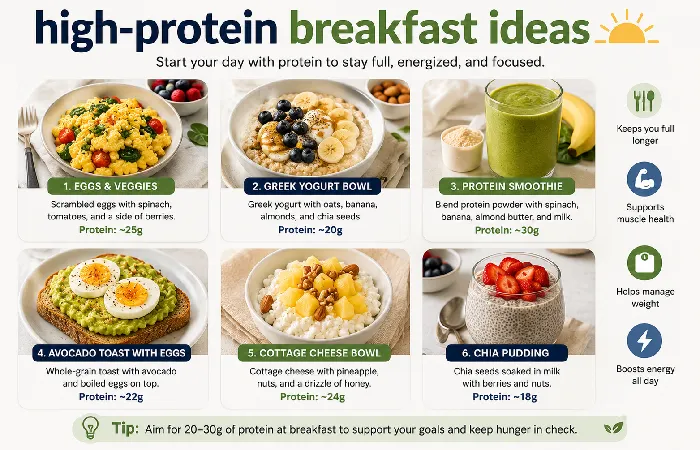
Breakfast doesn’t have to be a complicated meal.
Try:
Vegetarian
- Moong-dal chilla + curd
- Besan chilla + paneer
- Vegetable poha + sprouts
- Oats + milk + nuts
- Idli + sambar
- Tofu bhurji + roti
Non-vegetarian
Omelette of vegetables and whole grain toast.
- Boiled eggs + fruit
- Egg bhurji + roti
- Eggs + oats
- Leftovers of chicken and vegetables.
One easy thing to do is simply consider your typical morning meal and ask yourself:
“Where is the protein?”
If the response is “mostly nowhere”, increase the amount of 1 protein-rich food, rather than replacing the food entirely.
High-Protein Lunch and Dinner Ideas
A formula is available:
Protein, Vegetable, Carbohydrate, Healthy Fat (optional)
Examples:
| Meal | Protein | Carbohydrate | Vegetables | |
| Lunch 1 | Dal | 2 small rotis | Mixed sabzi | |
| Lunch 2 | Chicken | Rice | Salad | |
| Lunch 3 | Rajma | Rice | Cucumber/tomato | |
| Dinner 1 | Paneer | Roti | Spinach | |
| Dinner 2 | Fish | Rice | Beans | |
| Dinner 3 | Tofu | Roti | Stir-fried vegetables | |
| Dinner 4 | Chole | Roti | Mixed vegetables |
This approach keeps protein at the center without turning the diet into a meat-only plan.
High-Protein Snacks
Many well-balanced diet plans can be challenging regarding snacks.
Before reaching for biscuits and chips, try:
- Roasted chana
- Boiled eggs
- Plain curd
- Greek-style yoghurt
- Sprouts chaat
- A little bit of nuts
- Milk
- Paneer cubes
- Fruit + curd
- Roasted soy nuts
The CDC suggests to plan out portions and to not eat out of large packages since this can make it easier to eat more than planned.
Common High-Protein Diet Mistakes
1. Eating too much protein
The more, the merrier is not necessarily true.
Vegetables and fruits, whole grains, or other carbohydrate foods and proper fats are still important parts of your diet.
2. Depending on protein powder
Protein powder can be handy, but is not a necessary item for everyone.
ICMR-NIN is especially critical that protein supplements taken when the diet is well balanced do not guarantee increased muscle development. It also warns that there are added sugars, sweeteners and other additives in some protein powders.
The rule of thumb is that the main part of your diet should be whole foods.
3, Feed plant foods frequently.
Never letting the child know what to expect.8. Making all foods mundane.
It’s not required for daily consumption of chicken and boiled eggs.
Use dal, chana, rajma, tofu, paneer, fish, egg and curd to make variety.
4. Neglecting the other aspects of your life
Protein isn’t the only thing to consider in weight management.
Eating healthy, exercising, getting good sleep and dealing with stress are all important.
High-Protein Diet: Quick Comparison
| Goal | Better approach | Avoid |
| Increase protein | Add protein to meals | Eating protein only at dinner |
| Lose weight | Protein + vegetables + sensible portions | High-protein overeating |
| Vegetarian | Dal, beans, soy, tofu, paneer, curd | Assuming vegetarian means low protein |
| Vegan | Pulses, soy, tofu, beans, nuts, seeds | Relying on one protein source |
| Convenient snacks | Curd, eggs, chana, sprouts | Frequent protein bars and processed snacks |
| Build muscle | Protein + resistance training | Protein without exercise |
| Save money | Dal, beans, eggs, soy | Depending on expensive supplements |
Bottom Line
You don’t have to eat steak and protein drinks every day with a high protein diet for weight loss.
The simpler method is to have a protein source added to every main meal, to include lots of vegetables and other high fibre foods, to have sensible quantities and to avoid too many highly processed foods and added sugars.
Good news for an Indian diet, you already have many affordable options that are available, such as dal, chana, rajma, curd, eggs, paneer, tofu, soy, fish and chicken.
Begin with your next sit down.
Ask yourself:
What kind of protein is it?
Then add the rest of the food to that.
It’s the little habit that can help a diet be more balanced, satisfying and sustainable for weight loss.
Dr. Khizrana Begum is a qualified medical professional with MBBS and MD qualifications and 5+ years of experience in the medical field. She works as a General Physician and Dermatologist, with knowledge spanning general medicine, dermatology, preventive healthcare and skin health.
As a medical reviewer, Dr. Khizrana Begum reviews health and wellness content for medical accuracy, clarity and authenticity.
Sameena Begum reviews content for clarity, accuracy and reader usefulness. Her review process helps ensure that published information is clearly presented, relevant and easy for readers to understand.
Syeda Yasmeen is a Health & Wellness Writer at InHumanBeing.com. She creates clear and reader-focused content across health, nutrition, wellness, women’s health, men’s health and babies’ health.