
 Syeda Yasmeen
Health & Wellness Writer Syeda Yasmeen creates clear and
reader-focused content covering health,
nutrition, wellness, women’s health,
men’s health and babies’ health.
Read Full Bio of Author →
Syeda Yasmeen
Health & Wellness Writer Syeda Yasmeen creates clear and
reader-focused content covering health,
nutrition, wellness, women’s health,
men’s health and babies’ health.
Read Full Bio of Author →
 Sameena Begum
Health, Technology & Digital Content Reviewer Sameena Begum reviews selected content
for clarity, factual presentation,
consistency and reader usefulness.
Read Full Bio of Reviewer →
Sameena Begum
Health, Technology & Digital Content Reviewer Sameena Begum reviews selected content
for clarity, factual presentation,
consistency and reader usefulness.
Read Full Bio of Reviewer →
 Dr. Khizrana Begum
General Physician and Dermatologist Dr. Khizrana Begum is a qualified medical
professional with MBBS and MD qualifications
and 5+ years of experience. She reviews health
and wellness content for medical accuracy,
clarity and responsible presentation.
Read Full Bio of Medical Reviewer →
Dr. Khizrana Begum
General Physician and Dermatologist Dr. Khizrana Begum is a qualified medical
professional with MBBS and MD qualifications
and 5+ years of experience. She reviews health
and wellness content for medical accuracy,
clarity and responsible presentation.
Read Full Bio of Medical Reviewer →
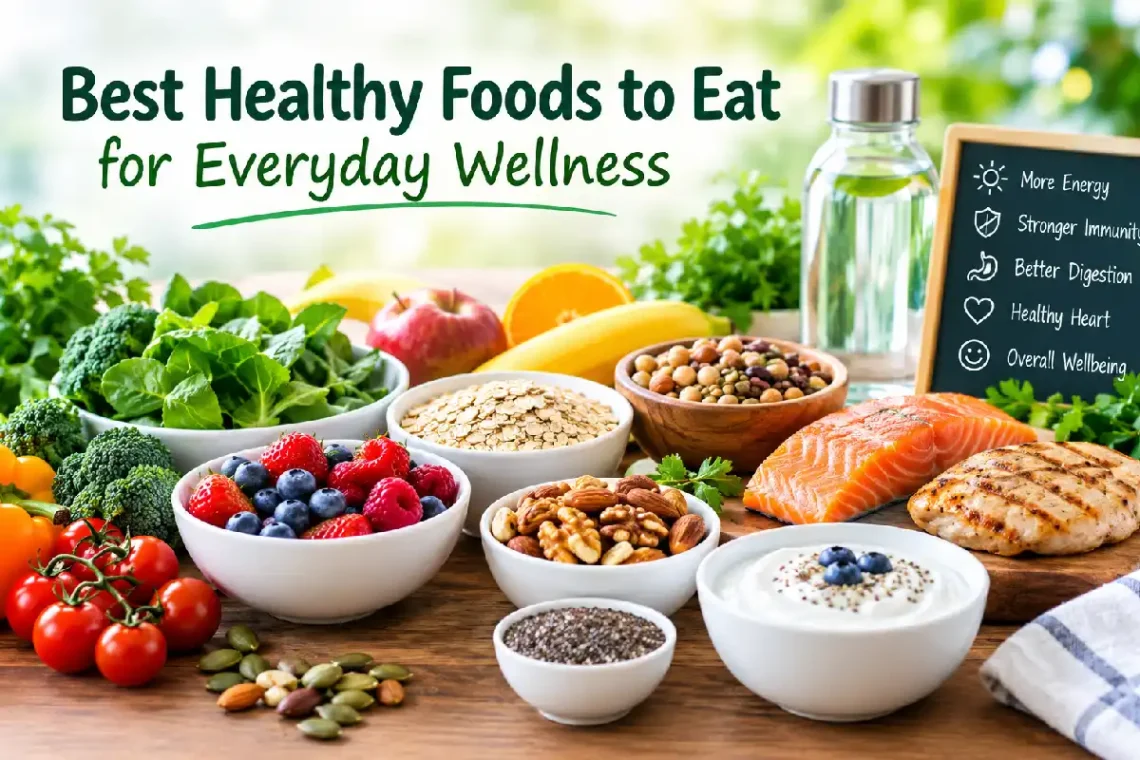
If you know what healthy foods to eat, then it will be easier to plan your meals every day. There are no magic ingredients or fancy recipes to a healthy diet. Primarily it’s about eating nutritious foods and creating meal combinations that contain a balance of protein, fibre, whole grain, fruit, vegetables and healthy fats.
Other factors, such as cultural, budgetary, food, and nutritional requirements, may also influence the best choices. A healthy eating plan can include a variety of foods including dal, vegetables, fruits, whole grains, yogurt, eggs, nuts, and seeds.
❝
This article is part of
Healthy Lifestyle Hub
What Are Healthy Foods?
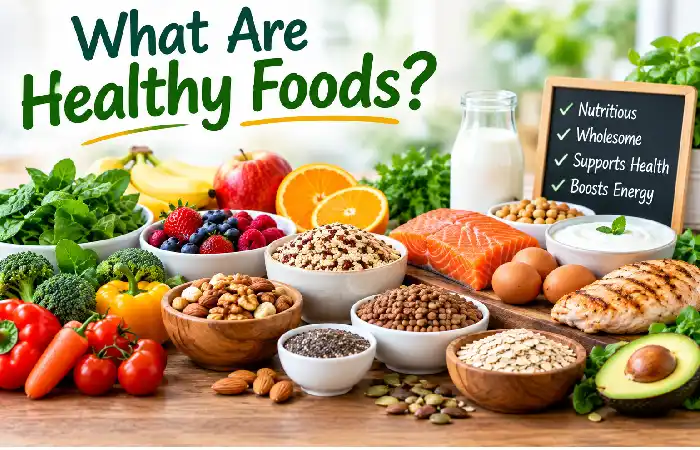
Healthy foods are often foods that contain a good balance of nutrients but not overly high content of added sugars, sodium or unhealthy fats.
Examples include:
- Vegetables and fruits
- Whole grains
- Pulses such as beans, peas and lentils.
- Eggs, fish, poultry and other protein foods
- Milk, yoghurt and appropriate dairy options
- Nuts and seeds
- Healthy cooking oils
Don’t look for this one “perfect” food, but choose a variety. Foods contain different nutrients and it is important to consume a variety of foods to make up for this.
Choosing nutritious foods is an important part of building a healthy and sustainable eating routine. Explore our complete healthy eating plan for practical guidance.
Best Fruits and Vegetables
Vitamins, minerals, fiber, and other beneficial plant compounds are important nutrients found in fruits and vegetables.
Seek to incorporate all kinds of colour and variety, including:
Spinning greens and other leafy vegetables.
- Broccoli
- Carrots
- Tomatoes
- Bell peppers
- Cauliflower
- Green beans
- Cabbage
- Sweet potatoes
- Peas
All fresh, frozen and canned vegetables can be helpful. Purchased canned vegetables: If available, buy ones with little or no added sodium.
Good choices include:
- Apples
- Bananas
- Oranges
- Berries
- Guava
- Papaya
- Mango
- Pears
- Watermelon
- Kiwi
Fruit juices are usually less healthy choices than whole fruit; eating whole fruit is more filling and contains fiber.
Including a variety of healthy foods throughout the week can make meal planning more balanced and enjoyable. Explore our 7-day healthy eating plan for practical meal ideas.
Whole Grains
Whole grains are made from all parts of the grain and can be a source of fiber and nutrients.
Examples include:
- Oats
- Brown rice
- Whole-wheat bread
- Whole-wheat roti
- Barley
- Quinoa
- Millet
- Whole-grain cereals
Eating whole grains is a simple change that can be made. For instance, opt for oatmeal rather than a breakfast cereal made from refined grain flour or whole-wheat roti versus a refined-flour one.
Whole grains are not the only source of healthy carbohydrates. Carbohydrates and nutrients can also come from beans, lentils, potatoes, fruits and vegetables.
It is possible to obtain protein and nutrients like calcium from dairy foods. Appropriate alternatives can also be provided as needed and desired.
Nutritious food choices can also be affordable when you focus on simple ingredients and plan meals carefully. Explore our healthy eating plan on a budget for helpful tips.
Good choices include:
- Plain milk
- Plain yogurt
- Greek yogurt
- Cottage cheese
- Paneer
- Fortified soy beverages
If you’re selecting a flavored yogurt or dairy drink, look for additional sugars listed on the nutrition panel.
Plant-based alternatives are used, select items that are fortified with calcium and vitamin D, as appropriate.
If someone is lactose intolerant they may be able to find dairy products without lactose, or alternatives.
Starting the day with nutrient-rich foods can help create a balanced breakfast and support consistent eating habits. Explore our healthy breakfast eating plan for practical ideas.
Healthy Snacks
Food can be a healthy snack as long as it is eaten when you are hungry, not just nibbling at it. The focus should be on selections of healthy foods and portion sizes.
Try:
- Apron with a spread of peanut butter
- Fruit and plain yogurt.
- Several handfuls of nuts
- Boiled eggs
- Roasted chickpeas
- Sticks of carrot and cucumber dipped in hummus.
- Fresh fruit
- Air-popped popcorn
Wholegrain toast topped with nut butter.Nut butter on wholegrain toast.
If you tend to snack directly from the large package, serve from a bowl. This can help to keep track of your portion sizes.
Choosing nutritious foods and appropriate portions can support a balanced approach to weight management. Explore our healthy eating plan for weight loss for useful guidance.
Foods Rich in Essential Nutrients
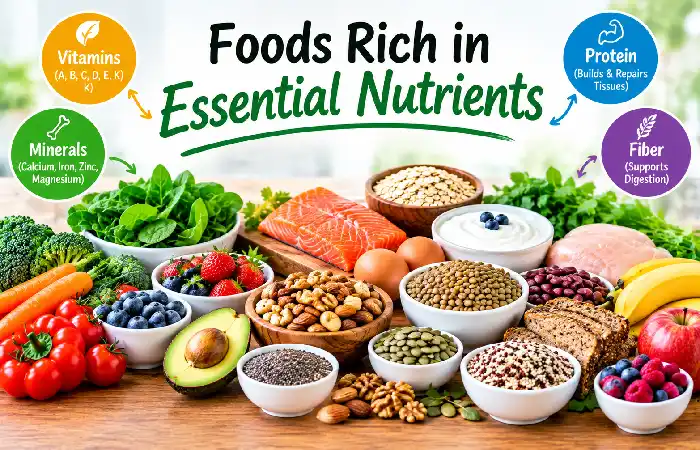
Foods offer different food nutrients. One of the simplest methods to get all the nutrition you need is to eat a diverse range of foods.
| Nutrient | Healthy food sources |
| Protein | Eggs, fish, chicken, dal, beans, tofu, yogurt |
| Fiber | Vegetables, fruits, oats, whole grains, beans |
| Calcium | Milk, yogurt, paneer, fortified alternatives |
| Iron | Lentils, beans, leafy greens, meat, fortified foods |
| Vitamin C | Citrus fruits, guava, peppers, tomatoes |
| Vitamin A | Carrots, sweet potatoes, leafy greens |
| Potassium | Bananas, potatoes, beans, yogurt |
| Healthy fats | Nuts, seeds, avocado, fatty fish |
Do not consume all of the foods listed daily. Rather, try to rotate various foods for the week.
Foods to Limit
Healthy eating doesn’t mean giving up treats entirely. Others have more added sugars, sodium, saturated fat, and/or calories and less nutrients, so they are not the best choice to eat regularly.
Consider limiting:
- Sugary soft drinks
- Candy and sweets
- Pastries and doughnuts
- Snack foods that are highly processed.
- Deep-fried foods
- Processed meats
People with little to no kidney function may need to eat fewer foods that have a lot of sodium.
Foods with very high sugar content, such as flavored breakfast cereals.
Sugar sweet sauces and drinks
When possible, check food labels for added sugars and salt.
There’s no need to make foods “good” or “bad” either.
A treat or favorite snack now and then can complement a healthy eating plan.
How to Build Balanced Meals
Using healthy foods can be as simple as pairing several food groups together for each of the main meals.
Use the balanced plate method
½ plate: Vegetables and fruit
Use a variety of vegetables; incorporate fruit if appropriate.
¼ plate: Protein
Include eggs, fish, chicken, tofu, beans, lentils, paneer or another protein source.
¼ plate: Whole grains or other carbohydrates
Use brown rice, oats, whole-wheat roti, quinoa, millet, potatoes or any other nutritious carbohydrate.
Next, add a healthy fat, like nuts, seeds, avocado or a good cooking fat.
Combining different food groups and nutrient-rich ingredients can help you create more balanced meals throughout the day. Explore our balanced healthy eating plan for helpful ideas.
Example Indian meal
One such balanced plate is:
Along with dal, whole wheat roti, mixed vegetables, cucumber salad and plain curd.
The other alternative is:
Brown rice + rajma + sautéed vegetables + plain yogurt.
For breakfast:
Vegetable omelet, whole-grain toast and fruit
For a quick meal:
This is a simple recipe that combines plain yoghurt, oats, banana, chia seeds and some nuts.
Eating a diverse diet of nutritious foods may be beneficial in creating well-balanced meals and in maintaining overall health. The CDC healthy eating guide includes tips for adding vegetables, fruits, whole grains, proteins and healthy fats to your daily meals.
The Bottom Line
The most nutritious foods don’t always cost a lot and aren’t foreign. Eat foods that are high in vegetables, fruits, whole grains, protein foods, dairy (or alternatives), nuts, and seeds. Eat less added sugar, salt and too many processed foods, and enjoy a diverse and balanced diet.
A healthy diet is an overall approach to eating, it’s not a list of foods to eat flawlessly each and every day.
Dr. Khizrana Begum is a qualified medical professional with MBBS and MD qualifications and 5+ years of experience in the medical field. She works as a General Physician and Dermatologist, with knowledge spanning general medicine, dermatology, preventive healthcare and skin health.
As a medical reviewer, Dr. Khizrana Begum reviews health and wellness content for medical accuracy, clarity and authenticity.
Sameena Begum reviews content for clarity, accuracy and reader usefulness. Her review process helps ensure that published information is clearly presented, relevant and easy for readers to understand.
Syeda Yasmeen is a Health & Wellness Writer at InHumanBeing.com. She creates clear and reader-focused content across health, nutrition, wellness, women’s health, men’s health and babies’ health.