 Syeda Yasmeen
Health & Wellness Writer Syeda Yasmeen creates clear and
reader-focused content covering health,
nutrition, wellness, women’s health,
men’s health and babies’ health.
Read Full Bio of Author →
 Sameena Begum
Health, Technology & Digital Content Reviewer Sameena Begum reviews selected content
for clarity, factual presentation,
consistency and reader usefulness.
Read Full Bio of Reviewer →
 Dr. Khizrana Begum
General Physician and Dermatologist Dr. Khizrana Begum is a qualified medical
professional with MBBS and MD qualifications
and 5+ years of experience. She reviews health
and wellness content for medical accuracy,
clarity and responsible presentation.
Read Full Bio of Medical Reviewer →
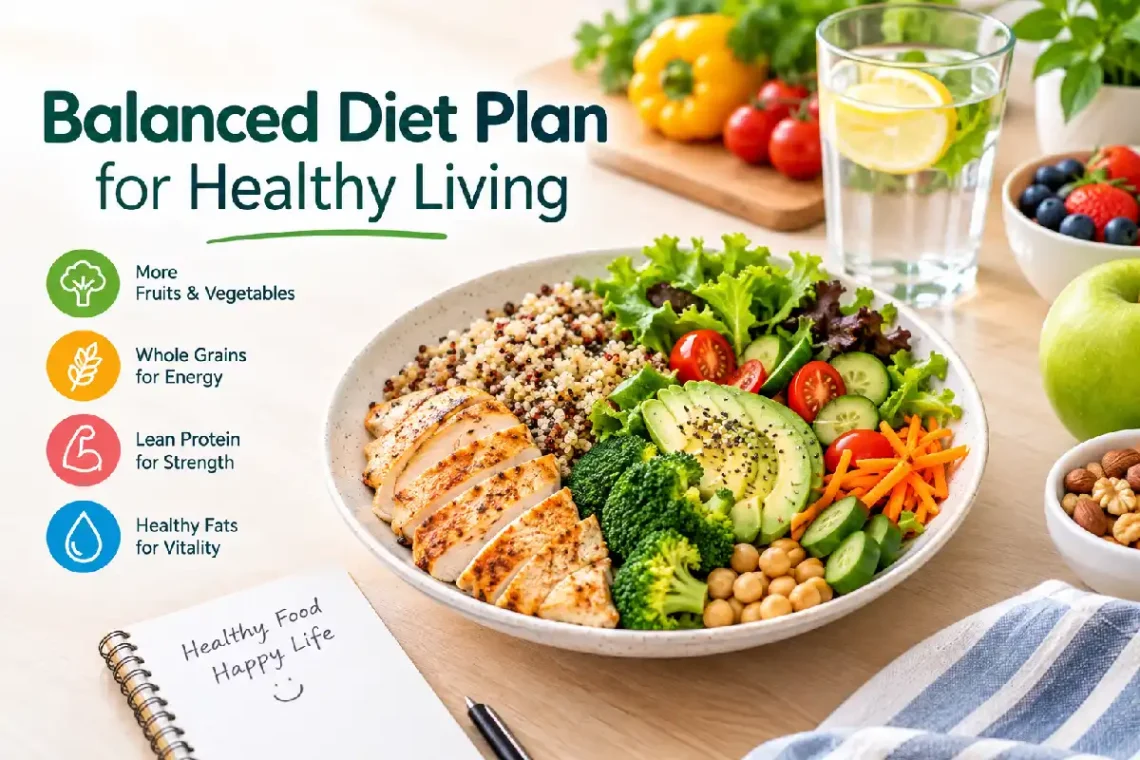
A well-balanced diet plan contains of a variety of foods that supply the nutrients. You need to support your energy, growth, repair and health. In a stable diet, rather than having one “perfect” food. Numerous vegetables, fruits, whole grains, protein-rich foods, healthy fats, and other nutrient-dense foods are the ones that are joint.
The ideal balance will depend on your age, level of movement, tastes, culture, and your health necessities. The aim is to grow a healthy, tasty and manageable eating plan.
❝
This article is part of
Healthy Lifestyle Hub
What Is a Balanced Diet?
A balanced diet consists of a combination of protein, carbohydrates, healthy fats, vitamins and minerals, fibre and fluids.
A balanced plate can feature:
- A good supply of vegetables and some fruit.
- A source of protein
- Nutrient-rich carbohydrates, such as whole grains.
- Moderate quantity of healthy fat.
- Water or other appropriate sugar-free drink.
It’s okay if it’s not perfectly balanced each meal. It is important to look at the whole day and the week’s eating pattern.
A balanced healthy eating plan can help you include a variety of nutritious foods while building consistent daily nutrition habits. Explore our complete healthy eating plan for practical guidance.
Essential Food Groups
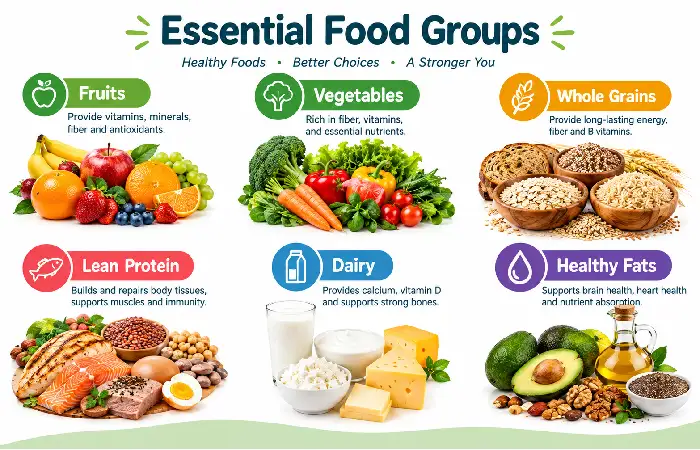
All foods provide various nutrients.
| Food group | Examples | Main nutrients |
| Vegetables | Spinach, carrots, broccoli, tomatoes | It contain fiber, vitamins, and minerals |
| Fruits | Apples, oranges, bananas, berries | It has lots of fiber, vitamins, and minerals |
| Grains | Oats, brown rice, whole-wheat roti | Carbohydrates, fiber |
| Protein foods | Eggs, fish, beans, dal, tofu | Protein, minerals |
| Dairy or alternatives | Milk, yogurt, fortified alternatives | Protein, calcium |
| Healthy fats | Nuts, seeds, avocado, healthy oils | Unsaturated fats |
Eat a variety of foods instead of eating the same foods daily.
Protein in a Balanced Diet
Protein is used to build and repair muscles and other body tissue. It also plays a significant role in numerous processes in the body.
Good sources of protein are:
- Eggs
- Fish and seafood
- Chicken
- Milk and yogurt
- Prepare cottage cheese and paneer.
- Tofu and tempeh
- Lentils and dal
- Beans and chickpeas
- Nuts and seeds
Protein can be added to any mealtime. For instance, eggs for breakfast, dal for lunch and fish, tofu, chicken or paneer for dinner.
The plant based eaters can mix and match different protein foods. Through the day to make a diverse diet.
Planning balanced meals across the week can make it easier to maintain consistent eating habits and include a variety of food groups. Explore our 7-day healthy eating plan for practical meal ideas.
Healthy Carbohydrates
Carbohydrate is one of the primary source of energy. Rather than removing carbohydrates. Try to drink them more frequently when they are packed with nutrients.
Good choices include:
- Oats
- Brown rice
- Whole-wheat roti
- Quinoa
- Barley
- Whole-grain bread
- Beans and lentils
- Potatoes and sweet potatoes
- Fruits and vegetables
Whole grains and other foods high in fibre can offer more fibre and nutrients than extremely developed carbohydrate foods.
A balanced meal can consist of carbohydrates as well as protein and vegetables. For example, brown rice along with dal, vegetables, and yogurt is an easy mix of foods.
Healthy Fats
Fat is one of the required nutrients that supports absorption of some vitamins, normal cell and hormone functions.
Use unsaturated fats more frequently such as:
- Nuts
- Seeds
- Avocado
- Olive oil
- Other plant oils
- Fatty fish
- Nut butters
Even though fat is high in calories, portions are still essential. There’s no need to remove fats from your diet. But if you have too abundant of oils, butter, nuts or spreads, it can simply add a lot of calories.
Consider using cooking oils and other high-fat foods wisely, but not as their only source of fat.
Healthy eating can be made more affordable by choosing simple, nutritious ingredients and planning meals carefully. Explore our healthy eating plan on a budget for helpful tips.
Vitamins and Minerals
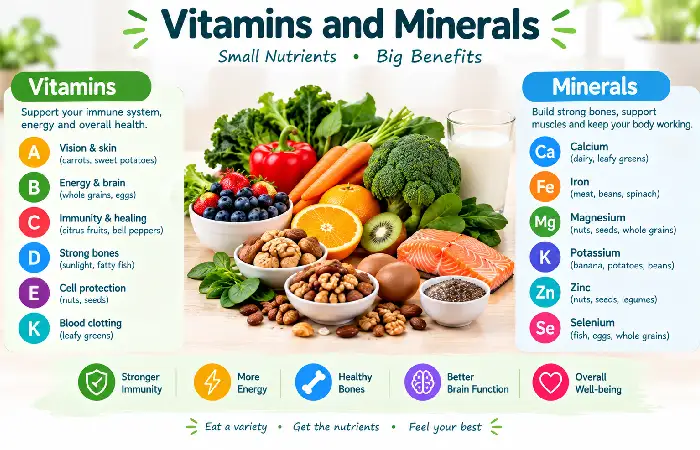
Vitamins and minerals play numerous roles in the body. Such as in the immune system, bone health, blood formation, energy metabolism, and normal nerve and muscle function.
Eating a different diet aids to get these nutrients.
A nutritious breakfast can provide a balanced start to the day and complement an overall healthy eating routine. Explore our healthy breakfast eating plan for practical ideas.
For example:
- Calcium: Milk, yogurt, fortified alternatives, tofu
- Iron: Lentils, beans, meat, spinach, fortified foods
- Vitamin C: Citrus fruits, peppers, tomatoes, broccoli
- Vitamin A: Carrots, leafy greens, sweet potatoes
- Potassium: Bananas, potatoes, beans, yogurt
- Folate: Leafy greens, beans, peas, fortified grains
Individuals have diverse nutritional requirements. Some individuals may want supplements, depending on their individual conditions. However, supplements are not a must if a diverse diet is followed.
Fiber and Digestive Health
Fiber can be present in foods from plants and is essential for healthy digestion. It’s also linked to some other health factors.
Frequently eat foods that are high in fiber –
- Vegetables
- Whole fruits
- Whole grains
- Beans
- Lentils
- Chickpeas
- Nuts
- Seeds
Don’t make a extreme alteration to your diet. But add fiber gradually, and drink plenty of water.
Simple changes comprise replacing whole grains for refined grains and serving vegetables and beans with meals.
Portion Sizes
Even healthy food items need the right serving size. This will vary from individual to individual created on their goals, level of activity, body size and age.
You do not have to measure all the food but you can use a simple plate technique instead:
- ½ plate: Vegetables and other non-starchy vegetables
- ¼ plate: Protein-rich food
- 1/4 plate: Whole grains or other carbohydrate rich food
Serve a little good fat and serve with water or other low sugar beverage.
Portion mindfulness works particularly well for foods that are rich in calories, like oils, nuts, nut butter, cheese and sweets.
A balanced approach to nutrition can also support healthy weight management when combined with appropriate portions and consistent lifestyle habits. Explore our healthy eating plan for weight loss for useful guidance.
Sample Balanced Meal Plan
Here’s a basic but one-day recipe to try, which can be altered for other cuisines and appetites.
| Meal | Example |
| Breakfast | Vegetable omelet , whole-grain toast and fruit |
| Morning snack | Plain yogurt and a few nuts |
| Lunch | Brown rice, dal, mixed vegetables and salad |
| Afternoon snack | Apple and peanut butter |
| Dinner | Roti, grilled fish,tofu,paneer and cooked vegetables |
| Drink | Water throughout the day |
This is a guide, not a set number of calories to follow. Serving sizes can be altered based on each person’s energy requirements.
Dals, roti, rice, vegetables, curd, paneer, beans, fruits, nuts and seeds are all good foods that can be included in a nutritious meal pattern for an Indian style balanced diet.
Common Balanced Diet Mistakes
Even health-conscious persons may have a few of these typical nutritional slip-ups.
One at a time food group
Diets that are high in protein, fruit or vegetable content are not balanced. Variety matters.
Avoiding carbohydrates completely
Carbohydrates are an essential energy source. Select high fiber foods; do not cut back on fiber unnecessarily.
Eating too little
Focusing on a balanced diet, there needs to be sufficient food to get the nutrition and energy needed.
Overeating healthy foods
Some foods like nuts, oils, avocado, cheese, and nut butters can be healthy, but fattening.
Consuming a lot of processed “health foods.”
Products that are labeled “healthy” are not necessarily healthy. Review products, added sugars, sodium and nutrition.
Forgetting variety
Consuming the same foods day after day may restrict food choices. Switch plants, fruits, grains and protein.
Check the NHS for reliable nutrition information. It offers easy to follow guidance for making a healthy plate. With vegetables, fruits, grains, protein foods and dairy/fortified foods. It could be a useful for planning healthy meals and the overall eating habits.
Including a variety of nutrient-rich foods is an important part of creating balanced meals and maintaining a sustainable eating routine. Explore our healthy foods for your eating plan for helpful ideas.
The Bottom Line
A balanced diet plan does not have to be a complex thing. Plan meals around vegetables and fruits, high fiber carbohydrates, protein rich foods and healthy fats. Even watch portions and rise the amount of minimally processed foods.
The perfect balanced diet is a food you can follow, adapt to your lifestyle, culture, budget and dietary requirements.
Dr. Khizrana Begum is a qualified medical professional with MBBS and MD qualifications and 5+ years of experience in the medical field. She works as a General Physician and Dermatologist, with knowledge spanning general medicine, dermatology, preventive healthcare and skin health.
As a medical reviewer, Dr. Khizrana Begum reviews health and wellness content for medical accuracy, clarity and authenticity.
Sameena Begum reviews content for clarity, accuracy and reader usefulness. Her review process helps ensure that published information is clearly presented, relevant and easy for readers to understand.
Syeda Yasmeen is a Health & Wellness Writer at InHumanBeing.com. She creates clear and reader-focused content across health, nutrition, wellness, women’s health, men’s health and babies’ health.