
 Syeda Yasmeen
Health & Wellness Writer Syeda Yasmeen creates clear and
reader-focused content covering health,
nutrition, wellness, women’s health,
men’s health and babies’ health.
Read Full Bio of Author →
Syeda Yasmeen
Health & Wellness Writer Syeda Yasmeen creates clear and
reader-focused content covering health,
nutrition, wellness, women’s health,
men’s health and babies’ health.
Read Full Bio of Author →
 Sameena Begum
Health, Technology & Digital Content Reviewer Sameena Begum reviews selected content
for clarity, factual presentation,
consistency and reader usefulness.
Read Full Bio of Reviewer →
Sameena Begum
Health, Technology & Digital Content Reviewer Sameena Begum reviews selected content
for clarity, factual presentation,
consistency and reader usefulness.
Read Full Bio of Reviewer →
 Dr. Khizrana Begum
General Physician and Dermatologist Dr. Khizrana Begum is a qualified medical
professional with MBBS and MD qualifications
and 5+ years of experience. She reviews health
and wellness content for medical accuracy,
clarity and responsible presentation.
Read Full Bio of Medical Reviewer →
Dr. Khizrana Begum
General Physician and Dermatologist Dr. Khizrana Begum is a qualified medical
professional with MBBS and MD qualifications
and 5+ years of experience. She reviews health
and wellness content for medical accuracy,
clarity and responsible presentation.
Read Full Bio of Medical Reviewer →
Weight Loss is not about eating as little as you can. It’s all about selecting healthy foods, portion sizes and eating habits that you can accept and withstand. You can control the calories in your diet and obtain the protein, fiber, vitamins, minerals and healthy fats your body necessities with a comprehensive diet.
The best plan is usually a slow and sensible one as opposed to a plan involving deprivation diets or eliminating entire food categories.
❝
This article is part of
Healthy Lifestyle Hub
How Healthy Eating Supports Weight Loss
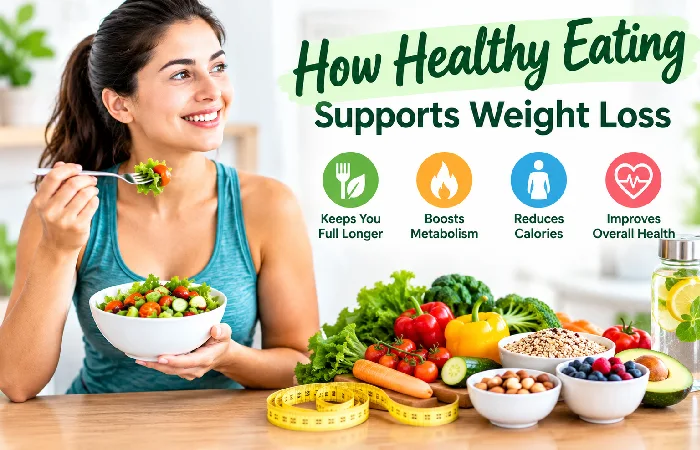
The important key to loss weight is to burn more energy than you take in. Eating healthy diets can make this easier, since the foods cover more nutrients and aid you feel full.
A healthy eating plan can provide a structured approach to making nutritious food choices and maintaining balanced daily habits. Explore our complete healthy eating plan for practical guidance.
A healthy weight loss diet is usually composed of:
- Fruit & vegetables
- Whole Grains and Other High Fiber
- Protein-rich foods
- In moderation: healthy fats
- Low-sugar drinks or other non-sweetened drinks
- Minimally managed foods
Protein and fibre are particularly helpful. Since they make meals more satiety. Water will also remove sugar calories without lessening the size of a meal.
Do not remove all carbs and fats. The general balance and amount of food is more essential.
Creating a Calorie-Aware Meal Plan
It is not needed to tally all calories to lose weight. But knowing what portion sizes and foods are high in calories can be helpful.
Simple weight reduction plate ought to look like:
| Food group | Approximate plate share | Examples |
| Vegetables | ½ plate | Spinach, broccoli, carrots, beans |
| Protein | ¼ plate | Eggs, chicken, fish, tofu, dal |
| Whole grains/starchy foods | ¼ plate | Brown rice, oats, roti, quinoa |
| Healthy fat | Small portion | Nuts, seeds, olive oil |
Incorporate healthy fats in small amounts, such as nuts and seeds, or olive oil.
Calorie supplies depend on age, sex, size, action level and health status of the person. Do not use very low calorie diets, unless managed and optional by a capable health care expert.
A 7-day meal structure can make it easier to organize nutritious meals and maintain consistent eating habits while working toward weight management goals. Explore our 7-day healthy eating plan for practical meal ideas.
High-Protein Foods for Weight Loss
The finest usage of protein is for structure and fixing muscle as well as for assistant normal body functions. Adding protein to meals can also make them more filling.
Good options include:
- Eggs
- Fish and seafood
- Greek yogurt
- Chicken and turkey
- Cottage cheese or paneer.
- Tofu and tempeh
- Chickpeas
- Milk
- Nuts and seeds
- Lentils and beans
Try some vegetarian options like dal and roti, chana dal and vegetables, paneer and salad.
Use cooking approaches other than deep-frying.
Healthy eating for weight management does not have to be expensive when you focus on affordable, nutritious ingredients. Explore our healthy eating plan on a budget for helpful tips.
High-Fiber Foods for Weight Loss
Foods with a high fiber satisfied can aid expand your meals and can extend a sense of fullness. They also help the digestion.
Add the following foods:
- Oats
- Whole-grain bread
- Brown rice
- Chickpeas
- Beans and lentils
- Vegetables
- Whole fruits, such as apples, pears, berries
- Chia and flax seeds
- Nuts
If you are not getting enough fiber in your diet, slowly add more fiber and drink adequately of liquids through the day.
An easy modification is to substitute advanced grains with whole-grain picks and add vegetables or beans to meals.
Healthy Fats and Portion Control
Healthy fats are a important element of a healthy diet, but they are high in calories. Time portion switch is still pertinent, even when challenging to lose weight.
Useful basics include:
- Nuts
- Seeds
- Avocado
- Olive oil
- Nut butters
- Fatty fish
Do not eliminate fat foods from your diet, just decrease the amount of each. When making oatmeal, for instance, a few nuts may be extra or there is a dose of oil in cooking.
One of the most often made mistakes is assuming something is a healthy food and thus can be portion of a weight loss diet just because it’s healthy.
Starting the day with a nutritious breakfast can complement a balanced eating routine and support consistent meal planning. Explore our healthy breakfast eating plan for practical ideas.
Best Foods for Weight Management
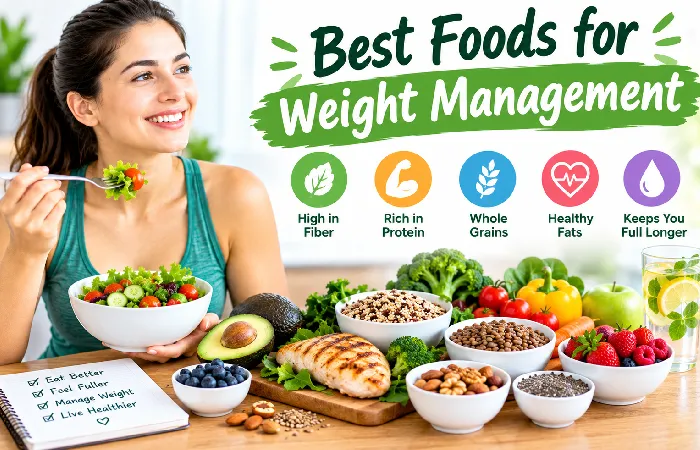
No single food is the sole source of weight loss. Instead, it is better to make most meals with slightly processed and nutritious foods.
Best everyday selections
- Fruits: Apples, oranges, berries, bananas, pears and other whole fruit.
- Protein: Eggs, fish, chicken, tofu, beans, lentils, yogurt, and paneer.
- Healthy fats: Nuts, seeds, avocado and moderate amounts of healthy cooking oils.
- Whole grains: Oats, brown rice, quinoa, whole-wheat bread and whole-grain roti.
- Whole fruit is a upright daily snack, related to fruit juice, which is healthier than none, but less preferable as an every day snack.
For healthy weight loss, focus on balanced meals with vegetables, fruits, whole grains, lean proteins, and healthy fats while limiting added sugars and highly processed foods. The NIH healthy weight guide offers evidence-based tips for reaching and maintaining a healthy weight.
Healthy Breakfasts for Weight Loss
A breakfast for weight loss must be filling, but not too sugary.
Try:
- A veggie omelet on a whole-grain toast.
- Oatmeal and milk with berries and chia seeds
- This is a basic and delicious mixture: Greek yogurt, fruit and nuts.
- Ripe curds of moong dal mixed with plain yoghurt. Vegetable poha, Eggs boiled.
- Whole-grain toast and peanut butter and banana
- The idea is not to effort and make breakfast the least. Instead, pair up protein and fiber for a well-rounded meal.
Healthy Snacks for Weight Loss
When you are hungry between meals, you can add snacks in weight loss plan.
Building meals with a variety of nutritious food groups can help create a balanced approach to everyday eating and weight management. Explore our balanced healthy eating plan for useful guidance.
Good choices include:
- Apple and peanut butter
- Plain yogurt and berries
- A small amount of nuts
- Boiled eggs
- Add the carrot or cucumber sticks to hummus.
- Roasted chickpeas
- Fruit + plain yogurt
- Air popcorn (with minimal butter and salt)
Serve snack foods in smaller quantities instead of eating them straight out of a package. This helps to keep you on path with your portion sizes.
Common Diet Mistakes
Numerous weight loss diets are not followed to due to being too limiting.
Common mistakes include:
Skipping meals without cause
Fasting can leave you hungry later in the day and it can be more problematic to regulator your portions.
Removing whole food groups
Removing carbs or fat is typically not necessary to achieve a healthy weight.
Drinking too many calories
Health drinks, milkshakes, sweetened coffee and sweetened drinks can contribute main calories.
Eating too numerous healthy foods
Even healthy items like nuts, nut butters, oils, granola and other nourishing foods can be high in calories.
Expecting rapid results
A healthy weight loss is normally a slow process. In no way are short term changes on the scale abnormal.
An excess of limit in diet:
A plan that is not easy to follow for a few weeks, may not be a useful long term plan.
How to Maintain Weight Loss
Many of the same weight-loss plans are required to uphold weight loss. Do not go back to old eating ways right away. Instead work up into a new and healthy eating routine.
Focus on:
- Healthy eating, consumption regular and well-balanced meals.
- Safeguarding easy access to vegetables and fruits
- Adding protein and fiber to foods.
- Eating small amounts of high calorie foods
- Remaining physically active
- Declining food or drinks that are high in calories.
- Consuming primarily water or low-calorie drinks.
- Making meals in advance on hectic days
- Tracking weight changes and not worrying about the fluctuations each day.
If you find that you’re gaining weight regularly, take a look at your portions, snacks, drinks, and activity and make some small changes.
Choosing nutrient-rich foods can make it easier to create satisfying meals while maintaining a healthy and sustainable eating routine. Explore our healthy foods for your eating plan for helpful ideas.
The bottom line
It is not necessary to starve, make up complicated recipes or cut out things you enjoy to eat in order for healthy eating to be a part of your weight loss program. Use vegetables, fruits, high fiber carbohydrates, protein and moderate amounts of healthy fats as the foundation of your meal. Select a plan which you can stick to, not only for a few weeks, but as a healthy eating plan for the long term.
Nutritional requirements are different for each person. Individuals with medical conditions, those who have known eating disorders or special dietary needs should seek professional advice.
Dr. Khizrana Begum is a qualified medical professional with MBBS and MD qualifications and 5+ years of experience in the medical field. She works as a General Physician and Dermatologist, with knowledge spanning general medicine, dermatology, preventive healthcare and skin health.
As a medical reviewer, Dr. Khizrana Begum reviews health and wellness content for medical accuracy, clarity and authenticity.
Sameena Begum reviews content for clarity, accuracy and reader usefulness. Her review process helps ensure that published information is clearly presented, relevant and easy for readers to understand.
Syeda Yasmeen is a Health & Wellness Writer at InHumanBeing.com. She creates clear and reader-focused content across health, nutrition, wellness, women’s health, men’s health and babies’ health.