
 Syeda Yasmeen
Health & Wellness Writer Syeda Yasmeen creates clear and
reader-focused content covering health,
nutrition, wellness, women’s health,
men’s health and babies’ health.
Read Full Bio of Author →
Syeda Yasmeen
Health & Wellness Writer Syeda Yasmeen creates clear and
reader-focused content covering health,
nutrition, wellness, women’s health,
men’s health and babies’ health.
Read Full Bio of Author →
 Sameena Begum
Health, Technology & Digital Content Reviewer Sameena Begum reviews selected content
for clarity, factual presentation,
consistency and reader usefulness.
Read Full Bio of Reviewer →
Sameena Begum
Health, Technology & Digital Content Reviewer Sameena Begum reviews selected content
for clarity, factual presentation,
consistency and reader usefulness.
Read Full Bio of Reviewer →
 Dr. Khizrana Begum
General Physician and Dermatologist Dr. Khizrana Begum is a qualified medical
professional with MBBS and MD qualifications
and 5+ years of experience. She reviews health
and wellness content for medical accuracy,
clarity and responsible presentation.
Read Full Bio of Medical Reviewer →
Dr. Khizrana Begum
General Physician and Dermatologist Dr. Khizrana Begum is a qualified medical
professional with MBBS and MD qualifications
and 5+ years of experience. She reviews health
and wellness content for medical accuracy,
clarity and responsible presentation.
Read Full Bio of Medical Reviewer →
Acne is a very common skin problem that can be usually find in the teenagers as well as adults. Pimples, blackheads, whiteheads and scarring can cause frustration, mainly when breakouts occur repeatedly. The great news is that simple, reliable skin care routine for acne can aid control many common types of acne.
The response of your skin may vary according to the environment. Acne-prone skin can be compressed by humidity, heat, sweat, pollution, even touching, sunscreen, and makeup. A simple routine is helpful. Since many regions in Mexico are warm and sunny, caring your skin from the sun can be mostly useful.
❝
This article is part of
Womens SKin Care Hub
What Causes Acne?
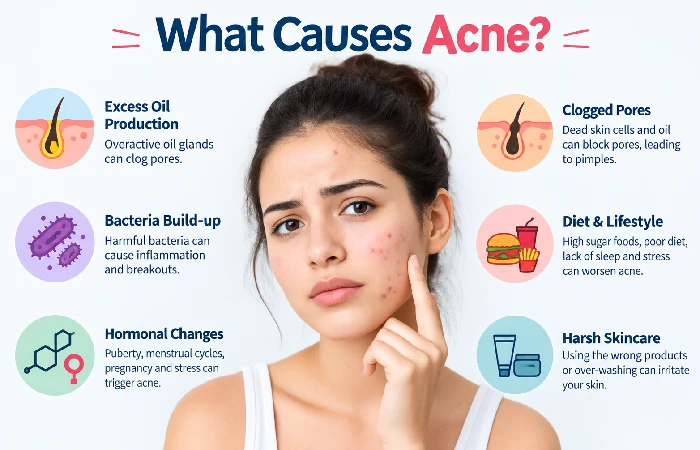
Acne occurs when the hair follicles are congested with oil and dead skin cells. Bacteria and irritation are then able to reason pimples or other forms of acne.
Acne-prone skin can benefit from a consistent skincare routine and carefully selected products that suit individual skin needs. Explore our complete skin care guide for practical information.
There are several reasons why acne may be more likely to occur if it does:
- Excess oil production
- Clogged pores
- Hormonal changes
- Certain medications
- Family history
- Stress
Some cosmetic or skin care products
Hormonal fluctuation is especially frequent in the periods of puberty, menstruation, pregnancy and adult age.
Acne is not due to “dirty skin.” A very aggressive wash won’t necessarily prevent skin breakouts either, and will make the skin more irritated.
Some people react to certain foods while others do not, but no one food triggers acne in all people.
Best Skin Care Routine for Acne-Prone Skin
The best acne skincare routine is the one that is easy to do on a day-to-day basis. Extreme use of strong products may lead to skin irritation and make it hard to stick to your routine.
Morning
- Gentle cleanser
- Cleaning of the affected area, if needed.4. Aftercare advice.
- Lightweight moisturizer
- Broad-spectrum sunscreen
Night
- Gentle cleanser
- Acne treatment
- Moisturizer
Non-comedogenic products can be helpful. Since they are formulated to less touch the skin’s pores.
Never over-scrub acne. Do not wash your face numerous times in a day because it looks greasy.
When start acne action, apply it gradually, following orders on the label. Some actions may be dry or irritating in the first stages of transition.
Following a consistent daily routine can help you keep skincare habits simple and organized. Explore our complete skincare routine guide for helpful tips.
Skin Care for Pimples
It’s hard not to squeeze or pop an active pimple. Try to avoid this.
Squeezing pimples can cause inflammation and may be a risk of scarring and dark marks.
Instead:
- Cleanse gently.
- Don’t touch the affected area.
- Using a suitable acne treatment.
- Avoid touching your face with your hands.
- Exchange the pillowcase with a clean one on a regular basis.
- Apply moisturizer if your skin becomes dry.
Some acne products contain fixings like benzoyl peroxide or salicylic acid that may help. Use the elements with caution as they may dry or annoy the skin.
In some cases, a patch made of hydrocolloid can be obliging for surface-level pimples. Since it will help keep the area from touching and picking.
Understanding your skin type can help you make more informed choices when selecting products for acne-prone skin. Explore our different skin types guide for useful information.
Skin Care for Blackheads and Whiteheads
There are two kinds of non-inflammatory acne: blackheads and whiteheads.
Blackheads are caused by clogged pores that remain open on the surface of the skin. Their dark color is not just dirt.
Whiteheads are produced by a blocked pore that continues to be blocked.
Salicylic acid is a widespread element in acne products as it can aid clear up extra oil and lifeless pores in the pores.
To treat blackheads and whiteheads:
- Use a mild detergent.
- Think about using a salicylic acid product.
- Moisturize regularly.
- Apply sunscreen in the daytime.
- Don’t squeeze plugged pores.
It is not advisable to attempt to remove blackheads by hand with the fingernails as this could cause damage to the skin and cause irritation.
Choosing suitable skincare products is an important part of creating a routine for acne-prone skin. Explore our skincare products guide for practical ideas.
Best Ingredients for Acne-Prone Skin
The various ingredients for acne have different modes of action. Don’t have to use them all.
| Ingredient | Common Use |
| Salicylic acid | Helps unclog pores |
| Benzoyl peroxide | Helps reduce acne-causing bacteria and inflammation |
| Adapalene | Helps prevent clogged pores and treat acne |
| Azelaic acid | Can help with acne and post-acne discoloration |
| Niacinamide | May help support the skin barrier and reduce oiliness |
| Ceramides | Help support the skin barrier |
Use one ingredient at a time, not a combination of strong ingredients at once.
When using benzoyl peroxide, keep towels, clothes, and pillowcases away from fabrics because they tend to bleach.
Retoids may be irritating when first used. Ask your health care provider before using topical retinoids if you are trying to become pregnant or are pregnant.
Daily sun protection is an important part of skincare, including when caring for acne-prone skin. Explore our sun protection skincare guide for helpful guidance.
How to Prevent Acne Breakouts
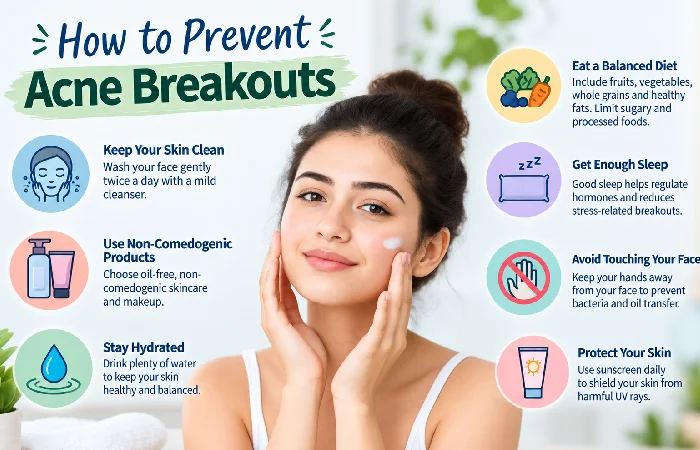
Unfortunately, not all acne outbreaks are avoidable, especially if it’s caused by hormones and genetics. But if you have some good habits in place, you can minimise unnecessary irritation and clogged pores.
Try to:
- Whenever it is appropriate, wash your face gently twice a day.
- Wash your skin after excessive sweating.
- Don’t pick or squeeze pimples.
- Use makeup and skin care items that are not comedogenic.
- Avoid wearing make-up while sleeping.
- Maintain the cleanliness of phone and other frequently touched objects.
- Wash pillowcases regularly.
- Avoid excessive exfoliation.
- Apply sun cream daily.
In hot, humid regions of Mexico the skin may appear even more oily because of sweat. Gently cleaning or rinsing your face after exercise or heavy sweating will remove sweat and residues.
Avoid over-cleaning as part of your acne prevention routine. Over washing and over scrubbing can be harmful to the skin barrier.
Skin Care for Acne Scars
There are several types of scars that some people call “acne scars.”
The marks left behind from acne may be post-inflammatory hyperpigmentation (flat brown or dark marks), or they could be red or pink marks left behind from inflammation. Real acne scars may include a modification of the skin’s condition, including depression or elevation.
It’s essential to use sunscreen daily as the sun can accentuate or aggravate discoloration.
Some post acne discoloration may be helped by ingredients like azelaic acid, retinoids or vitamin C; results take time.
True indented or raised scars usually need professional treatment. Depending on the scar type, a dermatologist may consider procedures such as chemical peels, microneedling, laser treatments, or other options.
The most important step is to control active acne first. Preventing new breakouts can reduce the chance of developing additional marks and scars.
Uneven pigmentation and visible spots can sometimes remain a skincare concern after breakouts, making targeted routine choices useful. Explore our skincare guide for pigmentation and spots for practical information.
Skin Care for Adult Acne
Acne does not just strike teenage girls. Acne can affect adults beyond their 20’s, 30’s, 40’s and even beyond.
Hormonal changes, stress, medications, cosmetics or other factors may be related to adult acne.
Gentle cleanser, the correct acne treatment, a moisturizer and a sunscreen are enough for a basic skincare regimen for acne treatment in adults.
Don’t use a product that’s labeled as an acne product for teenagers just because it’s marketed as an acne product. An adult’s skin may also become dry and sensitive, especially when using active treatments.
Any adult acne that suddenly occurs, that becomes painful, or doesn’t clear up with regular treatment should be talked about with a dermatologist. Sometimes a hormonal or medical disorder may be involved and should be taken into account.
The American Academy of Dermatology explains that effective acne care starts with gentle skin care and appropriate acne treatments. Avoiding picking or squeezing pimples can also help reduce the risk of scarring.
Common Acne Skin Care Mistakes
The reason many acne treatments do not work is because individuals attempt to treat their acne too quickly.
Common mistakes include:
- Roughly scrubbing the face
- Too much facial washing is considered bad.
- Popping pimples
- More than one acne treatment at a time
- Skipping moisturizer
- Avoiding sunscreen
- Switching of products every couple of days
- Avoid using products that block the pores.
- Applying too much treatment
- Expecting overnight results
Another frequent error committed is believing that dry, irritated skin indicates that the acne treatment is doing a more effective job. The skin barrier can become compromised by too much dryness which may lead to an uncomfortable routine.
Allow simple routine time to operate and closely follow product instructions.
If burning, swelling or a severe reaction does occur, discontinue use of the product and seek appropriate medical advice.
When Should You See a Dermatologist for Acne?
Simple acne can be pickled with an over-the-counter routine if proper care is taken. But, expert help might be required if acne is severe, painful, and persistent or causes scarring.
If you suffer from:
If the acne is deep and/or painful.
- Cysts or nodules
- Significant acne scarring
- Acne which fails to clear despite regular treatment.
- Constant acne that impacts your self-confidence
- Severity of acne that flares up or gets worse in adult years
- An extremely high level of irritation from acne products.
The dermatologist can identify the acne type and its severity and provide you with recommended acne treatment that can be used on your skin.
Many people find that the secret is not to use more products to treat their acne. It involves selecting the appropriate few products, using them regularly, guarding the skin from sunlight and not engaging in activities that can irritate the skin further. A basic regimen will serve as a good base for mild acne, and if the acne is more persistent or severe, you will need expert care.
Dr. Khizrana Begum is a qualified medical professional with MBBS and MD qualifications and 5+ years of experience in the medical field. She works as a General Physician and Dermatologist, with knowledge spanning general medicine, dermatology, preventive healthcare and skin health.
As a medical reviewer, Dr. Khizrana Begum reviews health and wellness content for medical accuracy, clarity and authenticity.
Sameena Begum reviews content for clarity, accuracy and reader usefulness. Her review process helps ensure that published information is clearly presented, relevant and easy for readers to understand.
Syeda Yasmeen is a Health & Wellness Writer at InHumanBeing.com. She creates clear and reader-focused content across health, nutrition, wellness, women’s health, men’s health and babies’ health.