

Last Updated: September 14, 2026
Feeding can be one of the most enjoyable but also one of the most difficult things about looking after your baby. Some of the problems that can occur with feeding during your baby’s first year are:- your baby will take the bottle but won’t feed, your baby won’t feed, baby vomits after feeding, gagging during feeding, feeds quite frequently and it takes a long time to finish feeding.
Certain feeding issues are temporary, possibly related to normal development. Some may be addressed through adjustments to feeding technique, while others may be a red flag to be checked by your pediatrician.
Common baby feeding problems Knowing what might be normal and the reasons for feeding problems can help you and your family decide when and if you need help.
Here we will discuss the common feeding problems that may be present at home with your child. These include: feeding refusal, decreased milk intake, spitting, gagging, feedings too frequent or slow, problems with the bottle and warning signs to report to the doctor.
Note: This article is for education only and is not the replacement for a doctor’s advice. If you have any worries about your baby’s feeding, hydration, growth, or health, seek a physician or a healthcare provider.
Baby Refusing to Feed
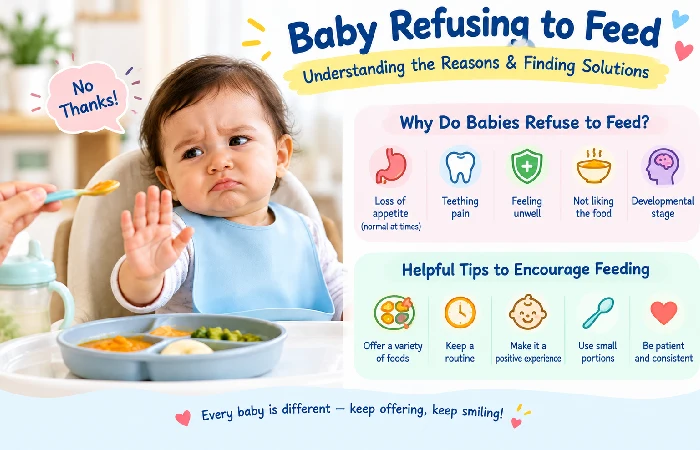
A baby may sometimes, for no apparent reason, refuse a breast, bottle or solid foods. One missed or a reduced number of feeds in itself does not necessarily mean a problem. Persistent refusal to feeds, especially in very young babies, needs to be addressed.
Why Might a Baby Refuse to Feed?
There are several possible reasons, including:
- Tiredness
- Distraction
- Illness
- Nasal congestion
- Teething discomfort
- Changes in routine
- An uncomfortable feeding position
- Changes in milk flow
- Bottle nipple problems
Older babies may also become distracted because they are more interested in their surroundings.
Breast Refusal
A breastfed baby may occasionally refuse the breast.
Possible factors can include:
- Changes in feeding routines
- A change in milk flow
- Discomfort
- Illness
- Nasal congestion
- Distraction
Those who won’t take the breast For those who may not take the breast but continue to appear hungry, a healthcare or lactation professional can help you identify reasons for this behavior.
Bottle Refusal
A bottle-fed baby may refuse a bottle because of:
- An unfamiliar nipple
- A nipple flow that is too fast or too slow
- Milk that is too warm or too cold
- Discomfort
- Illness
- Changes in routine
If a baby consistently refuses bottles or takes very little milk, speak with a pediatrician.
What Parents Can Do
You may try:
- Feeding in a quiet environment
- Offering feeds when the baby is calm
- Checking the feeding position
- Reducing distractions
- Checking the nipple flow
- Watching for signs of illness
Avoid forcing a baby to feed, as pressure can make feeding more stressful.
Baby Not Drinking Enough Milk
Common concern among parents: The baby is not getting enough milk. What may appear to be a light feed can, in fact, be a lighter feed than previous ones. The feed can range from one session to the next and still be within the normal range.
The feed weight by itself does not tell the complete picture.
The feeding pattern, the baby’s growth, hydration and overall condition are the most important factors.
Possible Signs of Low Milk Intake
Parents may become concerned if a baby:
- Consistently refuses feeds
- Drinks significantly less than usual
- Has fewer wet diapers
- Appears unusually sleepy
- Has difficulty staying awake during feeds
- Is not gaining weight as expected
These signs should be discussed with a healthcare professional.
Possible Reasons a Baby Drinks Less
A temporary decrease in feeding may occur because of:
- Illness
- Tiredness
- Nasal congestion
- Teething
- Changes in routine
- Distractions
- Developmental changes
However, significant or persistent changes should be evaluated.
Monitoring Hydration
Regular diaper output can provide useful information about hydration.
Parents should be familiar with their baby’s normal diaper patterns.
Signs of possible dehydration may include:
- Significantly fewer wet diapers
- Dry mouth
- Unusual sleepiness
- Other changes in behavior
If you are concerned that your baby may be dehydrated, seek medical advice promptly.
Do Not Force Extra Milk
Offering feeds regularly is important, but forcing a baby to drink may create additional stress.
Instead:
- Offer milk calmly.
- Watch for hunger cues.
- Monitor feeding patterns.
- Contact a pediatrician if intake remains low.
Baby Spitting Up After Feeding
Horsing up is prevalent in preschoolers.
A few babies spit up just after consuming because their digestion system is still maturing.
Spitting up isn’t automatically indicative of a huge dilemma unless the son or daughter can be comfortable and still developing properly.
| Topic | Key Information |
| What Is Baby Spitting Up? | Spitting up -When milk or food comes up from a baby’s stomach after a feeding-normal during infancy. |
| Why Do Babies Spit Up? | Common causes immature digestive system, swallowing air, feeding too quickly or large volume, and movement after feeding. |
| Is Spitting Up Normal? | Small amounts of spit-up without pain or discomfort are common, especially if the baby seems comfortable, is gaining weight normally, and is feeding normally. |
| Swallowing Air During Feeding | Swallowing air at feedings drink milk quickly. |
| Feeding Too Quickly | Drinking more than the stomach can hold pausing to burp holding the baby upright for a time after the feeding vigorous movement after a feeding. |
| Overfeeding | To do this, burp the baby during and after eating, for some babies. |
| Keeping Baby Upright | Keep the baby upright for a time after eating. |
| Avoiding Excess Movement | Avoid vigorous movement after a feeding |
| Spit-Up vs. Vomiting | How to know if you should make a paediatrician’s appointment Baby eating and drinking regularly, gaining weight, not having signs of dehydration, not in any pain or distress. |
| When to Seek Medical Advice | Frequent, large, forceful vomiting (vomiting forcefully up out of the mouth). |
| Urgent Warning Signs | Green, yellow, or bloody “spit-up,” or blood in the vomit; trouble breathing, or lethargy call your baby’s doctor. |
Baby Gagging During Feeding
Gagging may seem scary to a parent when a baby starts eating solids. But gagging is not choking. Gagging can be loud.
What Is Gagging?
Gagging is a protective reflex that can occur when food moves too far back in the mouth.
Babies are still learning how to:
- Move food around the mouth
- Manage different textures
- Chew
- Swallow
Occasional gagging can occur as babies develop these skills.
Why Babies Gag During Feeding
Possible reasons include:
- Learning to eat solid foods
- A new food texture
- Taking too much food at once
- Food that is difficult to manage
- An inappropriate food size
Gagging vs. Choking
A baby may cough, make noise, or push food out of their mouth.
Choking can be silent and can block your baby’s airway. If a baby is choking, it’s a medical emergency, and they need to have CPR and choking first aid done by a CPR trained provider.
How to Reduce Gagging Risks
Parents can:
- Offer age-appropriate textures.
- Prepare foods safely.
- Ensure the baby is seated upright.
- Supervise every meal.
- Avoid rushing the baby.
- Allow the baby to manage small amounts of food.
Never place fingers into a baby’s mouth unless there is a clear reason and you can safely see and remove an object. Blind finger sweeps can push food farther back.
Baby Feeding Too Frequently
Parents may be worried about having a frequent feeder if they think their baby is hungry again very soon after having a feed. For some babies, however, frequent feeding during the first year is normal.
Why Babies May Feed Frequently
Possible reasons include:
- Small stomach size
- Growth spurts
- Cluster feeding
- Comfort seeking
- Rapid growth
- Increased nutritional needs
Newborns, in particular, may need frequent feeds.
Cluster Feeding
Cluster feeding is when a baby wants to have several feeds close together. This can be common at certain times of the day or evening.
Does Frequent Feeding Mean the Baby Is Not Getting Enough?
Not necessarily.
Frequent feeding can be normal, especially for breastfed babies.
However, if frequent feeding is combined with concerns such as poor weight gain, very few wet diapers, or persistent distress, contact a pediatrician.
Follow Your Baby’s Cues
Instead of focusing only on the time between feeds, consider:
- Hunger cues
- Diaper output
- Growth
- Overall behavior
A healthcare professional can help determine whether your baby’s feeding pattern is appropriate.
Baby Feeding Too Slowly
Some babies take longer than others to complete a feeding.
A slow feeding pace is not always a problem.
However, consistently long feeding sessions may sometimes indicate difficulties.
Why Might a Baby Feed Slowly?
Possible causes include:
- Sleepiness
- Fatigue
- A slow bottle nipple
- Difficulty latching
- Weak sucking
- Distraction
- Nasal congestion
Signs of Slow Feeding
A baby may:
- Take a long time to finish a bottle.
- Fall asleep repeatedly.
- Pause frequently.
- Appear frustrated.
- Have difficulty maintaining sucking.
What Can Parents Do?
Try:
- Feeding when the baby is alert.
- Reducing distractions.
- Checking the bottle nipple flow.
- Ensuring a comfortable feeding position.
- Taking breaks when needed.
If slow feeding is persistent or the baby has difficulty gaining weight, seek professional advice.
Bottle Feeding Problems
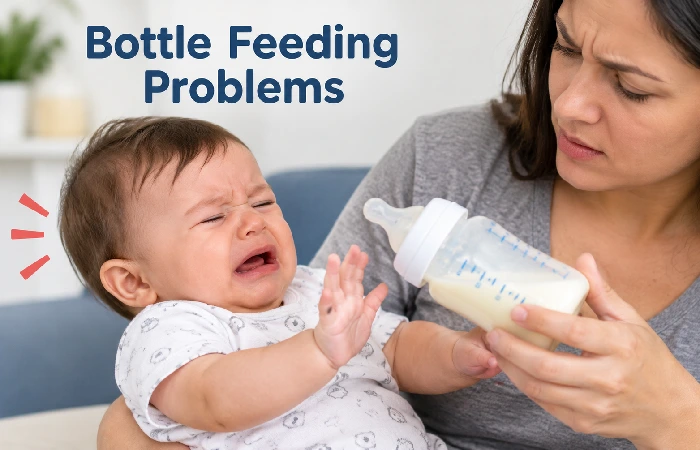
Bottle feeding can involve several common challenges.
Understanding the equipment and your baby’s feeding behavior can help identify potential problems.
Nipple Flow Problems
Bottle nipples come in different flow rates.
A nipple with a flow that is too fast may cause:
- Coughing
- Gulping
- Milk leaking from the mouth
- Difficulty coordinating sucking and swallowing
A nipple with a flow that is too slow may cause:
- Frustration
- Long feeding sessions
- Increased effort
- Falling asleep before finishing
Choosing an appropriate nipple flow can make feeding more comfortable.
Air Swallowing
Babies may swallow air while feeding.
This can contribute to:
- Gas
- Fussiness
- Burping
- Discomfort
A comfortable feeding position and appropriate bottle technique may help.
Bottle Refusal
A baby may refuse a bottle because of:
- A new bottle
- A different nipple shape
- A different milk temperature
- A change in routine
Some babies need time to adjust to new feeding equipment.
Feeding Too Quickly
A baby may drink too quickly if milk flows too rapidly.
Signs can include:
- Coughing
- Gulping
- Pulling away from the bottle
- Milk spilling from the mouth
Try using an appropriate nipple flow and allowing pauses during feeding.
Bottle Preference Changes
Some babies get used to the specific kind of bottle/nipple.
Switching equipment can disrupt feeds temporarily.
If a baby suddenly refuses all bottles, even when used to a good feed, think about whether illness or pain could be the cause.
Baby Coughing During Feeding
Some babies will cough on occasion with breast or bottle feeds, and when offered solids.
They may cough if milk is coming too fast or if they are just learning to manage food.
Repeated episodes of coughing at feeds should be investigated by a health professional.
Possible Causes
Repeated coughing may be associated with:
- Fast milk flow
- Bottle nipple problems
- Feeding position
- Difficulty coordinating sucking and swallowing
- Other feeding difficulties
If coughing occurs frequently, seek professional guidance rather than continuing to experiment without support.
Feeding Problems When Starting Solid Foods
Introducing solids brings new challenges.
A baby may initially:
- Refuse food
- Spit food out
- Gag
- Play with food
- Make unusual facial expressions
These behaviors can be part of learning.
Food Refusal
Babies may need repeated exposure before accepting a new food.
Avoid forcing food.
Instead:
- Offer small amounts.
- Keep mealtimes relaxed.
- Try again on another day.
- Offer a variety of foods.
Difficulty With Textures
Some babies have difficulty with textures.
Slowly build up.
From smooth to thicker to textured when ready.
If a baby’s having persistent texture or swallowing issues, ask your professional.
Final Thoughts
Some babies may have feeding issues from time to time, but most tend to go away.
Your baby may, at any point, decide not to take a feed, take less milk than normal, bring milk back up after a feed, gag while learning to eat solids, feed often or take ages to finish a bottle. Your baby’s usual feeding habits can make it easier to observe the more important differences.
If your baby displays cues of hunger and fullness, follow best feeding practices and don’t pressure your baby to eat or drink.
Just take a moment and breathe, and look at the bigger picture, the whole sum of it. How is your baby’s weight gain, fluid consumption, activity levels, wet nappies, and general attitude, your baby’s loss of weight and higher peak temperatures may all be indicators of how your baby is doing. If the hiccup persists or gets worse, or if it is accompanied by dehydration, frequency of vomiting, underweight, compromised breathing, or difficulties swallowing, call your paediatrician.
Most feeding issues can be rectified with understanding, responsive care, and the assistance of health care professionals.