
Last Updated: September 21, 2026
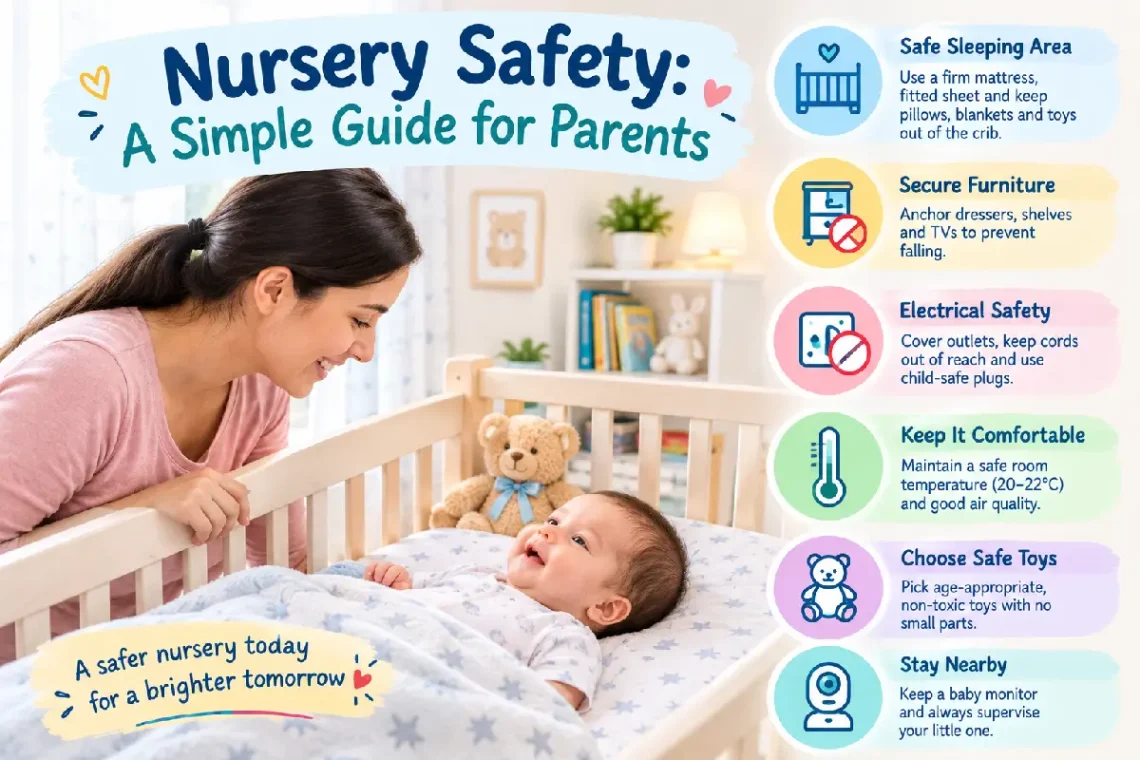
A comfortable sleep, rest and parent-infant space in the nursery. However, as babies get older they are more active, so the nursery needs regular checks for safety. Here are some safety references for your nursery: buying appropriate furniture, a safer sleep environment, handling cords, keeping small objects away, and room checks as your baby grows.
The changes do not all have to be made all at once. First check the baby’s sleeping space, then furniture, storage, electrical, windows, and other aspects of the room. Some good ideas to make a nursery safe.
Why Is Nursery Safety Important?
Babies spend a considerable amount of time in their nursery, particularly during sleep. They also start to reach and roll, crawl and pull up, and explore as they develop.
A safe nursery minimises the risks of:
- Falls
- Furniture tip-overs
- Choking hazards
- Unsafe sleep conditions
- Electrical hazards
- Burns
- Accessible cords
- Little things that are within your reach
Your baby’s safety in the nursery should evolve with their growth and development. What may be inaccessible to a newborn can be accessible once the baby can sit, crawl or stand.
Planning a Safe Nursery Layout
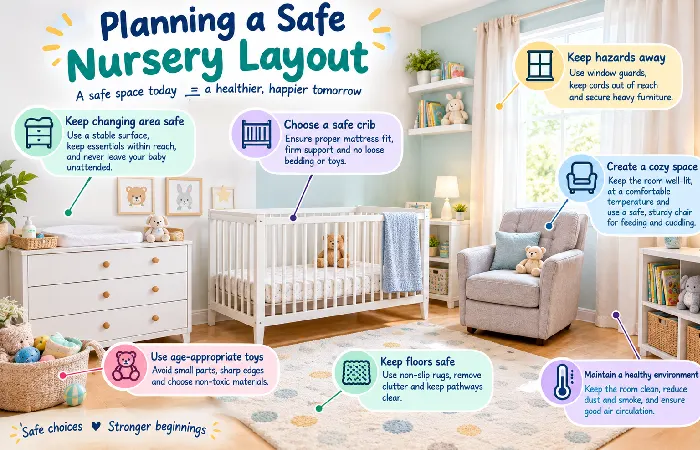
Consider how you and your baby will walk around the room. Maintain a well organized environment and ensure that items that are necessary for baby care are easily accessible to an adult without causing hazards.
The crib or other approved infant sleep space should be away from potential infant sleep hazards. Ensure furniture is stable and don’t leave furniture where the baby can pull it down later.
These are the most basic items to consider when planning nursery layouts.
| Nursery Area | Safety Consideration |
| Sleep area | Keep the sleep space clear and appropriate for the baby’s age |
| Changing area | Keep supplies within adult reach but away from the baby |
| Storage | Secure furniture and avoid unstable stacks |
| Windows | Keep climbing furniture away from windows |
| Electrical area | Keep cords and electrical devices out of reach |
| Floor | Remove small objects and unnecessary clutter |
| Walkways | Keep paths clear to reduce trips and falls |
When setting up the room consider future mobility. Your baby may be crawling or pulling up up soon, if he/she cannot move independently now.
Choosing Nursery Furniture
Nursery furniture is to be strong, stable and suitable for the purpose. When putting together furniture, such as cribs, dressers, shelves, changing tables and other furniture, follow manufacturer’s directions.
If it is appropriate, furniture that can tip should be anchored to the wall. Don’t store bulky items on a child’s furniture that they can access later.
Use a product that complies with current applicable safety standards and manufacturer’s directions when choosing a crib. Do not change or use damaged or missing parts to the crib.
Also special care should be given to the changing table. Babies can move unexpectedly, so never leave a baby unattended on an elevated changing surface.
Furniture Safety Tips
- Follow assembly instructions for furniture.
- Regularly check screws, bolts and connections.
- Secure appliances that have a tendency to tip over.
- Keep heavy objects down, wherever possible.
- Ensure that climbing opportunities are kept away from windows.
- Avoid nursery furniture that has been damaged.
- Don’t use recalled products.
Creating a Safer Sleep Environment
One of the most important aspects of nursery safety is a safer sleep environment. The American Academy of Pediatrics advises infants sleep on their back for all sleep periods and that infants sleep on a firm flat surface with a fitted sheet.
The crib should not contain soft items such as blankets, pillows, bumper pads, or other soft items. Ensure that crib(s) or approved sleep space is clear of objects that may contribute to the risk of suffocation or entrapment.
The AAP suggests that room sharing (but not bed sharing) be encouraged for at least the first six months and continues to recommend this practice until the first year. Parents should adhere to the current safe-sleep recommendations from their pediatrician and trusted health agencies.
Safer Sleep Basics
| Safety Step | What to Do |
| Baby’s position | Place baby on the back for sleep |
| Sleep surface | Use a firm, flat surface |
| Bedding | Use a fitted sheet designed for the sleep surface |
| Crib | Keep the sleep space clear |
| Pillows | Do not place pillows in the infant sleep space |
| Loose blankets | Keep them out of the sleep area |
| Soft toys | Keep them out of the sleep area |
| Room sharing | Keep baby’s sleep space in the parent’s room when possible |
Parents can check the current safe-sleep guidelines from the American Academy of Pediatrics (AAP) and talk to their child’s healthcare professional about any concerns they may have.
Nursery Storage and Organization
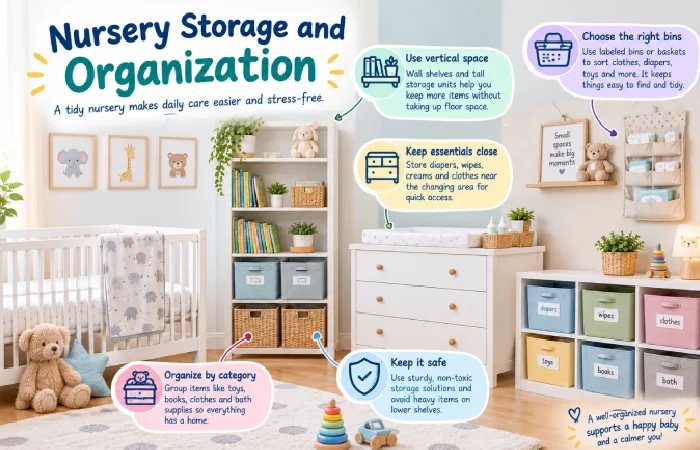
The storage areas can be a safety issue, and with good storage, the nursery will be easier to manage.
Securely store medicines, creams, lotions and other potentially harmful items away from children.
Do not stack items on top of dressers or shelves where a growing baby may be able to reach them. Reevaluate storage areas as your baby gets mobile.
- Safe Storage Habits
- Store medicines securely.
- Do not store cleaning supplies where children can reach them.
- Tidy up small baby items that are out of reach of baby.
- Don’t stack boxes or containers in an unstable manner.
- Anchoring furniture that may tip over.
- Store heavier objects at lower levels if possible.
- Regularly remove items your baby has outgrown.
Having a tidy nursery is nice but being organized does not necessarily mean things are within easy reach and might be dangerous.
Electrical and Cord Safety
As part of nursery safety, electrical outlets, power strips, chargers, lamps, baby monitors and cords should be checked.
Remove electrical items and cords from baby’s reach. Properly tidy up cords to prevent strangulation or pulling hazards.
Never use a crib or other furniture in front of a window, or near a cord on a window blind or other electrical device that could reach a baby.
Electrical Safety Checklist
| Potential Risk | Safer Practice |
| Electrical outlets | Use appropriate outlet protection where needed |
| Chargers | Keep cords inaccessible |
| Lamps | Place securely away from the baby’s reach |
| Power strips | Keep inaccessible |
| Baby monitor cords | Keep cords well away from the crib |
| Window covering cords | Keep them out of reach |
| Extension cords | Avoid unnecessary use and keep them inaccessible |
Inspect cords periodically for damage. Change out faulty electrical equipment instead of operating it.
Keeping Small Objects Out of Reach
Babies tend to put things in their mouths and in their hands. Small objects can thus be a choking hazard.
Inspect floor, baby-growth area, shelves, drawers and other surfaces your baby could reach for.
Small items that should be kept away include:
- Coins
- Small toy parts
- Button batteries
- Pen caps
- Small household items
- Jewelry
- Hair accessories
Small pieces of food that aren’t safe for the baby to eat at this stage.
Button batteries are a special type of battery that can cause serious injury if swallowed. Keep batteries securely out of reach and ensure battery compartments are closed and inaccessible.
Check the floor before your baby is going to play on the floor. In a flood of things, particularly if the small object is a common household item, it’s easy to overlook it.
Checking the Nursery Regularly
Ensuring the safety of nurseries is not a one-off task. The safety concerns of the room may change as your baby gains new skills.
A newborn might lie a lot, and an older baby might be crawling, pulling up, reaching for drawers, and opening shelves.
Regularly check the nursery for:
| Check | Question to Ask |
| Furniture | Could anything tip if pulled or climbed on? |
| Crib | Is the sleep space still appropriate and in good condition? |
| Cords | Can the baby reach any cords? |
| Floor | Are there small objects within reach? |
| Storage | Can the baby open or reach unsafe items? |
| Windows | Could furniture provide a way to climb toward a window? |
| Electrical items | Are devices and cords safely positioned? |
| Baby products | Are products damaged or subject to a recall? |
Go to your baby’s level and observe what’s happening in the room. This can help you to see hazards that may be hard to see from the adult’s perspective.
Common Nursery Safety Mistakes
There can be hidden dangers in a well made nursery. Be aware of these typical errors.
- Too Many Items in the Crib
A crib might look cosy with soft toys, pillows, loose blankets and other items but they are not suitable for an infant’s sleep environment.
- Tips On Forgetting Furniture Tip-Over Risks
Dressers or bookshelves can look solid, but may be hazardous when a child pulls or climbs on them. Use the correct furniture securing as directed by safety guidelines.
- Keeping Baby Monitor Cords within Reach
Keep monitor cords and/or other electric cords out of reach of the crib and where your baby can reach them.
- Storing Small items on Low Shelves
When babies start crawling and standing, small objects can be easily accessible and in easy reach.
- Ignoring Windows
An item of furniture placed close to a window can offer a climbing opportunity. Remove items from the climbing frame from near windows and address window hazards.
- Not verifying furniture over time.
Occasional use may cause screws and connections to loosen. Regularly check furniture and repair or replace damaged furniture.
- Baby proofing only once
The level of safety in the nursery must grow as your child grows. Check the room any time your baby is learning to move.
Final Takeaway
The first step to a safe nursery is to make a space for your baby free of clutter, structured, and appropriate for her age. Discuss the importance of a safe sleep environment, furniture safety, storage safety, electrical safety and cord safety, and small objects and little hands!
Check the nursery as your baby grows – from the baby’s perspective. Periodic inspections can be beneficial to provide awareness of potential hazards prior to them becoming an issue.
A safe nursery is not a perfectionist’s dream. It’s about minimising unnecessary risks and providing a safe environment for your baby to sleep and develop.