
Last Updated: September 21, 2026
Baby-proofing a home is an essential step to preparing for your growing baby. Any household objects are a safety hazard once babies begin crawling, pulling up, walking and exploring. The idea of a safe home is to make it as safe as you can, without making it “perfect.
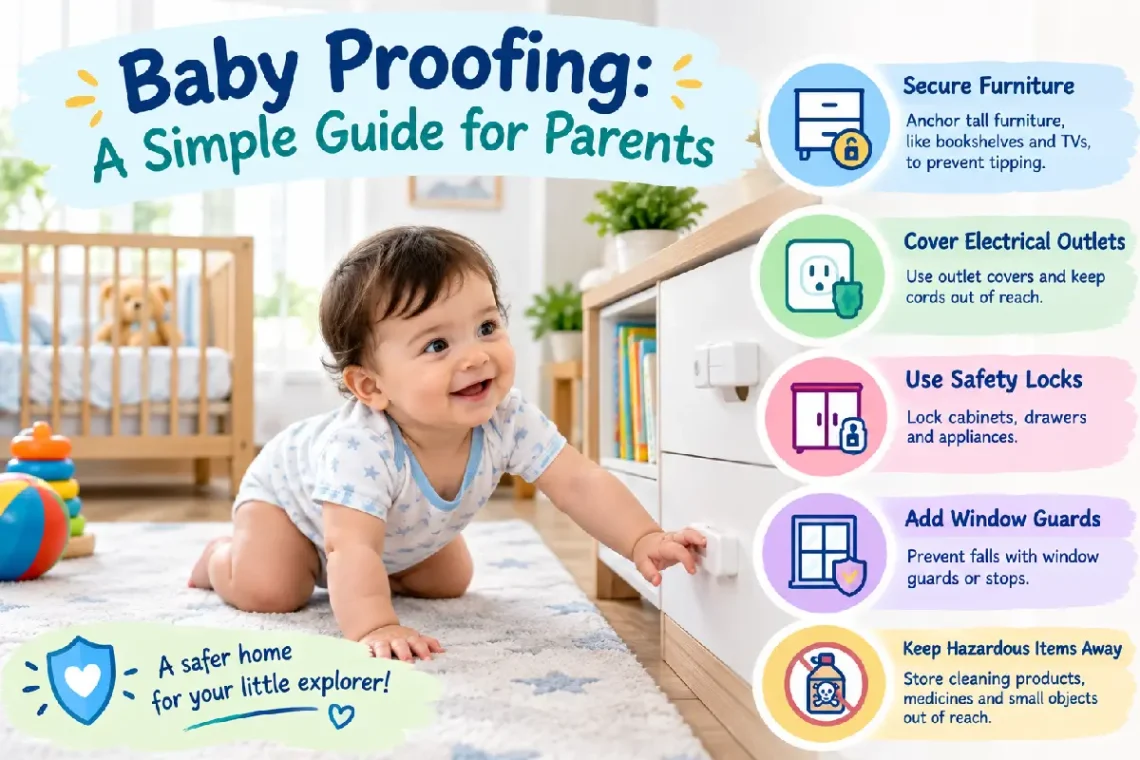
The first step that parents can take is to make rooms that baby spends most of his/her time in safe, and then make other rooms safe. Other measures that can help include securing furniture, covering electrical outlets, moving cleaning supplies out of the reach of the child and using safety gates.
What Is Baby Proofing?
Baby proofing – safe improvements to your home to reduce potential hazards to babies and young children. It is designed to recognise potential objects that a baby might be able to touch, pull, swallow, open, climb and fall into
Here are some common baby proofing measures:
| Area | Baby Proofing Step |
| Electrical outlets | Use appropriate outlet protection |
| Furniture | Secure heavy furniture to the wall |
| Cabinets | Add child-resistant latches where needed |
| Stairs | Install properly fitted safety gates |
| Windows | Keep cords and furniture away from windows |
| Medicines | Store them securely and out of reach |
| Cleaning products | Keep them locked away |
| Small objects | Remove choking hazards from reachable areas |
As your baby gets more mobile, baby proofing should be updated. A safe environment for a newborn baby could be unsafe for a crawling or walking baby.
When Should You Start Baby Proofing?
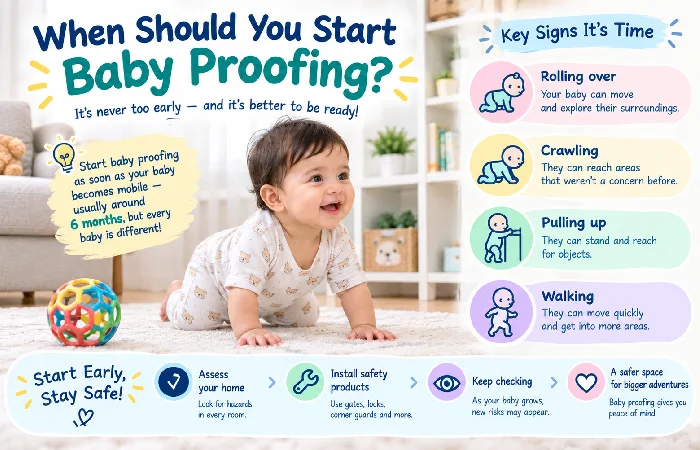
Getting baby proofed before your baby begins crawling is a good time. Many parents start prepping during pregnancy or in the first couple of months after a child’s birth.
It’s not necessary to baby-proof the entire house. Begin with spaces where your baby spends most of his or her time, like the living room or the nursery.
When an infant is ready to crawl, consider the home in a baby’s perspective. Put yourself at ground level and see what you can reach. Check for cords, small items, sharp corners, easily moved pieces of furniture, open cabinets and other possible dangers.
Keep in mind that babies grow rapidly. After your child is crawling, pulling up or walking, check your safety setup again.
Baby Proofing Your Living Areas
Furniture, electrical cords, remotes, decorations, lamps, and other items can be found in living rooms and family rooms and are items that can be grasped by babies.
Begin securing furniture that might tip over. Heavy objects such as bookshelves, televisions, dressers and other heavy objects should be secured as appropriate.
Don’t place small items on the floor as babies have a natural curiosity about putting things in their mouths.
Living Room Baby Proofing Checklist
| Potential Hazard | What Parents Can Do |
| TV and furniture | Secure them against tip-over |
| Electrical cords | Keep cords out of reach |
| Small decorations | Move them to inaccessible areas |
| Lamps | Position them where babies cannot pull them down |
| Sharp furniture edges | Reduce access or use appropriate edge protection |
| Remote controls | Keep away from babies |
| Plants | Keep potentially harmful plants inaccessible |
| Loose rugs | Reduce slipping and tripping risks |
Never use a baby gate or playpen as a substitute. The room should be frequently checked as babies will learn to climb up onto surfaces and move from areas of restricted space.
Baby Proofing the Kitchen
The kitchen kitchen space presents multiple hazards such as hot surfaces, sharp objects, cleaning supplies, glassware, appliances and small parts.
Securely store knives and other sharp objects out of reach of babies. Cleaning products must also be properly stored and out of the reach of children.
Use back burners if available when cooking and position handles of pots away from the edge of the stove top when cooking. Avoid placing hot food and beverages at the edge of counters, tables, and other surfaces.
Kitchen Safety Basics
- Put knives and sharp utensils out of reach.
- Keep cleaning products safely.
- Avoid placing small appliances and cords where they can be reached.
- Practice stove safety with hot burners.
- Ensure hot food and drinks are kept away from edges of table and counters.
- Tighten cabinets and drawers holding hazardous materials.
- Do not let children touch plastic bags or other small or hazardous materials.
- Never leave a baby unattended in the vicinity of cooking surfaces.
The kitchen can be particularly difficult as many ordinary items may be interesting to a baby. Periodically inspect low cabinets and drawers, and easily accessible shelves.
Tips for baby-proofing the bathroom.
The bathroom contains cleaning products, medicines, cosmetics and electrical devices, in addition to water. Never leave children unattended near water, even for short periods of time.
Secure and off-put medicines, toiletries, razors, cosmetics and other potentially dangerous items.
Any electrical appliance should not come in contact with water. Items that are not absolutely necessary, such as hair dryers and electric grooming tools should be stored securely when not in use.
When preparing your bathroom baby-proofing list, don’t forget the following.Baby Proofing the Bathroom
Bathrooms can contain water, medicines, cosmetics, electrical devices, and cleaning products. Babies should never be left alone around water, even for a short period.
Keep medicines, toiletries, razors, cosmetics, and other potentially dangerous products secured and out of reach.
Electrical appliances should be kept away from water. Items such as hair dryers and electric grooming tools should be stored safely when not in use.
Bathroom Baby Proofing Checklist
| Hazard | Safety Step |
| Water | Never leave a baby unattended near water |
| Medicines | Store securely and out of reach |
| Toiletries | Keep them inaccessible |
| Razors | Store safely away from children |
| Electrical devices | Keep away from water |
| Cleaning products | Store securely |
| Slippery floors | Keep floors as dry as practical |
Baby proofing the bathroom is not a substitute for active supervision. Water safety requires a parent or responsible adult to remain close and attentive.
Baby Proofing Bedrooms
Bedrooms (including the nursery) should be made safe. Ensure that sleep environment is clear of unnecessary items and adhere to current safe sleep guidelines.
Furniture must be solid, and fastened securely. Avoid cords, small items and other readily reachable hazards being placed near the baby’s sleeping and play areas.
Window areas should also be considered. Remove furniture that a child can climb on from windows, and follow current safety guidelines for window covering cords.
Bedroom Safety Checklist
- Ensure baby’s sleep area is clear and safe.
- Anchors furniture to minimize tip-over hazards.
- Protect babies from small objects.
- Do not place cords in locations where they can be reached.
- Store age appropriate toys.
- Check windows and window coverings.
- Store medicines and personal-care products out of reach.
- As your child starts to crawl and walk, go back to the room for a check-up.
Baby proofing should enhance the safe sleep environment, not add extra items to the crib or sleep area.
Identifying Potential Household Hazards
A simple step you can take toward baby-proofing can be to look for hazards one room at a time.
Consider what your child may be able to reach, pull, push, open, climb, swallow, touch or fall into.
Pay particular attention to:
| Hazard Type | Examples |
| Choking hazards | Small toys, coins, batteries, small household objects |
| Fall hazards | Stairs, windows, elevated surfaces |
| Burn hazards | Hot drinks, cooking surfaces, heaters |
| Poison hazards | Medicines, cleaning products, chemicals |
| Tip-over hazards | TVs, shelves, dressers |
| Electrical hazards | Outlets, cords, electrical devices |
| Water hazards | Bathtubs, buckets, toilets, pools |
| Sharp hazards | Knives, scissors, razors, sharp objects |
Button batteries are a special case that should be carefully reviewed as ingestion can result in serious injury. Secure batteries & battery powered products and inspect battery compartments frequently.
Visitors’ belongings should also be checked when they enter the home. Handbags, medicines, coins, cosmetics, and other small items can be a source of unexpected dangers if within the reach of a baby.
Baby Proofing Products and Safety Tools
Baby proof products can help to minimise risks, but must be installed appropriately and inspected regularly.
Common products include:
| Safety Product | Main Purpose |
| Safety gates | Limit access to stairs or selected areas |
| Cabinet latches | Help prevent access to unsafe contents |
| Outlet covers | Help reduce access to electrical outlets |
| Furniture anchors | Help reduce furniture tip-over risks |
| Window safety devices | Help limit dangerous window access |
| Corner or edge protection | Helps reduce contact with sharp edges |
| Door safety devices | Helps limit access to selected rooms |
| Toilet locks | Helps reduce access to toilet water |
Select products suitable for the site and follow instructions for installation.
Safety products do not replace the need for supervision. They may become loose or break or be put on incorrectly. Inspect them and replace them if they are damaged.
When it comes to stairs, safety gates should be designed and installed for the particular location. Never use makeshift barriers.
Common Baby Proofing Mistakes
Even parents who have taken the time to baby proof their home can overlook some hazards.
Some of the most common ones are:
1. It’s too late to baby-proof.
Some babies do not begin crawling until after the preschool child has already begun to show signs of it.
Once a baby begins crawling, there may not be enough time to prepare. Begin to plan before your child starts crawling or walking.
2. No locks at all inside the home.
Babies grow quickly. As soon as they are able to stand and reach further, things they couldn’t get to before may now be possible.
The three Furniture Tip-Over Risks are:
Any large furniture or TVs can be hazardous if they tip over. Tie off suitable materials, following safety instructions.
3. Relies on Safety Products Completely
The use of outlet covers, cabinet latches, and gates can help, but they can’t take the place of supervision and good home organization.
4. Take away Small Objects Within Reach
Small objects such as coins, batteries, and parts of small toys can be a choking hazard.
5. Do not place a coax and window in the same box.
Window covering cords and easy-to-reach windows pose hazards. Avoid putting dangerous cords or climbing up close to babies.
6. Not Updating the Home
Baby proofing is an ongoing process. A crawling baby and a walking toddler are able to explore other areas and pose various safety risks.
7. Forgetting Guests’ Belongings
An easily-reached toy or medicine bag or a small item sitting on a low table or sofa can easily come into reach of a curious infant.
Final Takeaway
Baby proofing is all about preparing your home to be safer as your baby becomes more active and grows. Begin room by room with rooms your baby uses regularly, find hazards and make simple changes to minimize risk.
Tie down furniture, store hazardous materials out of reach, sweep up electrical and window hazards, keep stairs clear, and clean up small objects that are potential choking hazards. Most importantly, don’t reduce supervision and review your safety system as your baby masters new skills.
There is no one product or checklist that will make a home safer. From continuous monitoring, careful planning, suitable equipment and active supervision.