
 Syeda Yasmeen
Health & Wellness Writer Syeda Yasmeen creates clear and
reader-focused content covering health,
nutrition, wellness, women’s health,
men’s health and babies’ health.
Read Full Bio of Author →
 Sameena Begum
Health, Technology & Digital Content Reviewer Sameena Begum reviews selected content
for clarity, factual presentation,
consistency and reader usefulness.
Read Full Bio of Reviewer →
 Dr. Khizrana Begum
General Physician and Dermatologist Dr. Khizrana Begum is a qualified medical
professional with MBBS and MD qualifications
and 5+ years of experience. She reviews health
and wellness content for medical accuracy,
clarity and responsible presentation.
Read Full Bio of Medical Reviewer →
Babies use a variety of products in their everyday lives, including cribs, strollers, high chairs, bottles, toys, and bathroom products. These products are intended to be used by parents but still require careful selection, assembly and use. Baby product safety involves selecting the right product for your baby’s age and stage, as well as following instructions from the manufacturer, inspecting for damage and monitoring for product recalls.
Something that is safe for a baby can no longer be safe when they get more active. It is important for parents to check baby products regularly to prevent potential safety hazards.
❝
This article is part of
Baby Safety Hub
Why Is Baby Product Safety Important?
Babies are learning to maintain balance, develop strength and coordination, and learn to recognize and avoid danger. They might pull, chew, climb on and put things in their mouths.
A product can be rendered unsafe if it:
- Used for the inappropriate age or weight.
- Missing parts.
- Damaged or broken.
- Assembled incorrectly.
- Modified from its original design.
- Made use of in a way that it was not intended to be used.
- No longer suitable for the developmental age.
Babysafety products that should be examined frequently include cribs, strollers, car seats, high chairs, carriers, toys, baby gates and feeding products.
Safety is more than just a trusted brand product. How and what you do to maintain and use the product also counts.
Baby safety involves practical steps that help create a secure environment for infants and young children. Explore our baby safety guide for an overall introduction.
How to Choose Baby Products Carefully
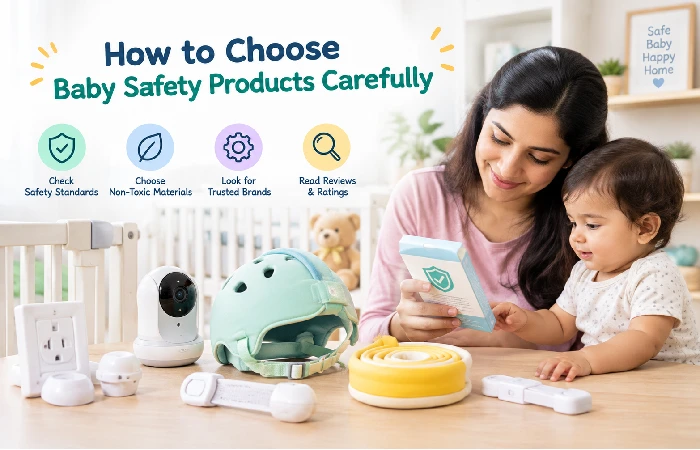
When purchasing a baby product, consider the child’s developmental, size and age appropriateness.
Thoroughly read the product description and safety information. Avoid purchasing a product because of its numerous features or appearance.
Check out my Baby Product Buying Checklist.
| Check | What to Look For |
| Age range | Is it suitable for your baby’s age? |
| Weight limit | Does your baby fit within the stated limit? |
| Development | Is it suitable for your baby’s current abilities? |
| Instructions | Are clear instructions included? |
| Condition | Is the product new, complete, and undamaged? |
| Safety information | Are warnings and precautions provided? |
| Recalls | Has the product been recalled? |
| Parts | Are all required parts included? |
Take extra precautions with re-used products. It can be an older model, have parts that are broken or missing, or have parts that are not as safe as newer products.
Creating a safer home can help reduce everyday hazards and support safer routines for babies. Explore our at-home baby safety guide for practical tips.
The student will read and comprehend product labels and instructions.
Product labels and instructions are important to understand the use of a baby product.
Read the directions on product use from start to finish before using a new product. Be sure to find out about:
- Recommended age
- Maximum weight
- Height restrictions
- Assembly
- Proper positioning
- Cleaning
- Maintenance
- Warnings
When to stop using the product
Store instructions in a place where they can be easily located. They might be necessary for cleaning, adjustment and checking in the future.
Don’t dismiss warning labels just because a product might seem simple. Safety instructions are developed for a certain circumstance and restriction.
For products lacking instructions, inquire with the manufacturer to see if they are available on their website before using the product.
Baby-proofing can help reduce potential risks around furniture, storage areas, electrical items, and other household spaces. Explore our baby-proofing guide for useful safety ideas.
Checking Product Age and Condition
Baby products should be checked regularly for wear and damage.
Look for broken plastic, loose screws, damaged fabric, sharp edges, cracks, missing parts, loose straps, or other problems.
Age and condition are particularly important for products that support a baby’s body or are used during sleep, feeding, transportation, or bathing.
What to Check
| Product | Safety Check |
| Crib | Check structure, hardware, and sleep-surface components |
| Stroller | Check wheels, brakes, frame, and restraints |
| High chair | Check stability and safety straps |
| Baby carrier | Check straps, buckles, and fabric |
| Toys | Look for broken pieces or loose parts |
| Baby gate | Check mounting and locking mechanisms |
| Bath products | Check for damage and follow age limits |
| Feeding products | Check bottles, nipples, and other parts for damage |
If a product is damaged or missing an important component, stop using it until the problem has been properly addressed.
Using Baby Products as Intended
Bath products Look for damage and pay attention to age restrictions
Inspect feeding products for damage to bottles, nipples etc.
When a product has damage, or a crucial part is missing, cease use until the issue is settled.
A well-organized nursery can provide a safer space for storing and using essential baby products. Explore our nursery safety guide for helpful information.
Follow the manufacturer’s instructions for:
- Assembly
- Positioning
- Weight limits
- Age limits
- Cleaning
- Storage
- Folding and unfolding
- Safety restraints
Never put any home-made part, additional padding, attachments or other accessories in a baby product unless they have been recommended for the product.
Do not use products in a manner that differs from the manufacturer’s safety guidelines as demonstrated in social media “hacks.”
Checking for Product Recalls
Product recalls are an important part of baby product safety in the USA. A product can be recalled when a safety problem is identified after it reaches consumers.
Parents should regularly check whether their baby products are subject to recalls, especially for products purchased secondhand or received as gifts.
The U.S. Consumer Product Safety Commission (CPSC) provides information about recalled consumer products in the United States.
When checking a product, keep important information such as:
- Brand name
- Product name
- Model number
- Serial number
- Manufacture date
- Purchase information
If a product has been recalled, follow the official recall instructions. Depending on the recall, the manufacturer or retailer may provide a repair, replacement, refund, or another remedy.
Do not continue using a recalled product unless the official recall notice specifically states that it is safe to use after a particular repair or correction.
Safe sleep practices are important when choosing and using products such as cribs, mattresses, and sleep accessories. Explore our baby sleep safety guide for practical information.
Maintaining Baby Products
Regular maintenance can help keep baby products in good working condition.
Follow the manufacturer’s cleaning and maintenance instructions. Some products may require specific cleaning methods or replacement parts.
Inspect products regularly, especially those that are used frequently.
Simple Maintenance Routine
| Task | How Often to Consider |
| Visual inspection | Regularly |
| Check screws and hardware | Regularly |
| Check straps and buckles | Before use when important for restraint |
| Clean according to instructions | As needed |
| Check for recalls | Regularly |
| Review age and weight limits | As your baby grows |
| Replace damaged parts | Immediately when needed |
NEVER repair a product using tape, glue, string or other improvisation methods—unless the manufacturer specifically states that this repair is allowed.
As far as possible keep replacement parts from the manufacturer and ensure that these parts are compatible with the specific product.
Bathing products should be age-appropriate and used carefully to support safe bath-time routines. Explore our baby bath safety guide for useful precautions.
Common Baby Product Safety Mistakes
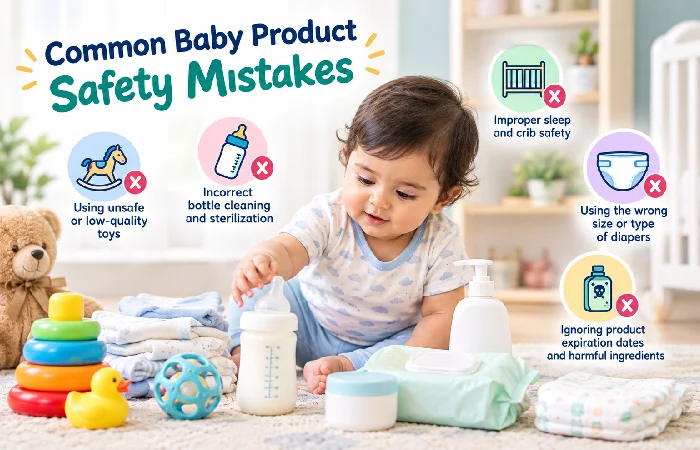
No matter how attentive parents are, they can miss important points. Watch out for these common mistakes.
1. Disregarding age and weight limitations.
Even if your baby has reached the stated age for the product, it may still appear to be appropriate. Always adhere to manufacturer’s age, weight and developmental limitations.
2. Using Damaged Products
Cracks, loose parts, broken straps, or broken/in damaged fabric may cause a product to function incorrectly. Cease use of products that are no longer safe to use.
3. Skipping the Instructions
You may install a product incorrectly if you don’t read the instructions or use it in a manner that is not safe.
4. Modifying Baby Products
Any home made cushions, attachments, straps etc. that add to products and which alter the mode of operation will affect the way the product works and can create new hazards.
5. Forgetting About Recalls
Recalls can occur after the product has been sold. Part of normal baby safety practice should be to make recall checks.
6. Commandment is “Buy secondhand without even looking.”
Secondhand products may be beneficial, but parents should inspect these products, their instructions, safety information and recall status before using.
7. Using One Product for Multiple Purposes
Baby products should not be used for more than one application. Follow instructions and use as intended.
8. Not Checking Products as Baby Grows
What might be good for a baby who can’t sit, crawl, stand or climb, may not suit a child who can.
When to Stop Using a Product
Parents should discontinue using a baby product when it is damaged, past its age, missing parts, or is not the right product for the development of the baby.
Discontinue use and consult manufacturer’s instructions if you observe:
- Cracks or damaged parts.
- Loose or missing hardware.
- Damaged straps
- Broken buckles
- Any edges or sharp points that might be exposed or sharp.
- Torn fabric
- Unstable frames
- Missing safety components
- A product recall
- When usage limit is expired/exceeded
Never use a product because it is safe for your baby in the past.
If a product has been recalled, comply with the official recall instructions before determining a product’s suitability for repair or reuse.
If you’re not certain about the condition or safety of an important baby product, reach out to the manufacturer or consult your child’s health care provider, as appropriate.
Final Takeaway
Baby product safety begins before you purchase the product and remains in the user’s hands. Select age and development appropriate products, read the labels, adhere to weight and age restrictions, and inspect products frequently for damage.
The U.S. Consumer Product Safety Commission recall database is another useful resource to keep you updated on recalled products for families in the USA.
Most importantly, never alter baby products and don’t use them for purposes they were not intended for. As you baby grows, check the products used and put away anything that is damaged, recalled or no longer suitable.
Dr. Khizrana Begum is a qualified medical professional with MBBS and MD qualifications and 5+ years of experience in the medical field. She works as a General Physician and Dermatologist, with knowledge spanning general medicine, dermatology, preventive healthcare and skin health.
As a medical reviewer, Dr. Khizrana Begum reviews health and wellness content for medical accuracy, clarity and authenticity.
Sameena Begum reviews content for clarity, accuracy and reader usefulness. Her review process helps ensure that published information is clearly presented, relevant and easy for readers to understand.
Syeda Yasmeen is a Health & Wellness Writer at InHumanBeing.com. She creates clear and reader-focused content across health, nutrition, wellness, women’s health, men’s health and babies’ health.