
 Syeda Yasmeen
Health & Wellness Writer Syeda Yasmeen creates clear and
reader-focused content covering health,
nutrition, wellness, women’s health,
men’s health and babies’ health.
Read Full Bio of Author →
Syeda Yasmeen
Health & Wellness Writer Syeda Yasmeen creates clear and
reader-focused content covering health,
nutrition, wellness, women’s health,
men’s health and babies’ health.
Read Full Bio of Author →
 Sameena Begum
Health, Technology & Digital Content Reviewer Sameena Begum reviews selected content
for clarity, factual presentation,
consistency and reader usefulness.
Read Full Bio of Reviewer →
Sameena Begum
Health, Technology & Digital Content Reviewer Sameena Begum reviews selected content
for clarity, factual presentation,
consistency and reader usefulness.
Read Full Bio of Reviewer →
 Dr. Khizrana Begum
General Physician and Dermatologist Dr. Khizrana Begum is a qualified medical
professional with MBBS and MD qualifications
and 5+ years of experience. She reviews health
and wellness content for medical accuracy,
clarity and responsible presentation.
Read Full Bio of Medical Reviewer →
Dr. Khizrana Begum
General Physician and Dermatologist Dr. Khizrana Begum is a qualified medical
professional with MBBS and MD qualifications
and 5+ years of experience. She reviews health
and wellness content for medical accuracy,
clarity and responsible presentation.
Read Full Bio of Medical Reviewer →
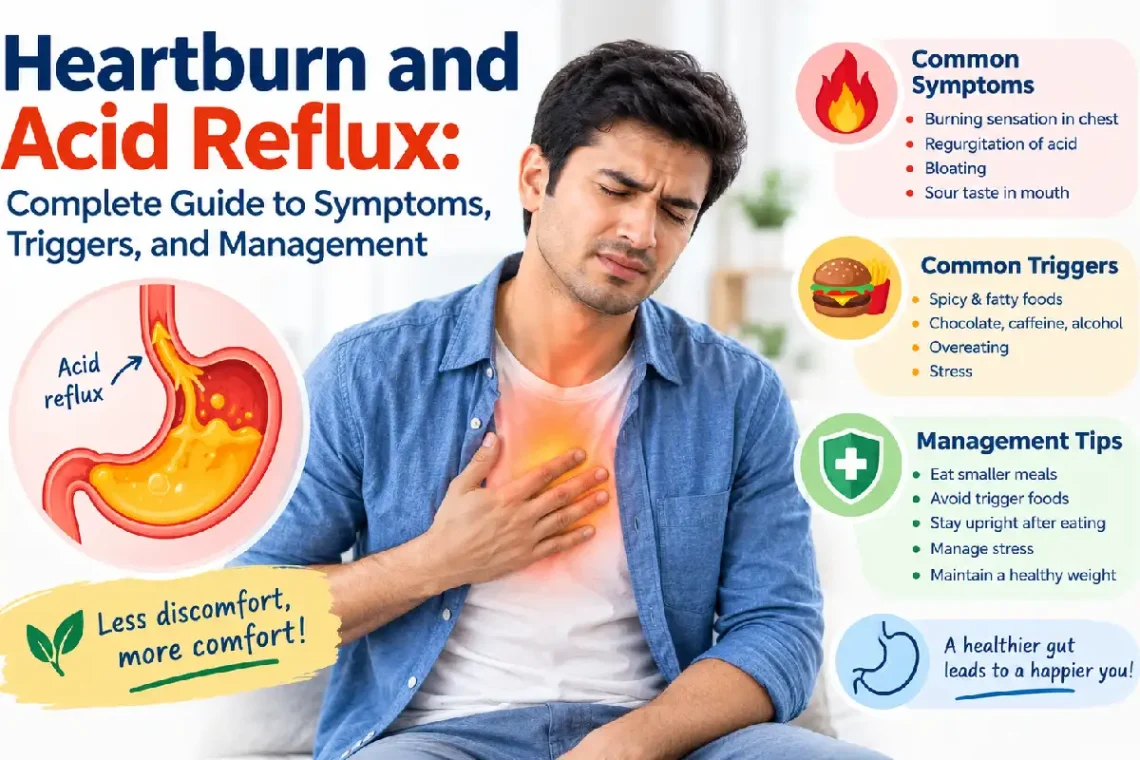
The experience of heartburn and acid reflux is quite usual and can appear as pain in the chest area, acidity of the mouth, and even after eating meals. Although there are many similarities between these diseases, they are not the same since acid reflux is a condition, while heartburn is a symptom of this disease.
However, acid reflux occurs very frequently, especially after large meals or acid reflux inducing foods. Nonetheless, one should take into consideration that the aforementioned symptoms can be signs of some other conditions like GERD.
❝
This article is part of
Digestive Health Hub
What Is Heartburn?
Heartburn refers to an uncomfortable burning sensation which mostly occurs behind the breastbone. Heartburn is not a disease of the heart despite being given this name.
Mostly, heartburn is caused by the movement of stomach contents containing acid into the esophagus and irritating its walls.
Symptoms of heartburn include:
- Symptom that occurs after food consumption
- Symptom that becomes worse when one lies down
- Symptom that worsens when bending
- Burning sensation that comes up from the upper stomach region towards the chest and throat
- Sour or bitter taste
While heartburn can occur occasionally, frequent occurrence should be reported to your doctor.
Chest pain should never be attributed to heartburn without further examination by a doctor because there are many causes of chest pain.
What Is Acid Reflux?
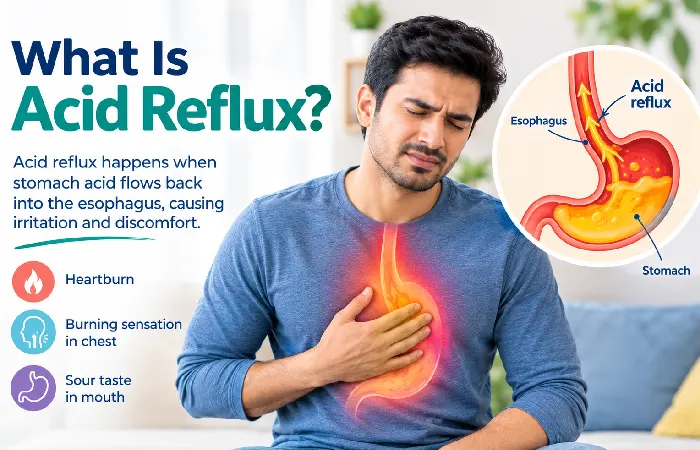
Gastroesophageal reflux happens when stomach contents go up the esophagus.
The lower esophageal sphincter serves to keep the stomach contents from going up. However, if this valve relaxes abnormally or fails to work properly, reflux can happen.
While acid reflux can lead to heartburn, not everyone who experiences the condition will feel a burning sensation in their chest.
Some of the symptoms may be:
- Sour taste in the mouth
- Refluxing of food and liquid back up into the esophagus
- Burning feeling in the chest
- Throat inflammation
- Hoarseness
- Ongoing cough
Difficulty swallowing due to feeling of lump in the throat
Frequent and disturbing gastroesophageal reflux is called GERD.
Common Symptoms
Symptoms vary from person to person.
| Symptom | Description |
| Heartburn | Burning sensation behind the breastbone |
| Regurgitation | Stomach contents moving toward the mouth |
| Sour taste | Acidic or bitter taste in the mouth |
| Chest discomfort | Discomfort associated with reflux |
| Throat irritation | Burning or irritation in the throat |
| Chronic cough | Cough that may be associated with reflux |
| Hoarseness | Changes in the voice, particularly in some people with reflux |
Symptoms can be occasional or frequent. Keeping track of when symptoms occur may help identify patterns.
Common Triggers
Triggers may vary from one person to another. Food, drinks, food quantity, body posture, and personal lifestyle can all impact the onset of GERD symptoms.
Foods that people usually report as triggers are:
- Large portions of food
- Greasy and fatty foods
- Spicy foods
- Chocolate
- Coffee or any other drinks containing caffeine
- Alcohol
- Carbonated drinks
- Some acidic foods
- Consumption of foods just before sleeping
Different people react differently to different foods. It is not practical to cut down too many foods from the diet.
Food and Acid Reflux
Although food can be one of the factors that trigger GERD, there is no specific GERD diet.
Some may develop reflux symptoms after eating fat-rich meals since such food may slow down the process of digestion. Others may feel GERD symptoms after consuming spices, chocolate, coffee, alcohol, or acidic food.
One of the solutions is to look at personal experience.
| Food or Beverage | Possible Effect in Some People |
| High-fat meals | May worsen reflux symptoms |
| Spicy foods | May increase burning or discomfort |
| Coffee | May trigger symptoms in some individuals |
| Chocolate | May worsen reflux for some people |
| Alcohol | Can contribute to reflux symptoms |
| Carbonated beverages | May increase belching or discomfort |
| Acidic foods | May aggravate symptoms in some people |
It does not mean that one has to refrain from everything listed above. It would only be reasonable to limit or refrain from those foods which cause symptoms.
Meal Time and Reflux
The timing of the meal may matter a great deal, particularly for those experiencing nighttime reflux.
Eating a heavy meal before sleeping may cause the development of nighttime reflux in some patients.
The following should be done:
Eat small meals instead of large ones which cause symptoms
Do not lie down straight after a meal
Leave enough time between dinner and bedtime
Refrain from your trigger foods before dinner
In case you have nighttime symptoms, it will be helpful to consult with a healthcare provider.
There are patients who need to change the time or volume of their dinner rather than giving up many foods.
Weight and Acid Reflux
Sometimes body weight may be one of the factors that cause heartburn in certain individuals. Increased pressure in the abdomen may help in bringing about stomach contents up into the esophagus.
In overweight or obese individuals, weight loss in a gradual manner will help in alleviating reflux symptoms.
The method of weight loss should not be through starving but should be by having a healthy diet and exercise.
But not all individuals suffering from acid reflux disease are overweight, hence weight loss may not be recommended for all.
Lifestyle Habits That May Help
Lifestyle modification is effective for some people in reducing their symptoms.
Have Appropriate Portion Sizes
Large meals might create higher pressure in the stomach. Smaller portions might suit better people experiencing symptoms due to having large meals.
Recognize Food Intolerances
Document your meals and symptoms in order to recognize any food or drinks causing you problems on a regular basis.
Don’t Lie Down After Meals
Being in an upright position after meals will limit the chances of stomach contents moving up.
Raising the Upper Part of the Body During Sleep
If you have symptoms at night, elevating the upper part of the body can be helpful. However, this approach should provide stable support, and not just involve putting extra pillows that bend your body at the waist level.
Quit Smoking
Smoking affects the protective reflexes of the body from reflux. Quitting smoking is a way of improving your health in many aspects.
Achieve a Healthy Body Weight If Appropriate
In case of overweight or obesity, gradual weight loss can improve the reflux symptoms.
Medication Review
Certain drugs may exacerbate heartburn or induce symptoms that mimic indigestion. Do not discontinue medications on your own, but consult a doctor regarding their side effects.
When Heartburn Needs Medical Attention
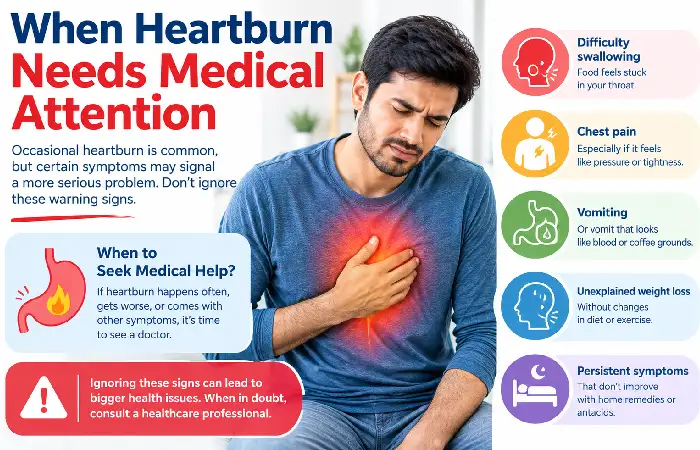
Heartburn now and then is generally not a medical emergency; however, repeated and persistent symptoms require further medical intervention.
Consult your healthcare provider if you:
- Experience heartburn frequently
- Take heartburn medication on a regular basis
- Must take over-the-counter heartburn drugs
- Suffer from symptoms that affect your sleep
- Find difficulty swallowing persistently
- Suffer from painful swallowing
- Experience vomiting persistently
- Suffer from weight loss without any cause
- Experience symptoms of gastrointestinal bleeding
Severe or unexpected chest pain requires immediate medical attention, especially when experienced with symptoms such as shortness of breath, sweating, dizziness, nausea, or pain that spreads to the arm, jaw, back, and shoulder. There are times when heart problems can mimic heartburn.
Treatment Options to Discuss With a Healthcare Professional
The treatment is dependent on the cause, severity, frequency, and personal circumstances.
Treatment options are lifestyle changes and drugs.
Antacids
These drugs can give quick relief as they neutralize the stomach acids. They are meant to be used in cases of symptoms once in a while, but not for continuous or persistent symptoms of reflux.
H2-Blockers
Drugs that block the H2 receptors and decrease stomach acid production can offer longer-lasting relief than antacids.
Proton Pump Inhibitors
These drugs reduce stomach acid production more significantly and are usually prescribed to people with some forms of reflux.
The drug and the time will depend on personal circumstances.
Prescribed Drugs
People suffering from constant or complicated symptoms may need prescriptions or further examination.
Do not assume that continuous treatment of yourself is right. Persistent symptoms, especially if there are warning signs, should be discussed with your doctor.
Frequently Asked Questions About Heartburn and Acid Reflux
What is the difference between heartburn and acid reflux?
Heartburn is a symptom that is typically experienced as a burning sensation in the chest area. Acid reflux is defined as the movement of contents from the stomach back into the esophagus.
Does heartburn always indicate acid reflux?
Though reflux is often the cause of heartburn, chest pains can occur for various reasons. New or worsening chest pains cannot simply be diagnosed as being due to reflux.
Which foods may induce acid reflux?
Food items such as high-fat or large meals, spicy foods, coffee, chocolate, alcohol, carbonated drinks, and acidic foods might act as potential triggers. It is important to note that individual reactions differ.
Does eating late at night cause reflux?
Consuming a large meal just prior to lying down may worsen the symptoms of reflux in certain individuals. Waiting after eating dinner before going to bed could help with the problem.
Will losing weight relieve acid reflux?
If you have been classified as overweight or obese, gradual weight loss could help with relieving the symptoms of your condition. However, weight loss is not applicable or necessary to all patients.
Final Thoughts
Heartburn and acid reflux are two conditions that are quite common among digestive system complaints; however, recurring symptoms must not be overlooked. Personal trigger avoidance, mealtime management, staying upright after eating, and maintaining proper body weight are some of the things that can aid in managing heartburn and acid reflux symptoms.
If you experience acid reflux on a regular basis or are taking medicine for it frequently, it may be necessary to consult a health care provider to identify the root cause of the problem. Any severe or unexplained chest pain must not be disregarded as heartburn.
This article is meant for educational purposes only.
Dr. Khizrana Begum
Dr. Khizrana Begum is a qualified medical professional with MBBS and MD qualifications and 5+ years of experience in the medical field. She works as a General Physician and Dermatologist, with knowledge spanning general medicine, dermatology, preventive healthcare and skin health.
As a medical reviewer, Dr. Khizrana Begum reviews health and wellness content for medical accuracy, clarity and authenticity.
Sameena Begum
Sameena Begum reviews content for clarity, accuracy and reader usefulness. Her review process helps ensure that published information is clearly presented, relevant and easy for readers to understand.
Syeda Yasmeen
Syeda Yasmeen is a Health & Wellness Writer at InHumanBeing.com. She creates clear and reader-focused content across health, nutrition, wellness, women’s health, men’s health and babies’ health.