
Last Updated: September 18, 2026
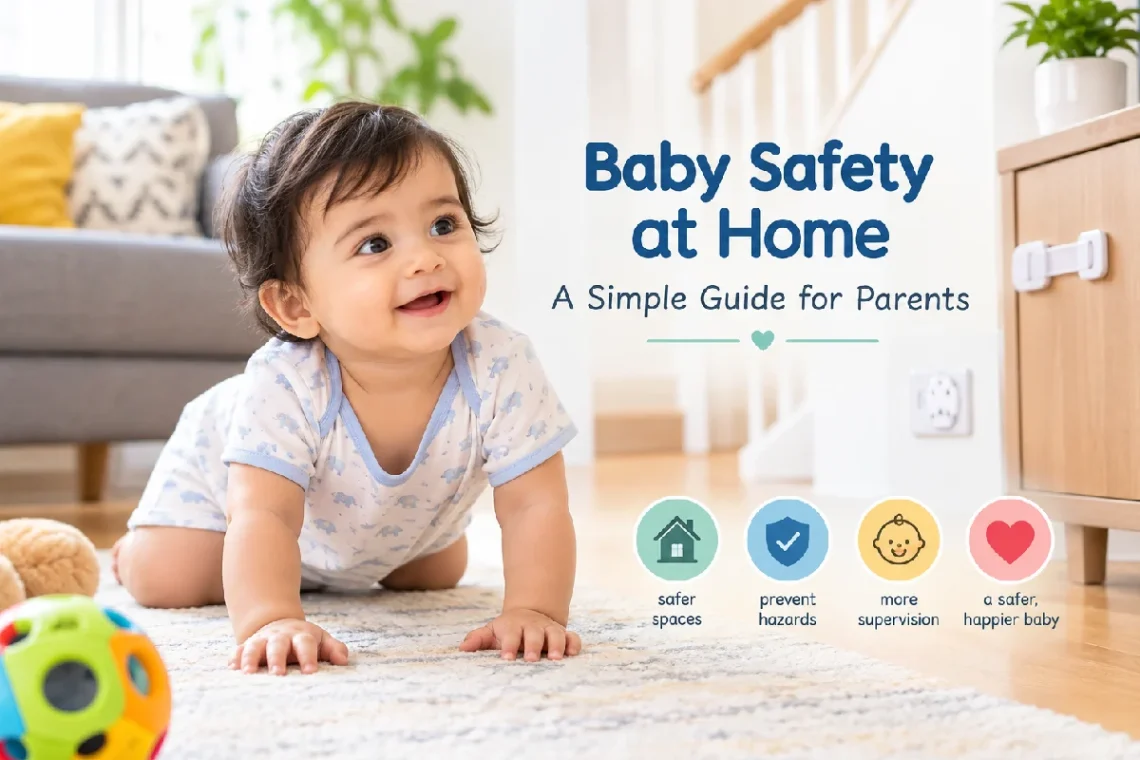
The first rule of keeping a baby safe at home is to know what common dangers exist. How to avoid them. Babies grow and become mobile in a blink of an eye and a home that is safe right now could need a new safety method in a few months.
Baby safety at home includes making sleeping areas, securing furniture, keeping medicines and cleaning products away from babies, preventing falls and burns, and emerging safe play areas for babies to crawl and play.
It’s not essential to overhaul your home at once. Initially look at the areas that your baby uses most and then revisit safety as your baby learns new skills like rolling, crawling, pulling up and walking.
When in doubt, consult your child’s physician and trusted child-safety organizations for advice.
Why Is Home Safety Important for Babies?

When babies touch, grab, crawl and put things in their mouths, they are learning to discover their environment. They also are unable to sense hazards like hot surfaces, stairs, electric outlets or small objects.
Falls, burns, choking, unsafe sleep environment, poisoning, and drowning are examples of common household injuries. Many of the dangers can be mitigated by modifying the home setting prior to an incident.
Regularly view your home through your baby’s eyes, as your baby becomes more mobile. While on the floor, look around to see what your baby can reach, pull and open, or put in his or her mouth.
Some basic precautions are:
- Avoid babies from coming into interaction with small objects.
- Tie down heavy furniture to the wall.
- Lock up medicines and chemicals
- Install safety gates as needed.
- Avoid hot drinks and surfaces for cooking being within easy reach.
- Cover or secure accessible electrical outlets
- Ensure that cords and blind strings are kept out of the way
- Keep Baby’s sleep area safe
- Keep babies out of water, always have someone with them.
How to Prepare Your Home for a Baby
Baby-proofing is most effective when you baby proof before your little one starts crawling! Look for hazards in each room while walking around.
Begin with the places your baby sleeps, plays, feeds and spends the majority of his or her time.
A simple home safety check
| Area | What to Check |
| Floors | Remove small objects and choking hazards |
| Furniture | Secure unstable or heavy furniture |
| Windows | Use appropriate window safety measures |
| Electrical | Secure accessible outlets and cords |
| Cabinets | Lock cabinets containing dangerous items |
| Stairs | Use suitable safety gates |
| Kitchen | Keep hot items and sharp objects away |
| Bathroom | Never leave baby unattended around water |
| Nursery | Keep the sleep area clear and safe |
Keep in mind baby-proofing is a continual process. A crawling baby will be able to get to places that a standing or walking baby cannot get to.
Living Room Safety Basics
When exploring your living room, it might be one of your baby’s primary play spaces, so do a safety check.
Tie heavy furniture and TVs down to prevent movement. Keep small objects, toys, remote controls, batteries and coins out of your baby’s reach.
Electrical cords should be out of your baby’s reach to pull or chew.
Watch for:
- Unstable furniture
- Sharp furniture corners
- Small decorative objects
- Loose cords
- Accessible electrical outlets
- Batteries
- Hot drinks
- Floor-level choking hazards
- Unsecured televisions
Never leave your baby alone on a sofa, chair or other high object. Babies can roll or move unpredictably.
Design a play space for children at floor level with age-appropriate toys free of small removable parts.
Kitchen Safety Basics
There are a number of hazards in the kitchen for young children to be aware of, such as hot liquids, sharp objects, cleaning products, appliances and cooking surfaces.
Lock knives and scissors, or put them out of reach, and keep glass objects, cleaning supplies and other dangerous objects out of reach of your baby.
Use back burners if available when cooking and turn handles of pots away from edge of stove.
If carrying a baby poses a risk of burn while handling hot food/drink, don’t do it. Place hot drinks out of reach of baby at tables or counters.
The following are other kitchen safety precautions:
- Keep appliance cords out of reach
- Keep cleaning supplies out of reach of children.
- Do not allow children to play with plastic bags.
- Secure drawers with sharp items in them
- Separate hot food and drinks from edges
- Keep small items out of the reach of children.
- Ensure there is no mud or water on the floor.
As your baby grows, keep in mind that something that can’t reach them now might soon be able to reach them.
Bedroom and Nursery Safety
The nursery should have a safe sleeping, changing and dressing area.
Sleep position: Lay your baby back on a firm flat infant sleep surface. Keep pillows, loose blankets, stuffed toys, and other soft objects out of the baby’s sleep area.
The crib or bassinet must be set up as per the manufacturer’s guidelines and used as per the latest safety guidelines.
Steer clear of cords, monitor cables, curtain strings and other hanging objects within the baby’s reach.
Another area that needs to be looked at is a changing area. Have diapers and supplies within easy reach but don’t leave your baby unattended on the changing table.
If you must leave, carry your baby or put him safely where he won’t be in your way.
Bathroom Safety Basics
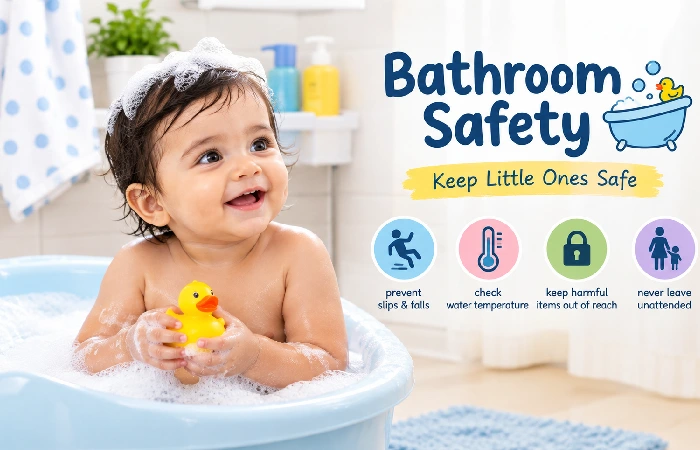
Bathrooms are places where there is water, slippery surfaces, hot water, medicines, cosmetics and cleaning products and supervision is particularly important.
Avoid being alone with a child around water. A small quantity of water can present a danger of drowning.
Bathe your baby while he is in your arms, and have everything ready before bathing him.
Some ways to make the bathrooms safe include:
- Test the temperature of water before putting baby in the bath!
- Have medicines locked up.
- Keep cleaning products in a safe place
- Keep electrical appliances away from water.
- Provide adequate anti-slip precautions
- Do not store razors and sharp objects off the reach of children.
- Take out water bottles after use
- Never leave baby unattended in the bathtub.
- Avoid bath seats, or other devices, to be used as a substitute for active supervision.
- To ensure the safety of stairs and hallways.To make stairs and hallways safe.
Stairway and Hallway Safety
Once your baby begins crawling and walking, stairs can pose a serious fall risk.
Install safely and use safety gates as necessary and appropriate for the age and location of your child.
Do not position furniture close to stairs, windows or other places that are conducive to climbing for the child.
Avoid placing items in hallways such as:
- Loose rugs
- Toys
- Bags
- Shoes
- Electrical cords
- Other objects which may cause trips or falls.
When your child gets more active, make it a habit to see if they can reach door knobs, locks, windows or other areas that they couldn’t access before.
Common Household Hazards to Consider
Certain hazards can be overlooked as being small or part of daily life.
Small Objects and Choking Hazards
Small parts and button batteries, when swallowed, may cause problems. Avoid letting items within baby’s reach that may be swallowed or choke on.
Medicines
Keep medicines safely, away from view. Never place medicine on a table or countertop next to a baby, or in a baby’s bag.
Cleaning Products
Household chemicals, laundry products, cleaners, disinfectants and others should be kept safely and as per their instructions.
Furniture Tip-Overs
Heavy furniture and TVs should be properly anchored to minimize the risk of tipping over.
Cords and Strings
Avoid electrical cords, blind cords or other strings being in the way.
Hot Objects
Burns can occur from hot drinks, hot food, hot surfaces or heated appliances. Keep out of your baby’s reach.
Water
Buckets, bathtubs, toilets, pools and other sources of water should be supervised at all times and have the proper safety measures in place.
Windows
Ensure windows are kept at the correct height and furniture does not offer a means of climbing onto the windows.
The process of baby proofing isn’t a single task, but rather a continuous project. Check your home over when your baby is at a new developmental level.
For evidence-based guidance on baby safety at home, parents can refer to the American Academy of Pediatrics (AAP). Its HealthyChildren.org guidance covers common household hazards, including furniture tip-overs, electrical outlets, window safety, small objects, cords, burns, and other risks.
Creating a Baby Safety Checklist
Parents can find it easier to keep in mind areas that are easy to forget on a checklist that they have in writing.
Safety Check Done?
The sleep space for the crib or infant is safe ☐
Heavy furniture is secured ☐
Small objects are not within reach ☐
Medicines are securely stored ☐
Cleaning products are secured ☐
Electrical cords can’t be reached ☐
Stairs have appropriate safety measures ☐
Windows are suitably secured ☐
Kitchen hazards are under control ☐
Bathroom supplies are safely kept ☐
Baby is being supervised around water (baby is supervised around water) ☐
Changing area is secured safely ☐
Hot drinks and foods are stored out of reach ☐
Emergencies can be reached on the phone: ☒
Final Takeaway
The main step to baby safety at home is to make simple changes to reduce common household hazards. Safe furniture, store hazardous things safely, establish a safe sleep environment, supervise babies around water and remove small objects that can cause choking.
Most important is the active supervision coupled with an environment that is geared towards what your baby is currently able to do.
Check each room again as your baby develops, and make changes to safety precautions as needed. Some simple safety monitoring can help make your house a safer environment for your developing child.