
Last Updated: September 21, 2026
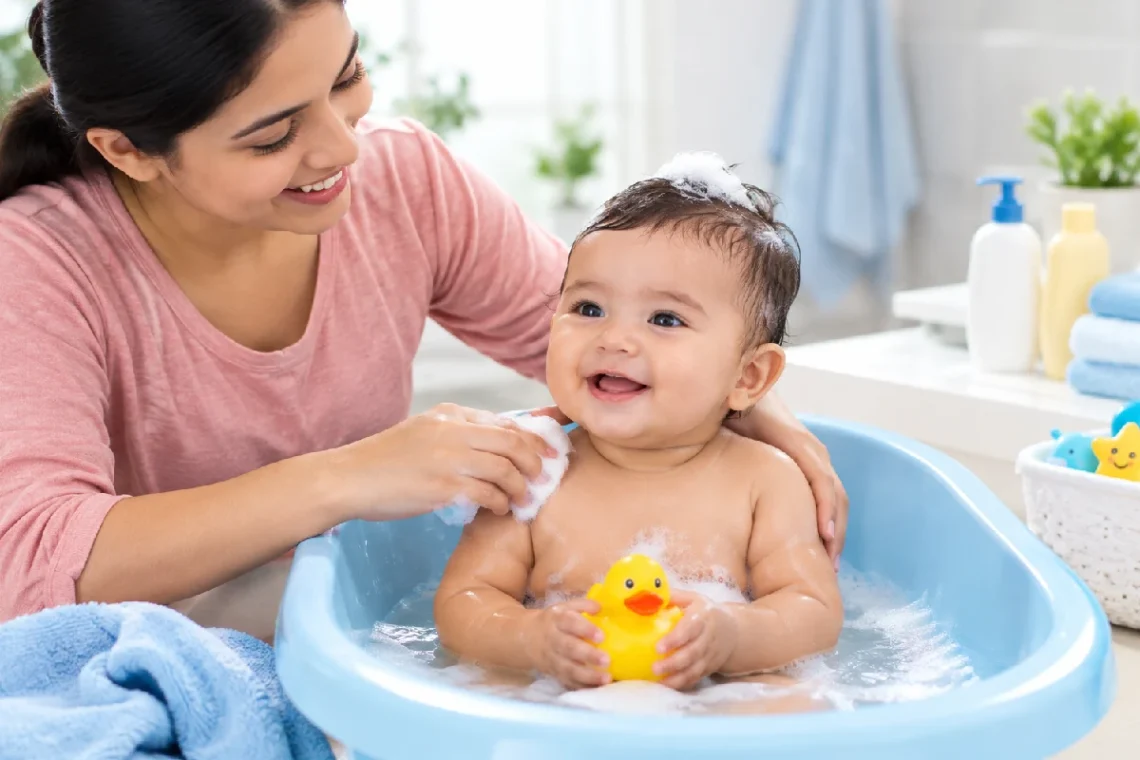
Bath time can be a calming activity for a baby but water can also pose serious safety concerns. Virtually any amount of water can be dangerous for babies to drink, so always put baby bath safety first.
The No 1 Rule is: Do not leave a baby unattended, even for a few seconds, in or around water. Be prepared before placing baby in the bath and be able to reach them at all times during baths.
Other components of a safe bath routine are to check the water temperature, select appropriate bath products, maintain the bathroom, and ensure safe drying and dressing after the bath.
Why is Baby Bath Safety important?

Babies are unable to look after themselves in the water. They may slip or drown, or struggle to hold their head up.
Bath seats and other bath products are a substitute for adult supervision. During the bath, a caregiver is required to stay close and attentive.
Common bath-time risks include:
| Risk | How to Reduce It |
| Drowning | Stay within arm’s reach of your baby |
| Slips | Support your baby and use an appropriate bathing surface |
| Hot water | Check the water temperature before bathing |
| Falls | Keep supplies nearby and avoid leaving the baby unattended |
| Unsafe products | Choose age-appropriate bath products |
| Burns | Keep hot water sources away from the bath area |
Baby bath safety also continues after the bath. A wet baby can be slippery, so use both hands when lifting and carrying your baby.
Preparing the Bath Area
Before starting the bath, check the bathroom and bathing area. The space should be comfortable, neat, and free from obvious hazards.
Keep electrical devices away from water. Hair dryers, electric grooming tools, chargers, and other electrical equipment should not be used or left where they could fall into the bath.
Place the baby’s bath supplies within easy reach of the adult but away from the baby’s reach.
Bath Area Checklist
| Item | Safety Consideration |
| Baby bathtub | Use according to the manufacturer’s instructions |
| Towels | Keep ready before the bath |
| Soap | Choose a gentle, age-appropriate product |
| Washcloth | Keep within adult reach |
| Diaper and clothes | Prepare before starting |
| Water | Check temperature before placing baby in |
| Electrical items | Keep away from water |
| Floor | Keep the surrounding area as dry as practical |
Never leave your baby alone to collect a towel, soap, diaper, or another item.
Choosing Safe Bath Products
There are many baby bath products available, including tubs, bath seats, soaps, shampoos, washcloths, and temperature indicators.
Choose products that are appropriate for your baby’s age and follow the manufacturer’s instructions.
A baby bath seat should never be treated as a safety device that allows a caregiver to leave the baby alone. Babies can slip or move unexpectedly.
When choosing soaps and shampoos, look for products intended for babies and avoid using unnecessary products. Newborn skin can be sensitive, so simple routines are often easier to manage.
- Helpful Bath Products
- Appropriate baby bathtub
- Soft washcloth
- Gentle baby cleanser
- Baby shampoo, when needed
- Clean towel
- Clean diaper
- Fresh clothes
Keep product containers closed when not in use and store them safely after bath time.
Preparing Everything Before Bath Time
One of the easiest ways to improve baby bath safety is to prepare everything before your baby enters the water.
Gather the towel, washcloth, cleanser, diaper, clothes, and anything else you expect to need.
Check the bathing area before starting. Once the baby is in the water, do not walk away to get something you forgot.
If you realize that an item is missing, safely remove your baby from the water before getting it.
Quick Preparation Checklist
When preparing your baby for the bath:
- Prepare the towel.
- Keep clean clothes to hand.
- Have a clean diaper on hand.
- Have bath products within reach.
- Check the water temperature.
- Clear the bathing area of extraneous objects.
- Make sure your phone and other distractions are put aside.
- Make sure to have another responsible adult available if you need assistance.
- Preparing less time for moving away from your baby during bath time.
Creating a Safe Bath Routine
Bath time can be easier for both parents and babies if they have a consistent bath routine.
Firstly organise the room and materials. Test water temperature before introducing baby to the tub. Hold your baby securely and gently wash his body.
Avoid direct flow of water to baby’s head and face. Avoid leaving your baby without supervision.
Don’t have to be a long bath. For regular cleaning, a short, calm bath might be sufficient.
Simple Bath Routine
| Step | What to Do |
| 1 | Prepare all supplies |
| 2 | Check the bathing area |
| 3 | Check the water temperature |
| 4 | Place baby safely in the bath |
| 5 | Keep one hand supporting the baby as needed |
| 6 | Gently wash the baby |
| 7 | Remove baby safely when finished |
| 8 | Dry, dress, and keep baby warm |
The routine should always prioritize supervision over convenience.
Water Temperature and Comfort Considerations
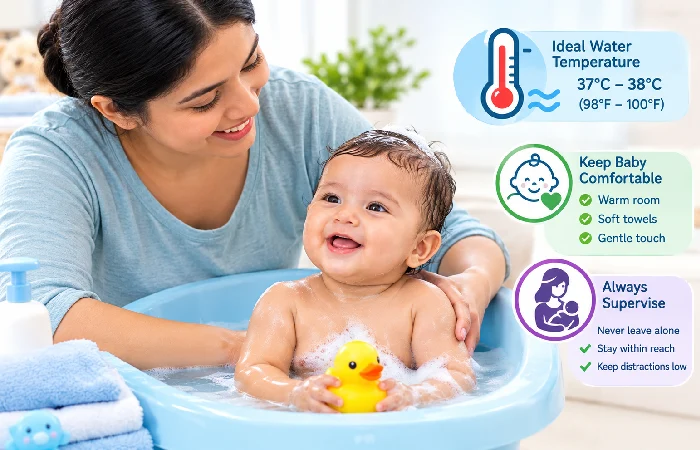
The temperature of the water may be too warm and burn an infant’s skin. Before getting your baby in the bath water check the temperature with your wrist or elbow and ensure that it is not too hot.
To help reduce the risk of scald burns, the American Academy of Pediatrics suggests that the thermostat on the home water heater be set to 120°F or less. Prior to placing the baby in the bath, parents should also test the water.
Do not add more hot water while your baby is in the bath. If the water needs to be adjusted, baby should be taken off first and then the water adjusted.
Water Safety Basics
| Consideration | Safer Approach |
| Water temperature | Check before placing baby in the bath |
| Hot tap water | Keep household water heater temperature appropriately controlled |
| Water depth | Use only the amount needed for the baby’s bath |
| Water flow | Keep baby away from direct hot water |
| Bath comfort | Use comfortably warm water |
| Temperature changes | Never add hot water while baby is in the tub |
A baby’s skin is more sensitive than an adult’s, so what feels comfortable to an adult may still be too hot for a baby.
Bath Time Supervision
Active supervision is the most important part of baby bath safety.
Stay within arm’s reach of your baby for the entire bath. Keep your attention on your baby rather than your phone, television, conversations, or other activities.
Never leave a baby alone in the bathtub, even if you believe the baby is safe for a moment.
Do not rely on:
- Bath seats
- Bath rings
- Bath mats
- Floating toys
- Older siblings
- Smart devices or monitors
These items do not replace direct adult supervision.
A baby’s skin is more sensitive than that of an adult and what may be comfortable for an adult does not necessarily need to be too hot for the baby.
After-Bath Safety
Babies’ skin and bodies may be slippery right after taking a bath. Pick up baby gently with both hands and maintain secure grip.
Prepare a towel before placing your baby in the bath or wading pool in case you need to wrap your baby up quickly.
Dry baby’s skin carefully, taking care with places where moisture might gather, such as skin folds.
When trimmed, place in a clean diaper and comfortable clothes. Maintain a warm temperature in the baby’s surroundings, but not too hot.
After-Bath Checklist
- Slowly lift up the baby.
- Cover the baby with a clean towel.
- Damp dry skin.
- Dry the folds of the skin with care.
- Change into a clean diaper.
- Keep the baby dressed in a comfortable manner.
- Drain the bathtub once the baby is out of the bathtub.
- Keep bath items in a safe place.
- Make sure the bathroom floor is, as dry as possible.
Keep in mind that the bathtime area can still be a danger after the baby has left the bath! Containers and standing water should not be left where a child can get to them.
Common Baby Bath Safety Mistakes
Baby Left to Himself
This is one of the worst mistakes you can make during bath time. Never leave a baby unattended around water.
Getting Supplies After the Bath Starts
Lack of a towel or diaper can lead to a parent being tempted to take a break. Get everything set up before setting baby in water.
Seat on Bath Seat
Bath seats are not a substitute for drowning prevention. There is still a need for close supervision.
Water that is too hot to use
Before putting baby in bathtub, check water temperature.
Looking Away for “Just a Second”
It’s easy for a baby to slip or take on water in no time at all. Pay attention to baby during bath time.
Allowing water to remain in the bathtub.
Remove water from the tub right after bath time and avoid storing standing water around children.
Plugging in items near water
Electric appliances and water can be a hazard. Ensure that electrical equipment is kept out of the bathing area.
Bath Time too complicated
A cluttered and distracting array of products and accessories can occur. Keep the routine simple and make sure it is a safe supervision.
Final Takeaway
Being prepared for the bath, not over heating or under heating the water, using the correct products for the bath and watching the baby are key factors in baby bath safety. Prep all items before bath begins and hold baby in arms throughout bath.
Never use a bath seat, toys or other products to supervise your child. Drain, lift, dry, dress and remove after baths; taking out standing water.
You can have a fun, safe bath time for your baby if you have a consistent bath time routine.