
 Syeda Yasmeen
Health & Wellness Writer Syeda Yasmeen creates clear and
reader-focused content covering health,
nutrition, wellness, women’s health,
men’s health and babies’ health.
Read Full Bio of Author →
Syeda Yasmeen
Health & Wellness Writer Syeda Yasmeen creates clear and
reader-focused content covering health,
nutrition, wellness, women’s health,
men’s health and babies’ health.
Read Full Bio of Author →
 Sameena Begum
Health, Technology & Digital Content Reviewer Sameena Begum reviews selected content
for clarity, factual presentation,
consistency and reader usefulness.
Read Full Bio of Reviewer →
Sameena Begum
Health, Technology & Digital Content Reviewer Sameena Begum reviews selected content
for clarity, factual presentation,
consistency and reader usefulness.
Read Full Bio of Reviewer →
 Dr. Khizrana Begum
General Physician and Dermatologist Dr. Khizrana Begum is a qualified medical
professional with MBBS and MD qualifications
and 5+ years of experience. She reviews health
and wellness content for medical accuracy,
clarity and responsible presentation.
Read Full Bio of Medical Reviewer →
Dr. Khizrana Begum
General Physician and Dermatologist Dr. Khizrana Begum is a qualified medical
professional with MBBS and MD qualifications
and 5+ years of experience. She reviews health
and wellness content for medical accuracy,
clarity and responsible presentation.
Read Full Bio of Medical Reviewer →
The gut microbiome is a community of microorganisms that lives throughout the digestive tract, with a particularly large and diverse population in the large intestine. These microorganisms include bacteria and other microbes that interact with food, the intestinal environment, and one another.
The gut microbiome is an active part of the digestive system. Certain microorganisms help break down components of food that the human digestive system cannot fully digest, including some types of dietary fiber. The substances produced through these interactions can influence the intestinal environment.
Gut health is influenced by many factors, including diet, physical activity, sleep, stress, medications, and overall health. Supporting the gut microbiome does not require a complicated diet or expensive supplements. Consistent healthy habits and a varied diet can provide a supportive environment for beneficial microorganisms.
❝
This article is part of
Digestive Health Hub
What Is the Gut Microbiome?
The microbiome of the gut is the name given to the colony of single-cell organisms and their genes in the gut.
This assemblage consists of a multitude of species and strains of bacteria and other microbes. Each individual has their own unique microbiome, which may vary over time.
The large intestine, as one might expect, contains particularly high numbers of microorganisms, as things which are not digested make their way through to this region of the digestive system. For this reason, fibers specifically can be found in the large intestine;
Several factors can influence the microbiome, including:
- Diet
- Age
- Physical activity
- Sleep
- Stress
- Medications
- Illness
- Environment
No one specific microbiome makeup is typically the Gold Standard for every individual. When referring to a healthy gut microbiome, it is more common to describe it as diverse, balanced, and in harmony with the host than it is to have one dominant bacterial species.
How Gut Bacteria Support Digestion
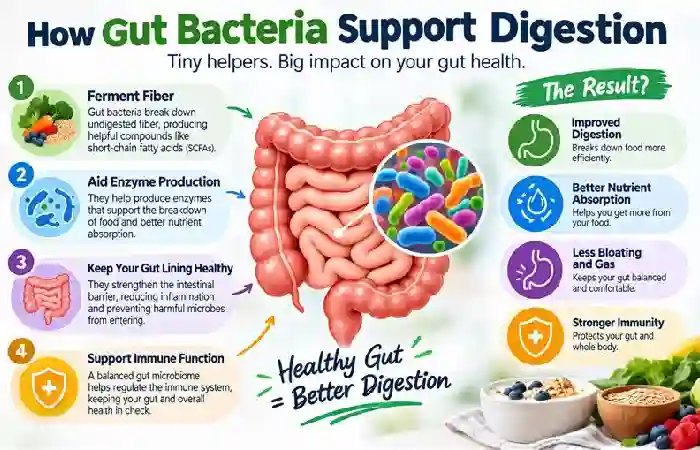
Gut bacteria can help with digestion by acting on things in your food that aren’t digested in your upper gut.
Let’s start with a great example: dietary fiber. Some microorganisms in the gut ferment fibers that make their way to the large intestine and have been shown to break down fibers to form short-chain fatty acids (like acetate, propionate, and butyrate).
These compounds may directly interact with cells in the gut lining, and they can alter the environment of the gut.
Other processes that nutrients and compounds reaching the colon can also be involved with include gut microorganisms.
| Gut Microbiome Activity | Relationship to Digestion |
| Fiber fermentation | Helps process certain undigested carbohydrates |
| Production of metabolites | Creates compounds that interact with the intestinal environment |
| Interaction with intestinal cells | Contributes to normal gut function |
| Microbial competition | Different microorganisms compete for nutrients and space. |
| Interaction with dietary components | Influences how some food compounds are processed |
The microbiome is therefore closely connected with the digestive process rather than being separate from it.
Gut Microbiome and Overall Health
Growing research is demonstrating the microbiome’s influence on multiple facets of human health – but the relationship is complicated, and simply having or not having certain microorganisms does not make a person healthy or unhealthy.
The gut microbiome has a role in the intestinal lining, the immune system, and the breakdown of food components.
Scientists are exploring links between the microbiome and the following areas:
- Immune function
- Metabolism
- Nutrient processing
- Intestinal barrier function
- Inflammation
- Communication between the gut and brain
Most of these are still under study. As such, care must be taken when claiming that a certain food, supplement, or microorganism can prevent or treat a certain condition.
The use of diet and healthy lifestyle to maintain general health provides a practical approach to supporting the gut environment.
Probiotics and Gut Health
Probiotics are defined as live microorganisms that confer a health benefit when administered in the correct dose and conditions.
Some food products contain live microorganisms. These include certain yogurts or other fermented dairy foods. We also stock probiotic supplements, although each product will contain different strains and in various quantities.
Crucially, probiotics are not equal. Benefits shown for one strain or product cannot be assumed to translate to all probiotic foods or supplements.
It is also possible that, depending on the person and the health issue in question, possible benefits may also be a factor.
| Probiotic Source | Important Consideration |
| Yogurt with live cultures | Check the product label for live cultures. |
| Kefir | May contain multiple microorganisms |
| Fermented foods | Microbial content varies by food and processing. |
| Probiotic supplements | Effects depend on specific strains and doses. |
People with certain medical conditions or weakened immune systems should discuss probiotic supplements with a healthcare professional before using them.
Prebiotics and Gut Health
Prebiotics are substances that are selectively utilized by microorganisms in a way that provides a health benefit. Many prebiotic substances are types of dietary fiber or related carbohydrates.
Foods containing prebiotic fibers can include:
- Onions
- Garlic
- Leeks
- Asparagus
- Bananas
- Oats
- Barley
- Legumes
When they arrive in the large intestine, some prebiotic fibers can be used as food by the bacteria living there.
Not all fiber types are equally prebiotic. Another reason to include lots of plant foods in your diet and not just a single source of fiber.
Fiber and Healthy Gut Bacteria
Fiber ranks among the greatest dietary components for the gut microbiome.
The human body can’t fully digest all varieties of dietary fiber. For some quantities of dietary fiber, it makes it to the colon and gets fermented by microorganisms.
Thus, a diet with a diverse range of fiber sources might be capable of feeding more different bacteria.
Useful sources include:
- Fruits
- Vegetables
- Beans
- Lentils
- Chickpeas
- Oats
- Barley
- Nuts
- Seeds
Increasing fiber gradually is important because a sudden increase can cause gas or bloating. Adequate fluid intake can also help when increasing dietary fiber.
Fermented Foods
Fermented foods are produced through the activity of microorganisms. Depending on the food and processing method, fermentation may introduce or preserve live microorganisms.
Examples include:
- Yogurt with live cultures
- Kefir
- Kimchi
- Sauerkraut
- Some fermented vegetables
- Traditionally fermented foods
Probiotic foods may be added to make the diet more diverse and may contain the microorganisms or their products.
But not all fermented foods may be classified as probiotic. A probiotic is required to meet strict regulations, such as a demonstrated health effect, at required levels in order to be classified as probiotic.
Some are further processed after fermentation, making the microbes undergo further changes before the product is sold.
Diet and the Gut Microbiome
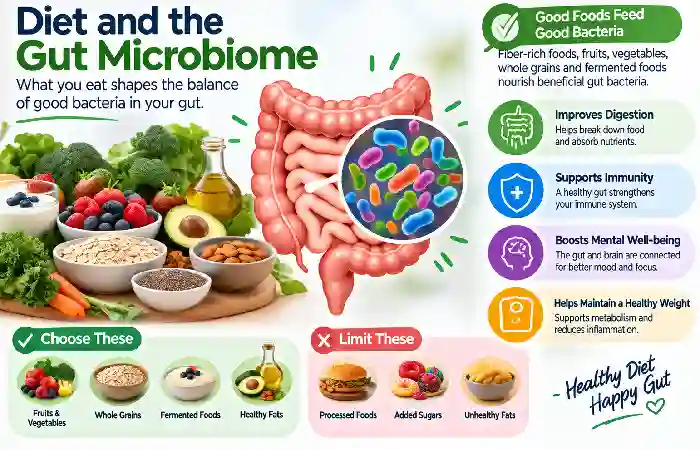
Diet is one of the main contributors to gut microbiota change.
A food pattern high in foods of plant origin offers fiber and other substrates for microorganisms to utilize or interact with. A diverse diet might increase the range of substrates to which the microbiome is exposed.
Foods that can contribute to a microbiome-supportive eating pattern include:
| Food Group | Examples |
| Fruits | Apples, berries, pears, citrus |
| Vegetables | Broccoli, carrots, leafy greens |
| Whole grains | Oats, barley, brown rice |
| Legumes | Lentils, beans, chickpeas |
| Nuts and seeds | Almonds, walnuts, chia seeds |
| Fermented foods | Yogurt, kefir, kimchi |
Instead of eating one “superfood,” try to have a selection all through the week.
While processed foods can be incorporated into a healthy overall diet, a diet that is low in fiber and low in nutritional variety may not be supplying enough of the ingredients needed for a diverse gut.
Lifestyle Factors That Affect Gut Health
Diet is influential, but the rest of the lifestyle also plays a role.
Physical Activity
Physical activity can have many health benefits and can contribute to the composition of the gut microbiome. Physically active individuals can walk, cycle, swim, lift weights, or undertake other activities to keep active.
Sleep
The importance of adequate sleep on health is proven by research. Gut microbiome and sleep seem to have a reciprocal relationship, but their interaction remains complicated.
Stress
The gut and the brain have many pathways of communication. Stress can affect GI function. It may also alter the presentation of symptoms such as abdominal pain or certain bowel pattern changes.
Stress management techniques such as exercise, relaxation, maintaining relationships, and getting enough sleep may enhance health.
Medications
Certain medicines may also have an effect on gut microorganisms. Antibiotics are the most obvious as they can significantly change bacterial composition.
Never change medications to modify the microbiome. Never stop medications on your own! Always ask your doctor!
Supporting a Diverse Gut Microbiome
Achieving a diverse microbiome can maintain through a variety of healthy and consistent habits, instead of fad diets.
Eat a Variety of Plant Foods
Eat a variety of fruits, vegetables, beans, whole grains, nuts, and seeds each week.
Increase Fiber Gradually
If you don’t already eat lots of fiber, add it to your diet gradually to help prevent an overload of gas and bloating.
Include Fermented Foods
Yogurt with live cultures, fermented foods, and other foods we tolerate and include in our patterns.
Stay Active
Physical activity: brisk walking can help with overall well-being and may also aid a healthy gut environment.
Prioritize Sleep
Try to be on the same sleep routine and get enough sleep.
Manage Stress
Try common sense tips that suit you, like walking, breathing, being mindful, doing a hobby, or socializing.
Avoid Unnecessary Antibiotics
Antibiotics are necessary and often life-saving – but they should use responsibly, and only when ordered by your healthcare provider.
Be Careful With “Gut Health” Claims
Gut health is complicate. Many so-called products that claim to “gut cleanses,” “detoxes,” or “Boosters” of your microbiome aren’t root in sound science. Eating well and living a healthy lifestyle are more dependable.
Frequently Asked Questions About the Gut Microbiome
What is the gut microbiome?
The gut microbiota are constituents of the community of microorganisms that reside in the gut. The gut microbiome is the community of microflora living in the gastrointestinal tract.
Is the gut microbiome healthy?
A diverse diet including a mixture of fruits and vegetables, legumes, whole grains, nuts, seeds, and appropriate fermented foods will supply fiber and a range of other substances which benefit the gut environment.
Probiotics – Do we need them to maintain a healthy gut?
Not always. Many can maintain a healthy gut through good diet and lifestyle choices. The probiotic effect is strain-, product-, and person-specific.
Are prebiotics and probiotics identical?
No. Prebiotics are define as substrates that are utilized by host microorganisms and confer a health benefit. Probiotics are define as “Live microorganisms that, when administer in adequate amounts, confer a health benefit on the host”.
Is antibiotic safe for gut microbiome?
Yes. Antibiotics can disrupt the normal populations of bacteria in the gut. The extent of this disruption depends on the medication, length of the course, and the person.
Final Thoughts
The gut microbiome constitutes a component of the gut environment. Gut microbes metabolize dietary fiber, generate metabolites, and communicate with the intestinal environment and with other parts of the body.
You don’t require an expensive supplement or a complex “gut cleanse” to put your microbiome on a healthy pathway. A diverse diet packed with plant foods, plenty of fiber, regular consumption of good fermented foods, physical activity, good sleep, and stress control can all go a long way to creating a generally healthy gut.
Since effects are variable from patient to patient, ongoing gastrointestinal symptoms should check by a doctor and not presumed to be related to the microbiome.
Dr. Khizrana Begum is a qualified medical professional with MBBS and MD qualifications and 5+ years of experience in the medical field. She works as a General Physician and Dermatologist, with knowledge spanning general medicine, dermatology, preventive healthcare and skin health.
As a medical reviewer, Dr. Khizrana Begum reviews health and wellness content for medical accuracy, clarity and authenticity.
Sameena Begum reviews content for clarity, accuracy and reader usefulness. Her review process helps ensure that published information is clearly presented, relevant and easy for readers to understand.
Syeda Yasmeen is a Health & Wellness Writer at InHumanBeing.com. She creates clear and reader-focused content across health, nutrition, wellness, women’s health, men’s health and babies’ health.