
 Syeda Yasmeen
Health & Wellness Writer Syeda Yasmeen creates clear and
reader-focused content covering health,
nutrition, wellness, women’s health,
men’s health and babies’ health.
Read Full Bio of Author →
Syeda Yasmeen
Health & Wellness Writer Syeda Yasmeen creates clear and
reader-focused content covering health,
nutrition, wellness, women’s health,
men’s health and babies’ health.
Read Full Bio of Author →
 Sameena Begum
Health, Technology & Digital Content Reviewer Sameena Begum reviews selected content
for clarity, factual presentation,
consistency and reader usefulness.
Read Full Bio of Reviewer →
Sameena Begum
Health, Technology & Digital Content Reviewer Sameena Begum reviews selected content
for clarity, factual presentation,
consistency and reader usefulness.
Read Full Bio of Reviewer →
 Dr. Khizrana Begum
General Physician and Dermatologist Dr. Khizrana Begum is a qualified medical
professional with MBBS and MD qualifications
and 5+ years of experience. She reviews health
and wellness content for medical accuracy,
clarity and responsible presentation.
Read Full Bio of Medical Reviewer →
Dr. Khizrana Begum
General Physician and Dermatologist Dr. Khizrana Begum is a qualified medical
professional with MBBS and MD qualifications
and 5+ years of experience. She reviews health
and wellness content for medical accuracy,
clarity and responsible presentation.
Read Full Bio of Medical Reviewer →
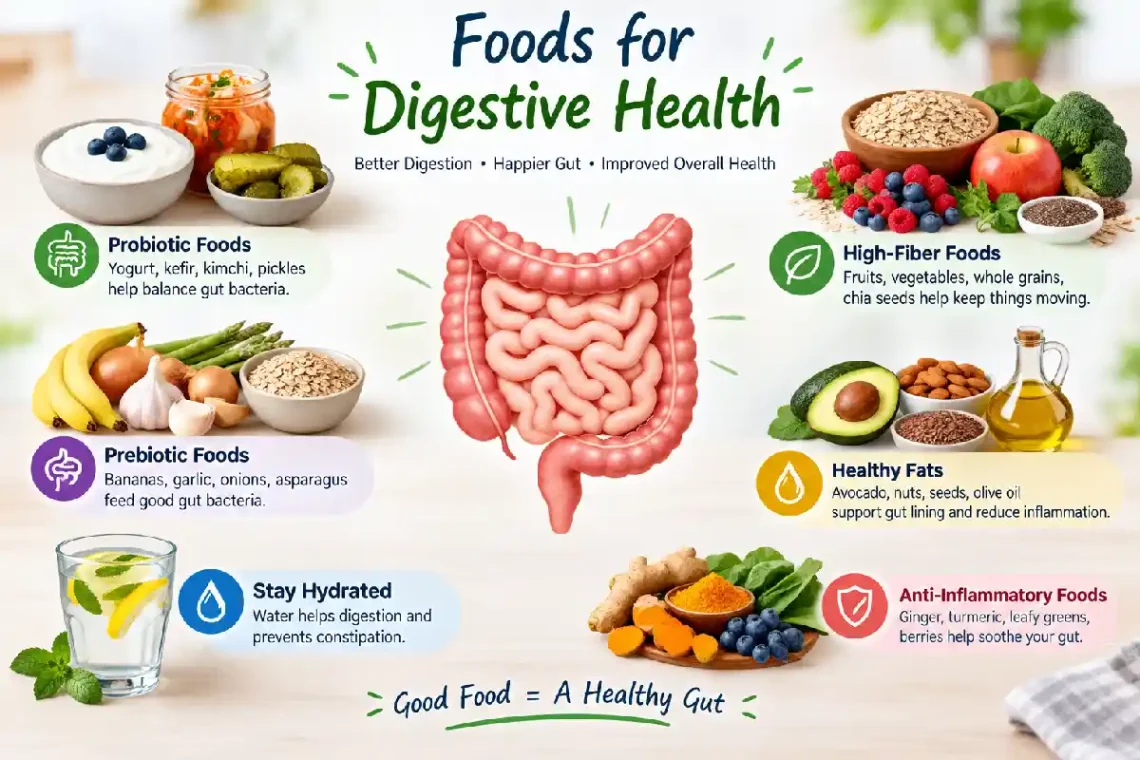
A healthy digestive system is not just about avoiding stomach aches. If you eat the right foods you will may notice regular bowel movements, a healthy population of gut bacteria, firm but soft stools and the general health of your gut will improve. Include plenty of fiber-containing plant foods, wholegrains, fermented foods, healthy fats, and drink enough water.
However, the idea of the “perfect” diet for digestive health is misleading. You can’t put everyone’s needs into one basket. Some foods that work well for someone else can border on the painful for you. The key is to establish a foundation of comfortable eating by creating a diverse, balanced diet.
❝
This article is part of
Digestive Health Hub
How Food Affects Digestion
Food travels through several stages of the digestive system. It starts in the mouth, then the stomach, the small intestine, and finally the egestion.
Furthermore, a few types of foods may influence this process differently.
Fiber contributes to stool weight and may help promote bowel regularity. Certain fibers are fermented to become food for healthy bacteria in the intestines. Proteins provide amino acids to be utilized in the entire body. Good fats also assist in nutrient absorption and the maintenance of health.
Fruits, vegetables, beans and wholegrain foods can be sources of fiber, vitamins, minerals and phytochemicals. Some fermented foods may provide live bacteria, depending upon the food and processing method.
The type of eating pattern that is considered ‘digestive friendly’ is usually more of a balanced diet rather than a diet based on a specific type of food.
High-Fiber Foods
It’s the most important source of food for your gut bacteria. Fiber occurs naturally in all plant foods and can be classified into two types: soluble and insoluble.
Soluble fiber dissolves in water and creates a gel-like material. This fiber gets transformed into various gel substances in the digestive system. Insoluble fiber binds water and contributes to the volume of the stool.
Good sources of dietary fiber include:
| Food Group | Examples |
| Fruits | Apples, pears, berries, oranges |
| Vegetables | Carrots, broccoli, peas, leafy greens |
| Whole grains | Oats, brown rice, whole-wheat bread |
| Legumes | Lentils, chickpeas, beans |
| Nuts and seeds | Chia seeds, flaxseeds, almonds |
Add fiber slowly if you are not used to eating a lot of fiber. A rapid large increase may result in gas, bloating, or an upset stomach. Drinking sufficient amounts of fluid will also help your digestive system accommodate increased fiber intake.
Fruits for Digestive Health
 <
<
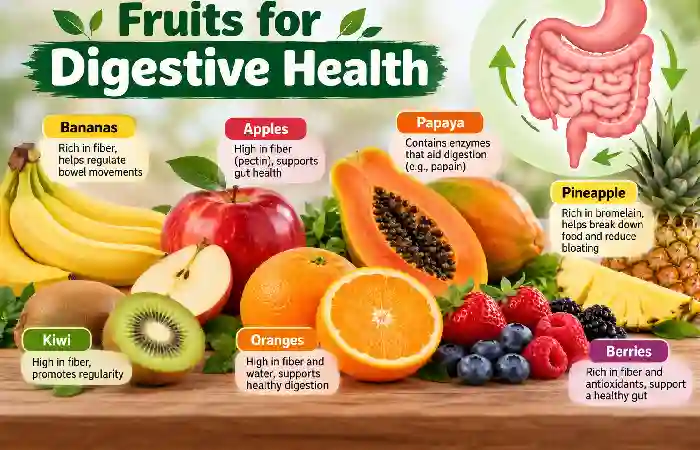
Fruits include fiber, water, vitamins, minerals, and phytochemicals. Several fruits may be beneficial for weight loss and overall health.
Apples and Pears – eat the edible skin if possible so that you can also get some more fiber. Apples and pears have fiber, including pectin.
Fruit. Berries like strawberries, raspberries, and blackberries.
Citrus and oranges have water and fiber. Fruit is better for the fiber you need in your diet than fruit juice.
Bananas are easy to grab and bring and can be a source of fiber and carbs. Their texture can also be incorporated into snacks or meals.
For Digestion: Eat whole fruits as often as possible, juicing as the occasional treat, since it contains the fiber.
Vegetables for Digestive Health
Another source of fiber and nutrients is vegetables. Eating different vegetables can make the diet more diverse and also supply different types of plant substances.
Examples include:
- Broccoli
- Carrots
- Spinach
- Green peas
- Sweet potatoes
- Cauliflower
- Bell peppers
- Green beans
- Pumpkin
In Abdominal Bloating, Gas, or discomfort, we can sometimes consume cooked vegetables more comfortably than raw ones.
If you find you are consuming a lot of a certain vegetable, you could try it in moderation, cooked, or choose some you know you can eat without any problems.
Whole Grains
Whole grains include the grain’s bran, germ, and endosperm. Because more of the grain is preserved than with refined grains, they may contain more fiber and nutrients.
Examples of whole grains include:
- Oats
- Brown rice
- Whole-wheat bread
- Wholegrain pasta
- Barley
- Quinoa
- Millet
These whole grains can be integrated into daily meals. For example, oatmeal can be prepared for breakfast, brown rice can be added to vegetables and be a source of protein for lunch or dinner, and whole- grain bread can be substituted for refined loaf bread.
Increase the consumption of whole grains and breads slowly-if you lack a family history of a sensitive digestive system or have never eaten this much fiber.
Legumes and Digestive Health
In Introduction: beans and lentils. Legumes – such as beans, lentils, chickpeas, and peas – contain fiber, plant protein, vitamins, and minerals, which can contribute to a healthy diet.
Legumes contain fiber that may help to keep things moving on the regular and may also act as a food source for some of the bacteria living in your gut.
Some people experience gas or bloating when eating beans or other legumes. If you are experiencing this:
- Start with smaller portions.
- Increase intake gradually.
- Cook legumes thoroughly.
- Drink adequate fluids.
- Notice which types and portions you tolerate best.
Some who have digestive conditions may need personalized dietary advice over just more legumes.
Fermented Foods
Fermentation: it is a food processing process that involves the change of food constituents by bacteria and other microbes. Some of the food products being fermented may be living at the time they are eaten, depending on the food product.
Examples include:
- Yogurt with live cultures
- Kefir
- Fermented vegetables
- Sauerkraut
- Kimchi
- Some traditionally fermented foods
Fermented foods may be a way to introduce more beneficial microorganisms into the diet and break up the monotony of what we eat.
If buying commercial fermented foods, be sure to read labels when appropriate. Commercially produced items may be pasteurized post-fermentation.
Probiotic Foods
A probiotic is a living microorganism which, when it is ingested in sufficient quantities and in the appropriate conditions, is capable of offering a health benefit. Certain foods naturally have probiotic microorganisms or are made through the use of cultures.
An example is yogurt with live cultures. Additionally, some fermented foods and kefir may contain live microorganisms.
You have to keep the difference between probiotic foods and just fermented foods in mind. Not all fermented foods qualify as a probiotic in the scientific sense.
Generally, probiotic foods can be consumed alongside a varied diet by most people. If you have particular digestive health concerns, specific probiotic products should be considered in discussion with a healthcare professional, as necessary.
Healthy Fats and Digestion
Fat is an essential nutrient and plays important roles in the body, including helping absorb fat-soluble vitamins.
Healthy fat sources can include:
- Avocados
- Nuts
- Seeds
- Olive oil
- Fatty fish
But excess very high-fat foods may be difficult for some to digest. It is also true that fatty foods may take longer to empty from the stomach, giving a feeling of heaviness in some cases.
Don’t try to totally eliminate fat; however, a balanced diet will include some in moderation and not just as part of a burger or fast food.
Building a Digestive-Friendly Diet

A digestive-friendly diet does not need to be complicated. The most useful approach is to build meals around a variety of nutritious foods and adjust portions according to individual tolerance.
A simple meal structure can include:
| Meal Component | Examples |
| Fiber-rich carbohydrate | Oats, brown rice, whole-wheat roti, quinoa |
| Vegetables | Spinach, carrots, broccoli, pumpkin |
| Fruit | Apple, orange, berries, banana |
| Protein | Lentils, beans, eggs, fish, poultry |
| Healthy fat | Nuts, seeds, avocado, olive oil |
| Fluids | Water, unsweetened beverages |
Tips for Building a Digestive-Friendly Diet
Eat a variety of plant foods: Fruits, vegetables, legumes, and whole grains contain various types of fiber and nutrients.
Increase fiber slowly: Going on a very high fiber diet overnight can cause farting, bloating, and wind.
Take plenty of fluids: Drinking enough fluids aids and complements the effects of dietary fiber in ensuring normal bowel function.
Opt for whole foods often: A wide variety of whole foods, including fresh fruit and vegetables, whole grains, beans, nuts, and seeds can provide the basis of a healthful diet.
Be conscious of your portion sizes: You may be able to eat more of a food that is still healthy without this leading to discomfort, but we’re all sensitive to large amounts of food.
Chew your food well: Eating slowly and thoughtfully may help you manage the pace of your meals and avoid overstuffing.
Maintain a Food and Symptoms Diary: It can be helpful to note down the foods that consistently bring on recurrent symptoms and the subsequent response you have to them, which can then be shared with your doctor.
Frequently Asked Questions About Foods for Digestive Health
What is the food for digestion?
There is no one perfect food. A diet that contains a variety of fruits, vegetables, whole grains, legumes, and other nutrient-dense foods can offer fiber and other nutrition that will help promote regular digestion.
Are fruits good for digestive health?
Yes. Fruits provide fiber, water, a range of nutrients, and many beneficial plant compounds. A healthful diet includes a variety of different fruits.
Is it healthy? Are vegetables hard to digest?
Vegetables are also good sources of fiber and nutrients. Cooked vegetables should be tolerated better if consuming raw ones causes discomfort.
Are high fiber foods gassy?
Yes. Rapidly increasing fiber may cause gas and bloating. Tolerance may improve with a slow progression of increasing fiber and adequate fluid intake.
Is fermented food good for gut?
Some fermented foods are rich in live microorganisms and can include in a diverse diet. NOT all fermented foods are probiotics, and there may be a further downside, as certain probiotic strains may not be suitable for consumption.
Should I avoid fatty foods for better digestion?
Not necessarily. Good fats have a role in a healthy diet. But extreme consumption of foods high in fats can lead to stomach upsets for some individuals.
Final Thoughts
A good diet for digestion should emphasize different types of food, a high-fiber diet, a high nutritive density, and individualized food choices without an exclusion list of “good” and “bad”. Fruits, vegetables, whole grains, pulses, probiotic and prebiotic foods, and healthy fats are various options that can incorporate into an appropriate diet.
Progressively raise fiber, keep well hydrated, pick mainly nutrient-rich foods, and be mindful of your reactions to specific meals. Persistent, severe, or unexplained digestive problems should not treat with diet alone.
Dr. Khizrana Begum is a qualified medical professional with MBBS and MD qualifications and 5+ years of experience in the medical field. She works as a General Physician and Dermatologist, with knowledge spanning general medicine, dermatology, preventive healthcare and skin health.
As a medical reviewer, Dr. Khizrana Begum reviews health and wellness content for medical accuracy, clarity and authenticity.
Sameena Begum reviews content for clarity, accuracy and reader usefulness. Her review process helps ensure that published information is clearly presented, relevant and easy for readers to understand.
Syeda Yasmeen is a Health & Wellness Writer at InHumanBeing.com. She creates clear and reader-focused content across health, nutrition, wellness, women’s health, men’s health and babies’ health.