
 Syeda Yasmeen
Health & Wellness Writer Syeda Yasmeen creates clear and
reader-focused content covering health,
nutrition, wellness, women’s health,
men’s health and babies’ health.
Read Full Bio of Author →
Syeda Yasmeen
Health & Wellness Writer Syeda Yasmeen creates clear and
reader-focused content covering health,
nutrition, wellness, women’s health,
men’s health and babies’ health.
Read Full Bio of Author →
 Sameena Begum
Health, Technology & Digital Content Reviewer Sameena Begum reviews selected content
for clarity, factual presentation,
consistency and reader usefulness.
Read Full Bio of Reviewer →
Sameena Begum
Health, Technology & Digital Content Reviewer Sameena Begum reviews selected content
for clarity, factual presentation,
consistency and reader usefulness.
Read Full Bio of Reviewer →
 Dr. Khizrana Begum
General Physician and Dermatologist Dr. Khizrana Begum is a qualified medical
professional with MBBS and MD qualifications
and 5+ years of experience. She reviews health
and wellness content for medical accuracy,
clarity and responsible presentation.
Read Full Bio of Medical Reviewer →
Dr. Khizrana Begum
General Physician and Dermatologist Dr. Khizrana Begum is a qualified medical
professional with MBBS and MD qualifications
and 5+ years of experience. She reviews health
and wellness content for medical accuracy,
clarity and responsible presentation.
Read Full Bio of Medical Reviewer →
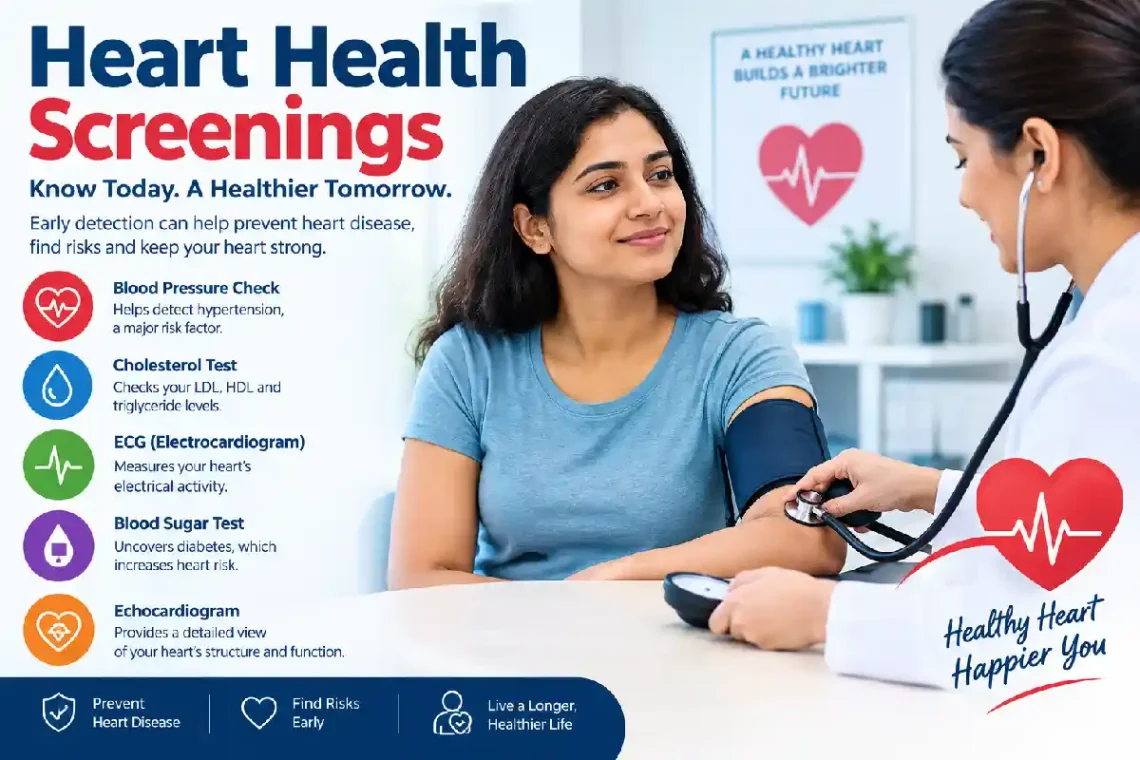
Heart screening and health screening are all about looking at key measurements and risk factors that can help determine whether you are at increased risk of heart disease and stroke. For some people, cardiovascular disease develops over many years with no obvious warning signs, so a preventative assessment is a valuable part of health care.
Screening may involve testing blood pressure, blood cholesterol, blood sugar or glucose, weighing and BMI measurement, and general assessment of cardiovascular risk. The types of tests and how often may depend on age, personal histories, family histories, lifestyle, and risk factors.
❝
This article is part of
Health Checkups Hub
What Is Heart Health Screening?
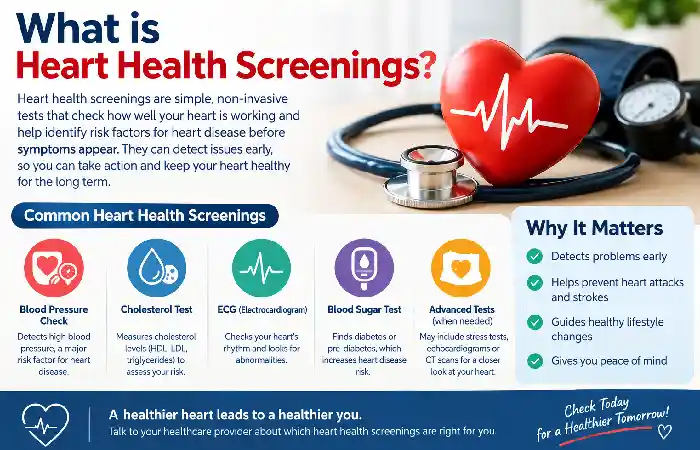
Screening for the health of the heart. Screening for cardiovascular risk is carried out before the individual demonstrates obvious signs of heart failure or disease. It does not necessarily involve a 12-lead electrocardiogram or sophisticated assessments of the heart. Measurements and blood tests used in apparently healthy adults are informative of heart failure risk.
Common components include:
- Blood pressure measurement
- Cholesterol and lipid testing
- Blood glucose or diabetes screening
- Weight and BMI assessment
- Waist circumference when appropriate
- Smoking and physical activity assessment
- Family and personal medical history
- Overall cardiovascular risk assessment
Combine the measurements of a test (each reading is interpreted in the context of other results; a cholesterol reading, for example, may have different implications depending on blood pressure, age, diabetic status, history of smoking, other risks, etc;)
Blood Pressure Screening
Blood pressure screening is one of the most easily administered and crucial aspects of cardiovascular health screening. Hypertension may not produce any symptoms, but sustained high blood pressure increases the risk for cardiovascular disease and stroke.
Blood pressure is recorded using two numbers:
- Systolic pressure: the pressure when the heart contracts.
- Diastolic pressure: the pressure when the heart relaxes between beats.
For everyone else who has not been previously diagnosed with hypertension, the USPSTF recommends screening for blood pressure in all adults aged 18 years or older. In cases where an initial measurement suggests the presence of hypertension, additional measurements taken from outside the clinical setting, through home or ambulatory monitoring, are recommended to confirm the diagnosis prior to treatment.
Depending on the screening interval, screening may be more or less costly. The USPSTF recommends screening every 1 year for adults aged 40 years and older and persons at increased risk, and possibly longer in adults aged 18–39 years with normal blood pressure without increased risk.
Cholesterol Testing
Cholesterol testing measures fats in the blood that are relevant to cardiovascular health. A lipid profile commonly includes:
- Total cholesterol
- LDL cholesterol
- HDL cholesterol
- Triglycerides
High LDL can lead to deposits in the arteries, leading to an increased cardiovascular risk. High triglycerides can also lead to increased cardiovascular risk, especially with other adverse lipid levels.
Usually, no symptoms are produced from high cholesterol, so testing is often required to determine if levels are elevated.
According to the American Heart Association, screening for cholesterol levels is normally initiated once a person reaches adulthood, with a healthy adult being tested roughly every four to six years and those who suffer from cardiovascular disease, diabetes, high cholesterol, or other risk factors being tested more often.
Some cholesterol tests can be done without fasting; however, others may need fasting depending on the individual test and situation; follow the guidance given by your healthcare professional or laboratory.
Blood Glucose Testing
Blood glucose measurements can be used to detect prediabetes or diabetes, both of which confer a greater risk of cardiovascular disease.
Common tests include:
- Fasting blood glucose
- Hemoglobin A1C
- Oral glucose tolerance testing in selected situations
Diabetes is a disease that can involve the blood vessels, and it is known to be a risk factor in cardiovascular disease. For this reason, a measurement of blood glucose is an important aspect of preventive cardiovascular therapy.
Suggests screening at a certain age and frequency, which depends on age, weight, family history, and other risk factors. Healthcare providers may choose to test more frequently when risk is higher.
Blood glucose results should be considered in the context of the individual patient. An isolated abnormal result probably needs to be reassessed or retested before a diagnosis can be made.
Weight and BMI Assessment
Weight and body mass index are familiar measures used in general practice.
Body mass index (BMI) is derived from height and weight and is useful to give a broad indication of weight classification. In the general practice setting, BMI may be used, but practice staff may also take the waist circumference, as abdominal fat distribution may provide further information about the individual’s risk of metabolic and cardiovascular disease.
Although BMI is very useful as a rough indicator of health, it can be argued that it is not a reliable indicator of health because of its inability to distinguish fat from muscle and its failure to take into account the distribution of body fat.
The American Heart Association considers body weight, BMI, and WC as measures to evaluate cardiovascular health, when estimated:
In other words, not a single number should be a thorough cardiovascular examination, and a cardiovascular assessment should take in the complete composition of blood pressure, cholesterol, glucose, physical activity, diet, smoking, sleep, and other factors.
Heart Disease Risk Assessment
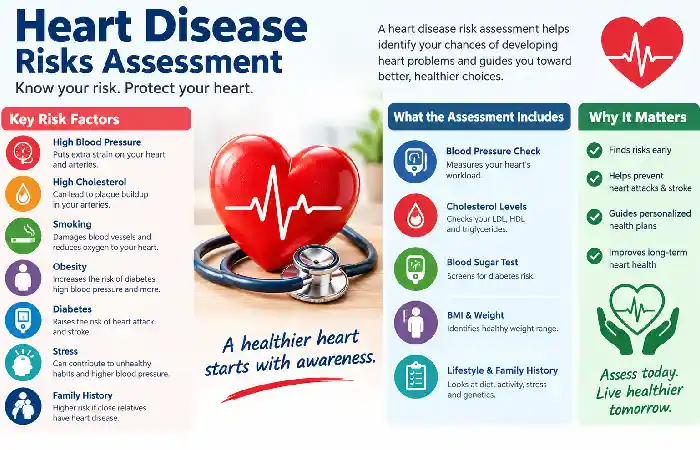
A heart disease risk assessment involves a number of factors to assess an individual’s risk of having cardiovascular disease or an event, such as a stroke or heart attack.
Depending on the risk calculator or clinical approach used, factors may include:
| Risk Factor | Why It Matters |
| Age | Cardiovascular risk generally changes with age. |
| Blood pressure | Persistent elevation increases cardiovascular risk. |
| Cholesterol | Certain lipid patterns are associated with artery disease. |
| Diabetes | Increases cardiovascular risk |
| Smoking | Strongly associated with cardiovascular disease. |
| Weight | Excess body weight can contribute to several risk factors. |
| Family history | Can indicate inherited or shared risk |
| Kidney health | Can influence cardiovascular risk |
| Previous cardiovascular disease | May substantially change risk assessment |
Some newer cardiovascular risk equations are able to utilize multiple health parameters. For example, the PREVENT equations, designed by the American Heart Association, are able to predict risks of death, heart attack, stroke, and heart failure through the utilization of age, sex, smoking status, blood pressure, cholesterol, kidney function, and diabetes.
Risk estimates should never be seen as a guarantee of what will happen to a particular individual but rather as a guide to clinical decision-making.
Family History and Heart Risk
A family history may also be of importance when considering the patient’s total cardiovascular risk.
Tell your healthcare professional if close family members have had:
- Heart attacks
- Strokes
- Coronary artery disease
- Very high cholesterol
- Heart disease at a relatively young age
- Certain inherited heart conditions
Family history of heart disease does not guarantee that a person will actually develop the disease. It may, however, influence when screening begins, what tests are performed, and how often risk factors are monitored.
Family history is most important when a patient has high cholesterol or cardiovascular disease without many other risk factors.
When Additional Heart Tests May Be Used
For many people, basic screening tests are sufficient, but when symptoms, histories, and risk factors indicate, further cardiac tests may be performed.
Depending on the situation, a healthcare professional may consider:
- Electrocardiogram (ECG or EKG)
- Echocardiogram
- Exercise stress testing
- Coronary artery calcium (CAC) scanning
- Ambulatory heart rhythm monitoring
- Other cardiac imaging or laboratory tests
These tests are not automatically indicated as a screening test for all apparently healthy adults. The tests are indicated depending on patients’ presenting features, risk factors and clinical context.
For instance, CDC cites a coronary artery calcium scan as an example of how such a test might sometimes be used to assess cardiovascular risk or guide cholesterol management.
Should be investigated by a health professional rather than being treated as an issue of screening if they are to be investigated by a health professional. Chest pains, loss of consciousness, unexplained breathlessness, episodes of long-standing palpitations, or any other symptoms of concern.
Understanding Heart Screening Results
Results of the heart screening should be viewed within the context of a full cardiovascular assessment.
For example:
- A normal blood pressure reading is reassuring but does not eliminate cardiovascular risk.
- A high cholesterol result does not automatically mean that a person has blocked arteries.
- An elevated glucose result may require additional testing to determine whether diabetes or prediabetes is present.
- BMI provides useful context but does not fully describe an individual’s cardiovascular health.
- A calculated risk score estimates risk; it does not predict an individual’s future with certainty.
Health professionals might work through several findings as a team before making recommendations for changes in lifestyle, further monitoring, medication, or tests.
Additionally, it is important to clarify the difference between a screening test and a diagnosis. Screening provides information on possible risk of the abnormality. Diagnostic testing may be indicated if the screening reveals an abnormality.
Discussing Heart Health With a Healthcare Professional
Engaging in common consultations with your doctor can help you understand what cardiovascular check-ups are best suited for you.
Before an appointment, it can be useful to know:
- Your previous blood pressure readings
- Your latest cholesterol results
- Any previous blood glucose or A1C results
- Your current medications
- Your smoking history
- Your level of physical activity
- Your family history of heart disease
- Any previous heart or blood-vessel conditions
Ask how often your blood pressure, cholesterol, glucose, and other risk factors should be monitored.
What if your results are out of range? Consider what they mean in terms of your overall cardiovascular risk and whether you need additional assessment or repeat testing.
Frequently Asked Questions About Heart Health Screening
How frequently should I have my blood pressure checked?
The USPSTF recommends annual screening among those aged 40 and over and those at increased risk, but in some adults at lower risk aged 18–39 with previously normal readings can be screened at 3- to 5-year intervals.
What are the recommendations for testing cholesterol?
Cholesterol testing should be done regularly. For most healthy adults, the test should be every 4–6 years; however, increased frequency may be required in those who have cardiovascular disease, diabetes, high cholesterol or are otherwise at increased risk.
Does a simple ECG regularly come up in screening?
Not in all cases. ECG would be indicated where symptoms, medical history, or other findings would suggest it was needed for further assessment—not always needed in an apparently fit and healthy person.
Is it possible to diagnose heart disease with blood tests?
Blood tests – can reveal a number of important cardiovascular risk factors, for example, abnormalities in cholesterol or glucose levels. These tests alone cannot identify all types of heart disease.
Is it possible to have underlying heart disease while the screening is normal?
Yes. Screening tests identify certain risk factors and conditions; however, no screening program can identify all cardiovascular issues. New or abnormal symptoms need to be discussed with your GP.
Final Thoughts
Screening for the Heart aims to detect the risk factors for cardiovascular disease early, with the aim of reducing the risk factors that can be modified. Blood pressure, cholesterol, blood glucose, obesity, family history, smoking habits, and level of activity are some factors that may affect a person’s cardiovascular risk.
We can’t assure that 6-monthly screening will prevent heart disease, but it can be useful to assess the best course of action for the patient. What tests and at which screening frequency should be decided on the basis of the patient’s age, previous history, risk factors, and clinical guidelines.
Medical disclaimer: This article is intended for general educational information and should not be substituted for medical advice, diagnosis, or specific screening recommendations. If you have symptoms such as chest pain, severe shortness of breath, fainting, or other potentially dangerous symptoms, please seek care as indicated.
Dr. Khizrana Begum is a qualified medical professional with MBBS and MD qualifications and 5+ years of experience in the medical field. She works as a General Physician and Dermatologist, with knowledge spanning general medicine, dermatology, preventive healthcare and skin health.
As a medical reviewer, Dr. Khizrana Begum reviews health and wellness content for medical accuracy, clarity and authenticity.
Sameena Begum reviews content for clarity, accuracy and reader usefulness. Her review process helps ensure that published information is clearly presented, relevant and easy for readers to understand.
Syeda Yasmeen is a Health & Wellness Writer at InHumanBeing.com. She creates clear and reader-focused content across health, nutrition, wellness, women’s health, men’s health and babies’ health.