

 Syeda Yasmeen
Health & Wellness Writer Syeda Yasmeen creates clear and
reader-focused content covering health,
nutrition, wellness, women’s health,
men’s health and babies’ health.
Read Full Bio of Author →
Syeda Yasmeen
Health & Wellness Writer Syeda Yasmeen creates clear and
reader-focused content covering health,
nutrition, wellness, women’s health,
men’s health and babies’ health.
Read Full Bio of Author →
 Sameena Begum
Health, Technology & Digital Content Reviewer Sameena Begum reviews selected content
for clarity, factual presentation,
consistency and reader usefulness.
Read Full Bio of Reviewer →
Sameena Begum
Health, Technology & Digital Content Reviewer Sameena Begum reviews selected content
for clarity, factual presentation,
consistency and reader usefulness.
Read Full Bio of Reviewer →
 Dr. Khizrana Begum
General Physician and Dermatologist Dr. Khizrana Begum is a qualified medical
professional with MBBS and MD qualifications
and 5+ years of experience. She reviews health
and wellness content for medical accuracy,
clarity and responsible presentation.
Read Full Bio of Medical Reviewer →
Dr. Khizrana Begum
General Physician and Dermatologist Dr. Khizrana Begum is a qualified medical
professional with MBBS and MD qualifications
and 5+ years of experience. She reviews health
and wellness content for medical accuracy,
clarity and responsible presentation.
Read Full Bio of Medical Reviewer →
Male health screening forms an integral component of preventive healthcare. Through regular screening, various conditions, including hypertension, hyperlipidemia, diabetes, colorectal cancer, and others, can be diagnosed long before any symptoms appear.
Preventive screening is different for each male. Age, personal and familial history, smoking history, body mass index, previous test results, lifestyle habits, medications, and health conditions can all impact the required screening tests.
The recommendations for screening also vary from one country to another and from one organization to another. The following are examples of current recommendations from organizations such as the U.S. Preventive Services Task Force (USPSTF). However, males must observe recommendations that are relevant to their place of residence.
Why Health Screening Matters for Men
There are some important conditions that can occur without any symptoms.
For instance, one’s blood pressure and cholesterol level might not show any symptoms but still contribute to the increased risk of cardiovascular diseases. Type 2 diabetes might occur progressively, and some cancers might be cured if they are discovered at the right time. Screening can help to detect:
- High blood pressure
- High cholesterol levels
- Prediabetes and/or type 2 diabetes
- Colorectal cancer
- The risk of prostate cancer
- Cardiovascular risk
- Depression and other mental health problems
- Bone problems among chosen males
The screening will not prevent or detect any disease, but the results of the tests can give wrong information about patients’ state. The idea is to apply screening that is justified by the benefits and risks of the procedure. Screening tests differ from diagnostic tests too. If some symptoms occur, men should undergo proper diagnosis.
Blood Pressure Screening
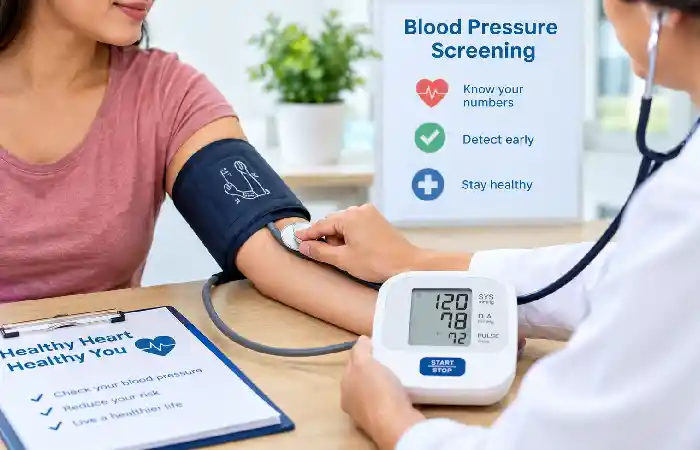
Blood pressure testing is among the easiest and yet most crucial elements of preventive medicine.
Chronic high blood pressure (hypertension) poses a risk factor for heart conditions, strokes, and kidney problems. The lack of symptoms of the condition means that testing could be essential to find out whether you have hypertension.
According to the USPSTF, it is advisable to screen adults aged 18 and over for hypertension by taking your blood pressure in a medical setting. If you are found to have elevated blood pressure, testing outside a clinical environment could help confirm the diagnosis and begin treatment.
Your screening frequency depends on your age and risks. The USPSTF recommends that you undergo annual screening if you are 40 or over or at an increased risk. Adults aged between 18 and 39 who have had normal blood pressure results before without any increased risk could get screened every three to five years.
Not all elevated blood pressure readings constitute the diagnosis. Your health care provider might advise on retesting or even taking your blood pressure from home.
Cholesterol Screening
Testing for cholesterol assists in the detection of blood lipids linked to cardiovascular disease.
A lipid panel is used to check for:
- Low-density lipoprotein (LDL) cholesterol
- High-density lipoprotein (HDL) cholesterol
- Total cholesterol
- Triglyceride levels
Elevated LDL cholesterol can lead to the formation of plaques in the arteries, thus posing risks for heart disease and stroke. Cholesterol problems do not have any noticeable symptoms; therefore, a blood test is required to confirm their presence.
Doctors consider results from cholesterol tests alongside other factors such as the patient’s age, blood pressure, whether they smoke, diabetes, family history, and overall heart disease risk.
The CDC encourages the discussion of cholesterol screening frequency with a doctor depending on a patient’s health history and heart disease risk. There are people who require more frequent testing.
Sometimes, an additional test like a coronary artery calcium test may be performed, depending on the situation at hand.
Diabetes Screening
Diabetic screening is performed to check the level of blood sugar for indications of prediabetes and type 2 diabetes.
Tests used include:
- A1C
- Fasting blood glucose
- Glucose tolerance testing
Screening for prediabetes and type 2 diabetes is advised for asymptomatic individuals aged between 35 and 70 years with overweight or obesity according to the USPSTF. Screening for those with further risks may be necessary early or regularly.
Risk factors may include:
- History of type 2 diabetes in the family
- Overweight or obesity
- Inactive
- Previously having prediabetes
- Older age
- Some metabolic disorders
A positive screening test does not automatically diagnose the disease on its own. Further testing may be required.
Colorectal Cancer Screening
Colorectal cancer screening involves testing for colorectal cancer and for any precancerous lesions.
Screening techniques include:
- Fecal immunochemical test (FIT)
- High-sensitivity fecal occult blood test (FOBT)
- DNA stool test
- Colonoscopy
- CT colonography
- Sigmoidoscopy
For average-risk adults, colorectal cancer screening is recommended by USPSTF from age 45 to 75. Adults aged 76 to 85 may be screened selectively depending on their general condition and past screenings. Different types of screening have various time intervals and preparations. According to USPSTF, annual FIT, stool DNA-FIT every one to three years, and CT colonography every five years are suggested approaches.
Men with strong family history, prior polyps, inflammatory bowel disease, or certain genetic disorders should have another screening schedule.
Prostate Health Screening
Health screening for prostate involves assessing the prostate cancer risk as well as discussing the appropriateness of prostate-specific antigen (PSA) screening.
The most common test for screening prostate cancer is the prostate-specific antigen (PSA) test. This test is used to measure the level of PSA in the blood. The prostate produces PSA, and high levels of PSA can result from prostate cancer or other conditions involving the prostate gland.
There are some concerns associated with PSA screening, which require an individual assessment:
- False positives
- The need for further tests
- Prostate biopsy
- Overdiagnosis
- Overtreatment
- Possible side effects of treatment
According to the current recommendation of USPSTF, screening should be based on an individual decision for men aged between 55 and 69 years old after discussion of the pros and cons of PSA screening with a physician. Screening is not recommended for men older than 70 years old.
Similarly, the CDC recommends men discuss the possibility of screening according to individual prostate cancer risk.
Family history and risk factors may influence the timing of discussion.
Mental Health Screening
Good mental health is an integral part of good men’s health.
Depression and other mental health issues can impact sleep, relationships, work, exercise, and quality of life. Some men do not see their signs as mental health problems or feel hesitant to talk about them.
According to the USPSTF, screening for depression is recommend among all adults, including older adults, when there are adequate systems to ensure correct diagnosis, efficient treatment, and proper follow-up.
Questions regarding mental health might include:
- Persistent sadness
- Loss of interest in activities
- Sleep changes
- Appetite changes
- Lowered energy
- Concentration difficulties
- Hopelessness
- Stress and anxiety
- Drug abuse
Although questionnaires help to find the presence of any issues requiring a conversation, they are not able to diagnose all mental health problems.
Heart Disease Risk Assessment

Heart disease is one of the things that need to be assessed when it comes to men’s preventive health care.
Some of the things involved in a risk assessment of cardiovascular disease may include:
- Blood pressure
- Cholesterol
- Diabetic state
- History of smoking
- Body weight
- Exercise
- Family history
- Age
- Past cardiovascular disease
All of these are taken into account collectively rather than individually.
For instance, a man may have normal cholesterol levels but still be at high risk of developing cardiovascular disease if he has high blood pressure, diabetes, and a history of heavy smoking.
Men are advised to visit their doctors in case they experience any of the following:
- Constant chest pain
- Shortness of breath
- Fainting
- Others
Considerations for Bone Health
Bone health is often neglect in preventive healthcare for men.
There are cases of men developing osteoporosis and having fractures as a result of aging or some diseases/medication.
Some risk factors are:
- Advanced age
- Fragility fracture previously
- Low body weight
- Long-term corticosteroid therapy
- Some hormonal disorders
- Smoking
- High alcohol consumption
- Diseases affecting bone metabolism
According to the current guidelines of the USPSTF, the evidence is inadequate to assess the balance between the benefits and risks of routine osteoporosis screening in men. This does not indicate that bone densitometry should never done for men because doctors can exercise their judgment on a case-by-case basis.
Men who are at high risk of fractures or have certain diseases that influence bone density should talk about bone density testing.
Age-Based Men’s Health Screening
Men’s preventive healthcare needs change throughout life.
| Age/Life Stage | Common Screening Areas |
| Young adulthood | Blood pressure, cholesterol when appropriate, mental health and risk-based screening |
| 30s | Blood pressure, cardiovascular risk, cholesterol, and diabetes assessment when indicated |
| 40s | Blood pressure, cholesterol, diabetes risk, colorectal screening beginning at 45 under USPSTF guidance |
| 50s–60s | Continued cardiovascular and diabetes screening, colorectal cancer screening, prostate screening discussion |
| 65+ | Continued cancer and cardiovascular screening when appropriate, bone health and other age-related assessments |
These categories apply to everyone in general but not to an absolute schedule.
An individual suffering from diabetes, hypertension, a strong family history of cancer, previous abnormalities during screening tests, or other diseases will require to have a different screening schedule.
Another aspect of a person’s health is his smoking history. This is because some adults meeting the criteria for smoking history can screen for lung cancer by using a low-dose CT scan as per the present guidelines. For instance, USPSTF suggests performing yearly low-dose CT scans on some adults between ages 50 and 80 years with a 20 pack-year smoking history.
Understanding Men’s Health Screening Results
A positive or negative result is not a diagnosis.
A negative result usually means that the test did not detect the condition under evaluation at the time the test was perform.
A positive result may suggest the need for further testing. This doesn’t necessarily mean that you have a major disease.
For instance,
- A high blood pressure result requires repeating or out-of-office measurement.
- A high cholesterol level requires an overall risk evaluation for the heart.
- An abnormal glucose result requires confirmation testing.
- A positive stool screening test requires colonoscopy.
- High PSA doesn’t always mean prostate cancer.
Consult with your healthcare provider about the result, additional testing requirements, and the need for rescreening.
Final Thoughts
Health screening among men encompasses many critical aspects, including blood pressure, cholesterol, diabetes, colon cancer, prostate conditions, cardiovascular screening, mental well-being, and bone health.
It is important to choose the screening schedule based on age, personal and family history, smoking history, past test results, lifestyle, and other potential risk factors. It is not necessary for all men to get all these screenings.
Screening has its advantages if used in connection with further examinations and discussion of the results with a doctor. In case any symptoms arise, a man should visit a healthcare provider regardless of his upcoming screening tests.
Disclaimer: The information provided above is for educational purposes only and does not substitute for professional advice, diagnosis, or an individualized screening plan. The screening guidelines can vary from country to country and might change over time. Consult a healthcare provider about your appropriate screening schedule and test results.
Dr. Khizrana Begum
Dr. Khizrana Begum is a qualified medical professional with MBBS and MD qualifications and 5+ years of experience in the medical field. She works as a General Physician and Dermatologist, with knowledge spanning general medicine, dermatology, preventive healthcare and skin health.
As a medical reviewer, Dr. Khizrana Begum reviews health and wellness content for medical accuracy, clarity and authenticity.
Sameena Begum
Sameena Begum reviews content for clarity, accuracy and reader usefulness. Her review process helps ensure that published information is clearly presented, relevant and easy for readers to understand.
Syeda Yasmeen
Syeda Yasmeen is a Health & Wellness Writer at InHumanBeing.com. She creates clear and reader-focused content across health, nutrition, wellness, women’s health, men’s health and babies’ health.