 Syeda Yasmeen
Health & Wellness Writer Syeda Yasmeen creates clear and
reader-focused content covering health,
nutrition, wellness, women’s health,
men’s health and babies’ health.
Read Full Bio of Author →
Syeda Yasmeen
Health & Wellness Writer Syeda Yasmeen creates clear and
reader-focused content covering health,
nutrition, wellness, women’s health,
men’s health and babies’ health.
Read Full Bio of Author →
 Sameena Begum
Health, Technology & Digital Content Reviewer Sameena Begum reviews selected content
for clarity, factual presentation,
consistency and reader usefulness.
Read Full Bio of Reviewer →
Sameena Begum
Health, Technology & Digital Content Reviewer Sameena Begum reviews selected content
for clarity, factual presentation,
consistency and reader usefulness.
Read Full Bio of Reviewer →
 Dr. Khizrana Begum
General Physician and Dermatologist Dr. Khizrana Begum is a qualified medical
professional with MBBS and MD qualifications
and 5+ years of experience. She reviews health
and wellness content for medical accuracy,
clarity and responsible presentation.
Read Full Bio of Medical Reviewer →
Dr. Khizrana Begum
General Physician and Dermatologist Dr. Khizrana Begum is a qualified medical
professional with MBBS and MD qualifications
and 5+ years of experience. She reviews health
and wellness content for medical accuracy,
clarity and responsible presentation.
Read Full Bio of Medical Reviewer →
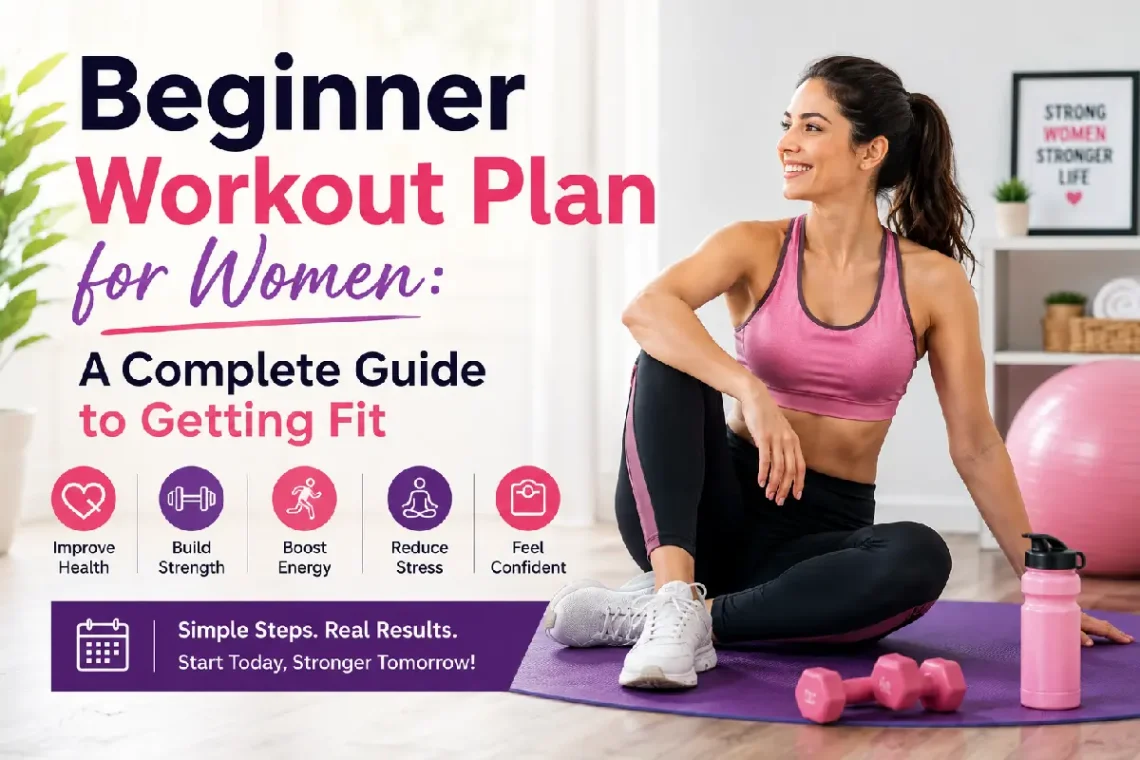
It can be thrilling yet daunting to Starting a beginner workout plan for women. There are thousands of fitness programs, exercise videos, and conflicting information available on the web; where should you start? The bottom line, you don’t have to invest in a ton of gear, or years of experience, to get a better, stronger, more confident physique.
With the best workouts for beginners, you need to be consistent, not intense. The development of good exercise habits, learning good technique, and slowly adding exercise is much more important than trying to do more advanced exercises too early on.
This is the complete guide to clearly understand everything before you begin your fitness journey.
Quick Overview
| Feature | Beginner Workout Plan |
| Best For | Women new to exercise or returning after a break |
| Goal | Build strength, improve fitness, and create healthy habits |
| Workout Length | 20–45 minutes |
| Weekly Frequency | 3–5 days |
| Equipment | Bodyweight or light dumbbells |
| Fitness Level | Beginner |
❝
This article is part of
Womens Fitness Hub
What Is a Beginner Workout Plan for Women?
A beginner workout plan is a program of exercises for women that is structured to provide safe exercise to improve strength, endurance, flexibility and overall fitness. More than high-intensity moves that achieve fast results, it creates a strong base with straightforward, effective exercises that are gradually made more difficult as you adapt to the body.
In contrast to advanced plans, beginner plans focus on the correct form, formulating the muscles, and getting them to recover. This technique will decrease the chances of injury and build confidence.
Starting a fitness routine can feel easier when you have a structured plan that matches your experience level and goals. For a complete overview of how to get started, explore our beginner workout plan for women.
Who Should Follow a Beginner Workout Plan?
The ideal beginner program is structured for:
- Women with little to no physical activity.
- Women who have taken a break from exercise for several months or years.
- New mothers who have been advised to return to exercise by their medical professional.
- People who are busy and want to find a workout they can do.
- Adults desiring general well being.
- Anyone wishing to develop a habit of building fitness throughout life.
Key Principles of a Beginner Workout Plan
1. Consistency Over Perfection
The worst thing a newbie does is to work out 7 days a week. It is better to have a realistic schedule that is followed regularly than to have some good workouts here and there.
2. Progressive Overload
The exercises need to be made more difficult as your body gets stronger.
It could be achieved by:
- Increasing repetitions.
- Adding light weights.
- Performing extra sets.
- Improving exercise technique.
- Increasing workout duration.
Little by little, little by little, it’s a big difference in the end.
3. Proper Form Comes First
It’s more important to learn the proper movement sequence than to lift heavy weights.
Good technique helps:
- Reduce injury risk.
- Improve muscle activation.
- Increase workout effectiveness.
- Build confidence.
4. Recovery Is Part of Training
It is during recovery that muscles grow and adapt which is the opposite of during the workout.
Include:
- Rest days.
- Quality sleep.
- Stretching.
- Proper nutrition.
- Hydration.
Failing to recover can hinder progress and worsening the risk of injury.
If you prefer exercising at home, you can follow a routine that requires little or no gym equipment. Explore our beginner home workout plan for women for practical ideas.
Beginner Workout Goals
Each woman starts exercising for a different motive. Some of your objectives might be:
- Increasing strength.
- Losing body fat.
- Improving cardiovascular health.
- Enhancing flexibility.
- Boosting energy levels.
- Improving posture.
- Supporting bone health.
- Building confidence.
Taking rich goals allows you to path growth and preserve motivation.
Beginner vs Advanced Workout Programs
| Beginner Plan | Advanced Plan |
| Focuses on basic movements | Includes complex exercises |
| Light to moderate intensity | High intensity |
| 20–45 minute sessions | 60–90 minute sessions |
| Longer rest periods | Shorter rest periods |
| Emphasis on learning technique | Emphasis on performance |
| Low injury risk | Higher injury risk if form is poor |
Benefits of Following a Structured Workout Plan
A structured workout plan can help eliminate the guesswork and make it easier to establish a consistent workout plan.
You don’t pick a workout plan for each day, you have a structure to work within, and it’s one that incorporates strength, cardio, flexibility, and recovery.
1. Builds Strength Gradually
Strength training benefits don’t end in the gym, it impacts your life everyday when you lift heavy food and carry children, when you climb stairs, etc.
In time, the sturdier muscles also will help to maintain healthy joints and excellent posture.
2. Supports Healthy Weight Management
Regular exercise boosts the daily calorie burn and will help maintain lean muscle during weight loss.
A well-balanced diet and a program of exercise can help maintain weight.
3. Improves Heart Health
Exercising frequently boosts the strength of the heart and circulation.
Potential benefits include:
- Better cardiovascular endurance.
- Lower resting heart rate.
- Improved blood pressure.
- Better cholesterol management.
4. Increases Bone Strength
Exercise that includes weight bearing (squats, lunges, walking, etc.) rouse bone tissue.
It is particularly significant with women since bone thickness naturally declines with age.
5. Boosts Mental Well-Being
There is a strong connection between exercise and a better emotional state.
Many women report:
- Reduced stress.
- Better mood.
- Improved sleep.
- Increased confidence.
- Greater energy.
Physical activity is a important factor of a healthy lifestyle, in count to the right diet and emotional care.
6. Improves Flexibility and Balance
Adding widening and mobility exercises to your workout can:
- Improve posture.
- Increase range of motion.
- Reduce muscle stiffness.
- Lower injury risk.
- Enhance daily movement.
7. Builds Long-Term Healthy Habits
A major advantage of a structured plan is to establish routines that become a habit.
Successful results can be achieved over the long term when things are consistent.
Benefits Comparison
| Random Exercise | Structured Workout Plan |
| No clear direction | Defined weekly schedule |
| Hard to track progress | Easy to measure improvement |
| Higher chance of skipping workouts | Better consistency |
| Uneven muscle development | Balanced full-body training |
| Greater injury risk | Progressive workload |
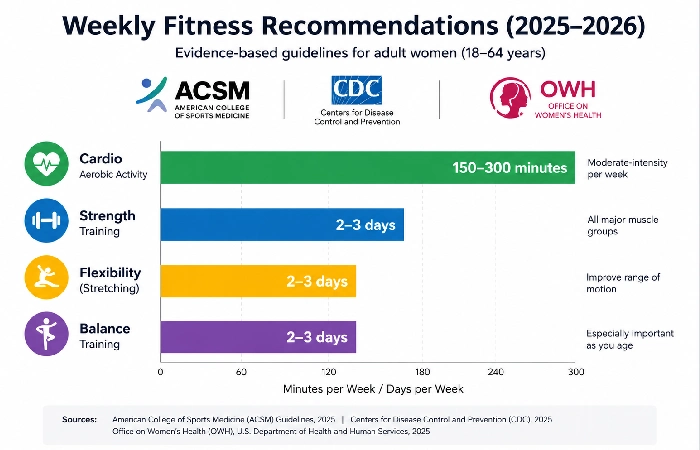
Recommended Weekly Exercise Guidelines (Adults)
| Activity | Recommendation |
| Moderate-intensity cardio | 150–300 minutes/week |
| Strength training | At least 2 sessions/week |
| Flexibility | 2–3 sessions/week |
| Balance training | 2 sessions/week (especially beneficial with age) |
How to Prepare Before Starting Your Fitness Journey
Getting prepared for your first workout will make you safe, interested and reliable.
Set Realistic Goals
Do not try to make big changes in a few weeks, but rather focus on small goals.
Examples include:
- Do 3 workouts per week.
- Walk 8,000–10,000 steps daily.
- Do 10 bodyweight squat with proper technique.
- Eat plenty of water daily.
- Be flexible by performing frequent stretching.
- Small wins lead to momentum.
Choose Home or Gym
You can use both options and achieve the goals.
| Home Workouts | Gym Workouts |
| Convenient | More equipment |
| Lower cost | Access to trainers |
| Flexible schedule | Greater exercise variety |
| Minimal equipment required | Dedicated workout environment |
The one that you will use most consistently is the best choice.
Essential Beginner Equipment
A fancy home gym is not required to get started.
Basic equipment includes:
- Exercise mat
- Comfortable athletic shoes
- Resistance bands
- Light dumbbells (5-15 lbs depending on starting level)
- Water bottle
- Small towel
Equipment Comparison
| Equipment | Beginner Friendly | Home Use | Estimated Lifespan |
| Resistance Bands | ★★★★★ | Yes | 2–5 years |
| Yoga Mat | ★★★★★ | Yes | 3–5 years |
| Adjustable Dumbbells | ★★★★☆ | Yes | 10+ years |
| Kettlebell | ★★★☆☆ | Yes | 10+ years |
| Stability Ball | ★★★★☆ | Yes | 3–5 years |
Warm Up Before Every Workout
A good warm-up will make your muscles and joints ready to move.
Do some light activities for 5-10 minutes like:
- Marching in place.
- Arm circles.
- Hip circles.
- Bodyweight squats.
- Shoulder rolls.
- Leg swings.
Don’t start an exercise program too quickly.
Track Your Progress
Keeping a record of your workouts will keep you motivated.
Record:
- Workout dates.
- Exercises completed.
- Sets and Reps.
- Weights used.
- Energy levels.
- Progress photos (optional).
It is important to celebrate small improvements to help increase confidence.
Signs You’re Ready to Progress
If you’re ready for more of a challenge when you can:
- Complete all repetitions with good form.
- Complete exercise routines without undue fatigue.
- Recover well between sessions.
- Feel confident performing the exercises.
Take steps to gradually increase activity to avoid overuse injuries.
For women who prefer training in a gym environment, having a simple beginner-friendly routine can make each session easier to follow. Our beginner gym workout plan for women offers a structured starting point.
7-Day Beginner Workout Plan for Women
For learners, it is best to focus on learning the right movement patterns and not accept high intensity exercise. Try to work up to 20-45 minutes of exercise a session, reliant on your fitness.
Weekly Beginner Workout Plan
| Day | Workout | Duration | Focus |
| Monday | Full Body Strength | 35–40 min | Build overall strength |
| Tuesday | Brisk Walking + Stretching | 30 min | Cardio & recovery |
| Wednesday | Lower Body + Core | 35–40 min | Legs and abdominal muscles |
| Thursday | Active Recovery (Yoga or Mobility) | 20–30 min | Flexibility & recovery |
| Friday | Upper Body Strength | 35–40 min | Arms, shoulders, back & chest |
| Saturday | Cardio + Core | 30–40 min | Endurance & core stability |
| Sunday | Rest Day | — | Recovery |
This is a balanced program, where each major muscle group is given adequate time to recover before retraining it.
Weekly Workout Schedule for Sustainable Progress
It’s the consistency of training that matters a lot more than intensity during the first couple months of training.
Month-by-Month Progression
| Weeks | Goal |
| Weeks 1–2 | Learn proper exercise technique |
| Weeks 3–4 | Improve consistency |
| Weeks 5–8 | Increase repetitions and endurance |
| Weeks 9–12 | Begin adding resistance |
| Months 4–6 | Increase strength and workout intensity gradually |
Beginner Workout Timeline
| Phase | Workout Time |
| Warm-up | 5–10 min |
| Strength Training | 20–25 min |
| Cardio | 10–15 min |
| Stretching | 5–10 min |
Total workout time: 30–45 minutes
Monday: Full Body Strength Workout
Perform 2–3 sets of each exercise.
| Exercise | Reps |
| Bodyweight Squats | 12 |
| Incline Push-ups | 10 |
| Glute Bridges | 15 |
| Dumbbell Shoulder Press | 12 |
| Bird Dog | 10 each side |
| Plank | 20–30 sec |
Rest 45–60 seconds between exercises.
You do not always need equipment to begin exercising. Bodyweight movements can be a convenient way to build consistency, so explore our beginner bodyweight workout plan for women.
Wednesday: Lower Body & Core Workout
| Exercise | Reps |
| Reverse Lunges | 10 each leg |
| Goblet Squats | 12 |
| Romanian Deadlift (Light Dumbbells) | 12 |
| Side-Lying Leg Raises | 15 each side |
| Dead Bug | 12 |
| Side Plank | 20 sec each side |
Friday: Upper Body Workout
| Exercise | Reps |
| Dumbbell Chest Press | 12 |
| Bent-Over Dumbbell Row | 12 |
| Shoulder Press | 12 |
| Bicep Curl | 12 |
| Triceps Extension | 12 |
| Wall Push-ups | 10–15 |
Saturday Cardio + Core Routine
- Complete the following circuit 3 times.
- 2 minutes brisk walking
- 20 Step Jumps (or Jack jumps)
- 15 Bodyweight Squats
- 20 Mountain Climbers
- 30-second Plank
- 15 Glute Bridges
- Wait for 1 minute before repeating.
Weekly Progress Tracker
| Week | Goal |
| Week 1 | Complete every workout |
| Week 2 | Improve exercise technique |
| Week 3 | Add one extra set |
| Week 4 | Increase walking speed or dumbbell weight |
Best Strength Exercises for Beginners
Strength exercise is one of the greatest ways to gain lean muscle mass, position, boost metabolism and promote bone strength.
The following exercises are intended to work all the main muscle groups and are easy to start.
1. Bodyweight Squats
Muscles Worked
- Quadriceps
- Hamstrings
- Glutes
- Core
Benefits:
- Builds lower-body strength
- Improves balance
- Supports daily movement
2. Glute Bridges
Targets:
- Glutes
- Hamstrings
- Lower back
Benefits:
- Strengthens hips
- Improves posture
- Reduces lower-back discomfort
3. Incline Push-Ups
Great for beginners because they’re easier than standard push-ups.
Muscles worked:
- Chest
- Shoulders
- Triceps
- Core
4. Dumbbell Rows
Targets:
- Upper back
- Lats
- Biceps
Benefits:
- Improves posture
- Strengthens pulling muscles
5. Shoulder Press
Strengthens:
- Shoulders
- Upper arms
- Upper chest
6. Bird Dog
Great stability workout for beginners.
Benefits:
- Improves core strength
- Supports spinal stability
- Enhances balance
7. Dead Bug
One of the most safe starting core movements.
Benefits:
- Improves abdominal control
- Supports the lower back
- Builds stability
Strength Exercise Comparison
| Exercise | Muscle Group | Beginner Friendly |
| Squats | Legs | Yes |
| Glute Bridge | Glutes | Yes |
| Shoulder Press | Shoulders | Yes |
| Dumbbell Row | Back | Yes |
| Incline Push-up | Chest | Yes |
| Bird Dog | Core | Yes |
| Dead Bug | Core | Yes |
| Lunges | Legs | Yes |
Home Workout vs Gym Workout
| Home Workout | Gym Workout |
| Convenient | Wide variety of equipment |
| Lower cost | Access to heavier weights |
| Flexible schedule | Professional guidance available |
| Less intimidating | More exercise options |
Both options are effective. The best workout is the one you can perform consistently.
Women who want to build a stronger foundation can also incorporate resistance-based exercises into their routine. Our beginner strength training plan for women provides additional guidance.
Beginner Cardio Workouts
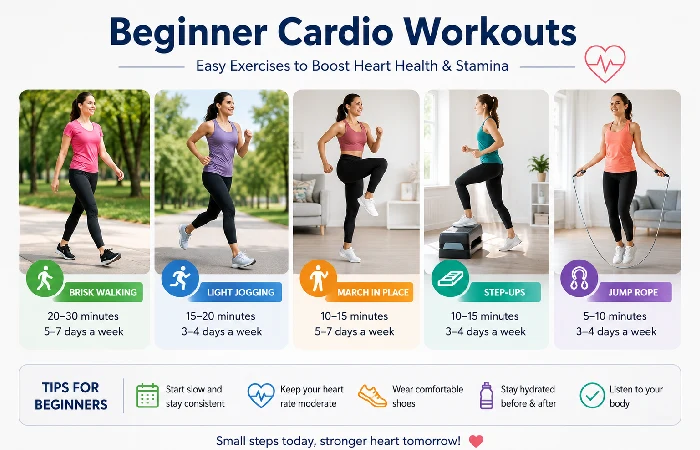
Cardio is great for strengthening the heart, building endurance, burning calories and general good health.
Newcomers should try activities that they enjoy.
Walking
Walking is one of the top exercises for beginners.
Benefits:
- Low impact
- Easy to start
- Improves cardiovascular health
- Supports weight management
Goal:
20–40 minutes
Cycling
Great for joint pain patients.
Benefits:
- Low-impact
- Strengthens legs
- Improves endurance
Swimming
Swimming offers an all round exercise without stressing the joints.
Great for:
- Beginners
- Older adults
- Recovery days
Dancing
Dancing is a form of exercise and fun.
Benefits:
- Improves coordination
- Burns calories
- Boosts mood
Elliptical Machine
Helps improve cardiovascular fitness without the impact of running.
Cardio Comparison
| Exercise | Calories Burned* | Joint Friendly |
| Walking | Moderate | 5 |
| Cycling | Moderate–High | 5 |
| Swimming | High | 5 |
| Dancing | Moderate | 4 |
| Elliptical | Moderate | 5 |
The amount of calories burned depends on individual size, exercise intensity and length.
Weekly Cardio Recommendation
| Goal | Weekly Cardio |
| General Health | 150 minutes |
| Weight Management | 200–300 minutes |
| Improved Endurance | 180–300 minutes |
Flexibility and Mobility Exercises
Flexibility increases muscle length and mobility increases joint range of motion.
Both can be incorporated into your exercise routine to help improve posture, help reduce stiffness and reduce the risk of injury.
Cat-Cow Stretch
Benefits:
- Improves spinal mobility
- Reduces back stiffness
- Warms up the spine
Hold for 30–60 seconds.
Child’s Pose
Benefits:
- Stretches the back
- Relaxes the shoulders
- Promotes recovery
Hold for 30 seconds.
Hamstring Stretch
Benefits:
- Improves flexibility
The following day, after intense leg exercise, it will help decrease tightness.
Maintain for 20-30 seconds on each side.
Hip Flexor Stretch
Ideal for those who sit for long periods of time.
Benefits:
- Improves hip mobility
- Reduces lower-back tension
Shoulder Stretch
Improves shoulder (upper body) movement and posture.
Chest Stretch
Great for post computer session or upper body exercise.
Mobility Routine
| Exercise | Duration |
| Cat-Cow | 1 minute |
| Hip Stretch | 30 sec each side |
| Hamstring Stretch | 30 sec each side |
| Child’s Pose | 1 minute |
| Shoulder Stretch | 30 sec |
| Chest Stretch | 30 sec |
Total routine:
5–8 minutes
Tips for Better Results
Some helpful suggestions to get better results:
- First work on good form, then add weight.
- Increase resistance gradually.
- Make sure to drink plenty of liquids during the day.
- Avoid warm-up and cool down.
- Maintain workout log to monitor progress.
- Acknowledge and have a celebration of successes to help maintain motivation.
Nutrition Tips to Support Your Workout Plan
Exercising is the trigger for change, while nutrition is the foundation which enables your body to regenerate and grow stronger.
There is no need to follow a special diet to make progress. Rather, make sure your diet consists of well-rounded meals with protein, complex carbs, healthy fats, fruits and vegetables.
Mobility and flexibility are also important parts of a balanced workout routine. Explore our stretching exercises for women for simple ways to include stretching in your routine.
Prioritize Protein
Protein assists in repairing muscles after workout and helps muscles to develop.
High-Protein Foods
| Food | Serving | Protein |
| Chicken Breast | 100 g | 31 g |
| Salmon | 100 g | 25 g |
| Greek Yogurt | 170 g | 17 g |
| Cottage Cheese | 100 g | 11 g |
| Eggs | 2 large | 12 g |
| Lentils | 1 cup | 18 g |
| Tofu | 100 g | 10 g |
Choose Healthy Carbohydrates
Carbohydrates are used for exercise fuel.
Good choices include:
- Oatmeal
- Brown rice
- Quinoa
- Sweet potatoes
- Whole-grain bread
- Whole-wheat pasta
- Fresh fruit
- Beans
Don’t use highly processed snacks or sugary beverages as a main source of energy.
Include Healthy Fats
Good fats are used to make hormones, aid brain function, and absorb nutrients.
Choose foods such as:
- Avocados
- Nuts
- Seeds
- Olive oil
- Fatty fish
Stay Hydrated
Hydration is the key to recovery and performance.
Water intake is determined by climate, activity level and individual requirements; most adults need to drink water regularly throughout the day and more when they exercise.
Common symptoms of dehydration include:
- Fatigue
- Headache
- Dark-colored urine
- Dizziness
Pre-Workout Snack Ideas
If necessary, consume a light snack 30-90 minutes prior to exercise.
Examples:
| Snack | Benefit |
| Banana + peanut butter | Quick energy + healthy fat |
| Greek yogurt + berries | Protein + carbohydrates |
| Apple + almonds | Fiber + healthy fats |
| Whole-grain toast + egg | Balanced energy |
Post-Workout Meal Ideas
Post-exercise: Recover with protein and carbohydrates.
| Meal | Main Nutrients |
| Grilled chicken, brown rice, broccoli | Protein + carbs + fiber |
| Salmon, quinoa, vegetables | Protein + healthy fats |
| Turkey wrap with vegetables | Lean protein + whole grains |
| Cottage cheese with fruit | Protein + natural carbohydrates |
Recovery, Rest Days, and Sleep
Recovery: Your body’s response to training. Progress may be delayed and the potential for injury may be higher if there is insufficient recovery.
Rest days help:
- Repair muscle tissue
- Reduce fatigue
- Improve performance
- Lower injury risk
- Support long-term consistency
Gentle stretching and walking (active recovery) may also help.
The Importance of Sleep
Good sleep promotes growth and regeneration of muscles, hormones and concentration.
The recommended sleep duration for most adults is 7-9 hours of sleep per night.
- Better Sleep Habits
- Have a regular bedtime.
- Avoid caffeine late in the day.
- Minimize screen time prior to sleep.
- Ensure your bedroom is cool, dark and quiet.
Recovery Methods Comparison
| Method | Benefit |
| Stretching | Improves flexibility |
| Walking | Promotes blood flow |
| Foam Rolling | Reduces muscle tightness |
| Yoga | Enhances recovery and mobility |
| Massage | Relieves muscle tension |
| Adequate Sleep | Supports overall recovery |
Common Beginner Workout Mistakes
We make mistakes as we learn, but there are ways to avoid some common pitfalls to keep us safe and motivated.
1. Doing Too Much Too Soon
High-intensity daily exercise may result in burn out or injury.
Think: Gradually add more work.
2. Skipping the Warm-Up
Doing intensive exercise without warming up can put you at risk for muscle strains.
Solution: Take 5-10 minutes to prepare your body before each workout.
3. Ignoring Proper Form
Bad form decreases the effectiveness of the exercise and increases risk of injury.
Goal: Practice bodyweight exercises before adding resistance.
4. Comparing oneself to others
People are at various fitness levels.
Emphasis on personal growth instead of others.
5. Not Eating Enough
Under-fueling can impact on energy, recovery and exercise performance.
Select well-balanced meals that meet your nutritional needs for your activity level.
6. Skipping Recovery
The more a person exercises, the better he will not get.
Recovery enables your body to strengthen.
7. Expecting Instant Results
It takes time to improve fitness.
Embrace consistency and incremental growth rather than rapid transformations.
If you have access to a pair of dumbbells, you can add resistance to many beginner exercises. Our beginner dumbbell workout plan for women covers ways to incorporate dumbbell exercises into your training.
Beginner Workout Troubleshooting Guide
| Challenge | Possible Cause | Practical Solution |
| Muscle soreness | New exercises | Light stretching, walking, and adequate hydration |
| Low energy | Poor nutrition or sleep | Prioritize balanced meals and quality sleep |
| Weight plateau | Inconsistent nutrition or activity | Review your eating habits and stay consistent with workouts |
| Lack of motivation | Unrealistic expectations | Set smaller, achievable goals |
| Joint discomfort | Poor form or excessive intensity | Improve technique and reduce exercise intensity if needed |
How to Stay Motivated and Build Healthy Habits
The motivation will always vary over the course of time. When you have low motivation, you stay consistent due to building habits.
Set SMART Goals
Goals should be:
- Specific
- Measurable
- Achievable
- Relevant
- Time-bound
Example:
For the next month, “do three 30 minute sessions a week.
Track Your Progress
Having a simple fitness journal will help you notice the improvements.
Track:
- Workouts completed
- Weights used
- Repetitions
- Energy levels
- Sleep
- Water intake
Celebrate Small Wins
The scale isn’t the only measure of progress.
Enjoy the benefits of enhancements like:
- Completing more repetitions
- Increasing the weight of the lifting resistance.• Using a slightly higher resistance to lift.
- Walking farther
- Better posture
- Increased confidence
Find Activities You Enjoy
When it comes to exercise, you’ll be more motivated to get it done when you love the activity.
Options include:
- Walking
- Cycling
- Swimming
- Yoga
- Dancing
- Hiking
- Strength training
Build a Routine
Make time for exercise as you would for an appointment.
Quality can be more important than perfection.
Beginner Workout Equipment Comparison
| Equipment | Best For | Beginner Friendly |
| Resistance Bands | Full-body workouts | 5 |
| Adjustable Dumbbells | Strength training | 5 |
| Yoga Mat | Floor exercises | 5 |
| Foam Roller | Recovery | 4 |
| Stability Ball | Core exercises | 4 |
| Fitness Tracker | Activity monitoring | 4 |
30-Day Beginner Fitness Checklist
| Habit | Goal |
| Complete planned workouts | ✓ |
| Walk daily | ✓ |
| Drink enough water | ✓ |
| Eat protein with meals | ✓ |
| Stretch after workouts | ✓ |
| Sleep 7–9 hours | ✓ |
| Take rest days | ✓ |
| Track progress weekly | ✓ |
Frequently Asked Questions
Which is the best workout routine for women to start?
One of the best ways to gain overall fitness is to have a balanced program which incorporates strength training, cardio, flexibility, and recovery.
How many days per week is it best to work out as a beginner?
Most beginners require 3-5 workouts a week with rest and/or active recovery sessions in between strength training days.
Is it possible to lose weight on a beginner workout program?
Combined with a healthy eating pattern, regular exercise can help for healthy weight management.
Is it good for women to lift weights?
Yes. Strength training benefits muscles and bones, supports metabolism and daily function.
Is it possible for novice trainees to train in the comfort of their own homes?
Absolutely. Strength training can be done with just body weight and a select few basic tools.
What is the proper amount of time for a beginner workout?
The duration of most sessions is set to be from 20 to 45 minutes depending on fitness and goals.
Does walking provide sufficient exercise?
Walking is an excellent way to achieve cardiovascular exercise. For balanced fitness, it’s also beneficial to include strength and flexibility exercises.
So, what do you eat before working out?
If necessary, eat a light meal or snack containing carbohydrates and protein about 30-90 minutes prior to exercise.
When can I expect to see my results?
Within a few weeks, many novices experience increased energy, strength and stamina after regular training. Physical changes can take longer and are different for each individual.
Is it normal to feel muscle soreness?
It’s normal to experience some soreness at the beginning of a new workout. If the pain is really severe or persistent, it should be checked by a healthcare professional.
Key Takeaways
- Build up gradually and concentrate on the correct exercise form.
- Use strength training, cardio, flexibility, and recovery to achieve a well-rounded fitness regimen.
- Consume healthy meals, get enough protein and drink plenty of fluids.
- Take sleep and rest days to aid recovery.
- Take it slow – don’t up the ante too fast.
- When things are done consistently over the years, they help strengthen, fit and build confidence.
Dr. Khizrana Begum is a qualified medical professional with MBBS and MD qualifications and 5+ years of experience in the medical field. She works as a General Physician and Dermatologist, with knowledge spanning general medicine, dermatology, preventive healthcare and skin health.
As a medical reviewer, Dr. Khizrana Begum reviews health and wellness content for medical accuracy, clarity and authenticity.
Sameena Begum reviews content for clarity, accuracy and reader usefulness. Her review process helps ensure that published information is clearly presented, relevant and easy for readers to understand.
Syeda Yasmeen is a Health & Wellness Writer at InHumanBeing.com. She creates clear and reader-focused content across health, nutrition, wellness, women’s health, men’s health and babies’ health.