
 Syeda Yasmeen
Health & Wellness Writer Syeda Yasmeen creates clear and
reader-focused content covering health,
nutrition, wellness, women’s health,
men’s health and babies’ health.
Read Full Bio of Author →
Syeda Yasmeen
Health & Wellness Writer Syeda Yasmeen creates clear and
reader-focused content covering health,
nutrition, wellness, women’s health,
men’s health and babies’ health.
Read Full Bio of Author →
 Sameena Begum
Health, Technology & Digital Content Reviewer Sameena Begum reviews selected content
for clarity, factual presentation,
consistency and reader usefulness.
Read Full Bio of Reviewer →
Sameena Begum
Health, Technology & Digital Content Reviewer Sameena Begum reviews selected content
for clarity, factual presentation,
consistency and reader usefulness.
Read Full Bio of Reviewer →
 Dr. Khizrana Begum
General Physician and Dermatologist Dr. Khizrana Begum is a qualified medical
professional with MBBS and MD qualifications
and 5+ years of experience. She reviews health
and wellness content for medical accuracy,
clarity and responsible presentation.
Read Full Bio of Medical Reviewer →
Dr. Khizrana Begum
General Physician and Dermatologist Dr. Khizrana Begum is a qualified medical
professional with MBBS and MD qualifications
and 5+ years of experience. She reviews health
and wellness content for medical accuracy,
clarity and responsible presentation.
Read Full Bio of Medical Reviewer →
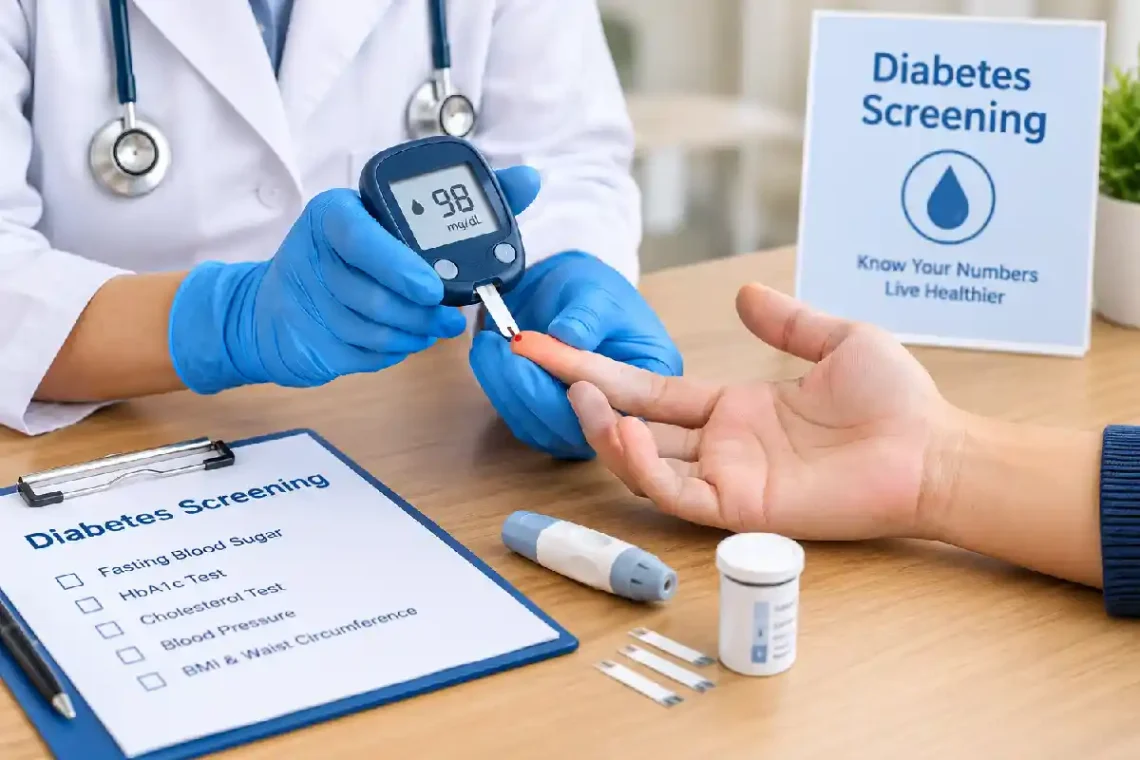
Diabetes screening forms an integral part of preventive health care as type 2 diabetes and prediabetes may develop insidiously without obvious symptoms. Screening involves the use of blood glucose testing in detecting atypical blood glucose levels before or at the time of symptom onset. It allows patients to discuss lifestyle changes, monitoring, and treatment.
Diabetes testing is based on need. Testing will depend on a person’s age, weight, ethnicity, health status, and previous pregnancy history of diabetes and may be detected in other medical conditions. Testing guidelines can be narrow for particular countries and several health-specific groups.
What Is Diabetes Screening?
Diabetes screening is a test for people who either have no symptoms or who do have symptoms and are at increased risk of prediabetes and type 2 diabetes.
The main screening tests include:
- Hemoglobin A1C test
- Fasting blood glucose test
- Oral glucose tolerance test (OGTT)
They can identify blood glucose that falls within the bounds of normal glucose regulation, prediabetes, or diabetes. “Testing is important,” the CDC says, “because prediabetes and type 2 diabetes often have no symptoms.”
Most screening is directed towards type 2 and prediabetes, although type 1 is different and may manifest more acutely with prominent symptomatology.
The abnormal screening result may have to be retested or further investigated before diagnosis is established.
Who Should Be Screened for Diabetes?
The screening recommendations will vary according to the guidelines consulted. They will also vary based on the individual’s risk factors.
The USPSTF recommends that all asymptomatic adults aged 35–70 years with overweight or obesity should be screened for prediabetes and type 2 diabetes (prevalence > 12.0%) and that A1C, fasting plasma glucose, and oral glucose tolerance testing are appropriate screening tools.
Screening might also be undertaken earlier or more frequently if people have other risk factors.
Healthcare professionals may consider factors such as:
- Family history of type 2 diabetes
- Overweight or obesity
- Older age
- Previous gestational diabetes
- Polycystic ovary syndrome (PCOS)
- Physical inactivity
- Certain dietary and lifestyle factors
- A history of abnormal glucose levels
For certain populations, diabetes risk thresholds may exist at lower BMI ranges. The USPSTF states, “some Asian American subgroups may warrant earlier screening and lower BMI thresholds because BMI tends to underestimate their metabolic risk.”
Separate screening guidelines are recommended for pregnant women because gestational diabetes is screened using pregnancy-based methods.
Type 2 Diabetes Risk Factors
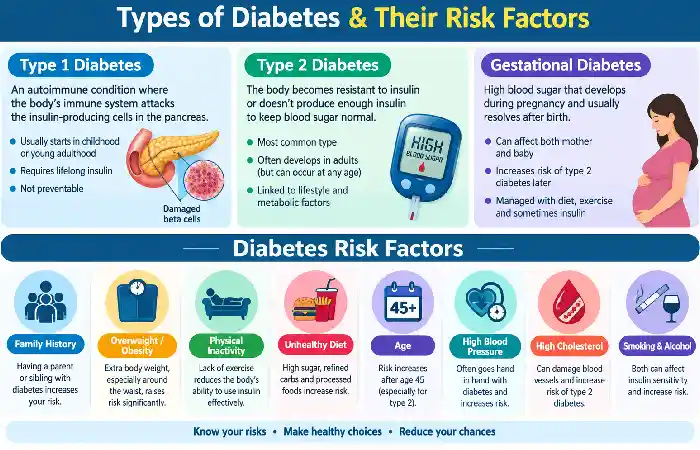
Type II diabetes is the result of genetic, metabolic, and environmental influences. The fact that a person has one or more risk factors does not otherwise indicate that they will necessarily develop diabetes, but it can be more worthy of screening.
Important risk factors include:
| Risk Factor | How It Relates to Diabetes Risk |
| Overweight or obesity | Associated with increased risk of insulin resistance |
| Family history | Genetic and shared environmental factors can influence risk. |
| Older age | Risk generally increases with age. |
| Physical inactivity | Can contribute to insulin resistance and metabolic risk |
| Previous gestational diabetes | Increases future risk of type 2 diabetes |
| PCOS | Associated with increased metabolic and diabetes risk |
| Previous prediabetes | Indicates elevated blood glucose and increased future risk |
| Certain ethnic or population groups | Diabetes prevalence can vary among populations. |
Having risk factors does not necessarily mean that there is a diagnosis. Determination of abnormal glucose levels requires blood glucose testing.
A1C Test
A1C test (hemoglobin A1C or HbA1c): This blood test determines an average blood sugar level over the previous two to three months. Unlike a glucose blood sample, which necessitates fasting, a person can often take an A1C test without fasting beforehand.
Common diagnostic categories are:
| A1C Result | Interpretation |
| Below 5.7% | Normal range |
| 5.7%–6.4% | Prediabetes range |
| 6.5% or higher | Diabetes range |
These values are more frequently used for diagnosing prediabetes and diabetes mellitus, but an atypical result may require confirmation depending on the circumstance.
A1 C has been suggested as they need not require fasting. Some illnesses can influence the results of an A1C test. Examples of such conditions are: blood dyscrasias, anemia, renal and hepatic disease, blood loss and transfusions.
Before you have your A1C test result read, inform your healthcare professional if you have any medical conditions.
Fasting Blood Glucose Test
A fasting blood glucose test looks at the level of sugar in the blood after a person has not eaten for some time.
According to CDC diagnostic ranges:
| Fasting Blood Glucose | Interpretation |
| 99 mg/dL or below | Normal range |
| 100–125 mg/dL | Prediabetes range |
| 126 mg/dL or higher | Diabetes range |
The fasting test has been more common because it is easier to perform and measures a single value of blood glucose.
The manufacturer or laboratory will provide specific details to be followed. The fasting period can depend on what other tests are being done at the same time.
One abnormal result does not provide the full picture. Your healthcare practitioner may order another round of testing or do a different kind of glucose test.
Oral Glucose Tolerance Test
The oral glucose tolerance test (OGTT) evaluates the body’s response to a fixed quantity of glucose.
In a normal diabetes test, a person fasts before the test. A blood sample is taken; they drink a solution containing glucose, and another blood sample is taken after a given time.
For a two-hour glucose tolerance measurement, CDC ranges include:
| 2-Hour Glucose Result | Interpretation |
| 140 mg/dL or below | Normal range |
| 140–199 mg/dL | Prediabetes range |
| 200 mg/dL or higher | Diabetes range |
OGTT may yield valuable information about the body’s handling of glucose, but it is more time- and prep-intensive than an A1C or fasting blood glucose test.
It is also used in pregnancy, or there are other, different protocols for screening gestational diabetes.
Prediabetes Screening
Prediabetes: Blood Glucose higher than normal but not diagnostic for diabetes
Being diagnosed with prediabetes does not equal a guaranteed future for diabetes. It is an opportunity to explore the factors that increase risk and speak with a health care professional about prevention.
Prediabetes can be identified using:
- A1C testing
- Fasting plasma glucose
- Oral glucose tolerance testing
As an example, the CDC criteria define elevated A1C (5.7–6.4%), fasting glucose (100–125 mg/dL), or 2-hour glucose (140–199 mg/dL) as the range for prediabetes.
For adults who are at risk for diabetes (such as those with prediabetes), the USPSTF suggests offering or referring them to effective preventive interventions.
Individualized prevention strategies may consist of enhancing dietary habits, integrating more physical activity, and, when indicated, maintaining a healthy weight according to one’s healthcare provider’s guidance.
Understanding Diabetes Screening Results

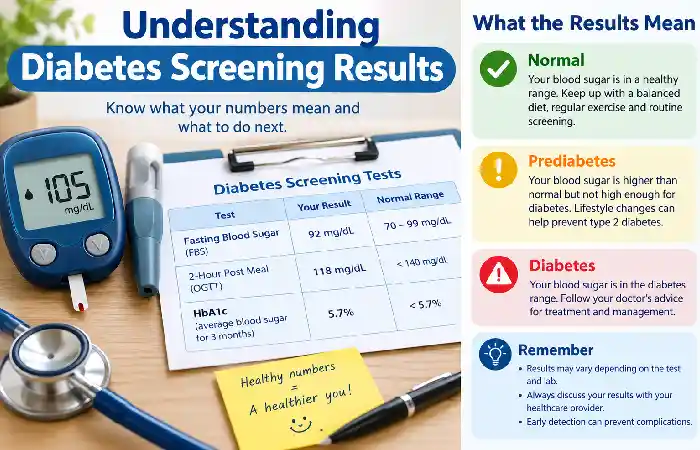
The distinction between a screening result and a diagnosis is worth noting.
A normal result indicates the blood glucose level is within the expected level of response at the time of the test; a label of within the normal range does NOT necessarily mean diabetes will never happen.
A prediabetes result represents risk and may be a reason to recommend lifestyle modification, testing, and monitoring more.
A result within the range for diabetes requires investigation. This may mean retesting or ordering another test. The health professional may decide to do this before making a diagnosis of diabetes.
Interpret the results in context. Illness, drugs, pregnancy, and conditions affecting your red blood cells can all affect a few of the measurements.
Don’t self-diagnose based on one lab value. Your doctor can help you understand what that test result is indicating and if more testing is needed.
How Often Should Diabetes Screening Be Done?
One screening interval does not fit all.
USPSTF notes that it is not certain what the best interval is following a normal screen, but it may be reasonable to screen every 3 years for adults with normal glucose who meet the criteria.
Individuals at risk or with previous abnormal results might require testing at more regular intervals.
For example, if normal results are followed by a period of elevated values, follow-up may be more frequent until euthymia has re-establish. Factor in age, risk, previous results, and clinical judgment.
The recommended screening test may vary among institutions, such as between the US and UK. Patients should adhere to the guidance and medical advice given in their domain.
What to Discuss With Your Healthcare Professional
Including information about your family and personal health history in a screening discussion for diabetes can be more helpful.
Consider discussing:
- Your age and weight history
- Family history of diabetes
- Previous blood glucose or A1C results
- History of gestational diabetes
- PCOS or other relevant health conditions
- Physical activity levels
- Current medications
- Previous diagnosis of prediabetes
- How frequently you should screen
- Which test is most appropriate for you
You might also inquire if fasting is necessary, how you should prepare, and what your results indicate.
If you receive an abnormal result, ask whether the result requires confirmation and what follow-up is necessary.
Frequently Asked Questions About Diabetes Screening
Are blood test and A1C test the same?
They‘re both tests for blood sugar, yet they give you different details. A1C approximates overall blood sugar over a couple of months, more generally covering two to 3 months. Fasting sugar measures blood sugar at a specific point in time.
Are people with diabetes supposed to fast before an A1C?
A1C testing does not usually require fasting. If you are having other blood tests that require fasting, you may ask to fast before an A1C blood test.
Is it possible to reverse prediabetes?
Prediabetes is not diabetes. Lifestyle and prevention strategies can prevent or delay the progression to full-blown diabetes, and your doctor or other healthcare professional can assist you with developing a prevention plan.
Can I have diabetes and not even know it?
Yes. Asymptomatic growth of Type 2 diabetes is one of the reasons screening recommend for people at high risk.
Is there an age limit to screening for diabetes?
No. Age alone is one reason. Individuals with risk factors may require screening before age-based guidelines.
Final Thoughts
Diabetes screening can help detect prediabetes or type 2 diabetes early, before or near the time when major symptoms might begin. The primary tests to look for diabetes include: A1C, fasting blood sugar, and oral glucose tolerance.
The appropriate screening schedule determine by age, weight, family history, previous test results, a history of pregnancy, medical history, and any other risk factors. An abnormal screening result does not necessarily mean that diabetes has diagnose, and further assessment may necessary.
With proper preventive care and good follow-up, we can help people learn about how their body is managing their blood sugar levels and make decisions on actions that may decrease the risk of future complications.
Medical disclaimer: This article is for general educational purposes and does not replace medical advice, diagnosis, or individualized screening recommendations. Diabetes screening criteria and guidelines may differ between countries and may change over time. Discuss your appropriate testing schedule and results with a qualified healthcare professional.
Dr. Khizrana Begum
Dr. Khizrana Begum is a qualified medical professional with MBBS and MD qualifications and 5+ years of experience in the medical field. She works as a General Physician and Dermatologist, with knowledge spanning general medicine, dermatology, preventive healthcare and skin health.
As a medical reviewer, Dr. Khizrana Begum reviews health and wellness content for medical accuracy, clarity and authenticity.
Sameena Begum
Sameena Begum reviews content for clarity, accuracy and reader usefulness. Her review process helps ensure that published information is clearly presented, relevant and easy for readers to understand.
Syeda Yasmeen
Syeda Yasmeen is a Health & Wellness Writer at InHumanBeing.com. She creates clear and reader-focused content across health, nutrition, wellness, women’s health, men’s health and babies’ health.