
 Syeda Yasmeen
Health & Wellness Writer Syeda Yasmeen creates clear and
reader-focused content covering health,
nutrition, wellness, women’s health,
men’s health and babies’ health.
Read Full Bio of Author →
Syeda Yasmeen
Health & Wellness Writer Syeda Yasmeen creates clear and
reader-focused content covering health,
nutrition, wellness, women’s health,
men’s health and babies’ health.
Read Full Bio of Author →
 Sameena Begum
Health, Technology & Digital Content Reviewer Sameena Begum reviews selected content
for clarity, factual presentation,
consistency and reader usefulness.
Read Full Bio of Reviewer →
Sameena Begum
Health, Technology & Digital Content Reviewer Sameena Begum reviews selected content
for clarity, factual presentation,
consistency and reader usefulness.
Read Full Bio of Reviewer →
 Dr. Khizrana Begum
General Physician and Dermatologist Dr. Khizrana Begum is a qualified medical
professional with MBBS and MD qualifications
and 5+ years of experience. She reviews health
and wellness content for medical accuracy,
clarity and responsible presentation.
Read Full Bio of Medical Reviewer →
Dr. Khizrana Begum
General Physician and Dermatologist Dr. Khizrana Begum is a qualified medical
professional with MBBS and MD qualifications
and 5+ years of experience. She reviews health
and wellness content for medical accuracy,
clarity and responsible presentation.
Read Full Bio of Medical Reviewer →
Health screening is a key component of preventive health care. Screening tests are used to look for specific illnesses, markers, and early changes in the body before any symptoms are experienced. For some conditions, early detection may mean treatment or a change in lifestyle can start earlier.
Health screening doesn’t imply that everyone requires all the tests. Appropriate health screening requires taking into account various factors, including age and sex, family and personal health history, risk factors, symptoms, as well as country-specific guidelines. According to the World Health Organization, screening programs should be justified by establishing that the benefits significantly outweigh the harms, false positive findings, and overdiagnostic workups.
A plan for preventive health, therefore, involves the right screening, while more or less tolerating healthy lifestyle interactions and detection of symptoms, and association of vaccinations with healthcare visits.
What Is Health Screening?
Health screening is the practice of testing individuals without symptoms of the disease to determine who is more likely to develop the disease or already has the disease.
The aim differs from the way you’ve tested a person with symptoms.
Examples of health screening can include:
- Blood pressure measurement
- Cholesterol testing
- Diabetes screening
- Cancer screening
- Bone-density testing for appropriate groups
- Mental health screening
- Certain infectious disease tests
- Vision and hearing screening
- Developmental screening in children
Typically, a screening test will not confirm the diagnosis. If a screening test is found to be abnormal, further testing may be required.
Screening recommendations can evolve as new evidence emerges, and that is why individuals should consult with a health professional about their screening needs rather than automatically assuming every screen should be performed every year.
Why Is Health Screening Important?
There are many serious conditions that most of the time can exist symptom-free. A person can be feeling fit and well even with high blood pressure, abnormal blood glucose, or the early changes that can be linked with some cancers and high cholesterol.
Screening can identify some diseases before symptoms develop.
Potential benefits include:
- Detecting certain diseases at an earlier stage
- Identifying risk factors
- Providing opportunities for preventive treatment
- Guiding lifestyle changes
- Monitoring health over time
- Helping healthcare professionals identify people who may need further evaluation.
However, screening is not always a useful tool just because there is a test. Screening can also lead to false positives, false negatives, anxiety, unnecessary examinations and investigations, and overdiagnosis.
Thus, the idea of appropriate screening is correct, instead of the idea of as much testing as you can. WHO also stresses the appropriateness of screening, that is, weighing the benefits and harms of screening.
Health Screening vs. Diagnostic Testing
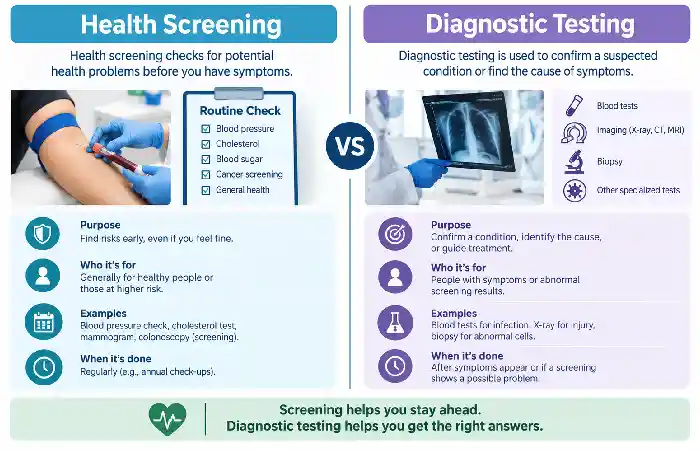
Screening and diagnostic testing are closely related, though different.
Screening is usually undertaken among asymptomatic individuals to try and determine those who are at risk.
Diagnostic testing is when symptoms, an abnormal screening result, or other clinical concern requires investigation.
| Screening | Diagnostic Testing |
| Usually performed before symptoms appear. | Usually performed because of symptoms or an abnormal finding. |
| Estimates risk or identifies possible disease. | Investigates a suspected condition |
| May identify people who need additional testing | Helps establish or exclude a diagnosis |
| Used for selected populations | Selected according to the individual’s clinical situation |
For example, screening for hypertension is performed on someone who has no symptoms, but repeated high readings may be confirmed with further readings.
This distinction is crucial since a positive screening test does not imply that a patient has the disease.
Types of Health Screening Tests
The process of health screening may encompass a wide range of procedures and assessments.
Blood Tests
Blood tests can be used to measure levels of various substances such as cholesterol, blood glucose, or other markers as required by the screening.
Physical Measurements
Blood pressure, weight, height, body mass index, or other measurements may or may not offer information about the risk to health.
Imaging Tests
Imaging is used in some screening programs in order to detect early changes for the disease. For example, mammography for breast cancer detection and low-dose computed tomography in a high-risk group for lung cancer detection.
Questionnaires
Additionally, specific preventive checkups and mental health screening may rely on standardized questionnaires to screen for potentially at-risk individuals.
Visual and Hearing Tests
Children and adults can have vision and hearing screening at appropriate ages and when risk factors exist.
Stool or Other Laboratory Tests
Some cancer screening tests are stool-based, and some infectious disease screening is done on blood, urine, swab, or other material.
Routine Health Screenings for Adults
Routine screening and other preventive services are provided based on age, sex, past medical history, and risk factors.
Common areas healthcare professionals may consider include:
| Screening Area | Examples |
| Blood pressure | Blood pressure measurement |
| Cardiometabolic health | Cholesterol and diabetes risk assessment |
| Cancer | Breast, cervical, colorectal, lung, and other appropriate screening |
| Mental health | Depression and other appropriate mental health screening |
| Bone health | Bone-density assessment for appropriate populations |
| Infectious diseases | HIV, hepatitis, sexually transmitted infections, or other risk-based testing |
| Vision | Eye and vision assessment |
| Hearing | Hearing assessment when appropriate |
| Lifestyle risks | Tobacco, alcohol, diet, physical activity, and other risk factors |
Routine screening and other preventive services are provided based on age, sex, past medical history, and risk factors.
For instance, that USPSTF at present suggests screening adults aged 18 yrs Moreover and older for hypertension, with affirmation outside of the circumstance when treatment is indicated. It has really turned into an advised screening pattern recommended primarily based on age and risk.
Health Screening by Age
Changes in screening requirements over life course.
Children and Adolescents
Preventive healthcare for children may include:
- Growth monitoring
- Developmental screening
- Vision screening
- Hearing screening
- Immunization review
- Dental care
- Blood pressure assessment at appropriate ages
- Mental health screening when appropriate
- Risk-based laboratory screening
The program for children is different from the adult program and should be dictated by pediatric guidelines.
Young Adults
Young adults may need attention to:
- Blood pressure
- Mental health
- Sexual and reproductive health
- Infectious disease risk
- Immunization status
- Lifestyle-related risk factors
Other screenings can be recommended depending on the family history and risk factors.
Middle-Aged Adults
More screening will also occur for other cancers, metabolic, cardiovascular, and general preventive screening as elders age.
Another example is the USPSTF’s current guidance that screening for colorectal cancer should be initiated at the age of 45 years for adults at average risk, with the optimal test and frequency of screening depending on the type of screening test.
Older Adults
In the same vein, older adults may also need ongoing cancer screening, as well as screening for bone health, risk of falls, vision and hearing problems, medications, cognitive issues, and other age-related risks.
When to screen in the elderly: overall health, life expectancy, screening history and patient preferences matter.
Health Screening by Sex
Some screening recommendations are sex-dependent, as some diseases are not equally prevalent in different sexes.
Screening Commonly Relevant to Women
Depending on age and risk factors, preventive care may include:
- Breast cancer screening
- Cervical cancer screening
- Osteoporosis screening at appropriate ages
- Blood pressure screening
- Diabetes screening when indicated
- Cholesterol assessment
- Mental health screening
- Infectious disease screening when appropriate
As an example, the USPSTF breast cancer recommendation is more current than its schedule version, updated in 2024, which is a reason it is better to verify a schedule against an insurance company’s current guidance.
Screening Commonly Relevant to Men
Depending on age and risk factors, preventive care may include:
- Blood pressure screening
- Cholesterol assessment
- Diabetes screening
- Colorectal cancer screening
- Lung cancer screening for eligible high-risk individuals
- Prostate cancer screening discussions
- Mental health screening
- Infectious disease screening when appropriate
Prostate cancer screening is one such example where there is a need for shared decision-making. The USPSTF recommends that men 55–69 years old should consider the possible benefits and harms with a clinician rather than undergo screening as an automatic test.
Cancer Screening
Cancer screening is the detection of specific cancers or precancerous lesions in apparently healthy individuals.
Common cancer screening programs include:
- Breast cancer screening
- Cervical cancer screening
- Colorectal cancer screening
- Lung cancer screening for selected high-risk adults
Different cancers require different screening methods.
| Cancer | Possible Screening Method |
| Breast cancer | Mammography |
| Cervical cancer | HPV testing, cervical cytology, or appropriate combination |
| Colorectal cancer | Stool-based tests or colonoscopy and other accepted methods |
| Lung cancer | Low-dose CT for selected high-risk individuals |
For each type of cancer, a routine screening test may not exist in the general population. Screening should be based on evidence-based guidelines.
For instance, USPSTF guidelines now recommend screening for colorectal cancer in all adults between the ages of 45 and 75. In contrast, lung cancer screening is recommended for a targeted subgroup of a high-risk population.
Heart Health Screening
Screening for heart health includes screening for cardiovascular risk factors and, where indicated, screening for symptoms or known disease.
Common preventive assessments include:
- Blood pressure
- Cholesterol
- Blood glucose or diabetes risk
- Smoking status
- Weight and body composition
- Physical activity
- Diet
- Family history
- Other cardiovascular risk factors
Blood pressure screening is valuable because some people with high blood pressure have no symptoms of the disease.
The USPSTF recommends screening all adults for high blood pressure and recommends confirmation of an elevated office measurement using outside office measurements prior to treatment.
Present to a clinician if there are symptoms of chest pain, breathlessness, syncope, or unexplained severe fatigue. Do not wait until the next routine screening appointment.
Diabetes Screening
Diabetes screening can detect high blood glucose levels in the absence of disease or after diabetes has become established.
Tests may include:
- Fasting plasma glucose
- Hemoglobin A1c
- Oral glucose tolerance testing in appropriate circumstances
Recommendations for screening vary based on age, weight, pregnancy status, family history, and other risk factors.
Currently, the USPSTF recommends screening for those 35-70 years of age with overweight or obesity who are asymptomatic.
The abnormal result of screening alone will not confirm a diagnosis. Further testing may be repeated or confirmed given the situation.
Blood Pressure and Cholesterol Screening
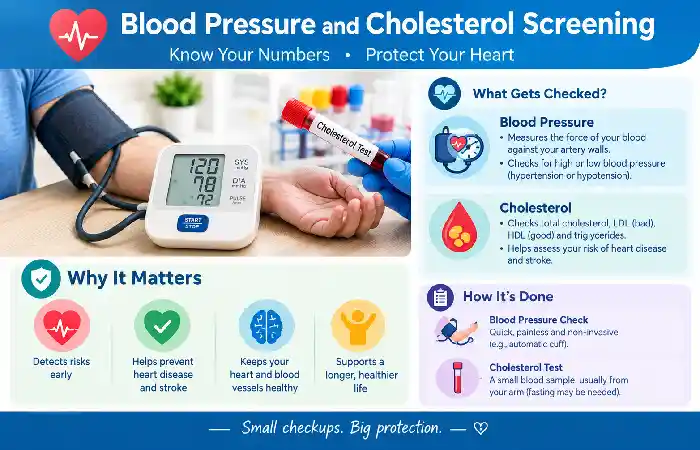
It are also valuable elements of preventive cardiovascular services.
Blood Pressure
The blood pressure thingymabob (that’s the technical term). Read about the blood pressure thingamajig (that’s the technical term).
One abnormal measurement on its own does not necessarily define hypertension. Readings can fluctuate due to stress, exercise, caffeine, medication, and other influences.
Cholesterol
A lipid panel may measure:
- Total cholesterol
- LDL cholesterol
- HDL cholesterol
- Triglycerides
The clinical importance of the results of the cholesterol testing depends on the entire cardiovascular risk profile and not just one single number.
Physicians could take into account factors such as age, blood pressure, diabetes, smoking, family history, and others.
Bone Health Screening
Bone health becomes more crucial with age as bone density diminishes and the risk of fracture increases.
Bone-density testing, such as dual-energy X-ray absorptiometry (DXA), can be used to determine bone mineral density.
Existing USPSTF guidelines suggest screening for osteoporosis in women aged 65 years and older and screening in postmenopausal women less than 65 years at increased risk on the basis of an appropriate risk assessment.
Screening recommendations for men and other populations may vary. Other individual factors, including a previous fracture, medication use, and medical conditions, may influence recommendations.
Mental Health Screening
‘Mental health’ is an integral part of preventive medicine.
Screening could also assist in detecting people who might need further assessment for depression or anxiety.
The screening provides an indication that more in-depth assessment and diagnosis may be needed.
The USPSTF currently advises depression screening for all adults, and specifically for pregnant and postpartum individuals as well as older adults. It further advises depression screening in adolescents 12–18 years of age.
Any mental health issues should be raised directly with a health professional regardless of the screening schedule if the symptoms of the disorder are present.
Infectious Disease Screening
The screen for infectious diseases is heavily dependent upon age, pregnancy status, sex exposure, occupation, travel, immunization history, and other risk factors.
Depending on circumstances, screening may include:
- HIV
- Hepatitis B
- Hepatitis C
- Syphilis
- Chlamydia
- Gonorrhea
- Tuberculosis
- Other infections
For instance, the USPTF suggests screening for HIV infection for a 15- to 65-year-old population, where, in those at higher risk, testing can be extended to others.
Pregnancy can also change screening recommendations. People who are pregnant should receive prenatal screening according to current obstetric guidance.
Health Screening for Children
Children need preventive screening that reflects their stage of development.
Important areas may include:
- Growth and development
- Vision
- Hearing
- Oral health
- Blood pressure at appropriate ages
- Immunizations
- Nutrition
- Developmental and behavioral concerns
- Mental health in appropriate age groups
- Risk-based laboratory screening
Children may not always recognize or communicate symptoms clearly, making routine pediatric visits especially valuable.
Developmental screening can help identify children who may benefit from additional assessment or early support.
Pregnancy may also alter screening recommendations. Current obstetric guidelines should be used to determine whether individuals who are pregnant should undergo prenatal screening.
Health Screening for Older Adults
As people grow older, screening becomes more personalized.
Older adults may need assessment of:
- Blood pressure
- Diabetes risk
- Cholesterol
- Cancer screening
- Bone health
- Vision
- Hearing
- Fall risk
- Medication use
- Mental health
- Cognitive concerns
- Nutrition
Not all screening tests will be appropriate forever. When considering whether or not to continue particular screening programs, health care professionals might take into account general health, physical functioning, past screening results, mortality expectancy, and personal choice.
It is especially true as screening can potentially (after follow-up procedures and treatment) offer little benefit for some older adults.
How to Prepare for a Health Screening
Depends on the test.
Before an appointment:
Review Your Medical History
Remember the primary medical conditions, past surgeries, allergies, and family health history.
Bring a Medication List
Should include: prescription medicines, over-the-counter medicines, vitamins, and supplements.
Ask Whether Fasting Is Required
Some of the blood tests a person has may have been done with fasting and some not. Follow the instructions given by the health professional or test center.
Bring Previous Results
If the screening results are not from the current year, there is the ability to compare previous findings across years.
Ask Questions
Useful questions include:
- What is this screening test for?
- Do I need to prepare?
- What happens if the result is abnormal?
- When will I receive the results?
- Do I need another test afterward?
- How often should I repeat the screening?
Being well prepared can make the screening process easier for you and can make you aware of the reason for the test being done.
Understanding Your Screening Results
The screening result will often be normal, abnormal, positive, negative, or inconclusive, depending on the test.
The above implications are based on the fact that if you test positive, it does not mean you have the disease.
In the same way, a normal screening does not mean that a disease will not develop in the future.
Possible outcomes include:
- Normal result — routine screening may continue according to the recommended schedule.
- Abnormal result — additional testing may be recommended.
- Inconclusive result — the test may need to be repeated or followed by another test.
- Positive screening result — diagnostic evaluation may be needed.
Healthcare professionals analyze findings in context, considering age, medical history, symptoms, risk factors, and past results.
Do not read a single laboratory number in a vacuum. Always consider the reference range and the clinical picture.
How Often Should You Get Health Screenings?
There is definitely no once-for-all time frame for all people.
Screening frequency depends on:
- Age
- Sex
- Family history
- Personal medical history
- Lifestyle factors
- Previous screening results
- Pregnancy status
- Medication use
- Exposure risks
- Country-specific recommendations
Some may be done repeatedly, and others only once or at a certain age.
For example, current USPSTF hypertension recommendations include screening all adults aged 40 and older annually and screening all at-risk adults aged 18–39 less frequently.
Cancer screening intervals also vary widely based on the type of cancer and the screening test. The USPSTF plans to keep the current intervals for many screening and preventive services, so screening schedules should be reviewed in comparison with the current guidelines.
Frequently Asked Questions About Health Screening
What exactly is health screening?
Health screening is desired for particular diseases or risk factors where this may be followed by appropriate follow-up, prevention, or treatment when evidence emerges to support screening for these conditions.
Is health screening the same as a medical check-up?
No, a general health checkup would include history, physical, counseling, and prevention. Screening refers only to tests or procedures used to identify possible health risks in people who do not have symptoms.
Can detection of a disease be done with a screening test?
Often screening detects people who might benefit from further evaluation. Positive screening tests generally lead to diagnostic testing before a definitive diagnosis can be made.
Are health screenings necessary for healthy individuals?
Yes, screening could be suitable for asymptomatic individuals. The required test would, however, be expected to vary according to risk factors and current evidence.
Healthcare screenings–is there a one-size-fits-all?
No. Screening recommendations are indicated based on age, sex, family history, personal medical history, risk factors, pregnancy status, and other factors.
Are there risks when using screening tests?
Yes. While screening may lead to false-positive or false-negative outcomes, it can also cause unnecessary follow-up and procedures as a result of anxiety and extra diagnosis. J. Detels explains the WHO’s focus on discovering the balance between potential harms and benefits of a screening program.
What happens if something turns up on my screening?
An abnormal screening result does not mean you definitely have a disease. Contact the health care professional who ordered the test to discuss if repeat testing, diagnostic testing, monitoring, or treatment is need.
How do I monitor my screenings?
Keep track of when you had previous screenings, screening results, Vaccinations, Medications, and Family History of disease. Your provider can help you develop a schedule of preventive-care screenings.
Final Thoughts
Prevention is also an integral part of health screening. Good screening is always about the right test for the right person at the right time.
Other outcomes can be, among many others: blood pressure, cholesterol, Diabetes, cancer, bone health, mental health, infectious disease, eyes, ears, and pediatrics. The question is not whether to consider them, but how, when, etc. Different screening can done according to age, sex, risk factors, etc. And depending on countries.
A screening test is not the same as a diagnosis. An abnormal test may lead to further testing, and even a normal test does not rule out future disease.
The most successful strategy would be to continue routine doctor visits, to review your personal risk factors, adhere to current evidence-based screening guidelines, and seek health care during the onset of symptoms instead of waiting to review them during a check-up visit.
It is general public educational information; it does not substitute for individualized advice. Screening guidelines may vary in time and in countries as new evidence arises. Ask your doctor what your individual screening plan is.
Dr. Khizrana Begum
Dr. Khizrana Begum is a qualified medical professional with MBBS and MD qualifications and 5+ years of experience in the medical field. She works as a General Physician and Dermatologist, with knowledge spanning general medicine, dermatology, preventive healthcare and skin health.
As a medical reviewer, Dr. Khizrana Begum reviews health and wellness content for medical accuracy, clarity and authenticity.
Sameena Begum
Sameena Begum reviews content for clarity, accuracy and reader usefulness. Her review process helps ensure that published information is clearly presented, relevant and easy for readers to understand.
Syeda Yasmeen
Syeda Yasmeen is a Health & Wellness Writer at InHumanBeing.com. She creates clear and reader-focused content across health, nutrition, wellness, women’s health, men’s health and babies’ health.